Best rimless toilet selection depends on uniform rimless wash coverage, reliable one-flush clearance, low splash behaviour, durable ceramic and glaze quality, leak-free cistern internals, stable seat hinges, correct outlet match, correct projection fit, and planned service access, because rimless performance relies on exposed flush channel distribution rather than hidden rim tunnels. Rimless toilets work by releasing a controlled cistern volume through shaped channels that wash the bowl perimeter, then siphon action clears waste through the trapway and restores the water seal. Rimless toilets reduce hidden grime traps and shorten cleaning time, but rimless toilets lose performance when cistern waterline is low or when scale narrows channel outlets.
Bathroom layout determines the best rimless toilet format. Close-coupled rimless toilets suit straightforward replacements with simple servicing. Back-to-wall rimless toilets suit furniture bathrooms with concealed pipework, so access planning becomes essential. Wall-hung rimless toilets suit minimalist layouts with easier floor cleaning, but frame strength and alignment become critical. Compact bathrooms benefit from short-projection rimless pans, while accessibility-focused bathrooms benefit from comfort-height rimless pans. Maintenance success depends on keeping channels descaled and cistern parts leak-free to protect wash coverage and flush consistency.
What Is A Rimless Toilet?

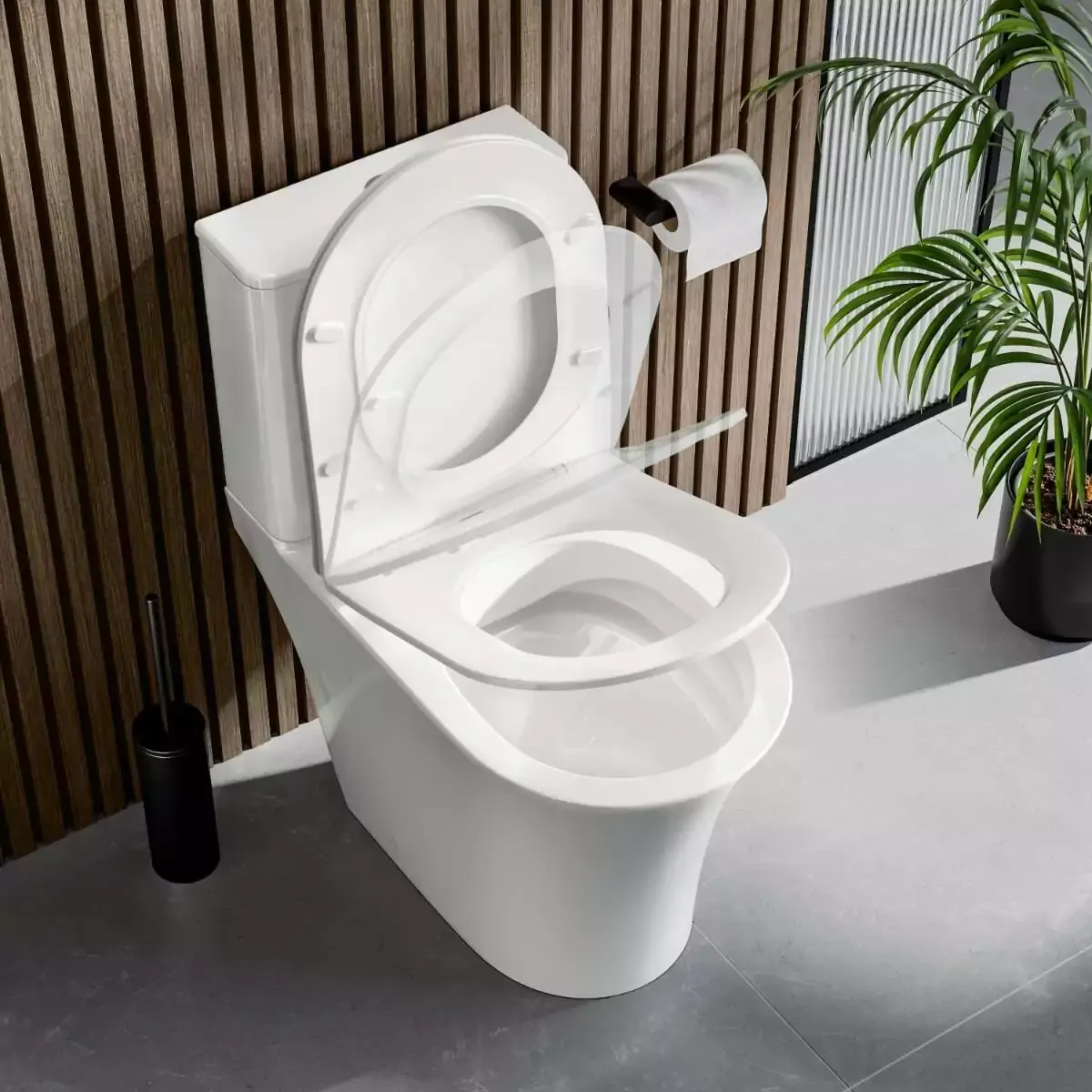
A rimless toilet is a toilet bowl design without a traditional rim lip, and a rimless toilet uses exposed flush channels to distribute water around the bowl for complete wash coverage with fewer hidden grime traps. Rimless design improves cleaning access because under-rim cavities are removed. Rimless design reduces bacterial residue zones because water pathways are visible and reachable.
- Rimless Bowl Geometry: Rimless bowl geometry removes the concealed rim cavity that collects scale and residue. Exposed channels allow direct wiping and direct descaling. Smooth ceramic contours reduce deposit anchor points.
- Flush Distribution Path: Flush distribution path guides water around the bowl through shaped channels rather than hidden rim tunnels. Even distribution prevents dry wash zones. Poor distribution creates streaking and repeated cleaning.
- Hygiene Access Benefit: Hygiene access benefit comes from visible surfaces and fewer hidden edges. Cleaning becomes faster because under-rim scrubbing reduces. Limescale removal becomes easier because deposits remain exposed.
- Cleaning Time Reduction: Cleaning time reduction occurs because wiping replaces deep under-rim brushing. Descaling becomes targeted rather than guesswork. Smooth surfaces reduce staining grip.
- Flush Performance Factors: Flush performance factors include flush volume, flush timing, water entry angle, and bowl shape. The correct cistern waterline protects flush energy. Stable flush valve lift protects discharge duration.
- Noise And Splash Control: Noise and splash control depend on bowl shaping and water entry direction. Controlled flow reduces chaotic splashing. Lower splash reduces cleaning frequency around the rim zone.
How Does A Rimless Toilet Work?
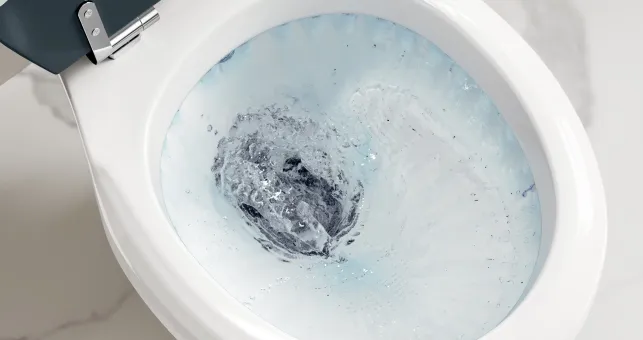
A rimless toilet works by releasing a controlled volume of water from the cistern through a shaped distribution channel that directs water around the open bowl rim area, creating a uniform wash pattern that pushes waste into the trapway and completes siphon evacuation. Rimless toilets replace hidden rim tunnels with exposed flow paths. Water enters the bowl at angled outlets to create a circular wash.
- Cistern Discharge Timing: Cistern discharge timing determines how long water flows into the bowl during a flush. Full lift keeps the flush valve open long enough for full volume release.
- Channel Flow Control: Channel flow control uses shaped ceramic channels to direct water along the bowl perimeter. Channel outlets aim water to reach all wash zones. Even flow prevents streaking and dry patches.
- Swirl Formation: Swirl formation occurs when angled water entry creates rotational movement. Strong swirl improves bowl wash and guides waste toward the trapway inlet. Weak swirl leaves residue and slows evacuation.
- Trapway Siphon Pull: Trapway siphon pull evacuates bowl contents once water level rises and flow accelerates through the trap bend. Stable siphon clears solids and water quickly. Partial restrictions weaken siphon and reduce clearance.
- Rimless Wash Coverage: Rimless wash coverage depends on consistent outlet openings and clean channel edges. Mineral deposits reduce outlet size and reduce coverage. Uneven coverage creates streaks and cleaning burdens.
- Refill And Seal Level: Refill and seal level restore the bowl water seal after the flush. Correct refill maintains odour control and prepares the next flush. Low seal level increases odour risk.
Which Factors Define The Best Rimless Toilet?
The best rimless toilet is defined by uniform rimless wash coverage, reliable one-flush waste clearance, low splash behaviour, durable ceramics, stable seat hardware, easy service access, and long spare-part support, because rimless performance depends on flush distribution quality and long-term maintainability. Flush distribution must reach the full bowl perimeter without dry zones. Trapway geometry must support stable siphon pull without frequent blockages.
- Wash Coverage Quality: Wash coverage quality means water reaches all bowl wash zones in one full flush. Coverage must stay even around the open rim area. Dry zones indicate weak channel design or low flush volume.
- One Flush Clearance: One flush clearance means solid waste clears without repeat flushing under normal use. Stable siphon pull and correct bowl shape support clearance. Repeat flushing increases water use and cleaning load.
- Splash Control Design: Splash control design reduces outward spray and surface wetting around the toilet. Controlled entry angles reduce chaotic water impact. Lower splash reduces floor spotting and reduces cleaning frequency.
- Ceramic And Glaze: Ceramic and glaze quality define stain resistance and long-term appearance. Dense ceramic reduces water absorption and odour retention. Smooth glaze reduces limescale adhesion and simplifies cleaning.
- Seat And Hinges: Seat and hinges quality define daily stability and durability. Strong hinge plates prevent wobble and misalignment. Soft-close damping reduces noise and impact wear.
- Cistern Reliability: Cistern reliability means stable waterline, stable flush valve sealing, and consistent refill control. Silent leaks reduce flush volume and reduce wash coverage. Stable refill prevents underfilled flush events.
What Are The Main Benefits Of Choosing A Rimless Toilet For Your Bathroom?

Rimless toilets improve hygiene control, reduce cleaning time, and maintain a cleaner bowl appearance because rimless bowl design removes hidden rim cavities and enables more complete wash coverage with easier access for wiping and descaling. Rimless design reduces grime traps where limescale and residue build.
- Hygiene Improvement: Hygiene improvement occurs because the rim cavity is removed and fewer hidden surfaces exist. Residue remains visible and removable. Cleaning targets exposed channels rather than unseen deposits.
- Faster Cleaning: Faster cleaning occurs because under-rim scrubbing reduces and wiping becomes more effective. Smooth glaze and open channels reduce time spent on deep cleaning. Less scrubbing reduces surface wear over time.
- Reduced Limescale Traps: Reduced limescale traps occur because exposed channels prevent scale hiding under a rim lip. Deposits form where cleaning access exists. Descaling becomes more precise and less chemical-intensive.
- Better Bowl Visibility: Better bowl visibility improves maintenance because staining and buildup become easier to spot early. Early cleaning prevents hardened deposits. Visual inspection confirms wash coverage quality.
- Modern Bathroom Look: Modern bathroom look improves because rimless toilets often use clean lines, slim seats, and minimal profiles. Rimless styling pairs well with wall-hung and back-to-wall installations. Minimal profiles reduce visual bulk in compact rooms.
- Lower Splash Potential: Lower splash potential occurs when rimless distribution channels control water direction and reduce chaotic rim turbulence. Controlled flow reduces outward spray.
Which Drawbacks Should Buyers Understand Before Choosing The Best Rimless Toilet?
Rimless toilet drawbacks include uneven wash coverage on weak designs, higher sensitivity to low cistern water level, visible channel scale buildup in hard water areas, higher reliance on correct installation alignment, and higher part-specific compatibility for seats and concealed cistern components. Rimless toilets show performance differences more clearly because channels are exposed. Poor distribution creates streaking and residue.
- Uneven Wash Coverage: Uneven wash coverage occurs when channel outlets do not reach the full bowl perimeter. Dry zones create visible streaks and residue. Repeat flushing and repeat cleaning increase.
- Low Waterline Sensitivity: Low waterline sensitivity occurs because rimless distribution requires stable flush volume. Underfilled cisterns reduce wash coverage and weaken siphon start. Silent leaks reduce volume gradually and reduce performance consistency.
- Hard Water Scaling: Hard water scaling affects rimless outlets because exposed channels collect visible mineral deposits. Deposits narrow outlets and reduce distribution reach. Scale can create uneven wash and weak swirl.
- Splash Pattern Variation: Splash pattern variation occurs when water entry angles and bowl shaping create outward spray in some designs. Splash increases floor spotting and cleaning load.
- Seat Fit Specificity: Seat fit specificity increases because rimless toilets often use slimline or D-shape seats with brand-specific hinge spacing. Generic seats may not fit correctly.
- Concealed Service Access: Concealed service access becomes a drawback when rimless toilets use concealed cisterns without easy access. Flush valve and inlet valve parts still require service over time. Poor access increases repair cost and downtime.
What Are The Different Types Of Rimless Toilets Available In The UK?
Rimless toilet types in the UK mainly differ by installation format, cistern location, projection depth, trap outlet configuration, and seat shape, because rimless design describes the bowl wash channel, not the mounting method. UK rimless toilets commonly appear as close-coupled, back-to-wall, and wall-hung formats. Compact rimless toilets suit cloakrooms through short-projection pans. Rimless toilets also vary by trap type to match floor outlets and rear outlets. Rimless toilets often pair with slimline D-shape seats for modern bathroom styling.
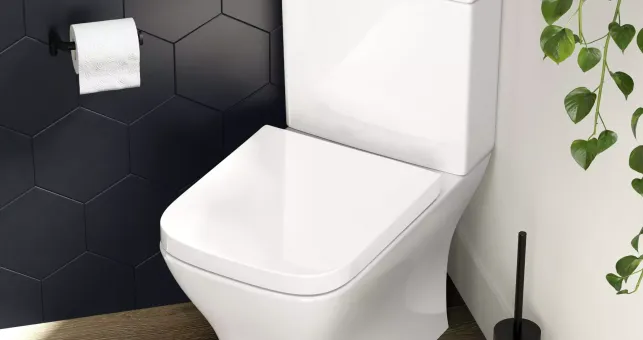
- Close Coupled Rimless: Close coupled rimless toilets use a visible cistern fixed to the pan and a rimless bowl for easier cleaning access. Installation is straightforward and servicing access is simple.
- Back To Wall Rimless: Back to wall rimless toilets sit tight to the wall with a concealed cistern inside a WC unit or wall void. Pipework concealment improves visual cleanliness and reduces dust traps.
- Wall Hung Rimless: Wall hung rimless toilets mount to a concealed frame and leave the floor clear under the pan. Cleaning access improves because floor wiping becomes easier.
- Short Projection Rimless: Short projection rimless toilets reduce pan depth to increase circulation space in cloakrooms and small bathrooms. Door clearance improves and knee-space conflicts reduce.
- Rimless With Frame: Rimless with frame toilets combine rimless bowls with concealed cistern frames for consistent modern styling. Flush plate access becomes the main service route. Frame quality influences noise transfer and long-term rigidity.
- S Trap Rimless: S trap rimless toilets discharge through the floor and suit floor soil pipe positions common in some properties. Outlet alignment must match the floor connection point accurately.
- P Trap Rimless: P trap rimless toilets discharge through the wall and suit rear soil pipe connections. Rear outlet position must match the existing soil pipe height and depth.
What Are The Best Rimless Toilets Available In The UK Right Now?
The best rimless toilets available in the UK combine consistent rimless wash coverage, reliable one-flush clearance, low splash behaviour, durable ceramics, stable seat hardware, and easy service access, and Bathroom Mountain ranges such as Boston, Seattle, Nevada, and Tucson cover the main installation formats for modern bathrooms. Close-coupled rimless toilets suit straightforward replacements with simple cistern access. Back-to-wall rimless toilets suit furniture runs with concealed services. Wall-hung rimless toilets suit minimalist layouts with easier floor cleaning. Comfort-height rimless toilets suit accessibility-focused bathrooms.
Boston Rimless Fully Back To Wall Close Coupled

Boston rimless fully back-to-wall close-coupled toilet suits bathrooms needing a clean rear wall line without a wall frame install. Rimless bowl geometry supports easier cleaning access because hidden rim cavities are removed. Close-coupled cistern placement keeps servicing straightforward for flush and fill components. Consistent wash distribution depends on correct cistern waterline and full flush valve lift.
Boston Rimless Comfort Height Close Coupled

Boston rimless comfort height close-coupled toilet suits bathrooms needing easier sit-to-stand movement through a taller pan height. Rimless bowl channels support faster wipe-down cleaning and better visibility of scale buildup. Close-coupled format keeps internal parts reachable without opening furniture panels. Comfort-height selection works best when basin height and accessory placement align with the raised seating position.
Boston Rimless Comfort Height Slim Seat

Boston rimless comfort height slim seat suits modern suites needing comfort-height ergonomics with a slimmer seat profile. Rimless distribution channels support accessible cleaning around the bowl perimeter. Slim seat profiles reduce visual bulk and suit contemporary bathroom furniture lines. Stable hinge hardware remains important to prevent wobble on slim seat designs.
Boston Rimless Close Coupled Slim Seat

Boston rimless close-coupled slim seat suits standard bathrooms aiming for a modern look with simple maintenance access. Rimless bowl design reduces under-rim deposit zones and supports quicker cleaning routines. Close-coupled installation keeps valve servicing simple and reduces concealed access complexity. Projection and outlet type matching still control installation ease and leak risk.
Seattle Rimless Close Coupled Soft Close

Seattle rimless close-coupled soft-close toilet suits smaller bathrooms and cloakrooms where space and noise control matter. Rimless wash design supports easier hygiene control because wash channels stay visible. Soft-close hinge damping reduces impact noise and reduces hinge stress over time. Compact layouts perform best when projection depth supports door clearance and comfortable knee space.
Boston Rimless Back To Wall Toilet

Boston rimless back-to-wall toilet suits fitted bathrooms using a concealed cistern inside a WC unit or wall void. Back-to-wall fit hides pipework and reduces dust traps behind the pan. Rimless bowl design supports easier cleaning access and reduced hidden residue. Service access planning remains essential because concealed cistern parts still need periodic replacement.
Nevada Rimless Wall Hung Soft Close

Nevada rimless wall-hung soft-close toilet suits minimalist bathrooms where floor clearance and easy mopping are priorities. Wall-hung installation improves floor cleaning access and reduces visual bulk. Rimless bowl channels support easier descaling and routine cleaning. Frame quality, wall strength, and flush plate access control long-term stability and serviceability.
Nevada Rimless Wall Hung Slim Seat

Nevada rimless wall-hung slim seat suits modern bathrooms needing a lighter visual profile and easier floor cleaning. Slim seat design reduces bulk and supports contemporary styling. Rimless wash channels remain visible for targeted cleaning. Correct frame alignment prevents pan movement and protects seals and fixings.
Nevada Rimless Wall Hung Slim Seat V2

Nevada rimless wall-hung slim seat V2 suits bathrooms needing a modern rimless bowl with a compact visual footprint. Rimless distribution supports consistent bowl wash when cistern volume and discharge timing remain stable. Wall-hung formats require planned access for internal valve servicing. Correct installation reduces vibration transfer and improves daily stability.
Tucson Rimless Close Coupled Soft Close

Tucson rimless close-coupled soft-close toilet suits straightforward replacements where simple servicing access and quiet use are priorities. Rimless bowl design supports faster cleaning by removing hidden rim cavities. Soft-close seat reduces noise and reduces impact wear on hinges. Correct outlet match and correct projection selection protect installation fit and comfort.
What Should You Look For When Buying A Rimless Toilet In The UK?
The best rimless toilet choice in the UK depends on wash coverage consistency, one-flush clearance, correct trap outlet match, correct projection for room size, stable seat hardware, accessible cistern servicing, and long spare-part support, because rimless performance relies on flush distribution quality and long-term maintainability. Selection starts by matching outlet type to soil pipe position.
- Outlet Type Match: Outlet type match means S-trap or P-trap selection aligns with floor outlet or rear outlet position. Correct alignment reduces connector stress and leak risk. Poor alignment creates restriction and odour risk.
- Projection And Clearance: Projection and clearance selection ensures comfortable knee space and door swing clearance. Short projection pans suit cloakrooms and tight bathrooms. Standard projection suits general family bathrooms.
- Wash Coverage Test: Wash coverage test means the rimless channel distributes water evenly around the bowl without dry zones. Even wash reduces residue and cleaning time. Uneven wash creates streaking and repeated cleaning.
- Flush Reliability: Flush reliability requires full flush valve lift and stable cistern waterline control. Underfilled cisterns weaken distribution and siphon pull. Silent leaks reduce waterline over time and reduce performance.
- Seat And Hinges: Seat and hinges quality must prevent wobble and maintain alignment over time. Soft-close hinges reduce noise and impact wear. Quick-release seats improve hinge-area cleaning.
- Ceramic And Glaze: Ceramic and glaze quality control stain resistance and limescale adhesion. Smooth glaze reduces cleaning effort and reduces deposit grip. Dense ceramic reduces odour absorption.
How Much Does A Rimless Toilet Cost?
Rimless toilet cost typically ranges from £120–£900 for the toilet unit in the UK, and installed cost typically ranges from £250–£1,200 depending on installation type, concealed cistern work, and pipework changes. Close-coupled rimless toilets usually sit at the lower installed cost end because cistern access is simple. Back-to-wall and wall-hung rimless toilets usually cost more because frames, furniture, and access planning add labour and parts.
- Entry Level Rimless: Entry level rimless toilets commonly sit around £120–£250 for basic close-coupled rimless pans and cisterns. Price usually reflects standard ceramics, basic seats, and simple internals.
- Mid Range Rimless: Mid range rimless toilets commonly sit around £250–£500 with improved glaze finish, stronger seat hinges, and more consistent wash coverage. Mid range options often include soft-close seats and better flush distribution.
- Premium Rimless: Premium rimless toilets commonly sit around £500–£900+ with brand-led ceramics, improved bowl geometry, rimless wash optimisation, and better hardware.
- Close Coupled Install Cost: Close coupled install cost commonly lands around £250–£600 when the toilet replaces an existing unit without major pipework changes. Labour cost reduces when the soil outlet aligns.
- Back To Wall Install Cost: Back-to-wall install cost commonly lands around £400–£900 because a concealed cistern or WC unit is involved. Service access must be created and maintained. Pipework concealment adds fitting time.
- Wall Hung Install Cost: Wall-hung install cost commonly lands around £600–£1,200 because a frame system, wall fixing, and flush plate integration are required. Wall structure and tiling changes can increase cost. Frame alignment is critical for stability.
How Can You Save Money On A Rimless Toilet?
Rimless toilet cost reduces most when the rimless toilet matches the existing soil outlet position and footprint, uses a close-coupled or back-to-wall format without pipework relocation, includes standard replaceable internals, and avoids hidden labour from poor access and rework. Labour usually exceeds the price difference between similar toilet models.
- Match Outlet Position: Match outlet position by choosing P-trap for rear outlet soil pipes and S-trap for floor outlet soil pipes. Correct match avoids costly soil pipe changes. Correct match reduces leak risk at connectors.
- Keep Same Footprint: Keep same footprint by selecting a rimless toilet with similar projection and fixing points to the existing toilet. A similar footprint reduces floor repair and tile patching.
- Choose Close Coupled: Choose close-coupled rimless toilets when budget is the priority because servicing access stays simple and parts are widely available. Close-coupled installation often requires less carpentry than concealed systems.
- Avoid Unnecessary Frames: Avoid unnecessary frames by selecting back-to-wall furniture solutions only when the room already has a WC unit or planned concealed space. New frame and boxing work increases labour cost. Wall-hung frames require stronger fixing and accurate alignment.
- Prioritise Standard Internals: Prioritise standard internals such as common inlet valves, flush valves, and seats with readily available hinge kits. Non-standard parts increase future replacement cost. Standard parts reduce downtime and reduce call-out frequency.
- Plan Service Access: Plan service access by keeping flush plate access clear or maintaining a removable panel for concealed cisterns. Poor access increases labour on simple repairs.
How Do Rimless Toilets Compare To Other Options?

Rimless toilets compare best on hygiene access and cleaning speed because rimless bowl design removes the hidden rim cavity that traps scale and residue, while other toilet options often rely on concealed rim channels that increase under-rim buildup over time. Rimless toilets perform well when wash distribution stays uniform and cistern water level stays correct. Rimmed toilets can flush strongly but require more under-rim cleaning.
- Rimmed Toilets: Rimmed toilets hide flush channels under a rim lip and trap residue in areas that are hard to wipe. Under-rim deposits build faster in hard water conditions.
- Rimless Toilets: Rimless toilets expose wash channels and reduce hidden grime traps. Visible channels allow direct wiping and targeted descaling.
- Wall Hung Toilets: Wall-hung toilets change mounting and floor access rather than bowl rim design. Floor cleaning becomes easier because the pan floats above the floor. Frame installation increases installation complexity and requires service access planning.
- Back To Wall Toilets: Back-to-wall toilets hide cistern and pipework inside furniture or a wall void. Visual cleanliness improves and dust traps reduce. Service access becomes the main long-term factor because valve parts need access.
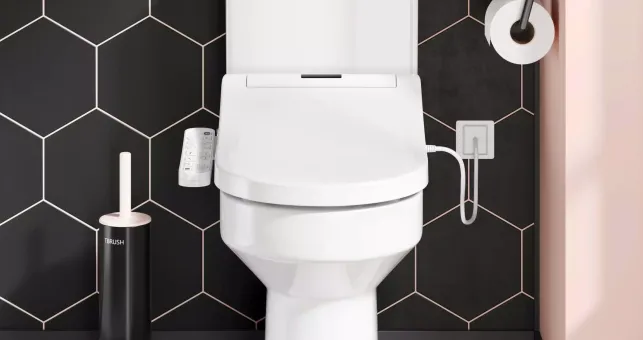
- Smart Bidet Toilets: Smart bidet toilets add washing, drying, and comfort functions beyond rim design. Hygiene level improves through water cleansing. Ownership complexity increases through filters, nozzles, and power supply requirements.
- Squat Toilets: Squat toilets use floor-mounted pans and rely on different user posture and drainage layout. Space planning changes because floor clearance and floor falls become critical.
What Is The Best Rimless Toilet For Your Budget And Bathroom Type?
Best rimless toilet selection matches rimless wash coverage quality, outlet type, projection depth, cistern format, and service access to the bathroom layout and the budget tier, because rimless performance depends on consistent flush distribution and maintainable internals. The budget tier sets ceramic grade, seat hardware quality, and cistern component reliability. Bathroom type sets space limits, noise tolerance, and installation constraints.
- Budget Close Coupled: Budget close-coupled rimless toilets suit standard bathrooms when floor space is moderate and service access simplicity is the priority. Visible cistern access reduces labour on maintenance.
- Mid Range Back To Wall: Mid-range back-to-wall rimless toilets suit modern bathrooms using WC units and concealed pipework. Concealed cistern placement improves visual cleanliness and reduces dust traps.
- Premium Wall Hung Frame: Premium wall-hung rimless toilets suit minimalist bathrooms where floor clearing and easy mopping are core goals. Frame quality controls stability and noise transfer.
- Compact Cloakroom Fit: Compact cloakroom rimless toilets suit small rooms where door swing and circulation space are tight. Short projection pans reduce front-to-back depth and improve clearance.
- Ensuite Noise Focus: Ensuite rimless toilet selection prioritises quiet refill, low splash behaviour, and stable one-flush clearance. Quiet-fill inlet valves reduce refill hiss. Soft-close seats reduce impact noise.
- Outlet Type Match: Outlet type match requires S-trap selection for floor outlets and P-trap selection for rear outlets. Correct outlet match reduces connector bends and improves flow efficiency. Straight connector runs reduce blockage risk.
Summing Up
A best rimless toilet choice comes from matching rimless wash coverage and flush reliability to the bathroom layout, then confirming installation fit and long-term service access. Rimless toilets stay cleaner because the rim cavity is removed and the wash channels remain visible, so routine wiping and targeted descaling become easier. Rimless toilets still need a stable cistern waterline and full discharge timing, because low flush volume and early closure reduce channel coverage and weaken siphon pull. Scale control matters because mineral buildup narrows outlets and creates uneven wash zones.
Bathroom format decides the practical option. Close-coupled rimless toilets suit straightforward replacements because servicing access stays simple. Back-to-wall rimless toilets suit furniture bathrooms when cistern access remains planned through a flush plate or access panel. Wall-hung rimless toilets suit minimalist bathrooms when frame strength, alignment, and vibration control are handled correctly. Compact bathrooms benefit from short-projection pans that protect circulation, while accessibility-focused bathrooms benefit from comfort-height pans that improve sit-to-stand comfort.
Long-term value depends on durable ceramics, smooth glaze, stable seat hinges, leak-free cistern parts, and spare-part continuity for seats and valve components. A successful rimless toilet installation ends with even bowl wash coverage, one-flush clearance, low splash behaviour, quiet and stable refill, and easy access for future maintenance.