Types of toilet selection depends on installation type, cistern type, trap outlet direction, flushing system, size and shape, noise level, accessibility needs, and waste handling method, because these factors control space use, flush performance, water efficiency, service access, and long-term durability. Installation choice separates floor-mounted toilets from wall-hung frame toilets and concealed cistern toilets, and drainage constraints introduce macerator and upflush options. Trap type choice matches soil pipe position using S-trap, P-trap, and universal trap formats with correct connector sealing.
Toilet performance and running cost depend on flushing system and cistern control, including gravity flush, siphonic action, washdown, dual flush, pressure-assisted systems, and rimless distribution, with real efficiency defined by one-flush clearance and leak-free cistern parts. Shape and size selection focuses on projection depth, seat height, and pan profile, including round, D-shape, square, oval, and compact short-projection forms.
Feature selection adds rimless hygiene, soft-close and quick-release seats, bidet and smart functions, and quiet-fill components, with service access and power planning as key constraints. Durable toilet choices prioritise stable fixings, reliable internal parts, smooth glaze, and spare-part continuity to prevent early replacement.
What Are The Main Types Of Toilets?

Main toilet types include close-coupled toilets, back-to-wall toilets, wall-hung toilets, comfort-height toilets, low-level toilets, high-level toilets, and corner toilets, and each toilet type differs by cistern position, installation method, projection depth, cleaning access, and pipework concealment. Toilet type selection depends on bathroom size, soil pipe position, wall strength, and service access requirements.
- Close Coupled Toilets: Close coupled toilets use a cistern fixed directly to the toilet pan. Installation is straightforward because the unit sits as one combined set. Spare parts availability is usually strong due to common UK sizing.
- Back To Wall Toilets: Back to wall toilets sit flush to the wall with the cistern concealed in a WC unit or wall void. Pipework concealment improves visual simplicity and cleaning around the toilet base.
- Wall Hung Toilets: Wall hung toilets mount to a concealed frame and leave the floor clear beneath the pan. Cleaning access improves because the floor area under the toilet remains open.
- Comfort Height Toilets: Comfort height toilets use a taller pan height than standard to improve sitting and standing ease. Taller height suits taller users and reduced mobility users. Comfort height toilets exist in close-coupled, back-to-wall, and wall-hung formats.
- Low Level Toilets: Low level toilets use a cistern mounted on the wall with a short flush pipe to the pan. The design suits period-style bathrooms without full high-level height. Access for maintenance stays simple because the cistern remains visible.
- High Level Toilets: High level toilets use a cistern mounted high on the wall with a long flush pipe and a pull chain. High-level styling suits traditional and Victorian-inspired bathrooms.
What Are The Types Of Toilets By Material?
Toilet material types include vitreous china, porcelain, ceramic, stainless steel, plastic composite, and concrete, and material choice affects stain resistance, chip resistance, hygiene control, weight, noise behaviour, and installation environment suitability. Vitreous china dominates domestic bathrooms because glazed surfaces resist staining and clean easily.
- Vitreous China: Vitreous china toilets use a ceramic body fired to low porosity with a glazed surface. Low porosity reduces water absorption and reduces odour retention.
- Porcelain: Porcelain toilets use fine clay composition and high-temperature firing that produces a dense body and smooth finish. Dense firing improves stain resistance and improves chip resistance at edges.
- Standard Ceramic: Standard ceramic toilets cover broader ceramic manufacturing grades with varying density and glaze quality. Ceramic toilets remain common in budget and mid-range suites.
- Stainless Steel: Stainless steel toilets suit high-use and high-abuse environments because metal resists cracking and impact. Stainless surfaces tolerate strong cleaning chemicals and frequent disinfection routines.
- Plastic Composite: Plastic composite toilets use moulded polymers and composite blends to reduce weight and simplify transport. Composite toilets commonly appear in portable toilets, caravans, and modular buildings.
- Acrylic And Fibreglass: Acrylic and fibreglass toilet materials appear in lightweight marine and mobile installations. Low weight supports installation where floor loading is limited.
What Are The Types Of Toilets By Use Case?
Toilet types by use case include domestic family toilets, compact cloakroom toilets, ensuite toilets, accessibility toilets, commercial public toilets, high-durability institutional toilets, portable toilets, and off-grid toilets, and each use case changes the priority between space, hygiene, durability, water efficiency, service access, and user safety. Domestic use prioritises comfort, quiet flushing, and easy cleaning. Compact use prioritises short projection and corner-friendly layouts.
- Family Bathroom Use: Family bathroom toilets prioritise reliable flush performance, easy cleaning surfaces, and standard sizing for simple replacement. Dual flush systems suit frequent use when flush valve reliability is good.
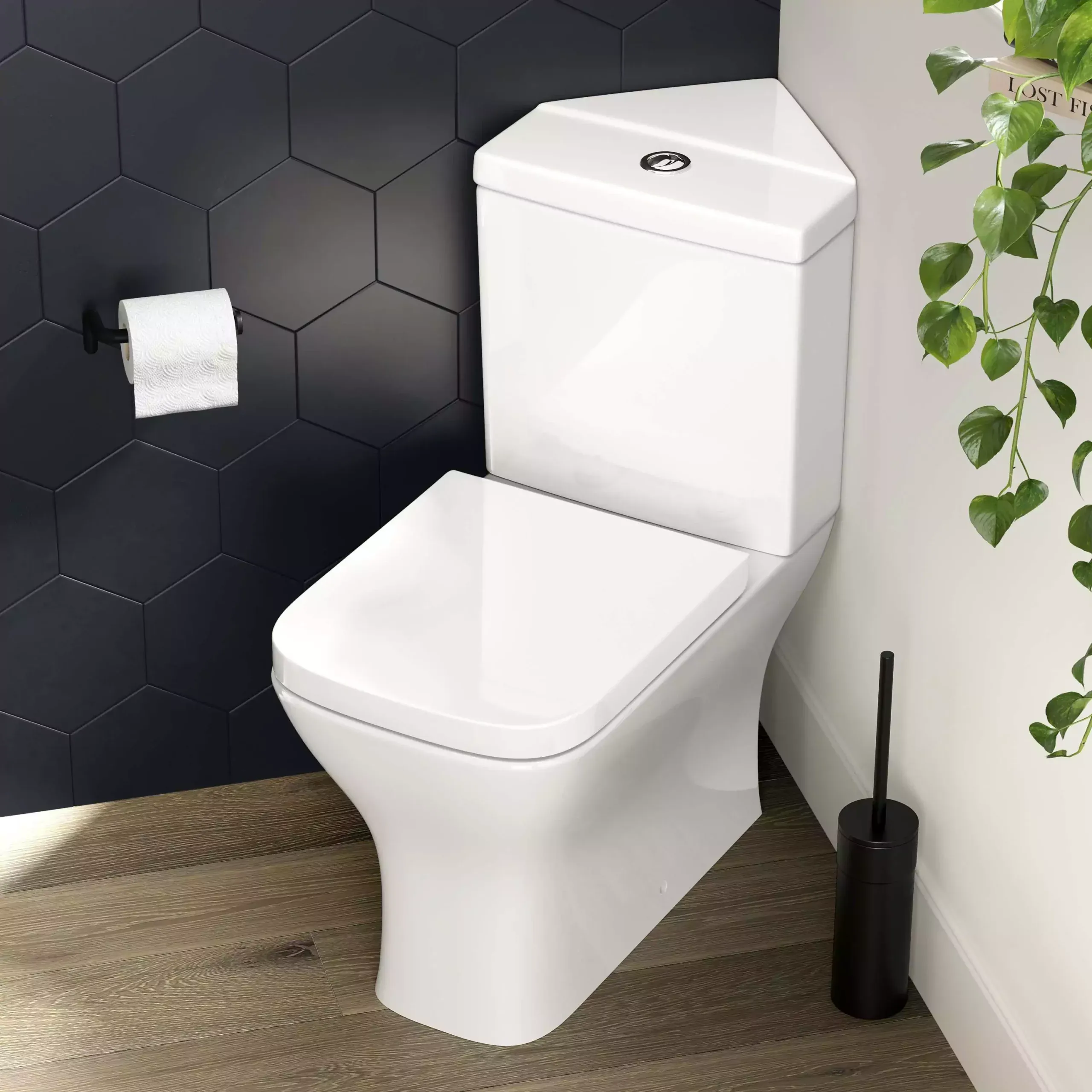
- Cloakroom Use: Cloakroom toilets prioritise short projection and compact cistern footprint to protect circulation space near doors. Corner toilets and short projection close-coupled toilets suit narrow rooms.
- Ensuite Use: Ensuite toilets prioritise quiet operation, compact layout integration, and design cohesion with vanity furniture. Back-to-wall and wall-hung toilets suit aesthetics and cleaning access.
- Accessibility Use: Accessibility toilets prioritise comfort height, stable support, and safe transfer clearance. Comfort height pans reduce sit-to-stand strain. Wall-hung frames can set height precisely when walls are suitable.
- Commercial Public Use: Commercial public toilets prioritise durability, fast cleaning, and strong anti-vandal design. Wall-hung toilets simplify floor cleaning in high-traffic settings.
- Institutional Secure Use: Institutional secure toilets prioritise extreme durability and tamper resistance. Stainless steel toilets are common in high-risk environments. Concealed fixings reduce removal risk.
What Are The Types Of Toilets By Installation Type?

Toilet types by installation include floor-mounted close-coupled toilets, floor-mounted back-to-wall toilets, wall-hung toilets with concealed frames, low-level toilets, high-level toilets, corner toilets, and integrated macerator toilets, and installation type changes fixing method, cistern placement, pipework routing, service access, and load requirements.
- Floor Mounted Close Coupled: Floor mounted close coupled toilets fix the pan to the floor and attach the cistern directly to the pan. Installation suits most bathrooms because pipework routing is familiar and parts are widely available.
- Floor Mounted Back To Wall: Floor mounted back-to-wall toilets fix to the floor while the pan sits tight to the rear wall. Cistern concealment occurs inside a WC unit or wall void. Pipework hides behind furniture, which improves appearance.
- Wall Hung Frame Mount: Wall hung frame mount toilets attach to a concealed steel frame that supports the pan load. The floor remains clear under the pan, improving cleaning access. Installation requires correct frame fixing to structural surfaces.
- Low Level Cistern Mount: Low level cistern mount toilets install a wall-mounted cistern at low height connected to the pan by a short flush pipe. The cistern remains visible for servicing and maintenance.
- High Level Cistern Mount: High level cistern mount toilets install a wall-mounted cistern high on the wall connected to the pan by a long flush pipe. Pull chain activation is common.
What Are The Types Of Toilets By Design?
Toilet types by design include modern minimalist toilets, traditional period toilets, rimless toilets, compact short-projection toilets, comfort-height toilets, wall-hung toilets, back-to-wall toilets, and smart toilets, and design choice changes visual style, cleaning effort, hygiene control, and space perception. Design selection must still match installation constraints, including soil pipe alignment and cistern access. Minimalist designs prioritise clean lines and concealed services.
- Modern Minimalist: Modern minimalist toilets use clean edges, reduced ornamentation, and concealed cistern options to reduce visual clutter. Wall-hung and back-to-wall formats fit this design best. Slim seats and flat-top cisterns align with contemporary furniture.
- Traditional Period: Traditional period toilets use classic pan shapes and cistern styling such as high-level or low-level designs. Pull chains, exposed flush pipes, and decorative fittings create period character. Traditional design suits older homes and heritage renovations.
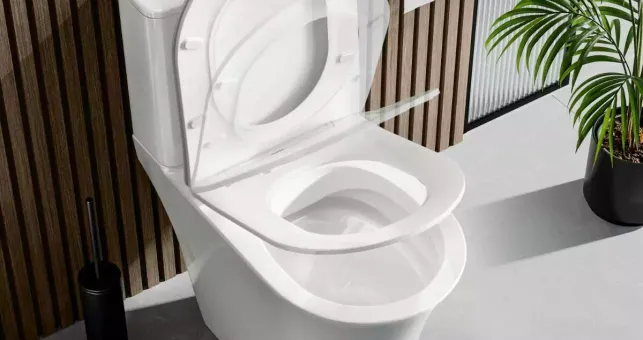
- Rimless Bowl: Rimless bowl toilets remove the internal rim lip to reduce grime traps and simplify cleaning. Smooth bowl geometry reduces residue hold points. Rimless designs rely on controlled flush distribution for full bowl wash.
- Short Projection: Short projection toilets reduce pan depth to suit compact bathrooms and cloakrooms. Reduced depth improves circulation and door clearance. Short projection designs exist as close-coupled and back-to-wall options.
- Square Vs Round: Square vs round design changes the visual language and seating feel. Square toilets suit modern bathrooms with angular furniture lines. Round toilets suit softer, traditional, or transitional bathrooms.
- Concealed Cistern Design: Concealed cistern design hides the cistern behind a wall or WC unit for a clean wall line. Flush plates replace exposed handles. Concealed designs require planned service access for valves and seals.
- Smart Toilet Features: Smart toilet features include bidet wash functions, heated seats, drying, and automatic flushing on some models. Smart designs require power access and splash-safe installation planning.
What Are The Types Of Toilets By Shape?
Toilet types by shape include round toilets, D-shape toilets, square toilets, oval toilets, corner toilets, and compact short-projection shapes, and shape choice affects space usage, seating comfort, cleaning access, and visual alignment with basin and furniture lines. Shape selection must still match toilet installation type and soil pipe position. D-shape and square profiles suit modern bathrooms with straight furniture lines.
- Round Toilets: Round toilets use a curved pan profile and a rounded seat shape. Rounded fronts reduce sharp corners and can feel softer in small bathrooms. Round shapes suit traditional suites and family bathrooms.
- D Shape Toilets: D-shape toilets combine a flat back line with a rounded front. Flat back lines suit back-to-wall and wall-hung aesthetics. D-shape seats often sit slimmer and more modern than round seats.
- Square Toilets: Square toilets use straight edges and angular seat lines. Square shapes create a strong modern look and align with squared basins and furniture.
- Oval Toilets: Oval toilets use elongated curves that create a balanced, soft modern profile. Oval seats often feel slightly longer for comfort. Oval shapes suit transitional bathrooms combining modern and classic features.
- Corner Toilets: Corner toilets use a corner cistern and pan alignment that fits into corner layouts. Corner shapes save wall length and improve door clearance in cloakrooms.
What Are The Types Of Toilets By Size?

Toilet types by size include compact short-projection toilets, standard projection toilets, extended projection toilets, comfort-height toilets, slimline depth toilets, narrow-width toilets, and junior toilets, and size choice affects circulation space, seating comfort, accessibility, and installation fit to soil pipe and service positions. Projection depth is the most important size dimension for small bathrooms. Pan height is the most important size dimension for accessibility.
- Compact Projection: Compact projection toilets reduce pan depth to maximise clearance in cloakrooms and small bathrooms. Reduced depth improves door swing space and knee clearance.
- Standard Projection: Standard projection toilets suit most bathrooms because dimensions balance comfort and space use. Standard projection supports predictable pipework alignment and replacement ease.
- Extended Projection: Extended projection toilets increase pan depth for added seating comfort and stability. Extended depth suits larger bathrooms where space is not constrained.
- Comfort Height: Comfort height toilets increase pan height compared to standard to improve sit-to-stand ease. Increased height supports reduced mobility use and taller user comfort.
- Slim Depth Cistern: Slim depth cistern toilets reduce overall depth by using a shallow cistern design or concealed cistern installation. Slim depth supports tighter layouts and furniture suites.
- Narrow Width: Narrow width toilets suit rooms with tight side clearances near vanity units or walls. Reduced width improves hip clearance and installation flexibility. Narrow width often pairs with compact projection designs.
- Junior Size: Junior size toilets suit children’s bathrooms and nurseries where lower pan height improves usability. Smaller pan and reduced height support independent use. Junior toilets require careful selection for trap and waste compatibility.
What Are The Types Of Toilets By Flushing System?
Toilet flushing system types include gravity flush, siphonic flush, washdown flush, pressure-assisted flush, dual-flush systems, flushometer valve systems, macerator-assisted systems, and rimless distribution systems, and each flushing system changes flush force, water use, noise level, blockage resistance, and maintenance needs. Gravity-based systems dominate domestic bathrooms because the cistern stores water and releases a controlled volume.
- Gravity Flush: Gravity flush uses a cistern that releases stored water into the bowl using a gravity head. Flush performance depends on cistern water level and flush valve lift duration.
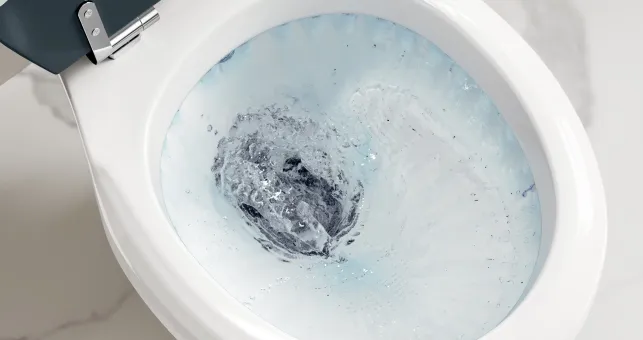
- Siphonic Flush: Siphonic flush creates a siphon in the trapway that pulls bowl contents rapidly after a water surge. Strong siphon action improves solids removal.
- Washdown Flush: Washdown flush pushes waste through the trapway using direct water flow rather than strong siphon pull. Washdown systems can be simpler and less prone to siphon instability.
- Dual Flush System: Dual flush system provides a reduced flush and a full flush using the same cistern. Correct linkage and full lift are necessary for full flush performance.
- Pressure Assisted Flush: Pressure assisted flush stores energy using pressurised air or a pressure vessel inside the cistern. High flush force reduces blockage risk. Noise level is often higher due to rapid discharge.
- Flushometer Valve: Flushometer valve flush uses direct mains water pressure through a flush valve without a cistern tank. Fast, strong flush suits commercial use and high traffic.
What Are The Types Of Toilets By Water Efficiency?
Toilet types by water efficiency include dual-flush toilets, low-flush gravity toilets, high-efficiency toilets, pressure-assisted toilets with reduced repeat flushing, rimless toilets with effective wash distribution, and smart toilets with optimised flush control, and efficiency depends on effective waste clearance per litre rather than low litres-per-flush claims alone. Water-efficient toilets reduce total water use by clearing waste in one correct flush and avoiding repeat flushing. Reliable flush valve sealing prevents silent leakage that erodes water savings.
- Dual Flush Toilets: Dual flush toilets reduce water use by offering a reduced flush and a full flush. Reduced flush suits liquid waste and lowers litres per use. Full flush must release full volume reliably to avoid repeat flushing.
- Low Flush Gravity: Low flush gravity toilets use a lower cistern volume while relying on bowl and trapway geometry to maintain clearance. Flush effectiveness depends on strong initial discharge and correct waterline.
- High Efficiency Toilets: High efficiency toilets focus on strong waste removal using optimised bowl design and controlled water delivery. Efficiency improves when one flush clears solids reliably.
- Rimless Efficient Bowls: Rimless efficient bowls support water efficiency by improving wash distribution and reducing grime traps that encourage extra cleaning and extra flushing.
- Leak Resistant Cisterns: Leak resistant cisterns protect water efficiency by preventing slow continuous water loss into the bowl. Stable inlet valve shutoff prevents overflow tube loss.
- Pressure Assisted Systems: Pressure assisted systems can improve practical efficiency by reducing blockage events and reducing repeat flushing in demanding use cases. High flush energy clears waste quickly.
- Smart Flush Control: Smart flush control improves efficiency through controlled flush selection, consistent discharge timing, and leakage detection features on some systems.
What Are The Types Of Toilets By Features?

Toilet types by features include rimless toilets, soft-close seat toilets, quick-release seat toilets, bidet and shower toilet types, comfort-height toilets, concealed cistern toilets, anti-bacterial surface toilets, quiet-fill toilets, and macerator toilets, and feature selection changes hygiene control, comfort, cleaning time, noise level, and installation complexity. Feature choice must still match toilet installation type and soil pipe position.
- Rimless Toilets: Rimless toilets remove the internal rim lip to reduce grime traps and improve cleaning access. Smooth bowl geometry reduces residue retention zones. Flush distribution must remain effective to avoid weak wash areas.
- Soft Close Seats: Soft close seats reduce noise and prevent seat slamming through damped hinge action. Damping reduces ceramic impact wear and improves household comfort.
- Quick Release Seats: Quick release seats detach without tools to improve cleaning around hinge areas. Hinge zones collect grime due to water splash and dust. Quick removal improves hygiene control and reduces odour persistence.
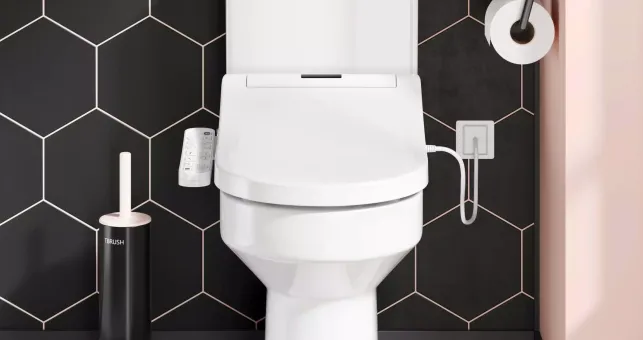
- Bidet And Shower Toilets: Bidet and shower toilets add wash functions that improve personal hygiene and reduce paper use. Bidet seats require a water feed connection. Electric models require a nearby power supply and safe installation planning.
- Comfort Height Design: Comfort height design increases pan height to improve sit-to-stand ease. Taller height supports reduced mobility users and taller users. Comfort height options exist across close-coupled, back-to-wall, and wall-hung types.
- Concealed Cistern: Concealed cistern toilets hide cistern components behind a wall or WC unit to create cleaner lines. Concealment reduces visible pipework and improves minimalist styling.
- Quiet Fill Systems: Quiet fill systems reduce refill noise through improved fill valve design and stable float movement. Noise reduction is valuable in ensuites and night-use bathrooms.
What Are The Types Of Toilets By Technology Level?
Toilet technology levels range from basic gravity cistern toilets to advanced smart toilets, and the main differences are flush control complexity, hygiene features, noise control, maintenance requirements, and installation needs such as power supply and service access. Basic toilets rely on simple mechanical valves and standard seats. Mid-level toilets add rimless bowls, improved flush distribution, concealed cistern systems, and better seat hardware.
- Basic Gravity Toilets: Basic gravity toilets use a simple cistern, flapper or drop valve, and standard seat hardware. Parts are common and easy to replace. Installation suits most homes with standard soil pipe positions.
- Improved Flush Toilets: Improved flush toilets add better bowl geometry, stronger wash distribution, and more stable flush valve designs. Flush effectiveness improves with fewer repeat flushes.
- Rimless Hygiene Toilets: Rimless hygiene toilets remove the rim lip and use directed water channels for bowl washing. Cleaning effort reduces because grime traps reduce. Flush distribution must remain stable for full coverage.
- Concealed System Toilets: Concealed system toilets hide the cistern behind a wall or furniture unit and use a flush plate. Visual simplicity improves and floor cleaning often improves with wall-hung pans.
- Comfort And Noise Upgrades: Comfort and noise upgrades include soft-close seats, quiet-fill valves, and improved hinge systems. Night-use comfort improves when impact noise reduces.
- Smart Bidet Toilets: Smart bidet toilets add integrated washing functions, heated seats, drying, and adjustable settings. Electrical supply and splash-safe installation become necessary.
What Are The Types Of Toilets By Waste Handling System?
Toilet waste handling system types include gravity soil discharge toilets, macerator pump toilets, upflush toilets, vacuum toilets, composting toilets, chemical cassette toilets, and incinerating toilets, and each system changes drainage requirements, pipe size, power needs, odour control method, and maintenance routine. Gravity discharge toilets rely on a soil pipe fall to move waste to the sewer. Pumped systems move waste when gravity falls are not possible. Vacuum systems use suction and low water volume in specialised installations.
- Gravity Soil Discharge: Gravity soil discharge toilets send waste through a trapway into a soil pipe using gravity and siphon action. Standard domestic toilets use this system.
- Macerator Pump System: Macerator pump system toilets cut and pump waste through small-bore pipes when gravity drainage is limited. Electrical supply becomes necessary for operation.
- Upflush Pump Toilets: Upflush pump toilets lift waste upward to reach an existing soil stack, often used in basements. The system uses a pump chamber behind the toilet. Installation requires space for the pump unit and access for servicing.
- Vacuum Waste System: Vacuum waste system toilets move waste using suction through sealed pipework. Water use is usually low per flush. Vacuum systems require a vacuum generator and specialised plumbing.
- Composting Toilets: Composting toilets separate and process waste in a compost chamber without connecting to a sewer. Odour control relies on ventilation and carbon balance control.
- Chemical Cassette Toilets: Chemical cassette toilets store waste in a removable tank with chemical treatment for odour control and breakdown. Waste disposal requires emptying at suitable facilities.
What Are The Types Of Toilets By Trap Type?

Toilet trap types include S-trap toilets, P-trap toilets, and universal trap toilets, and trap type selection matters because trap outlet direction must match the soil pipe position to avoid poor connections, leaks, and restricted flow. S-trap toilets discharge through the floor into a vertical soil connection. P-trap toilets discharge through the wall into a horizontal soil connection.
- S Trap Toilets: S-trap toilets discharge waste vertically through the floor. Floor outlet alignment must match the soil pipe position precisely. Installation often suits ground-floor bathrooms and properties with floor-level soil routing.
- P Trap Toilets: P-trap toilets discharge waste horizontally through the rear outlet into a wall-connected soil pipe. Rear outlet position and wall depth must match the existing soil connection.
- Universal Trap Toilets: Universal trap toilets allow flexible outlet routing using adaptable pan connector options. Flexibility helps when exact outlet position is uncertain or when layouts change during refit.
- Offset Trap Arrangements: Offset trap arrangements use angled connectors to reach soil pipe positions that do not align perfectly with the pan outlet. Offset connectors solve minor misalignment issues.
- Straight Connector Setup: Straight connector setup uses a direct connector line between pan outlet and soil pipe. Straight runs reduce resistance and improve waste flow speed. Reduced bends reduce blockage risk.
- Connector Seal Quality: Connector seal quality affects trap performance because poor seals allow odour leakage and micro-leaks. Quality rubber seals and correct insertion depth prevent leaks.
What Are The Types Of Toilets By Accessibility?
Accessibility toilet types include comfort-height toilets, wall-hung adjustable-height toilets, raised-height retrofit solutions, toilets with increased projection for transfer space, toilets designed for grab rail integration, and toilets specified for inclusive bathroom layouts, and accessibility selection depends on user mobility level, transfer method, and available clearance zones. Comfort-height reduces sit-to-stand strain. Increased projection can improve seated stability and transfer positioning.
- Comfort Height Toilets: Comfort height toilets use a taller pan height than standard to reduce knee flexion and improve standing up. Comfort height suits taller users and reduced mobility users.
- Wall Hung Adjustable: Wall hung adjustable toilets use a frame system that allows precise pan height setting at installation. Height tuning supports wheelchair transfers and individual ergonomic needs.
- Increased Projection Pans: Increased projection pans extend further from the wall to increase seated stability and improve transfer positioning. Extra projection can improve side transfer space alignment.
- Support Rail Ready: Support rail ready toilets suit layouts that include grab rails and assisted use aids. Fixing zones must allow rails to be anchored to structural supports. Toilet position must allow rail reach and correct approach angle.
- Raised Seat Solutions: Raised seat solutions add height to an existing toilet for short-term accessibility improvement. Raised seats use clamp-on or fixed fittings depending on design. Stability and cleaning access must be checked.
- Open Side Clearance Layouts: Open side clearance layouts prioritise space beside the toilet for wheelchair positioning and assisted transfer. Wider clearance reduces collision risk and improves manoeuvring.
What Are The Types Of Toilets By Ergonomics?
Ergonomic toilet types include standard-height toilets, comfort-height toilets, wall-hung height-adjustable toilets, extended projection toilets, compact projection toilets, comfort-shaped seats, and toilets designed for improved cleaning reach, and ergonomic selection focuses on sitting comfort, standing ease, reach comfort, and clearance safety.
- Standard Height: Standard height toilets suit average users and standard bathroom layouts. Standard height maintains common seat height compatibility and replacement flexibility.
- Comfort Height: Comfort height toilets improve standing ease by reducing knee bend angle. Taller pan height reduces strain during repeated daily use. Comfort height suits taller users, older users, and reduced mobility users.
- Height Adjustable Frame: Height adjustable frame toilets allow customised pan height using wall-hung frames. Adjustment supports individual user ergonomics. Frame installation must be accurate for stable seating height.
- Extended Projection: Extended projection toilets increase seated depth and can improve posture stability for larger users. Greater depth supports a more stable seated position.
- Compact Projection: Compact projection toilets improve movement space in small bathrooms and reduce door clash risk. Compact depth can reduce seated support length for some users.
- Seat Shape Comfort: Seat shape comfort depends on round, D-shape, oval, and square seat geometry. D-shape and oval seats often support a balanced contact area.
What Are The Types Of Toilets By Cistern Type?

Toilet cistern types include close-coupled cisterns, low-level cisterns, high-level cisterns, concealed cisterns, slimline cisterns, and pressure-assisted cistern units, and cistern type choice changes flush volume control, maintenance access, noise level, visual style, and installation constraints. Close-coupled cisterns suit simple installation and easy servicing. Concealed cisterns suit minimalist design but require planned service access.
- Close Coupled Cistern: Close coupled cistern mounts directly on the toilet pan and forms a single visible unit. Installation is straightforward and parts access is easy. Cistern replacement and internal servicing are simple.
- Concealed Cistern: Concealed cistern sits behind a wall or inside a WC unit and uses a flush plate for activation. Visual clutter reduces and modern styling improves. Service access must exist through the flush plate zone or an access panel.
- Low Level Cistern: Low level cistern mounts on the wall at low height and connects to the pan using a short flush pipe. Traditional styling is achieved without full high-level height.
- High Level Cistern: High level cistern mounts high on the wall and connects to the pan using a long flush pipe. Pull chain operation is common for traditional styling. Wall height and fixing security must be sufficient.
- Slimline Cistern: Slimline cistern uses reduced depth to fit narrow voids or shallow WC furniture. Slim depth improves clearance in compact bathrooms. Slimline units require stable internal valves to maintain the correct waterline.
- Pressure Assisted Unit: Pressure assisted unit uses a pressurised vessel inside the cistern to increase flush force. High flush energy reduces blockage risk in demanding use.
What Are The Types Of Toilets By Rim Type?
Toilet rim types include rimmed toilets, rimless toilets, open-rim hybrid designs, and channelled flush designs, and rim type choice affects hygiene control, cleaning effort, limescale buildup risk, and flush distribution consistency. Rimmed toilets use a traditional rim lip that distributes water through hidden channels. Rimless toilets use exposed channels and directed flow without a rim lip. Hybrid designs aim to combine controlled distribution with fewer grime traps.
- Rimmed Toilets: Rimmed toilets have a concealed channel under the bowl rim that distributes flush water around the bowl. Rimmed design can trap grime and limescale in hidden rim channels.
- Rimless Toilets: Rimless toilets remove the rim lip and use a visible flush channel to wash the bowl. Rimless design reduces grime traps and improves cleaning access. Limescale deposits are easier to see and remove.
- Open Rim Hybrid: Open rim hybrid designs use partial rim coverage with exposed sections to reduce hidden grime traps while maintaining controlled water distribution. Exposed sections improve inspection and targeted cleaning.
- Channelled Flush Rim: Channelled flush rim designs use shaped channels to direct water to specific wash zones and increase bowl coverage. Directional channels can reduce splash and improve wash efficiency.
- Anti Splash Profile: Anti splash profile rims use internal shaping to reduce splashback during the flush. Reduced splash improves hygiene and reduces cleaning frequency around the rim area.
- Easy Clean Lip: Easy clean lip designs use smoother curves and fewer sharp edges around the rim zone. Smooth curves reduce deposit anchor points. Reduced edges improve wipe-down cleaning.
What Are The Types Of Toilets By Noise Level?
Toilet types by noise level include quiet-fill gravity cistern toilets, concealed cistern toilets, wall-hung frame toilets with insulated voids, pressure-assisted toilets, flushometer valve toilets, macerator toilets, and vacuum toilets, and noise level depends on flush discharge sound, refill valve sound, and vibration transfer through walls and floors.
- Quiet Fill Cistern: Quiet fill cistern toilets reduce refill hiss and vibration through smoother inlet valve operation and stable float movement. Refill noise often dominates night-time disturbance.
- Concealed Cistern Systems: Concealed cistern systems reduce perceived noise by enclosing the cistern behind a wall or WC unit. Enclosure dampens airborne sound from refill and valve action.
- Wall Hung With Insulation: Wall hung with insulation toilets can run quietly when the frame void is insulated and the pan fixings include vibration isolation. Insulated voids reduce resonance in stud walls.
- Close Coupled Standard: Close coupled standard toilets can be quiet when refill valves are smooth and the cistern lid seats properly. Visible tanks transmit more sound into the room than concealed tanks.
- Pressure Assisted: Pressure assisted toilets often produce louder discharge noise because water releases rapidly under pressure. High flush energy reduces blockage risk.
- Flushometer Valve: Flushometer valve toilets often create high noise due to direct mains flushing and fast water delivery. Noise includes water rush through the valve and pipework vibration.
What Are The Types Of Toilets By Aesthetic Style?

Toilet types by aesthetic style include contemporary minimalist toilets, modern soft-curve toilets, traditional period toilets, industrial-style toilets, luxury spa-style toilets, and design-statement toilets, and style choice changes the visible pan shape, cistern visibility, finish matching, and the overall bathroom suite visual language. Aesthetic style must still match installation type and service access.
- Contemporary Minimalist: Contemporary minimalist toilets use clean lines, flat back profiles, and concealed cistern styling. Wall-hung and back-to-wall formats suit this style because visible pipework is reduced.
- Modern Soft Curve: Modern soft curve toilets use rounded and oval shapes with softer edges. Curved profiles suit smaller bathrooms because sharp corners reduce. Soft-curve designs pair well with oval basins and rounded furniture fronts.
- Traditional Period: Traditional period toilets use classic pan profiles and visible cistern styling such as high-level or low-level. Pull chains, exposed flush pipes, and crosshead brassware support heritage aesthetics.
- Industrial Look: Industrial look toilets align with exposed metal finishes, darker palettes, and robust hardware styling. Back-to-wall designs support tidy pipework while keeping a strong visual profile.
- Luxury Spa Style: Luxury spa style toilets prioritise clean surfaces, rimless bowls, quiet flush behaviour, and coordinated premium finishes. Wall-hung toilets support the spa feel by increasing floor visibility.
- Statement Design: Statement design toilets focus on distinctive shapes, unusual profiles, or coloured ceramics. Statement toilets often pair with coordinated basins and furniture fronts.
What Are The Types Of Toilets By Portability?
Toilet types by portability include fixed domestic toilets, portable chemical toilets, cassette toilets, camping toilets, composting portable toilets, bucket toilets, and travel bidet systems, and portability choice changes waste storage method, water use, odour control, emptying routine, and installation requirements. Fixed toilets rely on permanent drainage and are not portable. Portable toilets store waste in a tank or bag system for later disposal.
- Portable Chemical Toilets: Portable chemical toilets store waste in a sealed tank and use chemical additives for odour control and breakdown. Tank size determines usage time between emptying.
- Cassette Toilets: Cassette toilets use a removable waste cassette that slides out for emptying. Cassette removal simplifies disposal compared to whole-unit emptying. Cassette toilets are common in caravans and motorhomes.
- Camping Toilets: Camping toilets prioritise light weight, compact storage, and quick setup. Some models use small flush tanks and others use dry systems. Seat comfort and stability vary by size.
- Portable Composting Toilets: Portable composting toilets manage waste using dry media and ventilation rather than chemicals. Separation of liquids and solids is common to reduce odour.
- Bucket Toilets: Bucket toilets use a lined bucket system for basic temporary sanitation. Odour control relies on absorbent cover material. Disposal requires careful handling and correct bagging.
- Folding Travel Toilets: Folding travel toilets use collapsible frames and disposable bags for compact transport. Setup time is fast and storage footprint is small.
What Are The Types Of Toilets By Height?
Toilet types by height include standard-height toilets, comfort-height toilets, low-height junior toilets, wall-hung adjustable-height toilets, raised-height retrofit seat solutions, and bariatric-oriented higher-seat configurations, and height choice affects knee angle, sit-to-stand effort, transfer ease, and overall bathroom ergonomics. Standard height suits most households.
- Standard Height: Standard height toilets suit general domestic use and standard bathroom layouts. Standard seat height supports broad compatibility with replacement seats.
- Comfort Height: Comfort height toilets increase seat height to reduce knee bend and reduce effort when standing up. Comfort height suits older users, taller users, and reduced mobility users.
- Junior Height: Junior height toilets reduce seat height for children to improve independent use. Lower height reduces fear and improves stability for smaller users. Junior toilets require planning for future replacement as children grow.
- Wall Hung Adjustable Height: Wall hung adjustable height toilets use a concealed frame that allows precise installation height setting. Height tuning supports wheelchair transfer needs and custom ergonomics.
- Raised Seat Adaptors: Raised seat adaptors increase effective seat height without changing the toilet pan. Adaptors suit temporary mobility needs and recovery periods.
What Are The Types Of Toilets By Seat Type?

Toilet seat types include standard seats, soft-close seats, quick-release seats, slimline seats, wrapover seats, thermoset seats, duroplast seats, and bidet seats, and seat type choice affects comfort, hygiene, durability, cleaning access, and noise level. Seat performance depends on hinge quality and correct fit to pan shape. Top-fix hinges suit back-to-wall and wall-hung pans with limited underside access.
- Standard Seats: Standard seats use basic hinges and a simple profile for everyday use. Standard seats are widely compatible and easy to replace. Noise control is limited because dampers are absent.
- Soft Close Seats: Soft close seats use damped hinges to slow closing and reduce impact noise. Soft-close action reduces ceramic wear from repeated slams. Hinge stability prevents wobble and maintains alignment.
- Quick Release Seats: Quick release seats detach from hinges without tools for deep cleaning. Hinge zones accumulate grime and require periodic cleaning. Quick release improves hygiene control and reduces odour retention.
- Slimline Seats: Slimline seats use a thinner profile for modern aesthetics. Slim profiles require strong hinges to prevent flex and wobble. Slimline seats suit minimalist and contemporary bathrooms.
- Wrapover Seats: Wrapover seats cover the rim fully and create a smooth top surface. Smooth surfaces simplify wipe-down cleaning. Wrapover design can improve comfort through a broader contact surface.
- Thermoset Seats: Thermoset seats use a hard, dense resin material that resists staining and chemical damage. Thermoset surfaces stay glossy and resist yellowing better than softer plastics.
- Duroplast Seats: Duroplast seats use a rigid plastic with strong impact resistance and a smooth finish.
What Are The Best Durable Types Of Toilets?
The most durable toilet types use robust ceramic construction, stable installation methods, reliable flushing components, and long spare-part availability, so durable choices usually include close-coupled toilets with standard internals, back-to-wall toilets with accessible concealed cisterns, wall-hung toilets with quality frames, rimless toilets with well-designed wash distribution, and commercial-grade designs for heavy use. Durability depends on structural stability and serviceability, not only pan weight. Reliable cistern parts prevent running water faults and weak flush performance. Stable fixings prevent rocking and seal failure.
- Close Coupled Standard: Close coupled standard toilets are durable because the cistern and pan design is common, parts are easy to source, and servicing access is simple. Floor fixing stability reduces movement stress. Simple internals make repairs quick.
- Back To Wall With Access: Back to wall with access toilets are durable when the concealed cistern has a clear service route through a flush plate or access panel. Concealed pipework reduces accidental knocks and damage. .
- Wall Hung With Frame: Wall hung with frame toilets are durable when a load-rated frame is installed correctly into a strong structure. Frame stability prevents pan movement and seal stress. Floor clearance improves cleaning and reduces damp build-up around the base.
- Rimless Easy Clean: Rimless easy clean toilets can be more durable in appearance because grime traps reduce and harsh cleaning reduces. Smooth bowl surfaces resist residue build-up. Good flush distribution prevents weak wash zones and repeat flushing.
- Vitreous China Build: Vitreous china build toilets offer strong domestic durability due to low porosity and good stain resistance. Low absorption reduces odour retention. Glaze smoothness preserves appearance under routine cleaning.
- Commercial Grade Fixtures: Commercial grade fixtures prioritise heavy-duty use with stronger fixings and robust flush systems. Vandal resistance improves durability in shared spaces. Maintenance routines are simpler because parts are designed for frequent service.
- Simple Repair Ecosystem: Simple repair ecosystem toilets remain durable because seats, hinges, flush valves, and inlet valves remain standard and widely available. Standardised parts reduce downtime and cost. Non-standard parts increase early replacement risk.
Summing Up
Choosing the right toilet becomes straightforward when the selection follows a fixed order: drainage first, installation next, then size and comfort, then features and styling. Soil pipe position decides trap type, so S-trap, P-trap, or universal trap selection comes before choosing a close-coupled, back-to-wall, or wall-hung toilet. Wall-hung toilets and concealed cistern toilets look clean and improve floor access, but long-term success depends on frame strength and planned service access. Floor-mounted close-coupled toilets stay popular because installation is simple and maintenance access is easy.
Flush performance and water efficiency depend on the flushing system and cistern control, not marketing claims. A stable cistern waterline, full flush valve lift, and leak-free internals protect one-flush clearance and prevent silent water loss. Rimless bowls and good wash distribution reduce grime traps and reduce cleaning effort, while quiet-fill valves and soft-close seats reduce day-to-day noise. Size choices such as short projection, comfort height, and seat shape make the biggest difference to comfort and circulation, especially in cloakrooms and ensuites.
Special drainage needs change the toilet category completely. Macerator and upflush toilets solve gravity limitations but add power requirements and servicing considerations. Portable, composting, chemical, and incinerating systems suit off-grid and temporary use where sewer connection is not available. Long-term durability comes from stable fixings, good ceramic and glaze quality, and spare-part continuity for seats, hinges, inlet valves, and flush valves.