Slow toilet flushing occurs when the bowl fails to clear waste after a single flush. The fault lies across the flush system: insufficient cistern discharge, blocked rim holes, restricted siphon jet, trapway obstruction, drain line buildup, or reduced vent stack airflow. Repeated flushing, blockage risk, overflow, odour retention, and hygiene failure follow.
Diagnosis starts by separating slow filling from slow draining. Slow cistern filling points to a partially closed stopcock, kinked supply hose, worn fill valve, or incorrect waterline level. Slow bowl draining points downstream — scaled rim holes, blocked siphon jet, trapway restriction, drain line buildup, or vent stack obstruction.
A full cistern does not guarantee a strong flush. Excess chain slack, linkage wear, and handle faults prevent full valve lift and reduce discharge volume. Check and fix the flush mechanism before investigating the drain.
In hard water areas, limescale buildup inside rim holes and the siphon jet is the most common cause. Descaling the rim holes restores water distribution and bowl swirl. Cleaning the siphon jet restores directed thrust into the trapway, initiating and sustaining the siphon pull that clears waste.
Partial trapway blockages from compacted paper, wipes, foreign objects, or limescale reduce internal diameter and break siphon pull. Start with a flange plunger using a full airtight seal. If that fails, a toilet auger reaches and clears what a plunger cannot.
Use descaling products for limescale and enzyme cleaners for organic waste film. Never combine products — chemical reactions inside an enclosed bowl produce toxic fumes and damage seals and porcelain.
Call a plumber when slow draining affects multiple fixtures, other drains gurgle after flushing, overflow has repeated, or augering has failed. These indicate a shared drain restriction or vent stack failure beyond DIY reach.
Replace the toilet when porcelain is cracked, internal waterways stay restricted after full cleaning, or repair costs approach replacement cost.
Prevent recurrence by maintaining the correct cistern waterline, ensuring the flush valve lifts fully on every flush, and descaling rim holes and the siphon jet regularly in hard water areas. A weak flush caught early is a simple fix. Left unaddressed, it becomes a blocked drain, water damage, or sewage backup.
What Does A Slow Toilet Flush Mean And Why Is It A Problem?
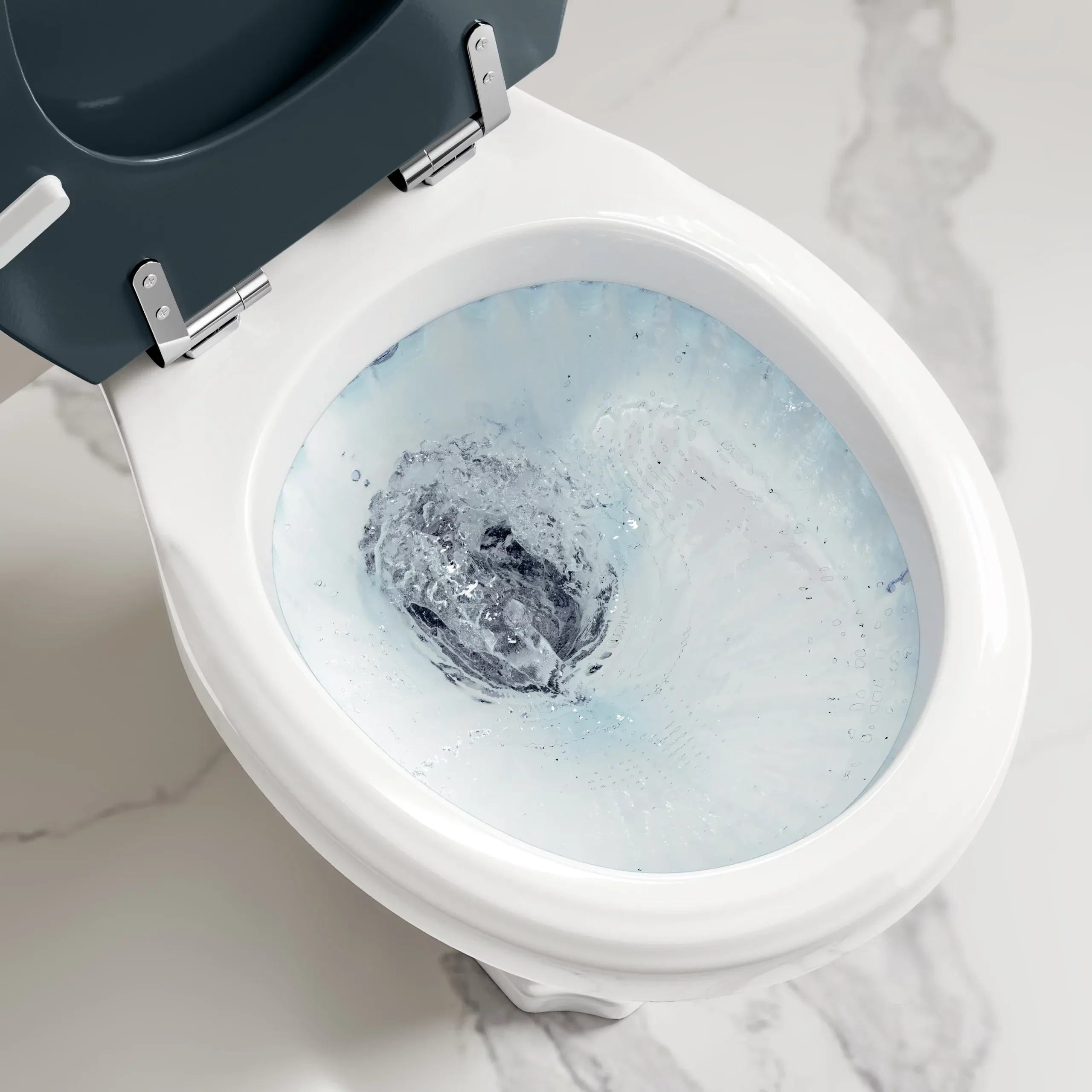
A slow toilet flush means the toilet bowl clears waste and refills water too slowly because water delivery, siphon action, or drain airflow is restricted, and the problem matters because slow flushing increases blockage risk, repeat flushing, overflow risk, and poor hygiene control. Slow flushing usually shows weak swirl, incomplete siphon pull, and delayed bowl clearance.
- Weak Siphon Action: Weak siphon action occurs when bowl water fails to accelerate into a full siphon. Waste removal becomes incomplete. Water movement looks sluggish rather than forceful.
- Low Flush Volume: Low flush volume means the tank releases insufficient water mass into the bowl. Water level sits below the marked fill line. Flapper closure happens too early or chain slack limits lift.
- Rim Jet Blockage: Rim jet blockage occurs when mineral scale narrows rim holes under the bowl rim. Water exits unevenly and loses swirl strength. Weak swirl reduces scouring of the bowl surface.
- Siphon Jet Blockage: Siphon jet blockage occurs when the main jet at the bottom of the bowl is partially blocked by scale or debris. Jet restriction reduces forward thrust into the trapway.
- Partial Drain Restriction: Partial drain restriction occurs when waste, paper, or foreign objects narrow the trapway or drain line. Water exits slowly and backs up in the bowl path.
- Vent Air Restriction: Vent air restriction occurs when roof vents or internal vent paths restrict airflow. Poor airflow prevents stable pressure equalisation. Siphon formation becomes weak or breaks early.
What Are The Most Common Causes Of A Slow Flushing Toilet?

A slow flushing toilet is most commonly caused by low tank water level, partial flapper lift, rim jet or siphon jet mineral blockage, partial trapway or drain restriction, or vent airflow restriction that weakens siphon force and slows bowl clearance. Cause diagnosis starts with observing flush strength, tank refill level, and bowl water movement. Water delivery faults reduce flush volume.
- Low Tank Level: Low tank level reduces flush volume because the tank releases less water into the bowl. The waterline sits below the marked fill line. Fill valve setting or float setting usually drives the level.
- Flapper Chain Slack: Flapper chain slack reduces flapper lift duration and shortens discharge time. Flapper closes early before full tank volume releases. Short discharge produces a slow, underpowered flush.
- Rim Jet Scaling: Rim jet scaling reduces swirl force because mineral deposits narrow rim outlet holes. Water flow becomes uneven around the rim. Reduced swirl weakens bowl wash and delays siphon start.
- Siphon Jet Scaling: Siphon jet scaling reduces thrust because the main jet at the bottom of the bowl becomes partially blocked. Reduced jet force weakens siphon initiation. Flush becomes slow and leaves waste behind.
- Trapway Restriction: Trapway restriction slows discharge because paper, waste, or foreign objects reduce internal diameter. Water exits slower and bowl clearance delays.
- Drain Line Build Up: Drain line build up slows outflow because grease, scale, or sludge narrows the pipe downstream of the toilet. Multiple fixtures may drain slowly when this cause exists.
How Do Water Pressure And Supply Issues Affect Toilet Flush Speed?
Water pressure and supply issues slow toilet flush speed by reducing tank refill rate, lowering tank water level, and limiting the volume and timing of water released into the bowl, which weakens siphon action and delays bowl clearance. Low supply flow extends refill time and leaves the tank underfilled.
- Low Supply Flow: Low supply flow slows tank refill and reduces readiness for the next full flush. Slow refill encourages partial flushes between uses. Partial flushes leave waste behind and increase repeat flushing.
- Partly Closed Stopcock: Partly closed stopcock restricts water delivery to the cistern. Reduced flow rate extends refill time. Low refill rate often leaves the tank below the correct waterline.
- Fill Valve Faults: Fill valve faults reduce refill efficiency through worn diaphragms, debris blockage, or sticking floats. Restricted inlet screens reduce incoming water. Incorrect float height sets a low fill level.
- Low Tank Waterline: Low tank waterline reduces flush volume because less water enters the bowl during discharge. Reduced volume weakens swirl and siphon pull. Marked fill lines indicate the correct target level.
- Restricted Supply Hose: Restricted supply hose slows delivery when internal liners collapse or fittings clog with sediment. Kinked hoses reduce cross-sectional flow.
- Intermittent Pressure Drops: Intermittent pressure drops cause inconsistent refill and inconsistent flush strength. Flush performance varies between morning and evening use.
What Role Does The Cistern Fill Valve Play In Slow Flushing?
The cistern fill valve controls flush speed indirectly by setting cistern refill rate and final water level, and slow flushing happens when low fill level or slow refill reduces the water volume released into the bowl and weakens siphon action. Incorrect float height leaves the cistern underfilled. Debris in the inlet restricts flow.
- Water Level Control: Water level control determines flush volume because the cistern releases the stored water mass during the flush. Low waterline reduces swirl strength and siphon initiation.
- Refill Rate: Refill rate affects flush consistency because slow refill encourages flushing before full fill completes. Partial cistern volume produces weak flush output. Slow refill also increases time between reliable flushes.
- Float Height Setting: Float height setting regulates the final cistern waterline. Float set too low stops filling early. Early shutoff reduces stored flush volume.
- Inlet Screen Debris: Inlet screen debris restricts incoming water at the valve entry point. Sediment reduces flow and slows refill. Reduced flow sometimes leaves the cistern below target before shutoff.
- Valve Seal Wear: Valve seal wear causes poor shutoff control and unstable fill behaviour. Worn seals lead to inconsistent fill levels. Inconsistent fill produces inconsistent flush strength. Replacing worn internals restores predictable filling.
- Stick And Stutter: Stick and stutter behaviour occurs when the valve mechanism sticks during fill cycles. Filling pauses and restarts.
How Can Mineral Deposits And Hard Water Cause Slow Toilet Flushing?

Mineral deposits and hard water cause slow toilet flushing by narrowing rim jets, blocking the siphon jet, roughening the bowl water path, and reducing flush velocity, which weakens siphon pull and slows bowl clearance. Limescale forms hardest at outlets where water accelerates and evaporates.
- Rim Jet Scaling: Rim jet scaling restricts rim hole diameter and reduces swirl strength. Water exits unevenly around the bowl rim. Weak swirl reduces bowl wash and delays siphon start. Uneven rim flow leaves waste behind.
- Siphon Jet Blockage: Siphon jet blockage reduces forward thrust into the trapway. Reduced thrust weakens siphon initiation and shortens siphon duration. Flush water exits slower and bowl clearance slows. Jet cleaning restores velocity and pull.
- Trapway Roughness: Trapway roughness increases friction when scale coats internal surfaces. Water loses speed as it passes through narrowed sections. Reduced speed weakens siphon stability.
- Jet Orifice Narrowing: Jet orifice narrowing reduces total flow volume delivered during the flush. Smaller openings increase resistance and reduce discharge rate. Lower discharge rate reduces kinetic energy in the bowl.
- Debris Capture Points: Debris capture points form when scale creates ledges and ridges. Paper catches on rough deposits. Partial obstructions build over time. Flow path narrows gradually until flush speed drops noticeably.
- Fill Valve Fouling: Fill valve fouling occurs when sediment and scale clog inlet screens and restrict refill flow. Slow refill encourages partial flushing before full fill. Low cistern waterline reduces flush volume.
What Is Toilet Trap Blockage And How Does It Slow Flushing?
Toilet trap blockage means a partial obstruction inside the toilet trapway or near the outlet reduces internal diameter, slows water and waste movement, and weakens siphon pull, which makes the flush sluggish and incomplete. Trap blockage often forms from paper buildup, limescale ridges, foreign objects, or deformable waste that catches on rough surfaces.
- Trapway Narrowing: Trapway narrowing slows flushing because reduced diameter increases flow resistance. Water speed drops as it passes the restriction. Lower speed weakens siphon stability.
- Paper Accumulation: Paper accumulation forms when excess paper compacts in bends of the trap. Compaction reduces effective diameter and slows discharge. Partial clearance may still occur, which hides the blockage.
- Foreign Objects: Foreign objects cause sudden slow flushing when items lodge in the trap bend. Common items include wipes, sanitary products, cotton buds, and small toys.
- Scale Ridge Build: Scale ridge build causes gradual slow flushing in hard water areas. Limescale creates ledges that catch paper fibres. Ledges grow into a stable restriction zone.
- Reduced Siphon Pull: Reduced siphon pull occurs because the restriction interrupts smooth water acceleration. Siphon formation becomes weak or breaks early. Bowl water level may rise temporarily during the flush.
- Early Warning Signs: Early warning signs include weak swirl, delayed clearance, and gurgling after flush. Water level may sit higher than normal after discharge. Plunging may give temporary improvement without full resolution.
How Do You Check If Your Toilet’s Flush Mechanism Is Faulty?
A faulty toilet flush mechanism causes slow flushing when the cistern releases too little water, releases water too slowly, or closes the outlet too early, which weakens siphon force and delays bowl clearance. Diagnosis starts inside the cistern with a visual and functional check. Correct operation shows full flapper lift, smooth chain movement, and a stable cistern waterline.
- Cistern Waterline: Cistern waterline must sit at the marked level or at the manufacturer-set line. Low waterline reduces flush volume and weakens swirl. Waterlines below target signals float or fill valve misadjustment.
- Flapper Seal Fit: Flapper seal fit must sit flat on the flush valve seat. Warped or hardened flappers leak and change refill behaviour. Poor seating also causes early closure during a flush. Correct seating supports full-volume discharge.
- Chain Length Check: Chain length check confirms the chain lifts the flapper fully without slack or binding. Excess slack closes the flapper early. Excess tension holds the flapper open and causes running water. Correct chain length delivers full discharge time.
- Handle Travel Test: Handle travel test confirms the handle moves freely and returns smoothly. Stiff handles reduce lift height. Loose handles reduce lift force transfer. Smooth travel supports consistent flapper lift on every flush.
- Flush Valve Movement: Flush valve movement must be vertical and unobstructed. Misaligned assemblies rub against the overflow tube. Rubbing reduces lift height and slows discharge. Clear movement supports rapid water release.
What Is The Difference Between Slow Filling And Slow Draining In Toilets?

Slow filling means the cistern refills water too slowly after a flush because the supply or fill valve restricts flow, while slow draining means the bowl clears waste too slowly during the flush because the jets, trapway, drain line, or vent airflow is restricted. Slow filling delays the next full-strength flush. Slow draining weakens the current flush and leaves waste behind. Symptoms differ by timing and sound.
- Timing Difference: Timing difference appears because slow filling happens after the flush, while slow draining happens during the flush. Slow filling shows long refill time and delayed readiness. Slow draining shows weak swirl and delayed bowl clearance.
- Symptom Location: Symptom location differs because slow filling occurs in the cistern and supply line, while slow draining occurs in the bowl outlet, trapway, and drain system. Cistern noise and slow rising waterline indicate slow filling.
- Common Causes Filling: Common causes filling include partly closed stopcock, kinked supply hose, debris in fill valve inlet screen, worn fill valve diaphragm, and low supply flow.
- Common Causes Draining: Common causes draining include rim jet scaling, siphon jet blockage, trapway restriction, drain line build up, and vent restriction.
- Effect On Flush Power: Effect on flush power differs because slow filling reduces power only on the next flush if flushing occurs before full refill, while slow draining reduces power on every flush immediately.
- Quick Confirmation Tests: Quick confirmation tests include a stopwatch refill test for filling and a bowl clearance observation for draining. Refill time over several minutes indicates supply restriction.
- Fix Priority: Fix priority starts with the phase that fails most consistently. Slow draining takes priority because overflow risk increases during weak evacuation.
How Does Cistern Water Level Affect Flush Performance?
Cistern water level controls flush performance because higher stored water volume releases more water mass and higher discharge energy into the bowl, which strengthens rim flow, siphon jet thrust, and siphon pull. Low water level produces weak swirl and slow clearance.
- Flush Volume Output: Flush volume output rises when cistern water level rises to the correct line. More volume enters the bowl during discharge. Higher volume increases swirl strength.
- Siphon Start Strength: Siphon start strength depends on fast delivery of sufficient water into the bowl throat. Low waterline reduces initial surge and delays siphon. Delayed siphon creates a slow flush and incomplete waste removal.
- Rim Jet Distribution: Rim jet distribution improves when cistern level supports full discharge pressure. Even rim flow creates a strong circular wash pattern. Low level causes uneven rim flow and weak scouring.
- Siphon Jet Thrust: Siphon jet thrust increases when discharge volume and timing are correct. The jet at the bottom of the bowl pushes water into the trapway. Reduced thrust weakens siphon pull.
- Early Flapper Drop: Early flapper drop reduces effective cistern water level during the flush. Early closure traps usable volume inside the tank. Short discharge weakens the siphon cycle.
What Are Dual Flush Toilets And Can They Cause Slow Flushing Issues?
Dual flush toilets use two flush volumes, a reduced flush for liquid waste and a higher flush for solid waste, and slow flushing occurs when the full flush volume fails to release or when the selected flush volume does not match the waste load. Dual flush systems rely on a split-button or lever mechanism that lifts a flush valve to different heights. Incorrect button action reduces lift height and shortens discharge time.
- Two Volume Design: Two volume design uses a low volume mode and a full volume mode. Low mode reduces water use per cycle. Full mode provides higher discharge energy for solids.
- Partial Lift Fault: Partial lift fault occurs when the full flush button fails to lift the flush valve fully. Reduced lift shortens discharge time. Short discharge weakens siphon pull. Slow clearance and repeat flushing follow.
- Button Linkage Wear: Button linkage wear reduces movement transfer between button and flush valve. Loose linkages create inconsistent lift height. Misalignment causes rubbing and sticking.
- Cistern Waterline Low: Cistern waterline low reduces both flush volumes because the tank stores less water. Full flush becomes underpowered. Reduced flush becomes ineffective for liquids.
- Flush Valve Sticking: Flush valve sticking occurs when scale and debris restrict vertical travel. Sticking prevents full opening and smooth closing. Restricted travel reduces discharge rate.
- User Selection Error: User selection error occurs when reduced flush mode is used for solid waste. Reduced volume cannot sustain a full siphon cycle on many toilets. Clearance slows and repeat flushing follows.
How Can You Diagnose A Blocked Toilet Pan Inlet?

A blocked toilet pan inlet means water from the cistern enters the bowl too slowly or unevenly because rim feed holes or the siphon jet inlet is restricted, and diagnosis matters because inlet restriction weakens swirl, delays siphon start, and causes slow flushing even when the cistern refills correctly. Diagnosis starts by separating slow filling from slow draining.
- Flush Pattern Check: Flush pattern check identifies weak swirl and uneven rim flow. Water should circulate evenly around the bowl. Weak flow on one side signals rim inlet restriction.
- Rim Hole Scan: Rim hole scan checks for blocked rim jets under the bowl rim. Use a torch to inspect each outlet hole. Dark, crusted, or narrowed holes signal limescale restriction.
- Siphon Jet View: Siphon jet view checks the main jet opening at the bottom of the bowl. A strong jet pushes water into the trapway. Weak jet output indicates partial blockage.
- Cistern Level Confirm: Cistern level verifies correct waterline before blaming the pan inlet. Low cistern level reduces flow at every inlet point. Correct waterline with weak bowl entry signals inlet restriction.
- Refill Timing Note: Refill timing note separates supply issues from inlet issues. Normal refill with slow flush points to bowl-side restriction. Slow refill with slow flush points to supply-side restriction.
What Should You Do If Your Toilet Flush Is Weak But Not Completely Blocked?
A weak but not blocked toilet flush requires restoring full cistern water level, ensuring full flush valve lift, clearing rim and siphon jet restrictions, and removing partial trapway buildup because these fixes increase flush volume, increase discharge speed, and stabilise siphon pull. Weak flush often shows slow swirl, delayed clearance, and occasional residue without a full backup. Quick checks start in the cistern because low volume and early closure produce the same symptom pattern as mild blockage.
- Set Correct Waterline: Set correct waterline by adjusting the fill valve float to the marked level. Low waterline reduces flush volume and weakens siphon start. Correct waterline increases swirl and improves clearance speed.
- Increase Valve Lift: Increase valve lift by correcting flapper chain slack or dual flush linkage alignment. Early closure traps usable water in the cistern. Full lift sustains discharge long enough to form a full siphon.
- Clean Rim Jets: Clean rim jets by removing limescale and debris from rim outlet holes. Even rim flow restores circular wash and accelerates siphon initiation. Uneven jets create weak zones that leave residue.
- Clear Siphon Jet: Clear siphon jet by removing scale and debris from the main jet opening at the bottom of the bowl. Strong jet thrust drives water into the trapway. Weak thrust produces a slow flush even with a full tank.
- Plunge Correctly: Plunge correctly using a flange plunger with a sealed bowl fit. Forceful downward strokes increase pressure through the trapway. Controlled strokes dislodge soft partial restrictions.
- Use Toilet Auger: Use toilet auger when weak flush persists after plunging. Auger reaches beyond the bowl bend to clear paper mats and minor obstructions. Mechanical clearing restores internal diameter. Correct auger use avoids scratching porcelain.
How Do You Check And Clean Toilet Rim Holes For Improved Flushing?
Cleaning toilet rim holes improves flushing by restoring even water distribution around the bowl rim, which increases swirl strength, speeds siphon start, and reduces residue after a flush. Rim holes block when limescale and debris narrow outlet diameter. Blockage creates uneven flow, weak wash, and slow clearance. Diagnosis starts by confirming cistern waterline and flush valve lift. Cleaning focuses on loosening the scale, clearing each outlet, and flushing debris through.
- Flow Pattern Check: Run a flush and watch rim flow around the bowl. Uneven streams and dry rim sections indicate blocked rim holes. Weak swirl and delayed siphon start usually accompany uneven rim flow.
- Torch Rim Scan: Use a torch to inspect under the rim and identify dark crust, white scale, and narrowed outlets. Visual confirmation helps target the worst holes first.
- Scale Softening Step: Apply white vinegar to a cloth and press the cloth under the rim for 20–30 minutes. Acid contact loosens calcium deposits and reduces scraping force needed. Repeat application improves heavy scale release.
- Hole Clearing Method: Clear each rim hole using a plastic cable tie, wooden cocktail stick, or nylon brush. Metal picks scratch porcelain and worsen future build-up. Work hole-by-hole to remove loosened scales.
- Siphon Jet Check: Check the siphon jet at the bottom of the bowl because rim cleaning alone may not restore flush speed. Weak thrust from the siphon jet still produces a slow flush.
What Is The Flush Valve And How Can It Cause Slow Flushing?

The flush valve is the cistern outlet assembly that releases stored cistern water into the toilet bowl, and slow flushing happens when the flush valve opens partially, closes too early, leaks continuously, or sticks, which reduces flush volume and weakens siphon action. Flush valve performance controls discharge speed and discharge duration. Full opening creates a rapid surge into the bowl. Early closure creates a weak, short flush. Leakage into the bowl lowers effective cistern volume.
- Outlet Release Control: Outlet release control determines how quickly water leaves the cistern. Restricted opening slows discharge rate. Slow discharge reduces bowl swirl and delays siphon start.
- Early Closure Pattern: Early closure pattern occurs when the valve drops before the cistern empties. Short discharge leaves usable water in the tank. Reduced discharge duration weakens siphon pull.
- Chain And Linkage: Chain and linkage issues reduce lift height and lift time. Excess slack produces partial lift and early closure. Excess tension holds the valve open and wastes water.
- Seal Surface Wear: Seal surface wear reduces stability because warped seals shift during the flush. Poor seal seating can cause continuous leakage. Continuous leakage lowers cistern level and reduces flush volume.
- Sticking Movement: Sticking movement occurs when scale and debris restrict vertical travel. Restricted travel produces partial opening and slow discharge. Sticky valves often show inconsistent flush strength.
- Overflow Interaction: Overflow interaction reduces effective flush volume when water level runs into the overflow tube due to misadjustment. Overflow flow wastes stored cistern water. Reduced usable volume weakens flush power.
What DIY Methods Can You Use To Improve Slow Toilet Flushing?
DIY slow toilet flushing improvement starts by restoring correct cistern water level, ensuring full flush valve lift, clearing rim and siphon jet restrictions, and removing partial trapway buildup because these actions increase flush volume, increase discharge speed, and stabilise siphon pull. Diagnosis must separate slow filling from slow draining. Cistern checks come first because low volume mimics blockage. Jet cleaning comes next because mineral deposits narrow outlets and weaken swirl.
- Set Cistern Level: Set cistern level by adjusting the float or fill valve to the marked waterline. Low waterline reduces flush volume and weakens siphon start. Correct waterline increases swirl strength and clearance speed.
- Improve Valve Lift: Improve valve lift by removing chain slack and ensuring the flush valve opens fully and stays open long enough. Early closure traps usable water inside the cistern. Full lift sustains discharge and strengthens siphon pull.
- Clean Rim Holes: Clean rim holes by inspecting under the rim and clearing blocked outlets with a plastic cable tie or nylon brush. Blocked rim holes reduce swirl and bowl wash.
- Clear Siphon Jet: Clear siphon jet by removing scale and debris from the main jet opening at the bottom of the bowl. Weak jet thrust produces a slow flush even with a full cistern. Restored thrust accelerates water into the trapway.
- Plunge With Seal: Plunge with seal using a flange plunger that fits the toilet outlet tightly. A tight seal converts effort into pressure changes inside the trapway. Controlled strokes dislodge soft partial restrictions.
How Do You Use A Plunger Effectively To Address Slow Flushing?
Effective plunging improves slow flushing by creating pressure and suction changes inside the toilet trapway that dislodge soft partial restrictions and restore flow velocity for stronger siphon action. Correct plunger type and a tight seal control results. Water level must cover the plunger cup to transfer force into the trapway.
- Choose Correct Plunger: Choose a flange plunger designed for toilets because the extended rubber sleeve seals the trapway opening. Cup-only sink plungers leak air and reduce force transfer. A tight seal concentrates pressure changes inside the trapway. Correct tool choice improves clearing speed.
- Set Water Level: Set water level so the plunger cup sits fully submerged. Water coverage improves pressure transfer and reduces air leakage. Add water from a bucket if the bowl level is too low. Stop adding water when the bowl approaches overflow height.
- Seal The Outlet: Seal the outlet by pressing the flange into the drain opening and tilting slightly to expel trapped air. Air gaps reduce suction strength and reduce clearing effect. Firm downward pressure creates a stable seal. A stable seal prevents splashback and improves control.
- Use Controlled Strokes: Use controlled strokes with a slow push and a firm pull to create alternating pressure and suction. Rapid stabbing wastes energy and breaks the seal. Ten to fifteen strokes form one effective set. Pause between sets to let water movement settle.
- Target The Trapway: Target the trapway by keeping the plunger centred over the drain opening throughout the stroke cycle. Off-centre plunging loses seal and reduces force. Consistent alignment drives pressure waves through the S-bend. Trapway pressure changes dislodge soft mats of paper and waste.
- Check Flush Response: Check flush response by flushing once after one plunging set and watching bowl clearance speed. Rising bowl water signals remaining restriction and overflow risk. Faster swirl and faster evacuation signal improvement. Repeat one set when performance improves but remains weak.
When Should You Use A Toilet Auger For Slow Flushing Problems?

Use a toilet auger when slow flushing persists after correct cistern water level, correct flush valve lift, and effective plunging, because an auger removes partial trapway obstructions and lodged objects beyond the bowl bend that plunging pressure changes cannot shift. Auger uses repeated weak flush with delayed clearance. Auger use suits frequent blockage recurrence.
- After Plunger Failure: After plunger failure means two to three sealed plunging sets do not improve clearance speed. No change in swirl strength signals a fixed obstruction. Bowl water rising during test flush signals ongoing restriction. Auger clearing becomes the next safe mechanical step.
- Recurring Weak Flush: Recurring weak flush indicates a partial obstruction that allows some flow but reduces velocity. Symptoms return within days after plunging. Paper mats and small debris often cause this pattern. Auger removal restores consistent diameter through the trapway.
- Foreign Object Signs: Foreign object signs include sudden flush weakness after an incident and abnormal resistance during plunging. Items such as wipes, sanitary products, cotton buds, and toys lodge at the trap bend. Object lodging causes repeated slow draining without full blockage. Auger hook retrieval addresses lodged items safely.
- Gurgling With Delay: Gurgling with delay indicates siphon instability from restriction or airflow issues. Weak evacuation combined with gurgling often points to trapway restriction when other fixtures drain normally. Auger clearing confirms trapway condition. Persistent gurgling after clearing suggests vent investigation.
- Slow Drain Only: Slow drain only means cistern refills normally but bowl clearance remains slow. Normal refill removes supply issues from the diagnosis. Drain phase weakness points to bowl jets, trapway, or drain line. Auger use targets trapway and near-line restrictions.
- Avoid Chemical Risk: Avoid chemical risk because caustic drain cleaners can damage seals and rarely remove solid obstructions. Chemical use can complicate auger work and splash hazards. Mechanical clearing targets the obstruction directly. Auger use reduces repeat chemical exposure.
How Can You Descale A Toilet To Restore Flush Speed?
Descaling a toilet restores flush speed by dissolving limescale that narrows rim holes, restricts the siphon jet, roughens the trapway surface, and weakens siphon action. Descaling works best when contact time targets scale zones under the rim and inside jet openings. Mechanical agitation improves deposit removal after softening. Controlled flushing removes loosened fragments.
- Identify Scale Zones: Identify scale zones by inspecting under the rim, around rim holes, and at the siphon jet opening. White crust and brown staining often indicate mineral buildup. Uneven rim flow during flushing signals rim restriction. Weak siphon jet output signals jet scaling.
- Use Acid Cleaner: Use acid cleaner by applying white vinegar or a citric acid solution to scale areas with a cloth contact method under the rim. Contact time of 20–30 minutes loosens deposits. Repeat application improves thick buildup. Avoid mixing cleaners to prevent hazardous reactions.
- Brush After Soak: Brush after soak using a toilet brush and a nylon detail brush for rim outlets. Softened scale releases with less force. Gentle brushing reduces porcelain scratching. Clearing each rim hole improves even water distribution.
- Clear Jet Opening: Clear jet opening by brushing and wiping the siphon jet area at the bottom of the bowl. Jet restriction reduces thrust into the trapway. Restored jet thrust strengthens siphon start. Jet cleaning improves clearance speed when rim cleaning alone fails.
- Flush Debris Out: Flush debris out by flushing once after cleaning to move loosened deposits through the trapway. Stop flushing if bowl water rises. Loosened fragments can temporarily restrict flow. Controlled flushing prevents overflow and confirms drainage stability.
What Chemical Treatments Are Safe For Slow Flushing Toilets?
Safe chemical treatments for slow flushing toilets focus on dissolving limescale, loosening organic buildup, and reducing debris adhesion without damaging seals, glazing, or pipe materials, and safe use depends on correct product type, correct contact time, and strict non-mixing rules. Slow flushing usually improves when rim holes and siphon jet scaling are reduced. Chemical use must support mechanical cleaning, not replace mechanical clearing.
- White Vinegar Soak: White vinegar soak improves flush speed by dissolving limescale around rim holes and siphon jet outlets. Cloth contact under the rim improves scale contact time. Soak time of 20–30 minutes loosens deposits for brushing.
- Citric Acid Solution: Citric acid solution removes calcium scale efficiently and produces less aggressive fumes than stronger acids. Solution application under the rim targets rim jets directly. Contact time supports deposit softening before rim hole clearing.
- Descaling Toilet Gel: Descaling toilet gel clings to vertical surfaces and stays in contact with scale zones longer than thin liquids. Gel application under the rim targets rim outlets and the waterline ring. Longer dwell time improves mineral dissolution.
- Enzyme Based Cleaner: Enzyme based cleaner supports slow flushing linked to organic film and mild sludge in the trapway. Enzymes work slowly and need overnight contact time. Enzymes do not clear foreign objects or hard scale.
- Oxygen Bleach Cleaner: Oxygen bleach cleaner targets organic staining and biofilm without the same corrosion profile as harsh caustics. Oxygen release helps lift residue from bowl surfaces. Oxygen bleach does not dissolve heavy limescale effectively.
- Avoid Caustic Openers: Avoid caustic openers when slow flushing suggests a partial trap or foreign object restriction. Caustics increase splash hazard during plunging or augering. Caustics can harm seals and plastics with repeated use.
- Never Mix Chemicals: Never mix chemicals because mixing acids with bleach releases dangerous gases and mixing cleaners increases heat and splash risk.
How Can A Faulty Flush Handle Cause Slow Toilet Flushing?

A faulty flush handle causes slow toilet flushing when handle movement fails to lift the flush valve fully or fails to keep the flush valve open long enough, which reduces cistern discharge volume and weakens siphon action. Handle faults often create a partial flush pattern that looks like a blockage. Loose handles reduce force transfer to the linkage. Stiff handles reduce lift height.
- Loose Handle Mount: Loose handle mount reduces leverage and produces incomplete lift. Handle wobble increases and lift force decreases. Partial lift shortens discharge time.
- Bent Handle Arm: Bent handle arm reduces chain pull alignment and limits lift height. Arm misalignment causes rubbing against the cistern wall or overflow tube. Reduced lift weakens the flush surge.
- Chain Slip And Slack: Chain slip and slack cause early valve closure because the chain fails to hold the flapper open. Excess slack produces a short flush and slow bowl clearance. Correct chain length keeps minimal slack while allowing full closure.
- Handle Return Failure: Handle return failure keeps the flush valve from resetting correctly. Valve seats poorly and leaks water into the bowl. Leaking reduces cistern water level and reduces flush volume.
- Binding Movement: Binding movement occurs when the handle spindle sticks or when the arm catches on internal parts. Binding reduces lift speed and lift height. Slow lift reduces discharge rate and delays siphon start.
What Is Toilet Fill Time And How Does It Relate To Slow Flushing?
Toilet fill time is the duration required for the cistern to refill from empty to the correct waterline after a flush, and slow flushing occurs when long fill time leads to underfilled cistern volume and weak flush power during the next use. Fill time affects readiness for a full-strength flush. Long fill time increases partial flush frequency. Partial flush volume weakens siphon pull and slows bowl clearance.
- Fill Time Definition: Fill time definition describes the minutes and seconds from flush start to fill valve shutoff at the correct waterline. Correct shutoff occurs without overflow tube discharge. Stable fill time produces predictable flush readiness.
- Normal Refill Behaviour: Normal refill behaviour shows steady water entry and smooth waterline rise. Shutoff happens at the same level each cycle. Stable refill supports consistent flush strength.
- Underfilled Flush Risk: Underfilled flush risk increases when flushing occurs before the cistern reaches the correct waterline. Partial tank volume releases less water mass. Less mass reduces swirl and siphon start strength.
- Stopcock Restriction: Stopcock restriction increases fill time when the supply valve is partly closed or stiff. Reduced flow rate slows cistern refill. Full opening restores normal refill speed.
- Fill Valve Restriction: Fill valve restriction increases fill time through debris in the inlet screen or worn internal seals. Restricted inlet reduces flow even with good supply. Cleaning screens restores flow.
- Supply Hose Limitation: Supply hose limitation increases fill time when hoses kink, clog, or collapse internally. Restricted hoses reduce cross-sectional flow. Hose replacement restores stable delivery.
What Is The Impact Of Low Water Pressure On Toilet Flushing Performance?
Low water pressure impacts toilet flushing performance by slowing cistern refill and reducing the chance of a fully filled cistern at the time of flushing, which reduces flush volume and weakens siphon action during use. Toilet flush discharge comes from stored cistern volume, not direct mains pressure, so low pressure mainly affects refill speed and final waterline. Low pressure combined with a restrictive fill valve or partly closed stopcock increases underfilled flush events.
- Refill Slows Down: Refill slows down when low pressure reduces incoming flow rate through the fill valve. Slow refill delays readiness for a full flush. Early flushing on a partially filled cistern reduces discharge volume.
- Waterline Drops: Waterline drops when low pressure cannot overcome fill valve restriction fast enough, especially with debris in the inlet screen. Low waterline reduces stored flush volume. Reduced stored volume produces a short, weak flush.
- Partial Flush Behaviour: Partial flush behaviour increases when users flush before refill completes. Two consecutive uses close together often trigger an underfilled flush. Underfilled flush leaves waste behind and encourages repeat flushing.
- Fill Valve Sensitivity: Fill valve sensitivity increases because many fill valves deliver less flow under low pressure, and minor debris causes larger flow reduction. Inlet screen contamination reduces effective pressure further. Cleaning or replacing the valve restores normal refill behaviour.
- Stopcock Restriction Compounds: Stopcock restriction compounds low pressure by adding extra resistance in the supply path. Partly closed stopcocks reduce flow further. Full opening often produces a noticeable refill improvement.
- Supply Hose Losses: Supply hose losses increase when hoses kink or when internal liners collapse. These faults reduce flow and mimic low pressure. Hose replacement restores delivery and reduces refill time.
How Do You Know If Your Toilet Needs Professional Plumbing Attention?

Professional plumbing attention becomes necessary when slow flushing continues after cistern water level correction, flush valve lift correction, rim and siphon jet cleaning, and safe mechanical clearing, because persistent slow flushing often signals drain line obstruction, vent failure, internal toilet damage, or joint leakage. Professional work prevents overflow damage and hidden leaks. Professional diagnosis identifies blockage location beyond the toilet trapway.
- Repeated Overflow Risk: Repeated overflow risk appears when bowl water rises during flushing or plunging attempts. Rising water signals a restriction that can block fully. Multiple flush attempts increase flood probability.
- Multiple Fixtures Slow: Multiple fixtures slow indicates a main drain or branch drain restriction rather than a single toilet issue. Slow sinks, slow baths, and gurgling drains point to wider pipework impact. Toilet-only fixes do not resolve shared line restrictions.
- Persistent Gurgling Sounds: Persistent gurgling sounds indicate airflow imbalance in the drain system. Vent restriction often creates negative pressure and siphon instability. Slow flushing with gurgling often returns after cleaning attempts.
- Water Leaks Visible: Water leaks visible include moisture at the toilet base, damp flooring, or staining near supply connections. Leaks can indicate failed seals or cracked porcelain. Hidden leaks rot subfloors and create mould risk.
- Auger Resistance Hard: Auger resistance hard occurs when an auger hits a solid obstruction that does not shift. Foreign objects lodged deep in the trapway or beyond can resist DIY removal. Forcing tools can crack porcelain or damage pipe joints.
- Flush Parts Damage: Flush parts damage includes cracked overflow tubes, loose flush valve seats, warped cistern fittings, or unstable mounting hardware. Damaged parts cause inconsistent discharge volume and ongoing slow flushing.
When Should You Replace A Slow Flushing Toilet Rather Than Repair It?
Replace a slow flushing toilet when repeated slow flushing persists after correct cistern setup and drain clearing, when porcelain or internal waterways are damaged, or when repair cost and downtime exceed the value of fitting a modern toilet with reliable flush performance. Replacement becomes the practical option when the toilet cannot sustain stable siphon action due to design limits or irreversible restriction inside glazed channels.
- Cracked Porcelain: Cracked porcelain requires replacement because cracks around the bowl, base, or cistern compromise structural integrity. Hairline cracks can leak intermittently under load. Base cracks can saturate flooring and cause odour.
- Internal Waterway Block: Internal waterway block suggests mineral buildup inside rim channels and internal jets that cannot be cleared effectively. Persistent weak rim flow after repeated descaling indicates restricted internal passages. Restricted passages weaken the swirl permanently.
- Repeated Blockage Cycle: Repeated blockage cycle indicates trapway geometry or downstream drainage issues that defeat short-term fixes. Frequent plunging and augering become routine. Waste clearance remains inconsistent.
- Seat And Seal Failures: Seat and seal failures include recurring leaks at the flush valve seat, persistent running water, and repeated gasket seepage. Constant leakage reduces effective flush volume and increases water cost.
- Repair Cost Threshold: Repair cost threshold is reached when repeated parts, call-outs, or time spent exceeds the cost of a new toilet installation. Multiple component swaps with no performance stability indicate deeper issues. Replacement consolidates costs into one controlled job.
- Old Inefficient Design: Old inefficient design applies when the toilet needs multiple flushes for normal waste loads even after tuning. Weak siphon action becomes a normal behaviour on some older models.
What Are The Cost Implications Of Repairing Vs. Replacing A Slow Flushing Toilet?

Repairing a slow flushing toilet usually costs less when the fault is cistern setup, fill valve, flush valve, or minor trapway restriction, while replacing a slow flushing toilet usually costs more upfront but reduces repeat call-outs when porcelain damage, internal waterway restriction, or recurring drain issues persist. Repair cost stays low when parts are standard and access is easy. Repair cost rises when drain clearing and diagnostics become necessary.
- Minor DIY Repair Cost: Minor DIY repair cost typically includes small parts and consumables, such as a fill valve, flush valve seal, flapper, or linkage parts. Typical spend range sits around £5–£40 depending on parts and quality. Tool cost stays low when a basic adjustable spanner and screwdriver already exist. DIY time cost increases when diagnosis is uncertain.
- Common Plumber Repair Cost: Common plumber repair cost typically includes call-out plus labour for cistern part replacement or basic clearing. Typical spend range sits around £80–£200 depending on location, access, and time onsite. Cost rises when multiple visits occur due to recurring symptoms.
- Drain Clearing Cost: Drain clearing cost increases when slow flushing links to downstream restriction. Basic rodding or local clearance often costs more than cistern repairs. Typical spend range sits around £120–£300 for standard clearing work.
- Parts Replacement Cost: Parts replacement cost stays moderate for standard valves but increases for branded concealed cistern components and specialised dual-flush assemblies. Hidden cistern access increases labour time. Mis-matched parts cause repeat visits and added cost.
- Toilet Replacement Cost: Toilet replacement cost includes the toilet pan and cistern, new close-coupling kit, isolation valve adjustments, and labour. Typical supply-only cost ranges widely, commonly £100–£400 for the toilet unit depending on design.
How Do You Prevent Future Slow Flushing Problems Through Maintenance?
Slow flushing prevention comes from keeping cistern water level correct, keeping flush valve lift full, keeping rim holes and the siphon jet clear of limescale, and preventing trapway restrictions through correct use and periodic mechanical cleaning. Maintenance targets the cistern, the bowl jets, and the drain path in a fixed order. Early action prevents scale from narrowing outlets.
- Monthly Visual Checks: Monthly visual checks include confirming the cistern waterline sits at the marked level and confirming no water runs into the overflow tube. A stable waterline maintains flush volume. Overflow flow wastes usable volume and weakens flushing.
- Flush Valve Service: Flush valve service includes checking chain slack, handle travel, and valve lift height. Full lift sustains discharge long enough for a full siphon cycle. Early closure creates weak flushing and repeat flushing.
- Rim Hole Cleaning: Rim hole cleaning prevents limescale narrowing and uneven rim flow. Torch inspection under the rim identifies early deposits. Gentle clearing using a plastic cable tie removes soft buildup.
- Siphon Jet Cleaning: Siphon jet cleaning preserves forward thrust into the trapway. Jet blockage reduces siphon initiation speed. Light brushing and descaling prevents scale hardening.
- Descale Schedule: Descale schedule uses periodic vinegar or citric acid treatment in hard water areas to reduce mineral buildup. Controlled contact time targets rim and jet outlets. Brushing after soaking removes softened deposits.
- Usage Controls: Usage controls reduce trapway restrictions by avoiding wipes, sanitary products, cotton buds, and excessive paper loads. Single flush loads reduce paper mat risk.
Summing Up
Slow toilet flushing improves when the root cause is fixed in the correct order: cistern volume first, flush mechanism second, bowl jets third, and the trapway and drain path last. A correct cistern waterline and a full flush valve lift provide the water volume and discharge speed that start a strong siphon. Clean rim holes and a clear siphon jet restore swirl and thrust, which stabilise siphon action and speed bowl clearance. Partial trapway restrictions require mechanical clearing because paper mats, foreign objects, and scale ridges slow flow and break siphon pull.
Slow filling and slow draining need different fixes. Slow filling points to the stopcock, supply hose, and fill valve. Slow draining points to rim and siphon jet scaling, trap blockage, downstream drain buildup, or vent airflow restriction. Safe DIY work uses a flange plunger with a tight seal, then a toilet auger when plunging does not change flush speed. Chemical treatment stays focused on descaling for limescale and enzyme cleaners for organic film, and chemical mixing stays avoided.
Professional plumbing becomes the right option when overflow risk repeats, multiple fixtures drain slowly, gurgling persists after cleaning, or obstructions resist augering. Toilet replacement becomes the practical option when porcelain cracks exist, internal waterways remain restricted after repeated descaling, or repair spend keeps rising without stable performance. Long-term flush speed stays stable when cistern level stays correct, flush valve parts move freely, rim holes and siphon jets stay clear in hard water areas, and non-flushable items stay out of the toilet.