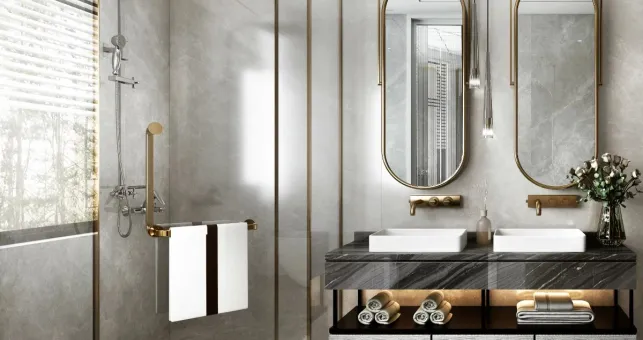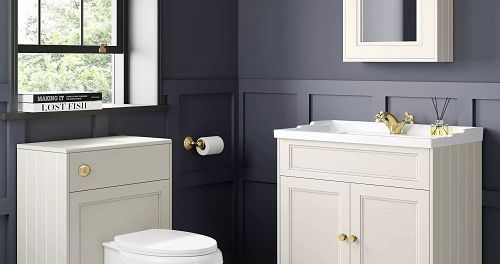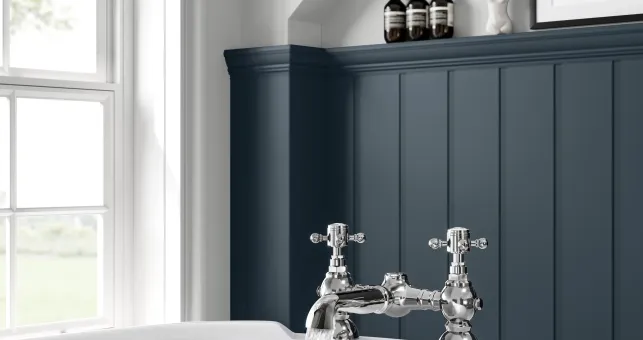
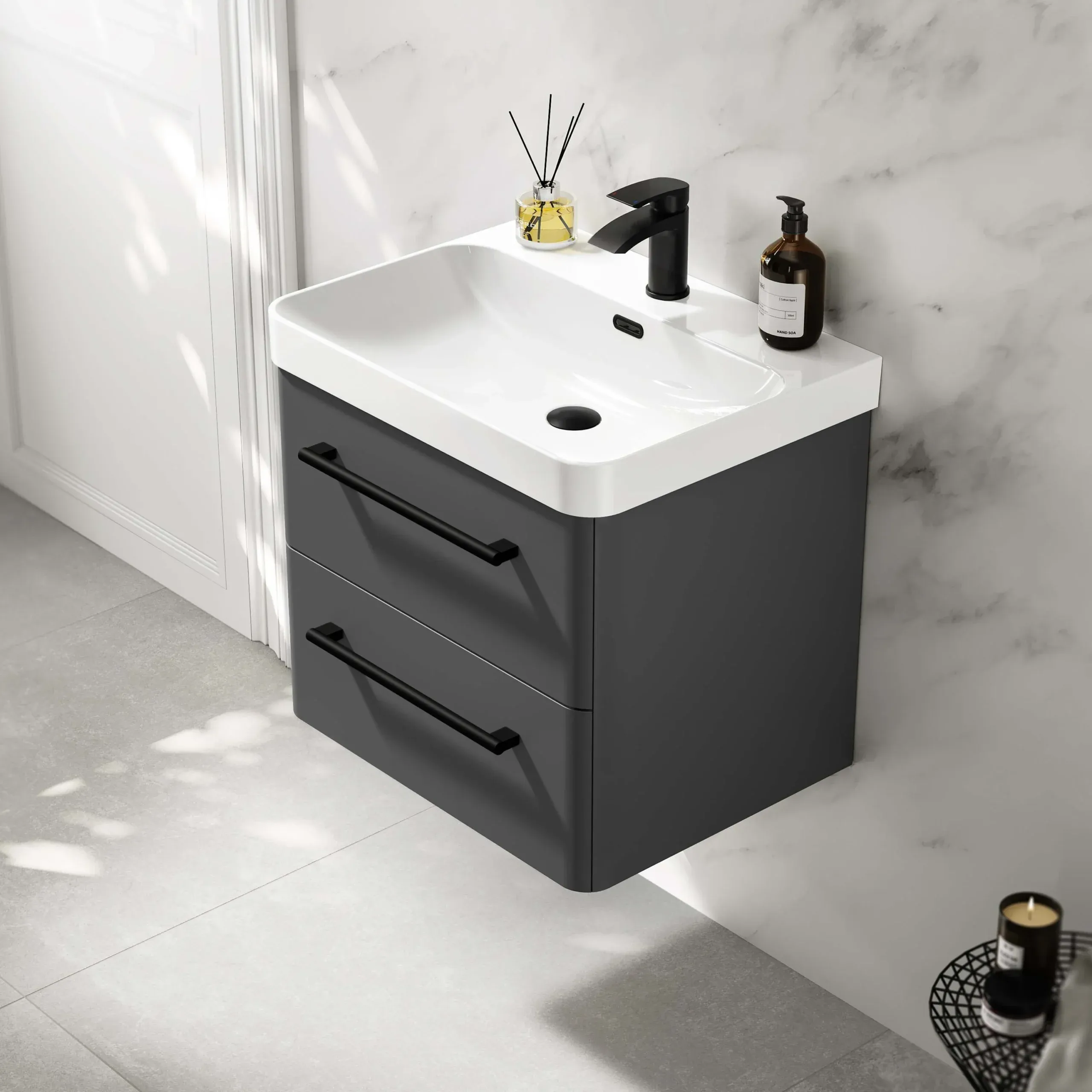
The best colour for a bathroom vanity in 2026 is a warm, nature-led shade: sage or olive green, inky blue, earthy clay, or real wood tones. Stark white and cool grey are giving way to colours that feel calmer and more personal.
Your vanity is often the biggest block of colour in a UK bathroom. It sits at eye level, it’s the first thing you see when you walk in, and it’s far easier to change than a suite or a floor. That makes it the perfect place to bring in a trend without committing the whole room to it.
The quick answer:
• Best all-rounder: sage or olive green
• Most on-trend: indigo and deep blue (Dulux’s 2026 Colours of the Year are a family of indigos)
• Warmest choice: terracotta, clay or caramel
• Most timeless: warm oak or walnut wood grain
• Best for small or dark rooms: warm white or soft off-white
• Boldest statement: matt black or charcoal
The top 7 bathroom vanity colours for 2026
1. Sage, olive and moss green
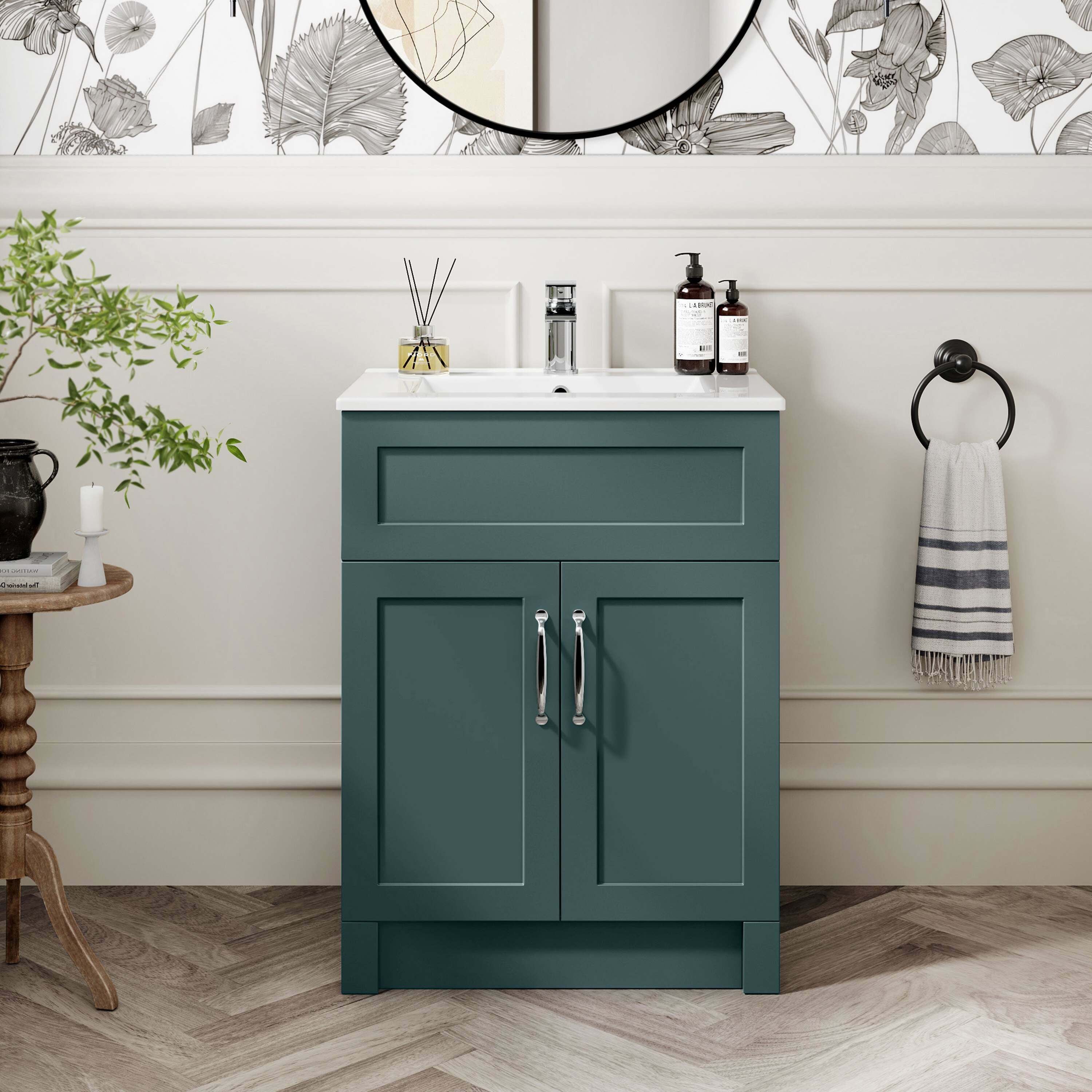
Green is the safest on-trend choice for 2026. Muted greens feel calm, link the bathroom to the outdoors, and sit comfortably with both modern and period features. Sage is soft and airy; olive and moss are deeper and more grown-up.
• Pair with: warm white or cream wall tiles, marble-effect porcelain, terrazzo floors, natural oak shelving
• Hardware: brushed brass for warmth, matt black for contrast
• Best for: family bathrooms, en-suites and anyone wanting colour that won’t date quickly
2. Indigo, navy and deep blue

Blue is having a real moment. Dulux chose a family of indigos as its Colours of the Year 2026: Free Groove, Mellow Flow and Slow Swing. Blue naturally suits water, and a navy vanity gives definition without the heaviness of black.
• Pair with: white metro or zellige-style tiles, light grey marble effects, neutral porcelain floors
• Hardware: brushed brass or polished nickel
• Best for: period homes, Shaker-style units and well-lit main bathrooms
3. Terracotta, clay, caramel and rust
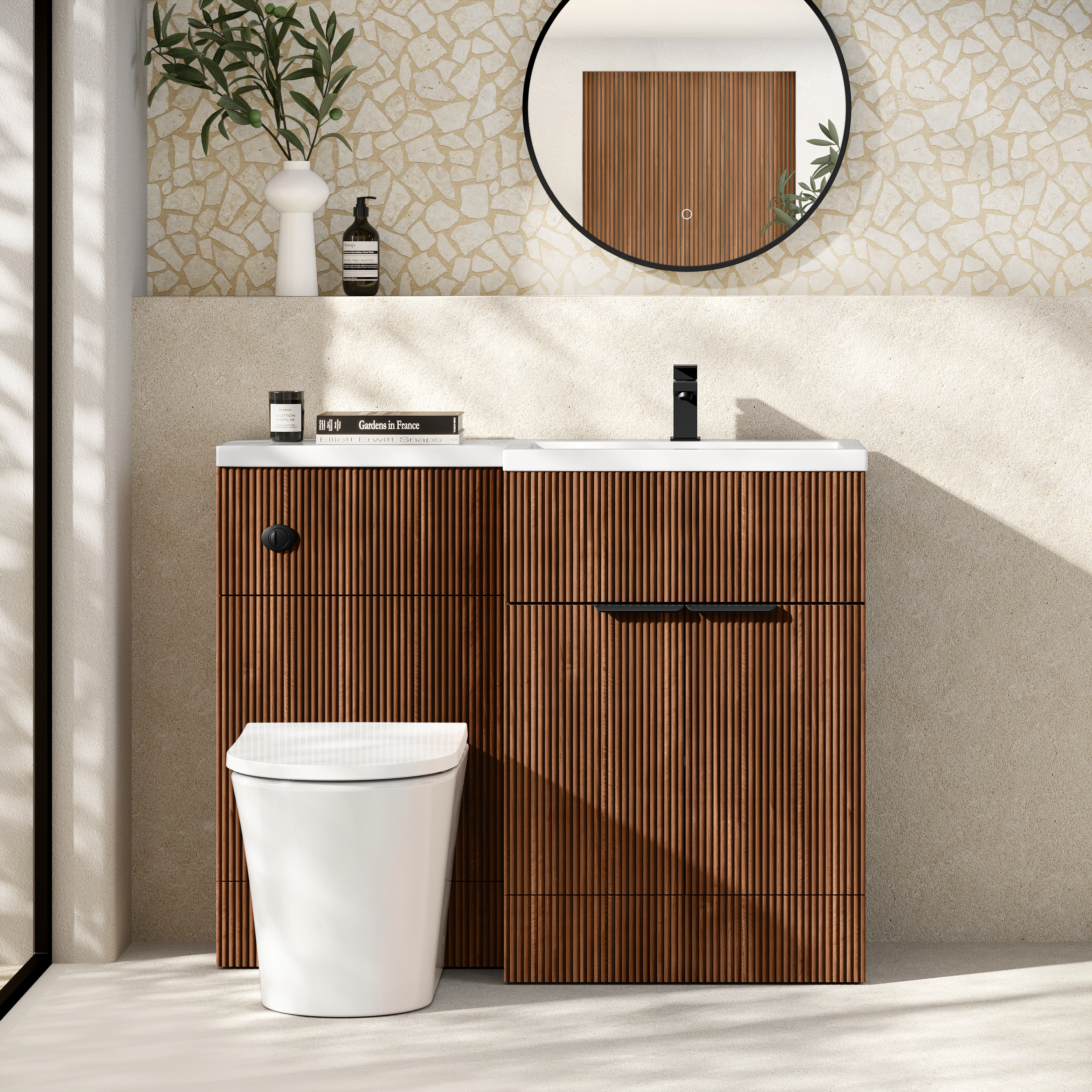
Earthy, sun-baked shades are the warmest vanity trend of the year. Designers describe them as grounding and reassuring, a clear move away from cold, clinical bathrooms.
• Pair with: stone-effect tiles, terrazzo, sand or beige porcelain, handmade-look tiles
• Hardware: bronze or brushed brass
• Best for: Mediterranean or boho schemes, cloakrooms and rooms that need warming up
4. Warm wood: oak, walnut and teak-look finishes
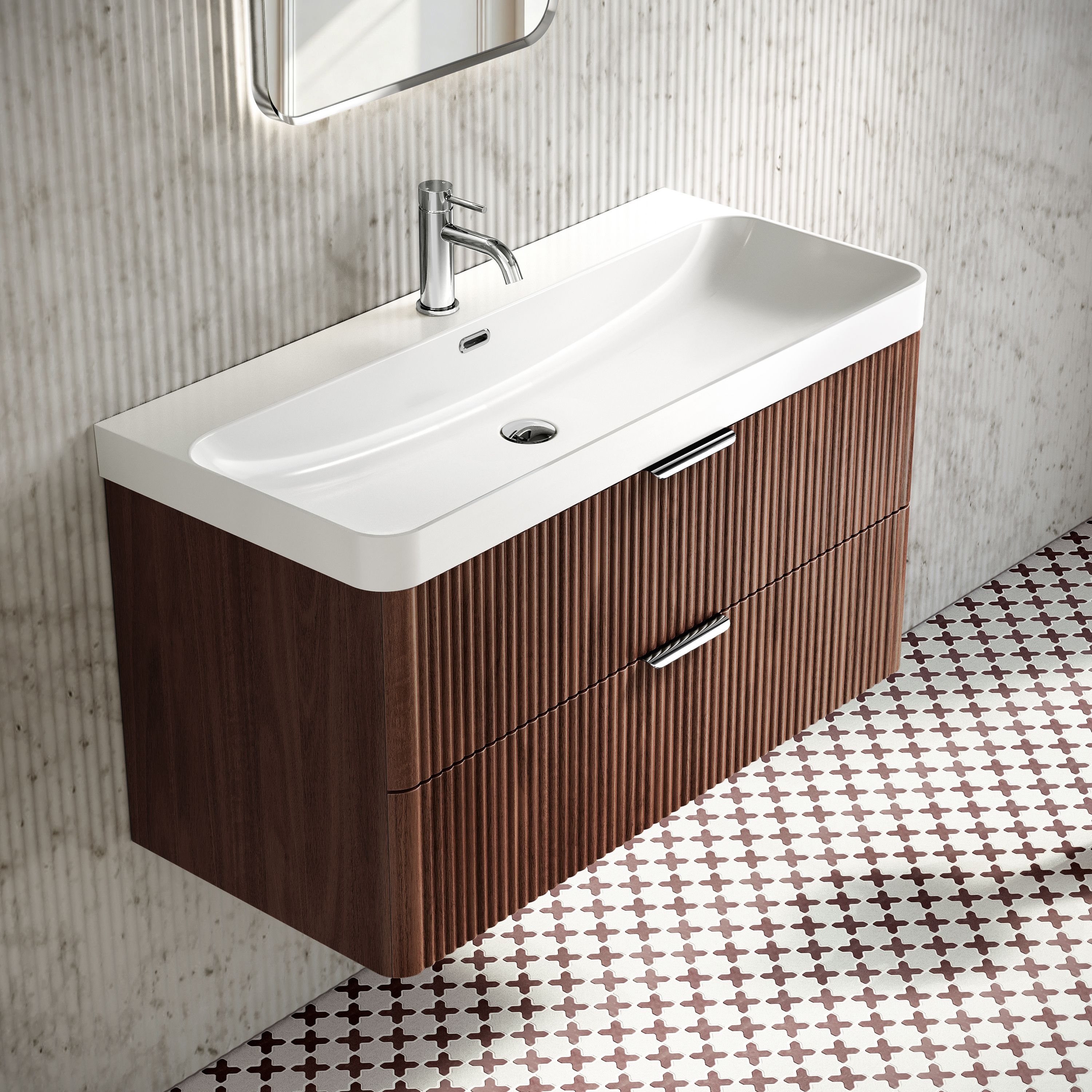
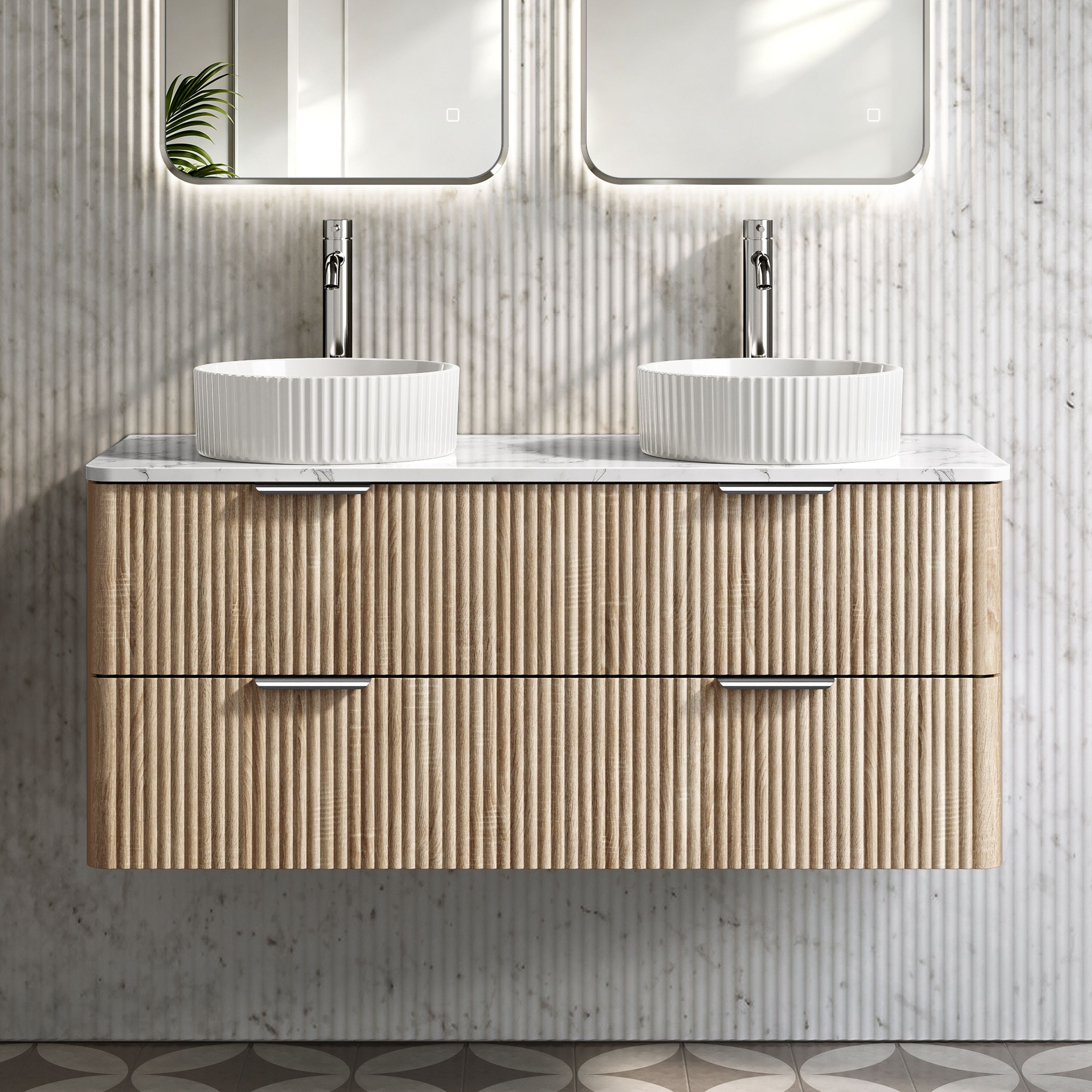
Wood grain is one of the strongest vanity looks for 2026, part of the wider shift to natural, biophilic materials. Light oak feels Scandi and fresh; walnut feels richer and more luxurious.
• Pair with: almost anything, from white gloss to green zellige to large-format stone effects
• Hardware: matt black or brushed brass
• Best for: spa-style bathrooms and anyone who wants a timeless investment
5. Warm white, ivory and off-white
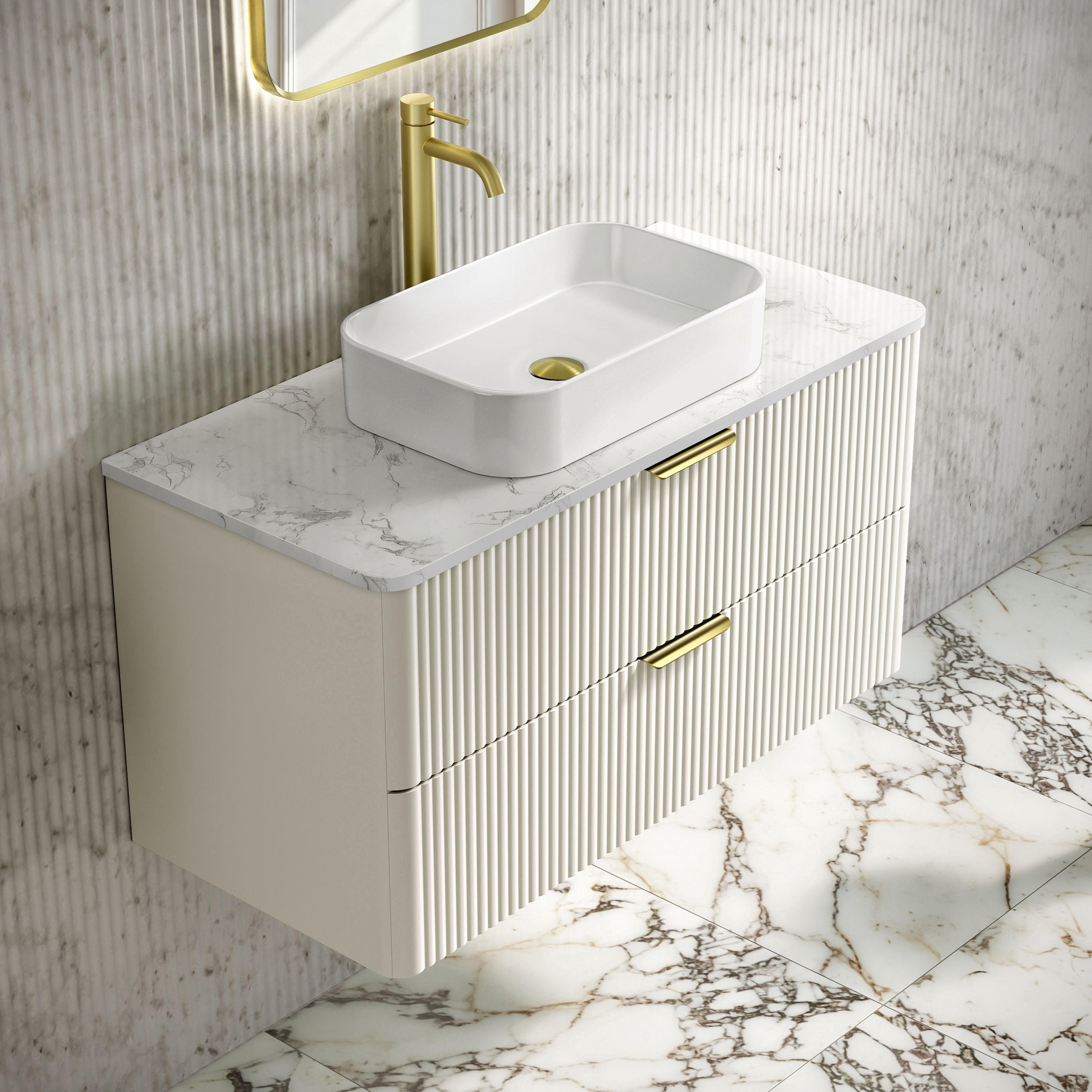
White isn’t going anywhere, but it’s getting warmer. Pantone’s Colour of the Year 2026 is Cloud Dancer, a soft off-white, the first white it has ever chosen. Swap brilliant white for ivory, linen or chalk for a cosier result.
• Pair with: coloured or patterned tiles, so the vanity doesn’t disappear into a white room
• Hardware: brushed nickel, brass or ceramic knobs
• Best for: small bathrooms, north-facing rooms and rentals or homes you plan to sell
6. Soft neutrals: taupe, mushroom and greige
Mushroom and taupe are the grown-up alternative to grey. They add depth without shouting, and work with the warm khaki tones behind Sherwin-Williams’ 2026 colour of the year, Universal Khaki.
• Pair with: stone-effect porcelain, travertine looks, oak accents
• Hardware: gold or champagne brass
• Best for: calm, hotel-style bathrooms
7. Matt black and charcoal

Black is the statement choice. A wall-hung black vanity with LED underlighting creates a dramatic floating effect, and dark finishes hide splashes better than pale ones.
• Pair with: light marble effects, white or pale grey tiles, patterned encaustic-look floors
• Hardware: brushed brass or gold for contrast
• Best for: larger, bright bathrooms and modern or industrial schemes
How to pair your vanity colour with tiles
The simplest rule: let either the vanity or the tiles be the star, not both. A coloured vanity looks best against calm tiles, and a bold tile looks best with a quieter vanity.
| Vanity colour | Wall tiles | Floor tiles | Grout | Hardware |
| Sage / olive green | Warm white metro, cream zellige-look | Terrazzo, light oak-effect | Warm white or ivory | Brushed brass |
| Indigo / navy | White gloss metro, Carrara marble-effect | Grey or monochrome patterned | White or light grey | Brushed brass, polished nickel |
| Terracotta / clay | Sand or stone-effect, handmade-look | Terracotta-look, travertine-effect | Beige or sand | Bronze, brushed brass |
| Oak / walnut | Green zellige, large-format stone-effect | Concrete or stone-effect | Grey or taupe | Matt black, brushed brass |
| Warm white / ivory | Coloured or patterned tiles, fluted-effect | Patterned encaustic-look | Match the tile | Brushed nickel, brass |
| Taupe / mushroom | Travertine or limestone-effect | Large-format stone-effect | Taupe or greige | Champagne brass |
| Matt black / charcoal | White marble-effect, pale grey | Monochrome pattern, light stone | White or charcoal | Brushed gold |
Tip: order tile samples and hold them against the vanity door in your own bathroom light before you buy. Colours can look very different under a warm LED than in a bright showroom.
Choosing the right colour for your UK bathroom
Trends are a starting point, but your room’s size, light and age should make the final call.
Small bathrooms and en-suites. Compact rooms are common in UK homes. Warm white, sage or light oak keep a small room feeling open. Choose a wall-hung vanity so you can see more floor, which makes the space feel bigger.
North-facing or windowless rooms. British light is often cool and grey, which can make blues and greys look cold. Lean towards warm shades: olive, terracotta, caramel or ivory. If you love blue, pick one with a hint of warmth and add brass hardware.
Cloakrooms and downstairs loos. These are the place to be brave. Guests pass through quickly, so a deep green, clay or navy vanity can feel like a jewel box rather than overwhelming.
Victorian, Edwardian and period homes. Navy, deep green and oak Shaker-style units suit original features, cornicing and metro or chequerboard tiles.
New builds and modern flats. Flat-fronted or fluted units in taupe, black or oak look sharp against large-format porcelain. They also add warmth to rooms that can feel plain.
Selling in the next few years? Stick to warm white, oak or soft sage. They feel current without putting off buyers.
Finishes, worktops and hardware trends for 2026
The colour is only half the story. How the vanity is finished changes how that colour reads.
• Matt over gloss. Matt and satin finishes look more expensive and show fewer fingerprints. Gloss still works for tiny, dark rooms because it bounces light.
• Fluted and ribbed fronts. Vertical grooves add texture and shadow, making even a plain white or oak vanity feel special.
• Wall-hung units. Floating vanities make rooms look bigger and make cleaning the floor easier.
• Natural worktops. Oak, marble and quartz tops are popular, often in a contrasting tone to the cabinet.
• Warm metals. Brushed brass, bronze and matt black are replacing shiny chrome. Match your tap, handles and mirror frame for a pulled-together look.
• Colour drenching. For a bold look, paint the walls, tile the splashback and choose the vanity all in one shade. It works especially well in olive green or deep blue.
Vanity colours to think twice about in 2026
No colour is truly “out”, but some combinations are starting to look tired.
• Cool grey with cool grey tiles. The all-grey bathroom of the 2010s now feels flat. Designers say what dates a room is every surface sharing the same cool undertone. If you like grey, warm it up with wood, brass or a greige tone.
• Brilliant white gloss in an all-white room. It can feel clinical. Soften it with an ivory shade, textured tiles or a wood worktop.
• High-gloss chrome-handled units. Swap handles for brushed brass, bronze or black to modernise an existing vanity for little money.
• Very dark vanities in tiny, dim rooms. Black and navy can shrink a small, windowless space. Save them for brighter rooms or cloakrooms where drama is the point.
Frequently asked questions
What is the most popular bathroom vanity colour in 2026?
Muted greens (sage and olive) and warm wood tones are the most widely recommended. Deep blue is close behind, boosted by Dulux choosing indigo shades as its 2026 Colours of the Year.
Is a white vanity still in style?
Yes. White is a classic, and Pantone chose a soft off-white, Cloud Dancer, as its 2026 colour. For a fresh look, choose a warm white rather than brilliant white and pair it with textured or coloured tiles.
What colour vanity makes a small bathroom look bigger?
Light, warm shades such as ivory, soft sage or pale oak. A wall-hung unit that shows more floor helps even more.
Should my vanity match my tiles?
It doesn’t need to match, but it should complement. Pick one hero, either the vanity or the tiles, and keep the other calmer. Repeating a colour in grout or accessories ties the look together.
Is a dark vanity practical?
Dark matt finishes hide dust and water marks well, but can show limescale and soap splashes in hard-water areas, common across much of England. Wipe it down regularly and use a mild, non-abrasive cleaner.
What hardware colour goes with a green vanity?
Brushed brass is the most popular pairing for warmth. Matt black gives a sharper, more modern contrast.
Finding your perfect vanity colour
If you want one answer, choose sage or olive green for a calm, current look that will last. Go for deep blue if you want the colour of the year, terracotta for warmth, oak for timeless style, or warm white if space and light are tight.
Whatever you pick, build the scheme around it: choose the vanity first, then tiles that let it shine, then hardware that ties it all together. Order tile samples, test them in your own light, and you’ll have a bathroom that feels right well beyond 2026.