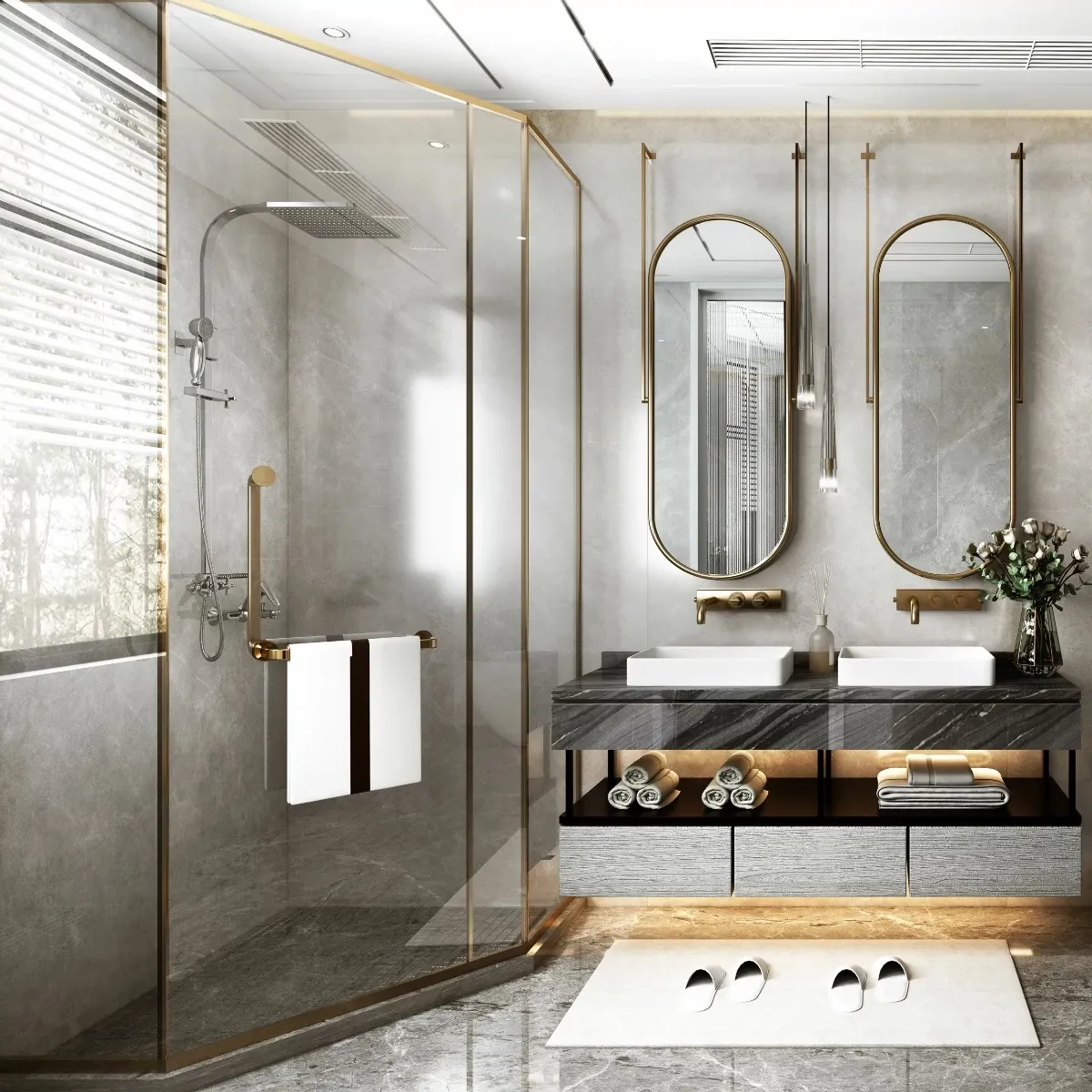
Art Deco bathroom ideas combine 7 core elements including geometric patterns, bold colour contrast, metallic finishes, symmetrical layouts, luxury materials, reflective surfaces, and structured fixtures to create visually balanced and high-impact bathroom design.
Art Deco bathroom design originates from the 1920s–1930s movement, defined by precision, repetition, and strong visual hierarchy. Key characteristics include geometric tile patterns such as chevrons and hexagons, high-contrast colour palettes including black and gold or monochrome schemes, and materials such as marble, glass, and polished metals. Sanitaryware and tap styles use angular forms, crosshead handles, and metallic finishes to reinforce authenticity. Wall and floor finishes use high-gloss tiles, marble-effect surfaces, terrazzo, and geometric layouts to maintain symmetry and depth.
Design strategies vary by space size, with small bathrooms using light reflective finishes and vertical layouts, while large spaces use feature walls, dual-tone zoning, and bold textures. Supporting elements such as mirrors, lighting, and storage maintain cohesion through symmetry and consistent materials. Effective Art Deco bathroom design requires alignment across all components, ensuring balanced composition, visual clarity, and long-term durability.
What Defines Art Deco Bathroom Design?
Art Deco bathroom design is defined by 6 core characteristics including geometric patterns, bold colour contrast, high-gloss materials, metallic accents, symmetrical layouts, and luxury finishes, creating structured visual balance and decorative precision across bathroom spaces. Art Deco bathroom design originated in the 1920s–1930s and focuses on symmetry, repetition, and strong visual identity. Design elements use structured lines, reflective surfaces, and contrasting tones to create a distinctive aesthetic.

Geometric Patterns
Art Deco bathrooms use repeating geometric shapes such as chevrons, zigzags, and stepped forms. Pattern repetition creates structured visual rhythm. Geometric layouts define wall, floor, and tile arrangements.
Bold Colour Contrast
Art Deco design combines high-contrast colours such as black and white, gold and navy, or emerald and cream. Strong contrast creates visual impact and depth. Colour pairing enhances spatial definition.
High-Gloss Materials
Art Deco bathrooms use glossy tiles, polished stone, and lacquered surfaces. Reflective finishes increase light distribution and highlight design details. High-gloss materials improve visual brightness.
Metallic Accents
Art Deco design includes metals such as brass, gold, and chrome across fixtures and trims. Metallic elements add contrast and highlight structural lines. Finishes improve visual richness.
Symmetrical Layouts
Art Deco bathrooms follow balanced layouts with mirrored placement of fixtures and design elements. Symmetry creates order and visual stability. Balanced spacing improves design clarity.
Luxury Finishes
Art Deco design incorporates marble, terrazzo, and decorative tiles to create high-end surfaces. Premium finishes enhance durability and visual appeal. Material quality defines the overall aesthetic.
What Are Historical Origins Of Art Deco Bathrooms?
Art Deco bathroom design originated between 1920 and 1939 during the Art Deco movement, influenced by industrialisation, modern architecture, and luxury craftsmanship, combining geometric symmetry, new materials, and decorative precision in interior spaces. Art Deco emerged after World War I as a design response focused on progress, technology, and visual order. The style integrated machine-age production with high-end materials to create structured yet decorative interiors.
Origin In 1920s Movement
Art Deco began in the early 1920s and gained global recognition after the 1925 Paris Exposition Internationale des Arts Décoratifs. The movement defined modern decorative arts. International adoption expanded design influence.
Influence Of Industrialisation
Industrial production introduced materials such as chrome, glass, and polished metals. Mass manufacturing enabled consistent geometric forms. Industrial influence shaped clean lines and precision.
Integration Of Luxury Materials
Art Deco bathrooms used marble, glass, and lacquered surfaces to create high-end finishes. Material selection reflected wealth and craftsmanship. Luxury defined visual identity.
Adoption Of Geometric Design
Design incorporated zigzags, chevrons, and stepped patterns inspired by architecture and machinery. Repetition created structured visual rhythm. Geometry became a defining feature.
Influence Of Global Styles
Art Deco integrated elements from Egyptian, African, and Asian design motifs. Cultural influence expanded decorative vocabulary. Global inspiration enriched pattern diversity.
Emphasis On Symmetry
Layouts followed balanced and mirrored arrangements across fixtures and surfaces. Symmetry created order and proportion. Structured composition defined spatial organisation.
Evolution Into Modern Interiors
Art Deco principles continue in modern bathroom design through geometric layouts, metallic finishes, and bold contrast. Contemporary adaptation maintains core characteristics. Design continuity extends historical influence.
What Are The Key Characteristics Of Art Deco Style?
Art Deco style is defined by 7 key characteristics including geometric symmetry, bold contrast, streamlined forms, decorative motifs, luxurious materials, metallic detailing, and layered textures, creating structured visual identity and high-end aesthetic across interior spaces. Art Deco style emphasises precision, repetition, and strong visual hierarchy.
Geometric Symmetry
Art Deco style uses repeated geometric forms such as zigzags, sunbursts, and stepped patterns. Symmetry creates balance and structured visual rhythm. Pattern repetition reinforces design consistency.
Bold Colour Contrast
Art Deco style applies high-contrast colour combinations such as black and white, navy and gold, or emerald and cream. Strong contrast defines shapes and enhances visual depth.
Streamlined Forms
Art Deco style features clean, linear shapes with curved or stepped edges. Streamlined forms create smooth transitions and reduce visual clutter. Defined lines improve structural clarity.
Decorative Motifs
Art Deco style includes motifs such as sunbursts, chevrons, and fan patterns. Decorative elements add detail without disrupting symmetry. Motifs reinforce the design identity.
Luxurious Materials
Art Deco style uses marble, glass, lacquer, and polished stone surfaces. High-quality materials increase durability and visual richness. Material selection defines premium appearance.
Metallic Detailing
Art Deco style incorporates brass, chrome, and gold finishes across fixtures and trims. Metallic elements highlight edges and enhance contrast. Finishes improve visual impact.
What Colour Palettes Work Best In Art Deco Bathroom Design?
Art Deco bathroom colour palettes use 6 structured combinations including monochrome contrast, black and gold, jewel tones, neutral luxury tones, metallic pairings, and high-gloss whites to create depth, symmetry, and visual hierarchy.
The colour palettes for Art Deco bathroom design are given below:
- Use Monochrome Contrast: Black and white combinations create strong geometric definition and clear visual structure. High contrast enhances symmetry and pattern visibility.
- Use Black And Gold Palette: Black surfaces combined with gold accents create luxury contrast and highlight edges, fixtures, and frames. Metallic detailing improves visual richness.
- Use Jewel Tone Colours: Deep tones such as emerald green, navy blue, and burgundy add depth and bold visual identity. Jewel tones enhance feature areas.
- Use Neutral Luxury Tones: Cream, beige, and soft grey create balanced backgrounds that support metallic accents. Neutral tones maintain elegance and clarity.
- Use Metallic Pairings: Combine chrome, brass, or gold with darker or lighter base colours to define edges and fixtures. Metallic finishes enhance reflectivity.
- Use High-Gloss White Scheme: White glossy surfaces reflect light and increase brightness while supporting geometric detailing. Reflective finishes improve spatial perception.
How Do Black And Gold Combinations Enhance Art Deco Bathrooms?
Black and gold combinations enhance Art Deco bathrooms by creating high-contrast visual structure, emphasising geometric lines, increasing depth perception, and adding metallic luxury through reflective finishes across walls, fixtures, and trims. Black surfaces define strong boundaries and highlight shapes, while gold accents introduce brightness and reflective detail. The combination aligns with Art Deco principles of contrast, symmetry, and material richness.
Create Strong Contrast
Black and gold combinations produce clear visual separation between surfaces and fixtures. High contrast defines geometric layouts and improves design clarity. Contrast strengthens structural composition.
Highlight Geometric Patterns
Gold accents outline shapes such as chevrons, frames, and borders against black backgrounds. Defined edges enhance pattern visibility. Pattern emphasis supports Art Deco identity.
Increase Visual Depth
Black surfaces absorb light while gold reflects light, creating layered depth. Depth variation improves spatial perception. Balanced contrast prevents flat appearance.
Enhance Metallic Detail
Gold finishes on taps, frames, and trims introduce reflective highlights. Metallic elements emphasise edges and focal points. Reflectivity improves visual richness.
Support Symmetrical Design
Black and gold layouts reinforce symmetrical placement of fixtures and features. Balanced colour distribution maintains visual order. Symmetry aligns with Art Deco structure.
Improve Lighting Interaction
Gold surfaces reflect light across darker backgrounds, increasing brightness in key areas. Light interaction highlights textures and finishes. Reflective balance enhances the overall atmosphere.
What Tile Options Best Reflect Art Deco Aesthetics?
Art Deco tile options include 7 types such as geometric tiles, black and white tiles, marble-effect tiles, chevron patterns, hexagon tiles, mosaic tiles, and high-gloss tiles, each reinforcing symmetry, contrast, and structured visual identity. Art Deco tiles define surface structure through repetition, contrast, and reflective finishes. Tile selection focuses on geometry, colour pairing, and material quality.
The tile options that reflect Art Deco aesthetics are given below:
- Use Geometric Tiles: Tiles with patterns such as zigzags, stepped designs, and linear forms create structured layouts. Geometric repetition reinforces symmetry.
- Use Black And White Tiles: Monochrome tiles define strong contrast and highlight shapes. High contrast enhances visual clarity and balance.
- Use Marble-Effect Tiles: Marble tiles with veining patterns add luxury and depth. Reflective surfaces improve brightness and material richness.
- Use Chevron Pattern Tiles: Chevron layouts create directional movement and guide visual flow across surfaces. Pattern alignment enhances structure.
- Use Hexagon Tiles: Hexagonal tiles provide repeating shapes that create visual rhythm. Uniform geometry supports Art Deco design principles.
- Use Mosaic Tiles: Small-scale tiles create detailed patterns and decorative accents. Mosaic designs enhance feature areas without disrupting balance.
- Use High-Gloss Tiles: Gloss finishes reflect light and highlight geometric shapes. Reflectivity improves depth and visual impact.
How Do Geometric Tile Patterns Create Art Deco Impact?
Geometric tile patterns create Art Deco impact by using repeated shapes, sharp symmetry, and high-contrast layouts to define structure, guide visual flow, and emphasise design precision across walls and floors. Geometric tiling forms the core visual language of Art Deco design. Patterns such as chevrons, hexagons, and stepped forms organise space through repetition and alignment.
Define Visual Structure
Geometric tile patterns organise surfaces using repeated shapes arranged in precise alignment. Structured layouts create order and improve visual clarity. Defined patterns establish strong design foundations.
Reinforce Symmetry
Geometric tiles follow mirrored placement across central axes. Symmetry creates balance and supports consistent spacing. Structured repetition aligns with Art Deco principles.
Create Directional Flow
Chevron and linear patterns guide the eye across walls and floors. Directional layouts influence perceived movement within the space. Flow improves spatial organisation.
Enhance Contrast Definition
High-contrast tile combinations such as black and white emphasise pattern outlines. Strong contrast highlights edges and shapes. Defined contrast increases visual impact.
Add Depth Through Repetition
Repeated geometric units create layered visual depth across surfaces. Pattern repetition increases complexity without clutter. Depth improves spatial perception.
Emphasise Feature Areas
Geometric tiles highlight focal zones such as shower walls or flooring sections. Defined areas improve visual hierarchy. Pattern placement enhances design emphasis.
What Flooring Solutions Best Complement Art Deco Bathroom Ideas?
Art Deco bathroom flooring uses 6 solutions including geometric patterned tiles, black and white contrast floors, marble or terrazzo surfaces, parquet-style layouts, mosaic detailing, and high-gloss finishes to reinforce symmetry, contrast, and visual structure. Flooring in Art Deco bathrooms defines spatial foundation and supports overall design cohesion. Material choice and layout determine durability, pattern clarity, and light reflection.
The flooring solutions that complement Art Deco bathroom ideas are given below:
- Use Geometric Pattern Tiles: Tiles with zigzag, stepped, or linear patterns create structured layouts. Repetition defines visual rhythm and reinforces design identity.
- Use Black And White Floors: Monochrome flooring creates strong contrast and highlights geometric layouts. High contrast improves spatial definition.
- Use Marble Or Terrazzo Surfaces: Marble and terrazzo provide polished finishes with natural patterns. Material richness enhances luxury and durability.
- Use Parquet-Style Layouts: Wood-effect or tile parquet patterns create directional flow and structured arrangement. Pattern alignment improves visual organisation.
- Use Mosaic Floor Detailing: Small tiles form decorative borders or central features. Mosaic detailing adds visual complexity without disrupting symmetry.
- Use High-Gloss Flooring: Gloss surfaces reflect light and enhance brightness across the floor. Reflectivity increases perceived space and depth.
What Sanitaryware Styles Define Art Deco Bathrooms?
Art Deco bathroom sanitaryware is defined by 6 styles including pedestal basins, console basins, geometric toilets, freestanding baths, angular basins, and symmetrical fixtures, using structured forms, smooth curves, and high-gloss finishes to reinforce design precision. Art Deco sanitaryware combines geometric structure with soft curvature to maintain balance between form and function.

Pedestal Basins
Pedestal basins use vertical supports with smooth curves and defined edges. Balanced proportions create symmetry within the layout. Pedestal design aligns with traditional Art Deco structure.
Console Basins
Console basins combine ceramic basins with metal or chrome frames. Open structure exposes geometric lines and supports visual lightness. Frame detailing enhances metallic accents.
Geometric Toilets
Art Deco toilets use angular forms with squared edges and structured cistern designs. Defined shapes maintain alignment with geometric themes. Compact design supports spatial balance.
Freestanding Baths
Freestanding baths feature curved silhouettes with symmetrical placement. Central positioning creates focal points within the bathroom. Smooth finishes enhance reflective surfaces.
Angular Basins
Angular basins use straight edges and rectangular forms to reinforce geometric design. Defined lines improve visual clarity. Shape consistency supports structured layout.
What Tap And Faucet Styles Define Art Deco Authenticity?
Art Deco tap and faucet styles are defined by 6 features including geometric forms, crosshead handles, stepped detailing, metallic finishes, symmetrical design, and bold silhouettes, creating structured control elements that reinforce visual precision and luxury. Art Deco taps combine angular geometry with refined detailing to align with the overall design language. Form, finish, and proportion determine authenticity. Materials such as brass and chrome provide durability and reflective quality.
Geometric Forms
Art Deco taps use square, rectangular, and stepped shapes instead of rounded designs. Defined edges create structured appearance. Geometry aligns with Art Deco principles.
Crosshead Handles
Crosshead or lever handles provide symmetrical control with clear visual balance. Handle design enhances usability and reinforces period styling. Structured form improves grip and precision.
Stepped Detailing
Tap bodies and spouts include tiered or stepped profiles that create layered visual depth. Repeated levels reflect Art Deco architectural motifs. Detailing enhances design complexity.
Metallic Finishes
Finishes such as chrome, brass, gold, and nickel provide reflective surfaces. Metallic elements highlight edges and improve contrast. Finish selection defines visual richness.
Symmetrical Design
Tap placement and handle alignment follow mirrored positioning across basins. Symmetry maintains visual order and proportional balance. Consistent layout strengthens design identity.
Bold Silhouettes
Art Deco taps feature strong outlines with defined spouts and handles. Clear silhouettes improve visibility and structure. Bold forms enhance focal presence within the bathroom.
What Solutions Enhance Art Deco Bathrooms?
Art Deco bathroom enhancement solutions include 7 elements such as statement lighting, mirrored surfaces, bold colour zoning, decorative accessories, structured storage, framed features, and material layering to reinforce symmetry, contrast, and visual depth. Enhancement solutions focus on strengthening the core Art Deco principles of geometry, contrast, and luxury. Each element contributes to visual hierarchy and spatial balance. Controlled application ensures cohesion without disrupting structured design.

Statement Lighting
Art Deco bathrooms use geometric light fixtures such as globe lights or stepped designs. Lighting defines focal areas and improves visibility. Structured lighting enhances symmetry and design clarity.
Mirrored Surfaces
Mirrors with geometric frames increase light reflection and expand visual space. Reflective surfaces improve brightness and depth. Framed mirrors reinforce Art Deco detailing.
Bold Colour Zoning
Zoning uses contrasting colours to define specific areas such as basins or shower enclosures. Colour separation creates visual structure. Defined zones improve layout organisation.
Decorative Accessories
Accessories such as trays, holders, and containers use metallic finishes and geometric shapes. Decorative elements add detail without disrupting balance. Consistent styling maintains cohesion.
Structured Storage
Storage units use clean lines and symmetrical placement. Cabinets and shelves align with geometric forms. Organised storage supports visual clarity.
Framed Features
Wall panels, mirrors, and tiles use borders or frames to highlight key areas. Framing emphasises structure and focal points. Defined edges improve visual hierarchy.
Material Layering
Combining materials such as marble, glass, and metal creates depth. Layered surfaces prevent flat appearance. Material variation enhances luxury and texture balance.
How Do Mirrors And Mirror Frames Define Art Deco Bathrooms?
Mirrors and mirror frames define Art Deco bathrooms through 6 features including geometric shapes, bold framing, metallic finishes, symmetry, light reflection, and focal positioning, creating visual depth, structure, and design hierarchy.
The defining roles of mirrors and mirror frames are given below:
- Use Geometric Mirror Shapes: Rectangular, arched, octagonal, and stepped mirror designs reinforce structured geometry. Defined shapes align with Art Deco principles and improve visual clarity.
- Apply Bold Frame Design: Thick or layered frames emphasise mirror edges and create strong visual outlines. Bold framing enhances structural definition and design impact.
- Use Metallic Finishes: Frames in gold, brass, or chrome reflect light and add contrast against darker or neutral backgrounds. Metallic finishes increase visual richness.
- Maintain Symmetrical Placement: Mirrors positioned centrally or in pairs create balanced layouts. Symmetry supports visual order and reinforces Art Deco composition.
- Enhance Light Reflection: Reflective surfaces distribute light across walls and fixtures. Increased reflection improves brightness and perceived depth.
- Create Focal Points: Large or decorative mirrors act as central design elements. Defined placement draws attention and strengthens visual hierarchy.
What Storage Solutions Maintain Art Deco Aesthetics?
Art Deco storage solutions maintain aesthetics through 6 elements including geometric cabinetry, symmetrical layouts, high-gloss finishes, metallic detailing, integrated storage units, and concealed compartments, preserving visual order and design consistency across bathroom spaces. Storage in Art Deco bathrooms must align with structured geometry and balanced composition. Design focuses on clean lines, reflective materials, and controlled placement. Storage units must support functionality while reinforcing symmetry and contrast.

Geometric Cabinetry
Cabinets use rectangular or stepped forms with defined edges. Structured shapes align with Art Deco geometry. Clean lines improve visual clarity.
Symmetrical Layouts
Storage units are placed evenly on both sides of basins or walls. Mirrored positioning creates balance. Symmetry reinforces design structure.
High-Gloss Finishes
Cabinet surfaces use lacquered or polished finishes to reflect light. Gloss improves brightness and highlights shapes. Reflective surfaces enhance depth.
Metallic Detailing
Handles and trims use brass, chrome, or gold finishes. Metallic elements define edges and add contrast. Detailing improves visual richness.
Integrated Storage Units
Built-in storage reduces clutter and maintains continuous surfaces. Integrated design supports seamless appearance. Hidden storage improves organisation.
What Wall Finishes Best Reflect Art Deco Principles?
Art Deco wall finishes include 7 options such as high-gloss tiles, marble-effect panels, geometric tiling, lacquered surfaces, metallic inlays, fluted panels, and mirror sections, each reinforcing symmetry, contrast, and reflective depth. Wall finishes in Art Deco bathrooms define visual structure and enhance light interaction. Material selection focuses on smooth surfaces, sharp geometry, and controlled contrast.
The wall finishes that reflect Art Deco principles are given below:
- Use High-Gloss Tiles: Gloss tiles reflect light and highlight geometric layouts. Reflective surfaces increase brightness and visual depth.
- Use Marble-Effect Panels: Marble finishes provide natural veining patterns with polished surfaces. Material richness enhances luxury appearance.
- Apply Geometric Tiling: Patterns such as chevrons, zigzags, and stepped layouts create structured visual rhythm. Repetition reinforces symmetry.
- Use Lacquered Surfaces: Smooth lacquer finishes create continuous reflective walls. Seamless surfaces improve visual flow and clarity.
- Add Metallic Inlays: Metal strips or trims highlight edges and patterns. Metallic detailing enhances contrast and definition.
- Use Fluted Wall Panels: Vertical fluted designs create texture and directional flow. Structured lines improve spatial height perception.
- Incorporate Mirror Sections: Mirror panels reflect light and expand perceived space. Reflective integration enhances brightness and depth.
How Do You Create A Cohesive Art Deco Bathroom Design?
Creating a cohesive Art Deco bathroom design requires 7 coordinated actions including consistent colour schemes, geometric pattern alignment, symmetrical layouts, material continuity, metallic detailing, balanced lighting, and unified fixture selection to maintain structured visual harmony. Cohesion in Art Deco design depends on maintaining alignment between all elements without visual conflict. Each component must follow the same geometric and contrast principles.
Use Consistent Colour Scheme
Select 2–3 colours such as black, white, and gold and apply across walls, floors, and fixtures. Consistency prevents visual fragmentation. A controlled palette improves unity.
Align Geometric Patterns
Use matching or complementary geometric patterns across tiles and panels. Pattern alignment ensures visual continuity. Consistent shapes reinforce design identity.
Maintain Symmetrical Layout
Position basins, mirrors, and storage evenly across central axes. Symmetry creates balance and order. Balanced placement improves spatial clarity.
Ensure Material Continuity
Use the same materials such as marble, glass, or polished surfaces across multiple elements. Consistent materials maintain visual flow. Material repetition strengthens cohesion.
Apply Metallic Detailing
Use one or two metal finishes such as brass or chrome across taps, handles, and frames. Consistent metals unify design elements. Metallic accents highlight structure.
Balance Lighting Design
Install lighting that complements geometric forms and reflects off surfaces. Balanced lighting enhances depth and visibility. Proper placement supports symmetry.
What Are The Best Art Deco Bathroom Ideas For Small Spaces?
The best Art Deco bathroom ideas for small spaces use 7 strategies including light reflective finishes, compact geometric layouts, vertical patterning, mirrored surfaces, limited colour palettes, slimline fixtures, and seamless surfaces to increase brightness, height perception, and spatial efficiency. Small Art Deco bathrooms require controlled design to avoid visual clutter while maintaining geometric identity.

Use Light Reflective Finishes
Gloss tiles, polished surfaces, and light tones such as white or cream increase brightness. Reflective finishes distribute light evenly. Increased brightness improves perceived space.
Apply Compact Geometric Patterns
Use smaller-scale geometric patterns such as thin chevrons or subtle lines. Controlled pattern size prevents overcrowding. Compact layouts maintain clarity.
Use Vertical Pattern Layouts
Vertical lines or panels increase perceived ceiling height. Directional patterns guide the eye upward. Vertical emphasis improves spatial proportion.
Install Mirrored Surfaces
Mirrors expand visual depth by reflecting light and surroundings. Framed geometric mirrors enhance design identity. Reflection increases perceived room size.
Limit Colour Palette
Use 2–3 colours such as white, black, and gold to maintain balance. Limited palette prevents visual clutter. Controlled contrast improves clarity.
Choose Slimline Fixtures
Select compact basins, wall-mounted sinks, and narrow storage units. Reduced size improves available space. Slimline fixtures maintain functionality.
Use Seamless Surfaces
Large tiles or panels reduce joint lines across walls. Continuous surfaces improve visual flow. Fewer breaks enhance spatial continuity.
Summing Up
Art Deco bathroom design achieves visual structure, symmetry, and long-term durability through coordinated use of geometric patterns, high-contrast colour palettes, metallic finishes, and balanced layouts across walls, floors, fixtures, and storage.
Art Deco bathrooms combine materials such as marble, terrazzo, glass, and polished metals with precise geometric tiling and bold colour schemes including monochrome and black–gold pairings. Sanitaryware and tap styles use angular forms, crosshead handles, and metallic detailing to reinforce design identity. Mirrors, lighting, and storage maintain cohesion through symmetry and consistent finishes.
Small spaces benefit from light-reflective surfaces and minimal palettes, while larger bathrooms use feature walls, dual-tone zoning, and textured materials to define areas. Proper alignment across all elements ensures clarity, depth, and visual balance, resulting in a cohesive and durable bathroom design that reflects Art Deco principles.