Small Victorian bathroom design combines traditional Victorian features with compact space planning, because classic fixtures, decorative detailing, and exposed elements must be adapted to fit limited layouts without reducing usability. Victorian bathrooms use freestanding baths, pedestal basins, high or low-level toilets, and decorative finishes such as patterned tiles and brass fittings. Small spaces require reduced fixture sizes, efficient layouts, and controlled detailing to prevent overcrowding. Layout success depends on maintaining circulation, aligning fixtures with wall space, and using height and corners effectively.
Design performance depends on colour, materials, lighting, and ventilation working together. Light colour palettes and reflective surfaces improve brightness and perceived space. Traditional tiling patterns such as checkerboard, mosaic, and bordered layouts define Victorian style while maintaining structure. Wall finishes such as half-height tiling and panelling protect surfaces and improve visual balance. Storage must use vertical space, under-basin areas, and recessed solutions because pedestal designs limit built-in storage. Mirror styles and decorative frames reinforce period character without increasing clutter.
Functionality improves through correct fixture selection and system planning. Compact baths, corner layouts, and shower-bath combinations maximise usability in limited space. Heating solutions such as towel rails, slim radiators, and underfloor systems provide warmth without occupying floor area. Lighting must use layered solutions to reduce shadows and improve visibility. Ventilation must remove moisture effectively to prevent condensation and material damage.
What Is A Victorian Bathroom?

A Victorian bathroom is a bathroom design style based on 19th-century British interiors, and Victorian bathroom design uses freestanding baths, high-level toilets, pedestal basins, decorative fittings, and classic materials to create a traditional and detailed aesthetic. Victorian bathrooms focus on symmetry, craftsmanship, and visible fixtures rather than concealed systems. Materials such as ceramic, cast iron, and brass define durability and appearance. Colour schemes often use white, black, and soft neutrals with patterned flooring.
- Freestanding Bath: Freestanding bath forms the central feature of Victorian bathrooms. Roll-top and slipper bath designs reflect period styling. Elevated rims and exposed feet create visual detail.
- High Level Toilet: High level toilet uses a wall-mounted cistern with a pull chain. Exposed flush pipes define traditional appearance. Height positioning requires sufficient wall space.
- Pedestal Basin: Pedestal basin uses a full ceramic base to conceal pipework. Classic basin shapes include rounded and oval forms. Pedestal support reduces wall load requirements.
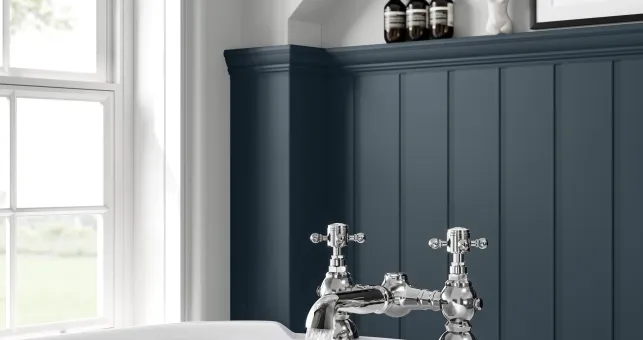
- Traditional Brassware: Traditional brassware includes crosshead taps, lever taps, and exposed pipework. Chrome, brass, or nickel finishes maintain period consistency. Visible fittings enhance decorative detail.
- Decorative Flooring: Decorative flooring uses patterned tiles such as checkerboard or mosaic designs. High contrast patterns define Victorian style. Smaller tile formats suit compact bathrooms.
- Wall Detailing: Wall detailing includes half-height tiling, painted upper walls, and decorative mouldings. Panelled walls add texture and depth. Light colours improve brightness in small spaces.
- Compact Adaptation: Compact adaptation reduces fixture size while keeping traditional proportions. Shorter baths, smaller basins, and tighter layouts maintain functionality. Space planning prevents overcrowding.
What Are Key Characteristics Of A Victorian Bathroom?
Key characteristics of a Victorian bathroom include freestanding fixtures, exposed plumbing, symmetrical layout, decorative detailing, high-contrast materials, and traditional colour schemes, because Victorian design prioritises craftsmanship, visibility of components, and structured visual balance. Victorian bathrooms avoid concealed systems and instead highlight functional elements as design features. Materials such as ceramic, cast iron, and brass define both durability and appearance.
- Freestanding Fixtures: Freestanding fixtures define the core visual identity of Victorian bathrooms. Baths and basins sit independently rather than built into units. Visible edges and legs add detail.
- Exposed Plumbing: Exposed plumbing uses visible pipework for both function and decoration. Pipe finishes match brassware for consistency. Alignment must remain precise to avoid visual clutter.
- Symmetrical Layout: Symmetrical layout creates visual balance through centred placement of key fixtures. Basin and mirror alignment improves structure. Symmetry reduces visual chaos in small rooms.
- Decorative Detailing: Decorative detailing includes mouldings, patterned tiles, and shaped ceramics. Detail adds character without requiring large fixtures. Overuse of detail can reduce space perception.
- High Contrast Materials: High contrast materials combine light ceramics with darker flooring or accents. Contrast defines zones and highlights features. Excess contrast can fragment space in small layouts.
- Traditional Colour Scheme: Traditional colour scheme uses white, cream, black, and muted tones. Light colours improve brightness in compact bathrooms. Dark accents define structure and edges.
What Are The Challenges Of Creating Victorian Bathrooms In Small Spaces?
Creating Victorian bathrooms in small spaces is challenging because traditional fixture proportions, exposed plumbing, and decorative detailing require more space than modern layouts, which increases risk of overcrowding, poor circulation, and reduced usability. Victorian design uses larger freestanding elements that must be scaled down carefully. Symmetry becomes harder to maintain in tight layouts. Storage becomes limited because pedestal designs replace vanity units.
Large Fixture Scale
Large fixture scale creates space pressure because Victorian baths and basins are traditionally oversized. Freestanding baths require clearance on multiple sides. Oversized basins reduce movement space. Scaling down fixtures becomes necessary for small bathrooms.
Limited Floor Space
Limited floor space restricts layout flexibility and reduces circulation paths. Traditional layouts rely on symmetry, which becomes difficult in compact rooms. Narrow layouts increase collision risk between fixtures. Efficient spacing becomes essential for usability.
Exposed Plumbing Layout
Exposed plumbing layout requires visible pipework alignment, which consumes additional wall and floor space. Pipe routing must remain neat and symmetrical. Poor alignment increases visual clutter. Space constraints make pipe placement more complex.
Storage Constraints
Storage constraints occur because pedestal basins replace vanity units. Lack of built-in storage increases clutter. Additional storage must fit under eaves or walls. Limited storage reduces organisation efficiency.
Decorative Overload Risk
Decorative overload risk increases because Victorian design includes patterns, mouldings, and detailing. Excess detailing reduces perceived space in small bathrooms. Overuse creates visual congestion. Controlled detailing becomes necessary.
Lighting Limitations
Lighting limitations arise from darker tones and detailed surfaces that absorb light. Small spaces require stronger lighting balance. Poor lighting creates shadows and reduces usability. Layered lighting becomes essential.
What Are The Best Colour Palettes For Small Victorian Bathrooms?

Best colour palettes for small Victorian bathrooms use light base colours, controlled contrast, and traditional tones such as white, cream, soft grey, and muted pastels, because these colours preserve Victorian character while improving brightness and perceived space in compact layouts. Colour selection must balance decoration with openness. Light tones reflect light and reduce visual compression. Dark accents define edges and period detailing. Overuse of dark colours reduces space perception.
Classic White Base
Classic white base creates maximum light reflection and improves perceived space. White ceramics match Victorian fixtures such as pedestal basins and freestanding baths. Bright surfaces reduce shadowing in small rooms. White also simplifies coordination with brassware and flooring.
Soft Neutral Tones
Soft neutral tones such as cream, beige, and light grey add warmth without reducing brightness. Neutral palettes soften decorative elements. Balanced tones reduce glare compared to pure white. Neutral schemes suit both traditional and modern adaptations.
Black And White Contrast
Black and white contrast defines Victorian style through strong visual structure. Checkerboard flooring and dark accents highlight fixtures. Excess black reduces space perception in small rooms. Controlled contrast improves clarity without overcrowding.
Pastel Accents
Pastel accents such as pale blue, sage green, and blush tones introduce colour without overwhelming the space. Light pastels maintain brightness while adding character. Accent use should remain limited to walls or tiles. Balanced colour use prevents visual clutter.
Monochrome Layers
Monochrome layers use variations of a single colour to create depth without strong contrast. Layered tones maintain cohesion and reduce fragmentation. Subtle variation improves visual interest. Monochrome schemes suit compact layouts.
Dark Feature Balance
Dark feature balance uses darker tones on small surfaces such as skirting, trims, or lower walls. Limited dark areas anchor the design without reducing brightness. Balanced placement prevents heavy visual weight. Small accents maintain Victorian character.
Gloss And Matt Mix
Gloss and matt mix combines reflective and non-reflective finishes to control light behaviour. Gloss tiles increase brightness and reflection. Matt surfaces reduce glare and add texture. Balanced finish improves both comfort and aesthetics.
What Wall Finishes Work Best In Small Victorian Bathrooms?
Best wall finishes for small Victorian bathrooms use moisture-resistant materials, light-reflective surfaces, and controlled decorative detailing, because compact spaces require durability, brightness, and visual balance without overcrowding. Wall finishes must handle humidity and splash zones. Light finishes improve space perception. Traditional detailing must remain controlled to avoid visual congestion. Finish selection must align with Victorian style while maintaining modern practicality.
- Half Height Tiling: Half height tiling protects lower wall areas from water exposure while keeping upper walls light and open. Classic Victorian layouts often use this format. Upper painted sections improve brightness in small spaces.
- Subway Tile Finish: Subway tile finish uses rectangular tiles arranged in straight or offset patterns. Gloss finish increases light reflection and improves brightness.
- Beadboard Panelling: Beadboard panelling adds texture and traditional character to walls. Vertical lines improve perceived height in compact rooms. Painted finishes maintain brightness and protect wood from moisture.
- Painted Upper Walls: Painted upper walls use moisture-resistant paint above tiled or panelled sections. Light colours improve openness and reduce visual weight.
- Patterned Feature Tiles: Patterned feature tiles add controlled decoration without covering entire walls. Small sections such as behind basins or baths work best. Limited use prevents visual clutter.
- Marble Effect Panels: Marble effect panels provide a traditional luxury appearance with fewer grout lines. Large panels reduce maintenance and improve cleaning speed. Light marble tones increase brightness.
- Moisture Resistant Wallpaper: Moisture resistant wallpaper adds decorative detail to dry wall areas. Victorian patterns such as floral or damask maintain period style. Placement must avoid direct splash zones.
What Tiling Patterns Reflect Victorian Style In Small Bathrooms?
Victorian tiling patterns in small bathrooms use geometric layouts, controlled contrast, and repeating motifs such as checkerboard, mosaic, and bordered designs, because these patterns define period style while structuring compact spaces visually without overcrowding. Pattern scale must remain small to suit limited space. Contrast must be balanced to avoid visual compression.
- Checkerboard Pattern: Checkerboard pattern uses alternating black and white tiles to create strong Victorian contrast. Smaller tile sizes suit compact bathrooms and improve fit around fixtures.
- Mosaic Tile Layout: Mosaic tile layout uses small tiles arranged in repeating geometric designs. Fine detail suits Victorian styling and adapts to irregular loft or small bathroom shapes.
- Hexagon Tile Pattern: Hexagon tile pattern uses repeating six-sided tiles for decorative floors. Small hex tiles reflect traditional Victorian design. Pattern density must remain controlled in small spaces.
- Border Frame Design: Border frame design uses contrasting tiles around the room edge to create structure. Borders highlight central patterns and improve symmetry. Narrow borders suit compact bathrooms without reducing usable space.
- Herringbone Pattern: Herringbone pattern arranges rectangular tiles in a zigzag layout to add depth. Pattern direction can visually lengthen narrow rooms. Smaller tiles suit compact layouts.
- Brick Bond Pattern: Brick bond pattern uses staggered rectangular tiles for subtle Victorian styling. Offset joints create gentle variation without heavy patterning. Gloss finishes improve light reflection.
What Are The Best Flooring Options For Small Victorian Bathrooms?

Best flooring options for small Victorian bathrooms use slip-resistant, moisture-stable materials with traditional patterns and light-reflective tones, because compact spaces need safe surfaces, easy cleaning, and period-appropriate visuals without heavy visual weight. Flooring must handle frequent water exposure and cleaning. Small-format tiles improve fit around fixtures and edges.
- Porcelain Mosaic Tiles: Porcelain mosaic tiles provide high water resistance and strong slip grip due to multiple grout joints. Small modules fit irregular perimeters around pedestals and baths. Classic Victorian motifs are easy to achieve.
- Checkerboard Porcelain: Checkerboard porcelain uses alternating black and white squares to create a classic Victorian floor. Smaller tile sizes suit compact rooms. Matt or satin finishes improve slip resistance.
- Hexagon Tiles: Hexagon tiles deliver a traditional geometric look with good traction on wet floors. Small hex formats suit tight footprints and complex edges. Light colours maintain brightness.
- Patterned Encaustic Style: Patterned encaustic-style tiles add Victorian character with controlled decoration. Use in a central field with a simple border to avoid visual clutter. Porcelain versions improve durability and reduce maintenance.
- Stone Effect Tiles: Stone effect porcelain provides a period feel with fewer grout lines when larger formats are used selectively. Light stone tones expand perceived space.
- Wood Effect Tiles: Wood effect porcelain introduces warmth while maintaining moisture resistance. Narrow planks can visually lengthen small rooms. Matt finishes reduce slip risk.
What Victorian-Style Toilets Work In Small Bathrooms?
Best Victorian-style toilets for small bathrooms use compact close-coupled designs, short-projection back-to-wall formats, and scaled-down high-level or low-level toilets, because traditional Victorian proportions must be adapted to fit limited space without reducing usability. Toilet selection must match soil pipe position and maintain safe clearance in front and to the sides.
- Compact Close Coupled: Compact close-coupled toilets suit small Victorian bathrooms because the cistern sits directly on the pan, reducing overall footprint. Short projection variants improve movement space. Traditional styling can be maintained through classic pan shapes and lever handles.
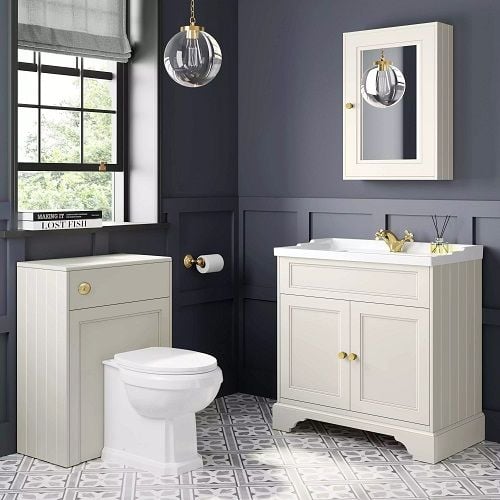
- Back To Wall Victorian: Back-to-wall Victorian toilets hide the cistern within a WC unit while keeping traditional pan styling. Concealed pipework reduces visual clutter in small rooms. Compact units improve layout flexibility.
- Low Level Toilet: Low level toilets use a wall-mounted cistern with a short flush pipe, maintaining Victorian style with reduced height compared to high-level systems. This format suits rooms with limited wall height.
- Compact High Level: Compact high-level toilets maintain traditional pull-chain styling while using reduced dimensions. Wall-mounted cistern must fit within available height under ceilings. Pull chain position must remain accessible.
- Short Projection Pan: Short projection pans reduce front-to-back depth to improve circulation space. Reduced depth prevents overcrowding near basins and doors. Compact pan design maintains seating comfort with careful shaping.
- Comfort Height Compact: Comfort height compact toilets provide slightly increased seat height for usability without large footprint increase. Height improves sit-to-stand ease. Compact sizing prevents loss of circulation space.
- Traditional Finish Details: Traditional finish details such as chrome or brass fittings, crosshead handles, and classic seat shapes maintain Victorian character. Small-scale detailing prevents visual overload.
What Bath Options Suit Small Victorian Bathrooms?
Best bath options for small Victorian bathrooms use compact lengths between 1200–1400 mm, corner positioning, shower-bath combinations, and wall-aligned designs, because limited space requires reduced footprint while maintaining traditional styling and usability. Victorian bathrooms traditionally use freestanding baths, but small layouts require scaled-down alternatives. Compact baths preserve circulation and prevent overcrowding. Corner and under-eaves placement maximise unused space.
- Compact 1400mm Bath: Compact 1400mm bath balances usability and space efficiency in small Victorian layouts. Reduced length fits narrow rooms without removing bathing function. Straight designs align easily with walls.
- Corner Bath Layout: Corner bath layout uses angled positioning to maximise unused corners. Placement frees central floor space and improves circulation. Triangular or offset shapes suit irregular layouts.
- Shower Bath Combination: Shower bath combination provides dual functionality in one fixture. L-shape or P-shape designs increase standing space for showering. Combined use reduces the need for separate shower enclosures.
- Freestanding Compact Bath: Freestanding compact bath maintains Victorian character while using reduced length. Compact designs allow decorative styling without full footprint. Placement must allow limited access around the bath.
- Inset Straight Bath: Inset straight bath fits tightly between walls to maximise width usage. Wall alignment reduces wasted space around the bath. Panelled sides conceal pipework and maintain clean edges.
What Mirror Styles And Frames Work Best In Victorian Spaces?

Best mirror styles and frames for Victorian bathrooms use ornate detailing, curved or oval shapes, metallic or painted finishes, and framed designs, because Victorian interiors emphasise craftsmanship, decorative edges, and visual focal points rather than minimal surfaces. Mirrors act as both functional and decorative elements. Frame detail defines the overall style more than mirror size alone.
- Ornate Framed Mirrors: Ornate framed mirrors use carved or decorative edges to create a strong focal point. Frames often feature scrollwork or floral detailing.
- Oval Mirror Shapes: Oval mirror shapes soften the overall bathroom design and suit traditional layouts. Rounded edges contrast with rectangular tiles and fittings. Oval mirrors improve balance in small spaces.
- Arched Mirror Design: Arched mirror design introduces height emphasis and classic Victorian character. Curved top sections draw the eye upward. Vertical shape improves perceived ceiling height.
- Gold And Brass Frames: Gold and brass frames provide traditional metallic finishes that define Victorian style. Warm tones complement white ceramics and patterned tiles. Metallic finishes add depth and richness.
- Painted Wood Frames: Painted wood frames use colours such as white, ivory, or black to match wall finishes. Painted finishes soften heavy detailing. Wood frames add warmth compared to metal.
- Bevelled Mirror Edges: Bevelled mirror edges add subtle decorative detail without heavy framing. Angled edges reflect light and improve visual depth. Bevelled designs suit both traditional and adapted Victorian layouts.
What Storage Solutions Work In Small Victorian Bathrooms?
Best storage solutions for small Victorian bathrooms use vertical space, under-basin adaptations, recessed storage, and multifunctional furniture, because traditional pedestal layouts reduce built-in storage and compact rooms require efficient organisation without visual clutter. Victorian design limits bulky cabinets, so storage must integrate with architectural features. Vertical storage increases capacity without reducing floor space. Hidden storage maintains traditional aesthetics.
- Under Basin Storage: Under basin storage uses skirts, compact units, or custom inserts around pedestal basins to recover lost space. Fabric skirts maintain Victorian styling while hiding items. Compact units fit tight footprints.
- Tall Narrow Units: Tall narrow units maximise vertical space without occupying large floor areas. Slim cabinets fit beside basins or between fixtures. Vertical storage suits towels and toiletries.
- Wall Mounted Shelves: Wall mounted shelves use upper wall space to store daily items without blocking movement. Elevated placement keeps items dry and accessible. Open shelving must remain organised to avoid clutter.
- Recessed Storage: Recessed storage fits within wall cavities to reduce projection in compact bathrooms. Built-in shelves maintain a clean and uncluttered appearance. Placement must avoid structural and plumbing elements.
- Over Toilet Storage: Over toilet storage uses vertical wall space above the cistern to add shelves or cabinets. This area often remains unused in small bathrooms. Compact shelving fits easily without affecting movement.
- Corner Storage Units: Corner storage units use unused corners to add compact shelving or cabinets. Corner placement improves layout efficiency. Small units prevent wasted space.
What Accessories Complete Small Victorian Bathroom Design?
Small Victorian bathroom design completes through carefully selected accessories such as brass fittings, decorative mirrors, traditional lighting, textile accents, and compact storage pieces, because accessories define the visual identity and enhance functionality without requiring additional space. Accessories must maintain Victorian style while avoiding clutter in compact layouts.
- Brass Fittings: Brass fittings include towel rails, hooks, and toilet roll holders with traditional detailing. Metallic finishes add warmth and period authenticity. Consistent finish selection across all fittings improves cohesion.
- Ornate Mirrors: Ornate mirrors act as focal points above basins and enhance decorative appeal. Framed designs with carved or bevelled edges reflect Victorian craftsmanship. Mirror size must match wall space to avoid overcrowding.
- Traditional Lighting: Traditional lighting includes wall sconces and decorative ceiling lights that match Victorian styling. Warm lighting tones improve ambience and comfort. Layered lighting improves visibility in compact spaces.
- Textile Accents: Textile accents include towels, bath mats, and curtains in muted or patterned designs. Soft materials add warmth and contrast to hard surfaces. Pattern scale must remain controlled in small spaces.
- Decorative Hardware: Decorative hardware includes handles, knobs, and small fixtures with traditional shapes. Detailed hardware reinforces Victorian style. Smaller elements add character without taking space.
- Compact Storage Accessories: Compact storage accessories such as trays, jars, and baskets organise small items without adding bulk. Grouped storage reduces clutter on surfaces. Decorative containers maintain style consistency.
What Heating Solutions Suit Small Victorian Bathrooms?

Best heating solutions for small Victorian bathrooms use compact, space-saving heat sources such as heated towel rails, slim radiators, and underfloor heating, because limited floor area and traditional layouts require efficient heat distribution without visual clutter. Victorian bathrooms often use decorative elements that restrict wall space. Heating must fit around freestanding baths and pedestal basins.
- Heated Towel Rails: Heated towel rails provide both heating and towel drying in one compact unit. Wall-mounted design saves floor space and suits small Victorian layouts. Placement near the bath or basin improves usability.
- Slim Radiators: Slim radiators fit narrow wall sections without reducing movement space. Vertical designs suit tight layouts and unused wall areas. Compact radiators provide focused heat output.
- Underfloor Heating: Underfloor heating distributes heat evenly across the floor surface. Hidden installation preserves traditional aesthetics without visible radiators. Warm flooring improves comfort on tiled Victorian floors.
- Traditional Column Radiators: Traditional column radiators match Victorian style while providing strong heat output. Decorative design complements period interiors. Compact versions suit smaller bathrooms.
- Electric Heating Units: Electric heating units provide flexible installation where central heating access is limited. Quick heat response improves comfort in small bathrooms.
What Are Common Mistakes In Small Victorian Bathroom Design?
Common mistakes in small Victorian bathroom design include oversized fixtures, poor space planning, excessive decoration, inadequate storage, weak lighting, poor ventilation, and ignoring plumbing constraints, because compact layouts require careful balance between traditional style and functional efficiency. Victorian style uses larger proportions and detailed finishes that can overwhelm small spaces. Poor planning reduces usability and increases maintenance issues.
- Oversized Fixtures: Oversized fixtures such as large freestanding baths and wide basins reduce available movement space. Large items create overcrowding in small layouts. Reduced clearance increases collision risk.
- Poor Layout Planning: Poor layout planning places fixtures without considering circulation and access. Narrow gaps between fixtures reduce usability. Incorrect positioning affects comfort and daily use.
- Excessive Decoration: Excessive decoration uses too many patterns, colours, and details in a limited space. Visual clutter reduces perceived size. Overuse of traditional elements overwhelms the layout.
- Lack Of Storage: Lack of storage leads to cluttered surfaces and reduced usability. Pedestal basins limit built-in storage options. Missing storage forces items onto visible surfaces.
- Weak Lighting Design: Weak lighting design creates shadows and dark zones in compact bathrooms. Single light sources do not cover all areas. Poor lighting reduces usability and safety.
- Inadequate Ventilation: Inadequate ventilation increases moisture buildup and mould risk. Small bathrooms trap humidity more easily. Poor airflow damages materials and finishes.
How Much Does A Small Victorian Bathroom Renovation Cost?
A small Victorian bathroom renovation in the UK typically costs £3,000–£9,000 for standard upgrades, and £9,000–£15,000+ for premium finishes, because cost depends on layout complexity, plumbing changes, tiling detail, and fixture quality rather than room size alone. Small bathrooms do not reduce labour significantly because plumbing, electrics, and installation time remain similar. Victorian styling can increase cost due to decorative finishes and traditional fittings.
- Budget Renovation Cost: Budget renovation cost typically sits between £3,000–£5,000 for basic layouts using standard fixtures and minimal design complexity. Existing plumbing positions reduce labour cost.
- Mid Range Cost: Mid-range renovation cost typically sits between £5,000–£9,000 with improved fixtures, decorative tiling, and better lighting. Victorian-style elements such as patterned flooring and traditional fittings increase material cost.
- Premium Renovation Cost: Premium renovation cost typically ranges from £9,000–£15,000+ with freestanding baths, high-level toilets, bespoke tiling, and detailed finishes. Custom layouts and structural adjustments increase labour cost.
- Plumbing Cost Impact: Plumbing cost impact increases when soil pipes or water feeds must be relocated. Victorian layouts often require exposed pipe alignment. Moving fixtures significantly increases labour time.
- Tiling And Finish Cost: Tiling and finish cost rises with patterned Victorian tiles and detailed layouts. Mosaic and border designs require more labour time. Larger tile areas increase material cost. Decorative finishes increase overall budget.
- Labour Cost Factor: Labour cost factor remains high even in small bathrooms because installation time for plumbing, electrics, and waterproofing does not reduce proportionally. Labour often forms the largest portion of the budget.
Summing Up
A successful small Victorian bathroom works when traditional character fits the space instead of competing with it. Compact versions of classic fixtures, balanced colour palettes, and controlled detailing keep the room practical while still reflecting Victorian style. Good layout decisions, especially around circulation and fixture placement, make the biggest difference to daily comfort.
Performance improves when lighting, ventilation, and heating are planned together. Bright, layered lighting reduces shadows, proper ventilation prevents condensation, and compact heating solutions maintain comfort without taking space. Storage must use walls, corners, and under-basin areas to keep surfaces clear and organised.
Long-term value depends on making careful choices early. Avoiding oversized fixtures, excessive decoration, and poor planning prevents costly changes later. When space, function, and style stay aligned, a small Victorian bathroom becomes efficient, comfortable, and easy to maintain for everyday use.