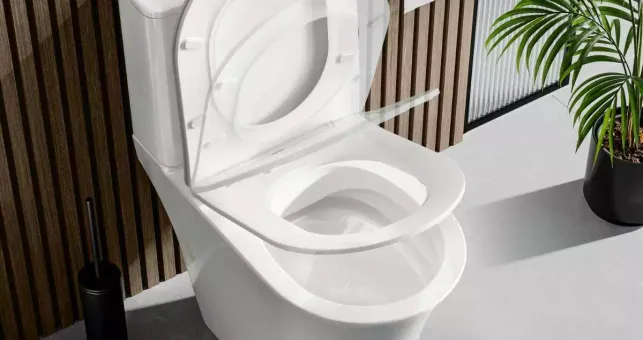
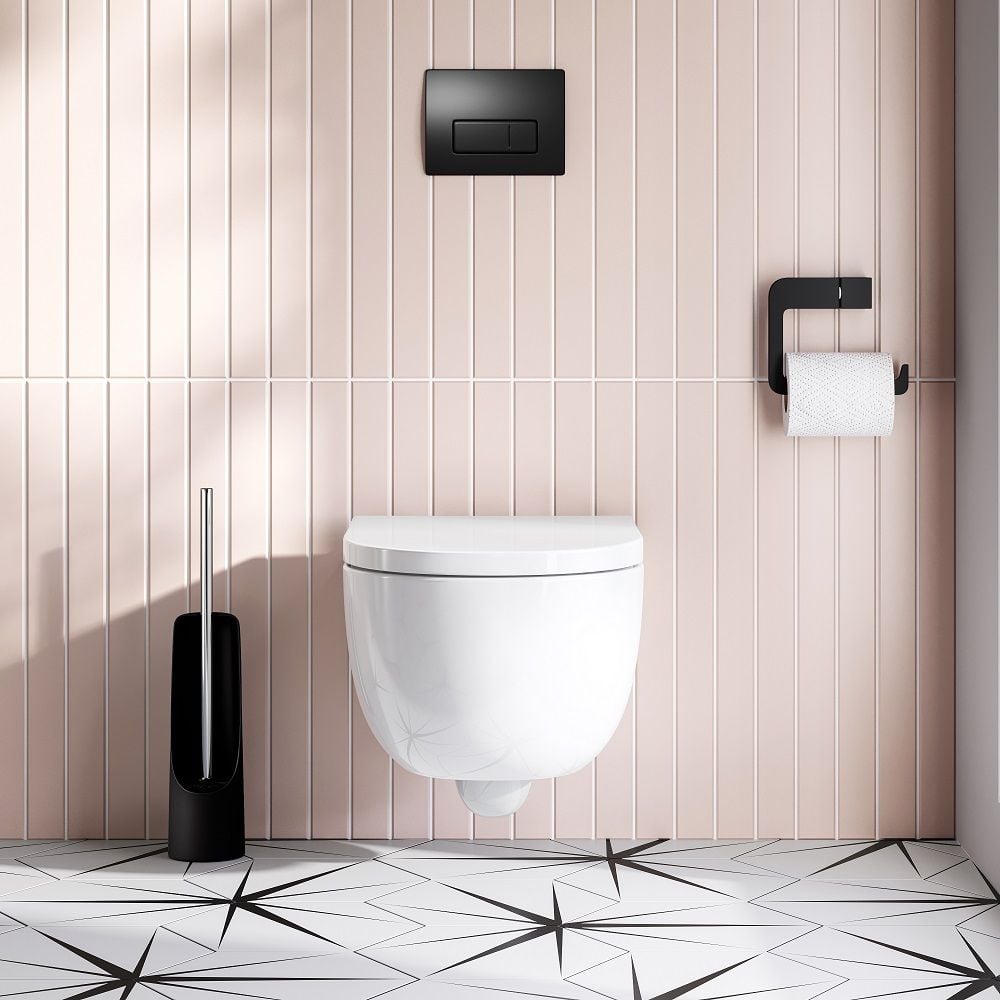
Wall-hung toilets are a modern bathroom solution that suspend the toilet bowl from the wall, conceal the cistern, and expose the floor beneath for improved hygiene and visual clarity.
Interest in wall-hung toilets has increased as bathroom design shifts toward minimalism, space efficiency, and easier cleaning. Concealed systems replace exposed pipework and bulky cisterns with cleaner wall lines and floating fixtures.
This article evaluates whether wall-hung toilets are worth the investment by examining design differences, advantages, disadvantages, cost, durability, maintenance, and suitability for different bathroom types.
What Is a Wall-Hung Toilet?
A wall-hung toilet is a toilet system where the ceramic bowl mounts to a concealed steel frame inside the wall, leaving the floor beneath fully exposed and hiding the cistern and pipework.
Wall-hung toilets separate structural support from the ceramic bowl by transferring load into a steel carrier frame fixed to the wall and floor. The visible elements consist only of the bowl and flush plate. Plumbing and fixings remain concealed behind the finished wall surface.
This system contrasts with traditional toilets that rely on floor-mounted ceramic bases and exposed cisterns, changing both appearance and installation requirements.
How Do Wall-Hung Toilets Work?
Wall-hung toilets work by transferring user weight through a concealed steel frame, controlling flushing via a hidden cistern, and discharging waste through a rear outlet connected to the soil pipe.
The steel frame supports static and dynamic loads independently of the ceramic bowl. The concealed cistern stores and releases flush water. Gravity moves waste horizontally into the soil pipe located behind the wall.
System reliability depends on correct frame fixing, accurate pipe alignment, and secure bowl mounting.
How Does the System Operate Step by Step?
- Support load
The steel carrier frame transfers user weight into the wall structure and floor slab through multiple anchor points. - Store flush water
The concealed cistern holds a preset flush volume, commonly 3/6 litres in dual-flush systems. - Activate flushing
The flush plate triggers a mechanical or pneumatic valve that releases water into the bowl rim. - Discharge waste
Waste flows through the rear outlet into the concealed soil pipe using gravity. - Refill the cistern
The inlet valve refills the cistern to its preset level after flushing.

What Are the Key Components of a Wall-Hung Toilet?
A wall-hung toilet consists of a steel support frame, a concealed cistern, and a wall-mounted ceramic bowl, with each component performing a defined role.
Component separation improves durability, hygiene, and long-term servicing compared to integrated floor-standing designs.
Key Components
- Steel frame
Transfers all static and dynamic user load into the wall structure and floor slab rather than into ceramic materials.
The frame is manufactured from welded steel profiles and fixed using multiple anchor points. Load ratings typically range between 400–500 kg. The frame also provides precise fixing points for the bowl, cistern, and flush plate, ensuring long-term alignment stability.
- Concealed cistern
Stores and releases flush water from within the wall cavity while remaining visually hidden.
The cistern connects directly to the water supply and flush mechanism and discharges water into the bowl rim through controlled channels. Concealment reduces visible clutter and dampens flush noise. Maintenance access is provided through the flush plate opening.
- Wall-mounted bowl
Provides the user-facing ceramic surface and waste channel without floor contact.
The bowl mounts directly to the steel frame using threaded steel rods. Waste exits through a rear horizontal outlet aligned with the concealed soil pipe. Absence of a floor base improves hygiene and allows unrestricted floor cleaning beneath the bowl.
How Do Wall-Hung Toilets Differ from Floor-Standing Toilets?
Wall-hung toilets differ from floor-standing toilets through first-fix installation requirements, enhanced visual openness, and improved hygiene outcomes caused by the absence of floor contact.
These differences affect how bathrooms are designed, built, and maintained. Structural integration, spatial perception, and cleaning behaviour change as a direct result of suspending the toilet bowl from the wall rather than fixing it to the floor.
Understanding these differences clarifies suitability for renovation projects, new builds, and long-term bathroom performance.
- Installation method
Wall-hung toilets require first-fix structural installation before wall finishing, as the steel frame, cistern, and pipework must be fixed inside the wall cavity.
Installation occurs during early construction or renovation stages. Floor-standing toilets install after floor and wall finishes and connect directly to visible soil outlets. Wall-hung systems therefore demand earlier planning, accurate measurements, and coordinated plumbing and wall construction. - Visual impact
Wall-hung toilets expose uninterrupted floor space beneath the bowl, creating a lighter and more modern bathroom appearance.
Continuous flooring lines extend visually across the room. The absence of a ceramic base reduces visual mass at floor level. This effect increases perceived space, particularly in compact bathrooms, without altering room dimensions. - Hygiene performance
Wall-hung toilets remove floor-mounted junctions where moisture, dust, and bacteria commonly accumulate.
Traditional toilet bases create sealed edges that trap dirt and cleaning residue. A suspended bowl eliminates these contact points, allowing complete floor access beneath the toilet and improving routine cleaning efficiency and hygiene consistency.

What Are the Advantages of Wall-Hung Toilets?
Wall-hung toilets provide functional, visual, and hygienic advantages through suspended installation, concealed systems, and adjustable configuration.
These advantages affect daily use, long-term maintenance, and overall bathroom perception. Each advantage is expanded below with practical detail.
- Space perception
Visible floor area increases because the toilet bowl does not contact the floor. Continuous flooring lines remain uninterrupted beneath the toilet. The absence of a ceramic base reduces visual mass at floor level. Bathrooms appear larger and less cluttered, especially in rooms under 5 m². - Modern appearance
Concealed cisterns and pipework remove exposed components from view. Wall surfaces remain visually clean and uniform. The bowl presents a minimal, floating profile. This design aligns with contemporary bathroom layouts that prioritise straight lines, symmetry, and reduced visual noise. - Easier cleaning
Full floor access beneath the bowl allows unrestricted mopping and vacuuming. No silicone joints or base edges exist to trap dirt, moisture, or limescale. Cleaning time reduces and hygiene consistency improves because all floor areas remain reachable without obstruction. - Adjustable height
Seat height is set during installation rather than fixed by ceramic base dimensions. Typical installation heights range between 400–480 mm from finished floor level. Height adjustment supports comfort for taller users, accessibility needs, and ageing-in-place bathroom designs. - Quieter flushing
The cistern sits inside the wall cavity rather than exposed to the room. Wall materials and insulation absorb sound generated during flushing. Flush noise becomes less sharp and less noticeable compared to exposed cistern systems, improving acoustic comfort in adjacent rooms.
What Are the Disadvantages of Wall-Hung Toilets?
Wall-hung toilets involve higher upfront cost, more complex installation, and reliance on suitable wall structures.
These limitations affect suitability for some projects.
Key Disadvantages
- Higher cost
Steel frames and concealed cisterns increase product and labour expense. - Installation complexity
Structural fixing and first-fix plumbing require professional expertise. - Maintenance access limits
Major repairs may require wall access beyond the flush plate. - Structural requirements
Reinforced stud walls or solid masonry walls are required.
How Much Do Wall-Hung Toilets Cost?
Wall-hung toilets cost more than standard toilets due to additional components and labour requirements. Total cost varies by product quality and installation complexity.
Cost Breakdown
- Product cost
Wall-hung toilet sets typically range from £350 to £900. - Installation cost
Labour typically ranges from £500 to £1,200. - Value consideration
Long-term aesthetic durability and hygiene benefits offset upfront cost for many homeowners.
Are Wall-Hung Toilets Durable and Strong?
Wall-hung toilets are structurally strong due to steel frame support rather than ceramic floor loading.
Correct installation ensures long-term reliability.
Strength Factors
- Weight capacity
Most frames support 400–500 kg static load. - Load distribution
Frames spread forces across wall and floor fixings. - Service life
Frame coatings and concealed installation support long-term durability.
Are Wall-Hung Toilets Easy to Maintain?
Wall-hung toilets allow routine maintenance through the flush plate opening while keeping most components concealed.
Design focuses on accessibility without visual clutter.
Maintenance Considerations
- Cistern access
Flush plate removal provides access to internal components. - Common issues
Valve wear and flush mechanisms match traditional cistern systems. - Parts availability
Replacement parts remain widely available for standard systems.
Are Wall-Hung Toilets Suitable for Small Bathrooms?
Wall-hung toilets suit small bathrooms by improving visual continuity, absorbing cistern depth into wall structures, and supporting efficient layout planning when integrated early.
These factors influence how compact bathrooms feel, function, and remain practical over time. Each consideration is expanded below.
- Perceived space
Floating toilet bowls increase visible floor area by removing the ceramic base from ground level. Continuous flooring lines extend beneath the bowl without interruption. Visual clutter reduces at eye and floor level. Compact bathrooms appear wider and less congested despite unchanged physical dimensions. - Wall depth
Stud walls or recessed solid walls absorb the cistern and frame depth, typically between 80–120 mm. The toilet projection into the room reduces compared to close-coupled designs with exposed cisterns. Effective wall depth management prevents loss of usable floor space in narrow bathrooms. - Layout planning
Early integration allows alignment of the frame, soil pipe, and water supply within existing wall voids. Fixture positioning becomes optimised before tiling and wall finishing. Poor late-stage planning increases projection, restricts movement zones, and compromises visual balance in compact layouts.

Who Should Choose a Wall-Hung Toilet?
Wall-hung toilets are best suited to new builds, full bathroom renovations, and accessibility-focused bathroom projects where structural integration, layout control, and user comfort take priority over lowest upfront cost.
These use cases share a common characteristic: early-stage planning or wall access. Wall-hung toilet systems perform best when frame installation, plumbing alignment, and wall finishing occur as part of a coordinated build or renovation sequence rather than as a late replacement.
Suitability depends on construction stage, intended bathroom lifespan, and user requirements rather than room size alone.
- New builds
First-fix integration simplifies installation because wall-hung toilet frames, cisterns, and pipework install before wall boarding and tiling.
Structural fixing occurs without demolition. Plumbing routes align cleanly within wall cavities. Finished walls conceal all components seamlessly. Installation accuracy improves and labour time reduces compared to retrofitting into completed bathrooms. - Full renovations
Full renovations make wall modification practical by allowing stud walls to be rebuilt or solid walls to be chased before finishes are applied.
Existing plumbing can be repositioned. Frame depth integrates into new wall constructions. Tile layouts remain uninterrupted. Renovation scope supports correct load transfer and long-term reliability without visual compromise. - Accessibility-focused bathrooms
Adjustable installation height supports improved comfort, transfer safety, and long-term usability.
Seat height can be set higher than standard floor-standing toilets to reduce knee and hip strain. The absence of a floor-mounted base improves wheelchair access and cleaning reach. Design flexibility supports ageing-in-place and inclusive bathroom layouts.
Wall-Hung Toilets vs Back-to-Wall Toilets
Wall-hung toilets differ from back-to-wall toilets through structural load support, installation complexity, cost profile, and floor-level hygiene performance.
Both toilet types conceal cisterns and pipework behind the wall, creating a similar visual outcome. Functional performance differs because wall-hung toilets suspend fully from steel frames, while back-to-wall toilets continue to rely on floor contact for load bearing.
Understanding these differences clarifies which option suits specific bathroom layouts, budgets, and maintenance expectations.
- Structural support
Wall-hung toilets suspend entirely from a concealed steel carrier frame fixed to the wall and floor structure. All user load transfers through the frame rather than through ceramic contact with the floor.
Back-to-wall toilets conceal the cistern but retain a ceramic base fixed directly to the floor. Load transfers vertically through the toilet base into the subfloor. Structural demands are lower, but floor contact remains unavoidable. - Cost and installation
Back-to-wall toilets install faster because no load-bearing frame is required and fixing occurs after floor and wall finishes. Installation typically involves standard plumbing connections and floor fixing.
Wall-hung toilets require first-fix installation of a steel frame, precise pipe alignment, and wall finishing coordination. Labour time increases and material costs rise due to the frame and concealed cistern system. - Cleaning performance
Wall-hung toilets allow full access to the floor beneath the bowl, removing base joints and sealant lines where dirt and moisture accumulate. Floor cleaning becomes uninterrupted and more consistent.
Back-to-wall toilets improve cleaning compared to close-coupled toilets but retain a floor-mounted base. Silicone joints around the base continue to collect dust and limescale, limiting hygiene performance compared to fully suspended designs.
What Should Be Considered Before Installation?
Successful installation depends on wall type, plumbing layout, and professional execution.
Early planning prevents defects.
Installation Considerations
- Wall structure
Reinforced stud walls or solid masonry walls are required. - Plumbing alignment
Soil pipe and water feed positions must match frame dimensions. - Professional installation
Experienced installers reduce structural and functional risk.
Are Wall-Hung Toilets Worth It?
Wall-hung toilets deliver measurable hygiene, design, and usability advantages while introducing higher upfront cost and installation complexity. The decision depends on renovation scope, budget tolerance, and long-term bathroom expectations rather than short-term savings.
A balanced evaluation requires expanding advantages, disadvantages, and suitability in practical terms.
- Advantages
Wall-hung toilets improve hygiene by removing floor-mounted bases that trap moisture, dust, and limescale.
Visual appearance becomes cleaner due to concealed cisterns and uninterrupted floor lines.
Adjustable installation height supports comfort, accessibility, and long-term usability.
Quieter operation results from wall-enclosed cisterns that dampen flush noise.
These combined factors improve daily use quality and perceived bathroom value. - Disadvantages
Higher initial cost results from steel carrier frames, concealed cisterns, and extended labour.
Installation complexity increases because structural fixing and first-fix plumbing must occur before wall finishing.
Retrofit projects require wall modification, increasing time and disruption compared to direct toilet replacement. - Verdict
Wall-hung toilets suit modern UK bathrooms where hygiene standards, visual simplicity, and functional longevity outweigh higher upfront cost and installation effort.