Different shower types perform differently depending on water pressure, bathroom layout, budget, accessibility needs, and maintenance demands. Shower selection depends on five factors: plumbing system, pressure level, enclosure size, installation complexity, and usage pattern. Low-pressure homes suit power showers, pumped mixers, and compact heads. High-pressure systems support rainfall showers, body jets, dual-outlet systems, and overhead layouts. Water efficiency depends on flow rate, duration, and showerhead design—low-flow heads reduce consumption more effectively than enclosure changes.
Installation costs vary by type. Electric showers cost less (smaller footprint); digital showers, power showers, walk-in showers, and wet rooms cost more (controls, pumps, waterproofing, drainage, tray fitting labour intensive). Accessibility improves via level access, grab rails, fold-down seats, thermostatic controls, hand-held heads, non-slip flooring, and easy-reach controls. Common shower problems include low pressure, temperature fluctuation, blocked drainage, leaking seals, dripping valves, limescale, and door misalignment. Maintenance includes daily moisture removal, weekly cleaning, monthly descaling, quarterly seal/drainage checks, and annual servicing for complex systems.
Latest trends favour walk-in showers, frameless glass, fluted panels, curved profiles, brushed nickel finishes, larger spaces, and spa-style wet rooms.
What Are The Different Shower Types And Enclosure Systems Available For Bathrooms?

The main shower types and enclosure systems for bathrooms are electric showers, mixer showers, thermostatic showers, digital showers, power showers, walk-in showers, quadrant shower enclosures, sliding door enclosures, pivot door enclosures, bi-fold door enclosures, hinged door enclosures, recessed enclosures, and bath shower screens.
Bathroom shower selection depends on 3 main factors: water pressure, bathroom layout, and enclosure footprint. Electric showers heat water internally and suit homes with limited hot water capacity. Mixer showers combine hot and cold water from the household supply and suit homes with stable pressure. Thermostatic showers maintain a set temperature and reduce temperature fluctuation risk. Digital showers use electronic controls for precise temperature and flow adjustment. Power showers include an integrated pump and suit gravity-fed systems with low pressure.
Mixer Shower
A mixer shower blends hot and cold water from the household supply through a single valve to produce a controlled shower temperature. Mixer showers suit homes with a combi boiler, unvented cylinder, or balanced high-pressure plumbing system. Mixer shower performance depends on stable pressure at both inlets. Bathroom Mountain customers often choose mixer showers for temperature control, finish choice, and compatibility with modern shower valves.
Electric Shower

An electric shower heats cold mains water inside the unit and delivers hot water without using stored hot water. Electric showers suit bathrooms with limited hot water capacity and properties with separate shower demand. Electric shower output is measured in kilowatts, with 8.5 kW, 9.5 kW, and 10.5 kW models common in Britain. Flow of electric showers usually decreases during winter because colder inlet water requires more heating.
Power Shower
A power shower mixes hot and cold water and uses an integrated pump to increase shower flow on low-pressure gravity-fed systems. Power showers suit properties with cold water tanks and hot water cylinders rather than mains-pressure combi systems. Power shower installation normally requires compatible stored-water plumbing. Power shower performance is stronger than standard gravity-fed mixer shower performance because the pump raises outlet pressure.
Combi Shower
A combi shower is a shower system supplied directly by a combination boiler without a separate hot water cylinder or cold water tank. Combi showers usually use mixer or thermostatic controls connected to mains-fed hot and cold water from the boiler circuit. Combi shower performance depends on boiler size, flow rate, and simultaneous household demand. Smaller boilers often reduce combined shower output during peak usage.
Rain Shower
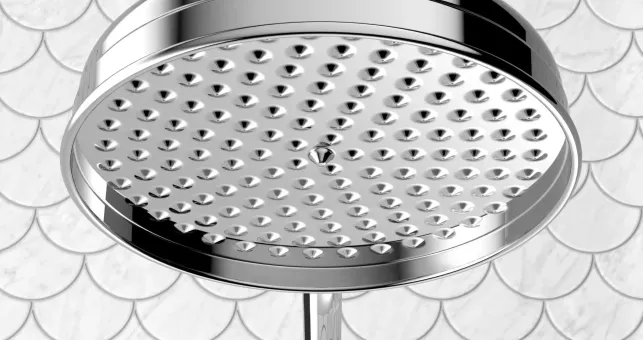
A rain shower is a shower with a large overhead head designed to spread water across a wider surface area for a softer coverage pattern. Rain shower heads are usually ceiling-mounted or arm-mounted and often measure 200 mm to 400 mm wide. Rain shower systems suit mains-pressure and pumped systems better than weak gravity-fed supplies. Rain shower styling is common in contemporary bathrooms and hotel-style bathroom designs.
Digital Shower
A digital shower uses an electronic control unit to manage shower temperature and water flow with precision controls or remote activation. Digital showers often include temperature presets, start-stop buttons, and wall-mounted or wireless controllers. Digital shower systems separate the valve from the user interface, which reduces visible pipework. Digital shower performance depends on the paired water system, such as high-pressure mains or gravity-fed with a pump.
Body Jet Shower System
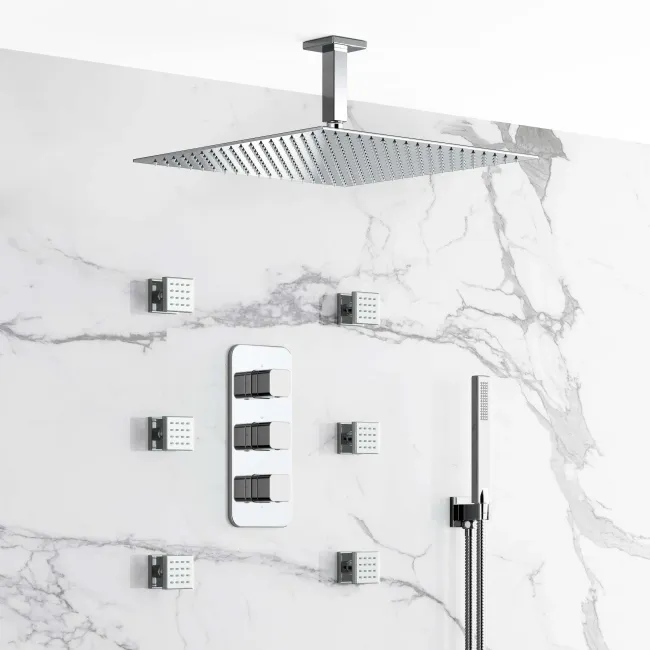
A body jet shower system adds side-mounted spray jets that direct water horizontally across the body as part of a multi-outlet shower layout. Body jet shower systems usually combine overhead showering, hand showering, and 2 to 6 body jets in one installation. Body jet systems require strong flow and pressure to perform correctly. High-output unvented systems and pumped systems support body jet shower layouts more effectively than weak supplies.
Steam Shower
A steam shower is an enclosed shower system that generates warm vapour inside a sealed cabin or enclosure. Steam shower systems combine standard showering with a steam generator, enclosed roof section, and controlled venting environment. Steam shower units usually include seating, controls, and lighting in one structure. Enclosure sealing is essential because steam performance depends on heat retention inside the showering space.
Overhead Shower

An overhead shower is a fixed shower head mounted above the user to direct water downward from a central position. Overhead shower heads create broad coverage and suit minimalist bathroom layouts. Overhead shower installation is common in concealed valve systems, twin-outlet systems, and rainfall shower designs. Ceiling-mounted and wall-arm-mounted versions are the 2 main overhead shower formats used in residential bathrooms.
Hand-Held Shower
A hand-held shower is a movable shower head attached to a flexible hose for targeted rinsing and adjustable positioning. Hand-held showers suit family bathrooms, accessible bathrooms, and shared shower spaces because the spray direction is flexible. Hand-held shower heads are often paired with riser rails for height adjustment. Many hand-held models include 3 to 5 spray patterns such as rain, massage, and mixed flow.
Rainfall Shower
A rainfall shower is a large overhead shower head designed to release water in a broad, even pattern that imitates rainfall. Rainfall shower systems are a subtype of overhead shower and are often larger than standard fixed heads. Rainfall shower heads usually need stronger pressure for full-face coverage across all nozzles. Contemporary bathroom layouts often use rainfall shower heads with concealed valves and separate hand showers.
Thermostatic Shower

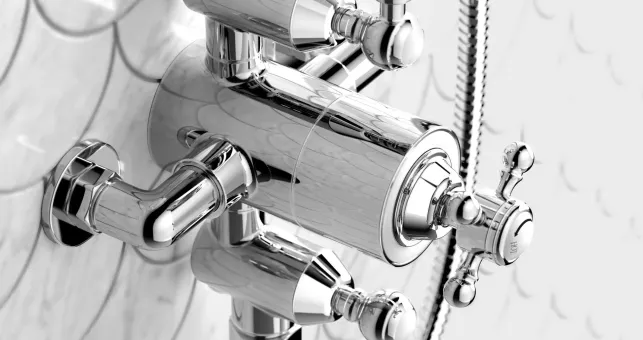
A thermostatic shower keeps water near a set temperature by automatically adjusting the hot and cold mix inside a thermostatic valve. Thermostatic showers improve temperature stability and reduce sudden temperature swings when taps or appliances draw water elsewhere in the property. Family bathrooms often use thermostatic showers for safety and comfort. TMV-style temperature regulation is widely recognised in British bathroom design and specification.
Wet Room Shower
A wet room shower is an open showering area built into a waterproofed bathroom floor with direct drainage and minimal enclosure framing. Wet room showers usually use a floor former or pre-sloped tray beneath the finished floor surface. Wet room shower layouts improve access and create a larger visual footprint. Proper tanking is essential because waterproofing protects surrounding floors and walls from long-term water ingress.
Enclosed Shower
An enclosed shower is a shower space formed by a shower tray, shower door, and surrounding glass or wall boundaries. Enclosed showers contain spray more effectively than open shower layouts and suit compact bathrooms, en suites, and family bathrooms. Common enclosure shapes are square, rectangular, quadrant, and offset quadrant. Enclosed shower systems also simplify drainage planning because water remains inside a defined footprint.
Walk-In Shower
A walk-in shower is a showering area with open access, usually formed by one or more fixed glass panels and a low-profile tray or wet room floor. Walk-in showers improve access and create a spacious bathroom appearance. Walk-in shower designs often use 700 mm to 1200 mm glass panels depending on splash protection requirements. Larger bathrooms suit full walk-in formats better because open entry needs clear circulation space.
Frameless Glass Shower Enclosure
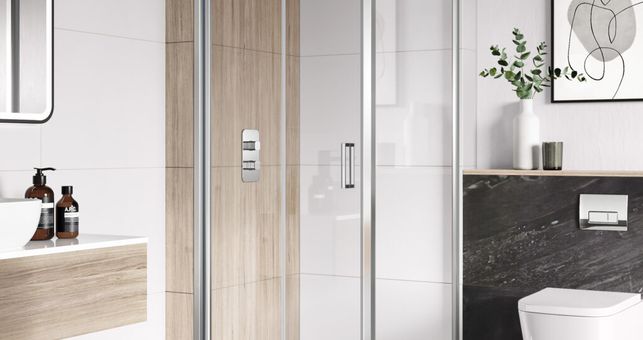
A frameless glass shower enclosure uses thick safety glass with minimal visible framing to create a cleaner and more open bathroom appearance. Frameless enclosures usually use 8 mm or 10 mm toughened glass with discreet hinges, brackets, or channels. Frameless shower designs reduce visual bulk and suit contemporary bathrooms. Accurate installation is important because frameless doors rely on precise alignment for sealing and smooth operation.
Corner Shower
A corner shower is a shower enclosure positioned in a bathroom corner to use two existing walls and reduce floor-space demand. Corner shower layouts are common in small bathrooms and en suites because corner placement frees central floor area. Quadrant, square, and neo-angle designs are all corner shower formats. Corner shower trays often range from 700 mm to 1000 mm wide depending on enclosure shape.
Curved Shower Enclosure
A curved shower enclosure is a corner shower enclosure with a bowed front that softens the footprint and improves entry space. Curved shower enclosures are usually quadrant or offset quadrant designs. Curved glass reduces hard front corners, which improves circulation in smaller bathrooms. Many British bathrooms use curved shower enclosures where sink, WC, and shower spacing is tight.
Pivot Door Shower
A pivot door shower is a shower enclosure with a door that opens on pivot points at the top and bottom or on a side hinge system. Pivot door showers create a wide, direct entry and suit recesses, corners, and rectangular enclosures. Pivot door opening needs front clearance outside the enclosure. Medium and larger bathrooms suit pivot door layouts better than very tight en suites.
Sliding Door Shower
A sliding door shower is a shower enclosure with one or more glass panels that move sideways instead of opening outward. Sliding door showers save external clearance space and suit narrow bathrooms or en suites with limited front access. Sliding door systems are common on rectangular and recessed enclosures. Larger enclosure widths, including 1000 mm, 1200 mm, and 1400 mm, often use sliding formats.
Bi-Fold Door Shower
A bi-fold door shower is a shower enclosure with a door that folds inward in sections to reduce external opening space. Bi-fold door showers suit compact bathrooms where a pivot or hinged door would obstruct nearby sanitaryware. Inward folding design improves clearance in front of the enclosure. Smaller recessed and corner shower spaces often use bi-fold doors for practical access.
Fixed Panel Shower
A fixed panel shower is a shower screen made from one stationary glass panel without a moving door. Fixed panel showers are common in walk-in shower layouts and wet room-style bathrooms. Fixed panels create a minimal appearance and reduce moving parts. Panel width is important because wider panels improve splash control, while narrower panels increase openness and circulation.
Shower Curtain Setup
A shower curtain setup uses a rail or pole and a water-resistant curtain to contain shower spray around a bath or shower tray. Shower curtain setups are simple, low-cost, and widely used in rental properties, family bathrooms, and bath-shower combinations. Curtain systems are less rigid than glass enclosures and usually need more maintenance for hygiene. Polyester and PEVA are 2 common curtain materials.
Dual-Outlet Shower System
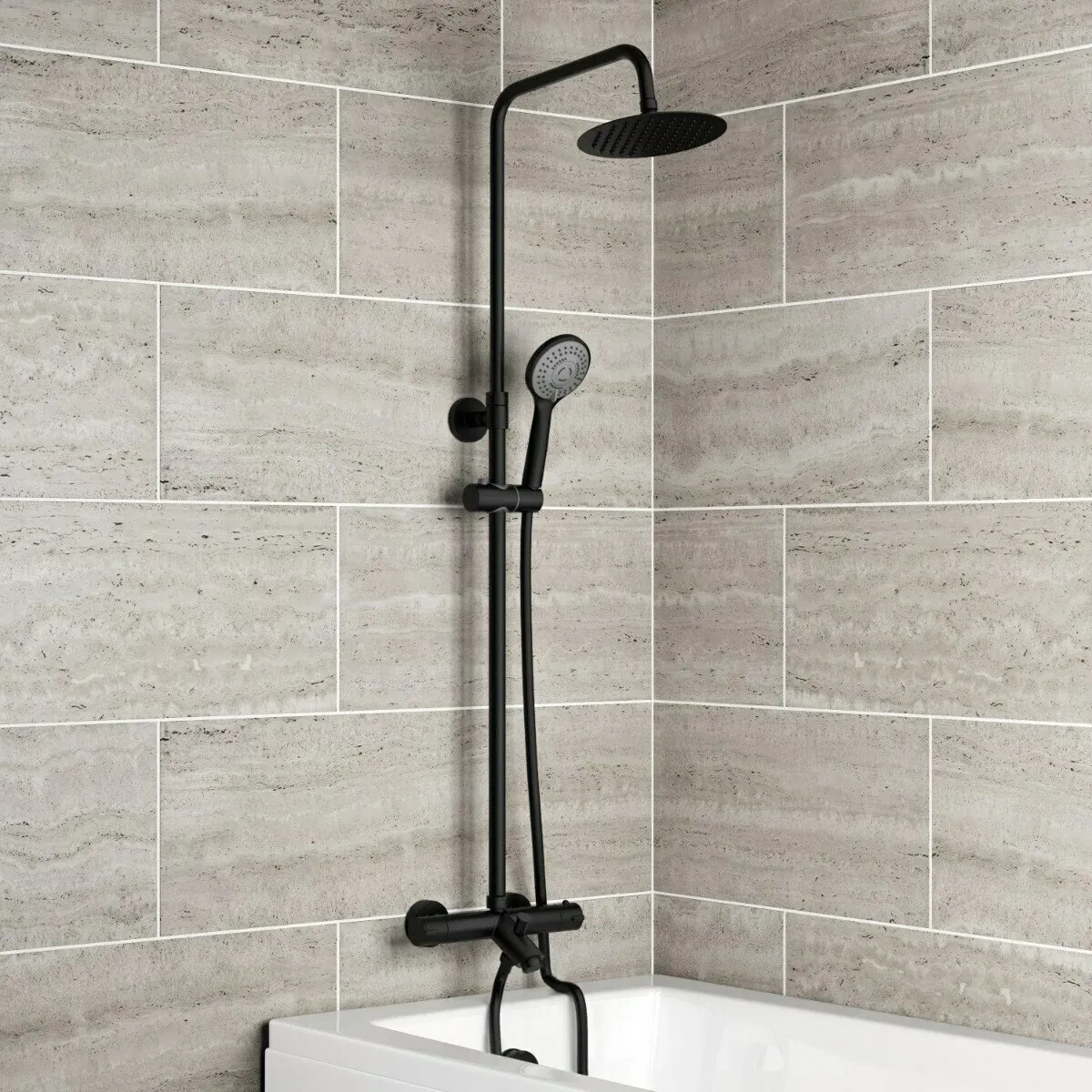
A dual-outlet shower system supplies water to 2 shower outlets, usually an overhead shower and a hand-held shower, from one valve. Dual-outlet shower systems improve flexibility because users can switch between rinse patterns or combine functions where the valve supports both. Dual-outlet layouts are common in modern family bathrooms. Water demand is higher than single-outlet demand, so system compatibility matters.
Gravity-Fed Shower
A gravity-fed shower is a shower supplied by water stored in a cold tank and hot water cylinder, where flow is created by height difference rather than mains pressure. Gravity-fed shower pressure is usually lower than mains-pressure shower pressure. Older British homes often use gravity-fed plumbing. Pump assistance is common where the vertical head is limited and natural shower flow feels weak.
Mains-Pressure Shower
A mains-pressure shower is a shower supplied directly from the incoming mains water system or from a boiler or cylinder operating at mains pressure. Mains-pressure showers usually deliver stronger and more stable flow than gravity-fed showers. Unvented cylinders and combi boilers commonly support mains-pressure shower performance. Many modern mixer, thermostatic, and digital showers are designed for mains-pressure plumbing.
Pressurised Shower System
A pressurised shower system is a shower arrangement that uses boosted or high-pressure water delivery to improve shower flow, spray strength, and outlet performance. Pressurised shower systems include unvented cylinders, combi-fed mains systems, and pumped gravity-fed systems. Pressurised supply is important for rainfall heads, body jets, and dual-outlet layouts. Larger multi-function shower systems perform best where pressure and flow are both strong.
Which Shower Type Is Best For Low-Pressure Homes And How Can Pressure Be Improved?

Power showers and pumped mixer showers are the most effective shower options for low-pressure homes because a pump increases water flow and spray force more consistently than a standard mixer, rainfall head, or dual-outlet system. Low-pressure shower performance depends on 3 factors: plumbing system type, available flow rate, and vertical head height. Gravity-fed systems usually deliver weaker shower pressure because water movement depends on storage tank height rather than direct mains force.
Enclosure style does not solve weak pressure, while shower valve type and pump support directly affect performance. Low-pressure bathrooms usually work better with compact shower heads, single-outlet controls, and pressure-matched plumbing components.
Power Showers
Power showers combine hot and cold water and use an integrated pump to increase shower flow on gravity-fed plumbing systems. Power showers suit homes with a cold water tank and hot water cylinder rather than combi boilers. Pumped delivery improves spray force more effectively than a standard mixer shower on weak pressure. Power shower layouts also suit enclosed shower spaces where stronger directional spray is needed.
Pumped Mixer Showers

Pumped mixer showers use a separate shower valve and pump combination to improve low-pressure shower output. Pumped mixer showers suit gravity-fed bathrooms where a homeowner wants more control over valve design and outlet style. Separate pump installation also supports overhead showers and hand-held showers more effectively than an unboosted valve. Pump specification must match plumbing layout, outlet demand, and hot water capacity.
Electric Showers
Electric showers heat cold mains water inside the unit and provide a practical shower option where stored hot water is limited. Electric showers help maintain shower function in smaller homes and secondary bathrooms. Electric showers do not create high flow rates because output still depends on incoming mains supply and kilowatt rating. Winter performance often feels lower because colder inlet water needs more heating time.
Gravity-Fed Systems
Gravity-fed shower systems rely on vertical distance between the storage tank and the shower outlet to create water flow. Limited head height usually reduces spray force and rinse speed. Older British homes often use gravity-fed plumbing, which explains why many bathrooms experience weak shower performance. Pressure improvement usually requires a pump, higher tank position, or lower-resistance shower head.
Pressure Improvement
Shower pressure improves through pump installation, pipework correction, valve checks, and flow-efficient shower head selection. A dedicated shower pump is the most direct upgrade for a gravity-fed bathroom. Open stop valves, clean filters, and descaled shower heads also improve flow where blockages restrict water movement. The Energy Saving Trust has noted that efficient shower fittings can influence household water use, which makes component choice important in both performance and consumption planning.
Shower Head Choice
Compact hand-held shower heads and low-pressure shower heads perform better on weak systems than large rainfall heads or body jet layouts. Smaller spray faces need less water volume to produce a usable shower pattern. Rainfall shower heads often underperform on weak pressure because wide nozzles need stronger and more even flow. Low-pressure bathrooms usually benefit from single-outlet design rather than multi-function showering.
System Upgrades
Unvented cylinders, mains-pressure plumbing, and pressurised shower systems provide stronger long-term pressure improvement than basic fixture replacement. Mains-pressure upgrades support thermostatic showers, digital showers, and dual-outlet systems more effectively than gravity-fed layouts. Larger shower heads and multi-outlet systems need both pressure and flow volume to work properly. Bathroom planning works better when water system upgrades are matched with shower type before enclosure selection.
What Shower Type Is Most Water and Energy Efficient?
Water-efficient showers with lower flow rates are the most water and energy efficient because lower hot-water use reduces both water consumption and water-heating demand. Shower efficiency depends on 3 factors: flow rate, shower duration, and hot-water share. A water-efficient shower head usually improves efficiency more directly than a change in enclosure type.
Water-Efficient Showers
Water-efficient showers are the most efficient shower category because reduced litres-per-minute output lowers water use and the energy needed to heat water. A lower-flow shower usually saves more than a standard high-flow shower during the same shower duration. Product comparison works best when the shower shows a recognised water-efficiency label or a clearly stated flow rate.
Electric Showers
Electric showers can be efficient for controlled individual use because an electric shower heats only the water passing through the unit at the time of showering. Electric shower efficiency still depends on flow rate and shower length rather than product type alone. A long electric shower uses more water and more electricity than a short low-flow shower. Electric shower selection works best where controlled output and limited hot-water demand are the main priorities.
Thermostatic Showers
Thermostatic showers improve control rather than absolute efficiency because thermostatic valves stabilise temperature instead of automatically reducing water use. Stable temperature can reduce waste caused by manual readjustment and unnecessary running time. Efficiency gains depend more on valve pairing with a low-flow shower head than on thermostatic control alone. Thermostatic shower performance is strongest when comfort, safety, and controlled flow are combined.
Digital Showers
Digital showers are efficient only when the shower system uses controlled flow rates and short shower durations. Digital controls improve temperature precision and start-stop convenience, but digital controls do not guarantee low water use. A high-flow digital shower uses more water than a low-flow mixer shower. Digital shower efficiency therefore depends on the selected outlet, programmed settings, and user behaviour rather than interface type alone.
Rainfall Showers
Rainfall showers are usually less water efficient than compact low-flow shower heads because a larger spray face often needs more flow for full coverage. Wide shower heads can increase water demand, especially where shower duration is also longer. Rainfall shower systems are better for coverage and aesthetics than strict efficiency. Low-pressure homes and water-saving bathrooms usually achieve better efficiency with smaller hand-held or compact fixed heads.
Shower Head Choice
Shower head choice has a bigger effect on water and energy efficiency than enclosure style because flow rate determines how much water is used each minute. A low-flow shower head also supports lower hot-water demand, which reduces energy use during daily showering.
Shower Duration
Shorter showers are one of the most effective efficiency improvements because less shower time cuts both water volume and water-heating demand. Keeping shower time to 4 minutes can save water each year and reduce annual energy costs. A water-efficient shower head paired with shorter shower duration creates the strongest efficiency result for most bathrooms.
How Do Shower Types Compare In Terms Of Installation Cost And Complexity?

Electric showers usually have lower installation cost and lower installation complexity than digital showers, power showers, walk-in showers, and wet room systems. Shower installation cost depends on 4 factors: existing pipework, electrical requirements, enclosure changes, and waterproofing scope. A like-for-like shower replacement usually costs less than a new shower installation because drainage positions, wall finishes, and supply routes remain unchanged. Labour demand increases with new wiring, concealed pipework, tray fitting, glass alignment, and floor preparation. Shower type directly affects installation time, fitting complexity, and total project cost.
Electric Showers
Electric showers are usually one of the lowest-cost shower types to install. Electric showers suit straightforward replacement projects where wiring capacity already exists. Installation becomes more complex when a new circuit, upgraded cable, or consumer unit work is required. Electric shower fitting is usually simpler than digital shower fitting or wet room construction because the system footprint is smaller.
Mixer Showers
Mixer showers usually have a moderate installation cost and a moderate fitting complexity. Mixer showers are easier to install where hot and cold supplies are already positioned correctly. Installation becomes more involved when walls need chasing, pipe centres need changing, or concealed valves are specified. Mixer shower projects usually cost less than wet room and walk-in shower conversions.
Power Showers
Power showers usually cost more to install than standard mixer showers because power showers include pump-assisted performance. Power showers are mainly used with gravity-fed plumbing systems. Installation complexity increases because water system compatibility, pump positioning, and pipe sizing all affect performance. Power shower fitting is therefore more technical than a basic exposed mixer replacement.
Digital Showers
Digital showers are usually more expensive and more complex to install than standard mixer showers. Digital showers use electronic controls and a separate processing unit, which increases setup requirements. Installation often involves extra routing for cables, controllers, and concealed components. Digital shower cost reflects both the higher product specification and the more detailed installation process.
Walk-In Showers
Walk-in showers usually cost more to install than standard enclosed showers because walk-in showers often involve tray fitting, drainage adjustment, and fixed glass installation. Walk-in shower projects also include more finishing work around panels, screens, and wall surfaces. Installation complexity rises further when replacing a bath or changing the bathroom layout. Larger glass panels also require accurate positioning and support.
Enclosure Systems
Shower enclosures vary in installation cost based on shape, door type, and tray alignment. Sliding door, pivot door, and bi-fold door enclosures all need precise fitting for smooth opening and proper sealing. Rectangular and quadrant enclosures are often simpler than bespoke frameless layouts. Enclosure replacement becomes more expensive when the tray, waste, wall boards, or tiling also change.
Wet Room Systems
Wet room systems are usually the most complex shower installations because wet room construction requires full waterproofing and level-floor drainage. Wet room installation includes floor preparation, falls for drainage, and tanking across the shower area. Wet room projects usually take longer than tray-and-door installations because the build process is broader. Wet room cost reflects structural work as well as shower fitting.
What Shower Features Improve Accessibility For Disabled And Elderly Users?

Level-access entry, thermostatic controls, grab rails, fold-down seating, non-slip flooring, and easy-reach hand-held shower controls are the shower features that improve accessibility most for disabled and elderly users. Accessible shower performance depends on 4 factors: safe entry, seated support, stable temperature, and easy control use.
Level-Access Entry
Level-access entry improves shower accessibility by removing the step into the showering area. Level-access showers reduce trip risk and make wheelchair access, walking-aid access, and assisted access easier. Walk-in shower layouts and wet room shower layouts usually create better access than raised shower trays.
Grab Rails
Grab rails improve shower accessibility by providing stable support during entry, standing, turning, and exit. Grab rails help disabled and elderly users maintain balance on wet surfaces. Correct grab rail positioning matters as much as grab rail strength because support is most effective near the entry point, seating area, and control area.
Fold-Down Seats
Fold-down seats improve shower accessibility by allowing seated washing without requiring full standing balance. Fold-down shower seating suits users with reduced stamina, lower-limb weakness, joint pain, or balance limitations. A wall-mounted seat also saves space when the shower is shared by different users.
Thermostatic Controls
Thermostatic controls improve shower accessibility by keeping water temperature stable and reducing scalding risk. Stable temperature control is important for older users and for users with slower movement or reduced hand speed because sudden heat changes are harder to manage quickly. Lever-operated thermostatic controls are usually easier to use than smaller twisting controls.
Hand-Held Showers
Hand-held showers improve shower accessibility by allowing targeted rinsing from a seated or standing position. A hand-held shower on a riser rail supports height adjustment and easier control of spray direction. Hand-held showering also helps carers assist more effectively where supported washing is needed. Dual arrangements with a fixed head and a hand-held head often improve flexibility more than a fixed overhead shower alone.
Non-Slip Floors
Non-slip flooring improves shower accessibility by increasing foot stability on wet bathroom surfaces. Slip resistance is important because many shower falls happen during stepping, turning, and transfer movement rather than during washing itself. Wet room floors, shower trays, and surrounding bathroom floors all need grip-focused surface selection.
Easy-Reach Controls
Easy-reach controls improve shower accessibility by reducing stretch distance and grip difficulty during use. Shower valves, buttons, and diverters work better for elderly and disabled users when the controls sit near the entry point or the shower seat. Lever controls are usually easier to operate than small round knobs.
What Maintenance Schedule Should Homeowners Follow For Each Shower Type?

Homeowners should follow a shower maintenance schedule that combines daily wipe-downs, weekly surface cleaning, monthly limescale checks, quarterly seal and flow inspections, and annual servicing for complex shower systems. Shower maintenance depends on 4 factors: shower type, water hardness, moving parts, and enclosure design. Hard-water areas usually need more frequent descaling because limescale reduces flow rate and blocks spray nozzles. A structured shower maintenance routine therefore protects appearance, temperature control, water flow, and product lifespan.
Daily Cleaning
Daily shower maintenance should include wiping glass, drying metal finishes, and removing surface moisture from the shower head and controls. Daily drying reduces water marks, slows limescale build-up, and helps preserve plated finishes. Daily cleaning is most important for frameless glass shower enclosures, fixed panels, and polished shower valves because visible residue forms quickly. A microfibre cloth or squeegee usually keeps the shower area cleaner between deeper cleaning sessions.
Weekly Surface Care
Weekly shower maintenance should include cleaning the shower tray, enclosure glass, door seals, curtain edges, and exposed valve surfaces. Weekly surface care removes soap residue before residue becomes harder to remove. Sliding door showers, pivot door showers, and bi-fold door showers need extra attention around runners, hinges, and lower seals because residue collects in movement zones. Shower curtain setups also need weekly washing or wiping at the lower edge where moisture remains longest.
Monthly Descaling
Monthly shower maintenance should include descaling the shower head, checking spray nozzles, and clearing minor blockages from filters or outlets. Monthly descaling is especially important in hard-water areas because mineral deposits reduce spray quality and water flow. Electric showers, mixer showers, rainfall showers, and hand-held showers all benefit from regular nozzle cleaning.
Quarterly Checks
Quarterly shower maintenance should include checking seals, grout lines, hinges, rollers, hoses, and waste drainage. Quarterly inspection helps identify leaks, stiffness, and wear before visible damage spreads into wall boards or flooring. Enclosed showers, curved enclosures, and sliding door showers need regular seal inspection because water containment depends on correct door alignment and intact sealing strips. Wet room showers also need drainage checks to confirm that water clears quickly and evenly.
Thermostatic Systems
Thermostatic shower maintenance should include temperature accuracy checks, smooth-control checks, and cartridge assessment where performance changes. Thermostatic showers rely on accurate internal temperature regulation, so poor response, stiff controls, or unstable heat can indicate cartridge wear or scale build-up. GROHE advises checking thermostatic temperature setting against the 38 degrees marker during adjustment, while Aqualisa notes that cartridges regulate flow and temperature performance. Thermostatic shower servicing therefore matters more than simple surface cleaning alone.
Digital Units
Digital shower maintenance should include gentle control cleaning, regular outlet descaling, and annual checks of the digital processor and connected components. Digital shower systems have fewer exposed valve parts but more electronic elements than standard mixer showers. Digital shower care therefore needs softer cleaning methods and closer attention to manufacturer instructions.
What Are The Most Common Shower Problems And Their Solutions?

Low pressure, temperature fluctuation, drainage blockage, leaking seals, dripping valves, limescale build-up, and door alignment failure are the most common shower problems in domestic bathrooms. Shower problems usually come from 4 causes: poor water flow, worn components, blocked outlets, and failed sealing points. Different shower types develop different faults because electric showers, mixer showers, digital showers, and enclosed showers use different internal parts. Early correction reduces water damage, protects shower performance, and lowers replacement cost. Shower maintenance and component matching usually prevent repeated faults more effectively than repeated short-term repairs.
Low Pressure
Low pressure reduces shower flow, weakens spray pattern, and increases rinse time. Gravity-fed systems, blocked shower heads, partly closed valves, and undersized pipework are common causes of weak shower performance. Pressure improvement usually starts with cleaning the shower head, checking isolation valves, and confirming system compatibility. A pump, low-pressure shower head, or pressure-matched shower valve usually improves low-pressure shower performance more effectively than a larger shower head.
Temperature Fluctuation
Temperature fluctuation causes hot and cold swings during shower use and reduces shower comfort and safety. Mixer showers and combi-fed showers often develop temperature changes when water demand shifts elsewhere in the property. Thermostatic cartridge wear, pressure imbalance, and partial blockages also cause unstable outlet temperature. Cartridge replacement, valve servicing, and pressure balancing usually correct temperature instability more effectively than repeated control adjustment.
Blocked Drainage
Blocked drainage slows waste removal, causes standing water, and increases slip risk inside the shower area. Hair, soap residue, and scale deposits are the most common drainage obstructions in shower trays and wet room outlets. Drainage improvement usually starts with waste cover removal, debris clearing, and trap cleaning. Regular drain cleaning and hair-catching accessories reduce repeat blockage more effectively than occasional reactive cleaning.
Leaking Seals
Leaking seals allow water to escape from the enclosure and damage surrounding walls, flooring, and joints. Shower door seals, silicone lines, tray edges, and panel joints are the most common leak points in enclosed showers and walk-in showers. Water marks outside the enclosure usually indicate seal failure or poor alignment. Resealing joints, replacing worn strips, and correcting panel position usually stop enclosure leaks more effectively than surface wiping alone.
Dripping Valves
Dripping valves waste water and usually indicate worn internal cartridges, seals, or closing components. Mixer showers, thermostatic showers, and exposed valves often develop dripping when internal parts wear through repeated use. A dripping outlet also signals incomplete shut-off or internal scale interference. Cartridge replacement or valve servicing usually solves dripping more effectively than tightening external controls.
Limescale Build-Up
Limescale build-up blocks nozzles, stiffens controls, and reduces shower flow across the system. Hard-water homes usually see faster scale formation on shower heads, hoses, cartridges, and glass surfaces. Spray distortion, reduced flow, and rough handle movement are common scale symptoms. Routine descaling, filtered water support, and regular nozzle cleaning usually protect shower performance more effectively than infrequent deep cleaning.
Door Misalignment
Door misalignment affects enclosure sealing, opening movement, and shower access. Sliding door showers, pivot door showers, and bi-fold door showers often develop alignment faults through worn rollers, loose hinges, or frame movement. Misalignment usually causes rubbing, uneven gaps, and water escaping near the door edge. Roller adjustment, hinge tightening, and seal replacement usually restore door function more effectively than forcing repeated use.
What Eco-Friendly Shower Options Are Available And Do They Reduce Water Bills?

Water-efficient shower heads, low-flow shower systems, efficient electric showers, aerating shower heads, and recirculating shower systems are the main eco-friendly shower options, and these options can reduce water bills where the home is on a water meter. Eco-friendly shower performance depends on 3 factors: litres per minute, shower duration, and hot-water demand. A shower that uses less hot water also reduces energy use because less water needs heating. In the bathroom, product choice usually affects water bills more directly than enclosure style or finish choice.
Water-Efficient Heads
Water-efficient shower heads are the most common eco-friendly shower option because lower flow rates reduce both water use and hot-water demand. A more efficient shower head can lower combined heating and water costs in Great Britain, and the saving is stronger in homes with frequent shower use. Water-efficient shower heads also suit retrofit projects because replacement is usually simpler than changing the full shower system.
Low-Flow Showers
Low-flow showers reduce water use by limiting litres per minute while maintaining a usable spray pattern. Low-flow shower performance is strongest where shower duration is also controlled. A low-flow shower usually gives a bigger bill benefit in metered homes because lower water use directly lowers billed consumption. Lower hot-water use also reduces energy demand during daily showering.
Efficient Electric Showers
Efficient electric showers can reduce energy and water use when the unit has a lower output and controlled flow. Electric shower efficiency depends on kilowatt rating, flow rate, and shower length rather than electric shower type alone. A more efficient electric shower can produce meaningful annual savings when daily use is high. Compact electric shower layouts therefore suit smaller bathrooms focused on controlled consumption.
Aerating Showers
Aerating shower heads improve eco-efficiency by mixing water with air to maintain spray feel with less water. Aerating shower systems reduce the volume of water passing through the shower head while preserving broader spray coverage. This shower type suits homeowners who want a more comfortable spray pattern without moving to a larger high-flow head.
Recirculating Systems
Recirculating shower systems are one of the most water-efficient shower options because recirculating mode is designed to reduce both water and energy use. This shower type reuses treated shower water within the system rather than relying only on fresh incoming water. Recirculating shower systems are less common than standard domestic showers, but the efficiency model is stronger than a conventional high-flow shower.
Product Labels
Water-efficiency labels improve shower selection because labelled products show water and associated energy consumption in a clearer format. The Unified Water Label is designed to help consumers compare bathroom products by water and energy performance. Label-led comparison is useful when two shower systems look similar but use different flow rates.
Bill Reduction
Eco-friendly showers do reduce water bills in metered homes, and eco-friendly showers also reduce energy bills where less hot water is heated. The strongest savings usually come from combining a water-efficient shower head with shorter shower duration. Homes without a water meter may see less direct water-bill change, but lower hot-water demand still reduces energy use.
FAQs
Is A 15mm Pipe OK For A Shower?
Yes, for most showers. 15mm pipe is the standard size for electric showers and for mixer showers on a combi boiler or mains pressure system. On a low pressure gravity fed system, or where a shower pump is fitted, 22mm pipe is better because it delivers more flow to the pump.
What Is A Mixer Shower?
A mixer shower blends hot and cold water from your existing supply through a mixer valve, so it does not heat the water itself like an electric shower. It works with combi boilers, unvented cylinders and, with a pump, gravity fed systems. Bar mixers fix to the wall surface, while concealed mixers hide the valve inside the wall.
Is A Thermostatic Shower The Same As A Mixer Shower?
A thermostatic shower is a type of mixer shower. It has a thermostatic valve that holds your chosen temperature steady, even when someone runs a tap or flushes a toilet elsewhere. A manual mixer shower has no thermostat, so the temperature can jump when pressure changes.
Is It Easy To Replace A Shower Mixer?
Replacing an exposed bar mixer is a straightforward job if the new valve has the same 150mm fitting centres as the old one. Turn off the water, unscrew the old valve from its wall connectors and fit the new one with fresh washers. A concealed mixer is harder because the wall usually has to be opened, so it is a job for a plumber.
How Many Showers From A 300 Litre Tank?
A 300 litre hot water cylinder usually gives around 4 to 6 back to back showers of 8 to 10 minutes. The exact number depends on the shower’s flow rate, the stored water temperature and how much cold water is mixed in. Large rainfall heads and power showers use hot water faster.
Can You Put A Shelf In A Shower?
Yes. You can build a recessed shelf into the wall, called a shower niche, add a corner shelf or fit a hanging shower caddy. A niche gives the neatest finish but must be planned before tiling and fully tanked. Corner shelves and caddies can be added at any time.
What Is The Drain In A Shower Called?
The drain in a shower is called a shower waste or shower trap. Most shower trays use a 90mm waste with a removable grate and hair catcher. In a wet room the drain is usually a linear drain or a gully set into the tiled floor.
How Do You Reset A Triton T80 Shower?
Switch the shower off at the isolator switch, wait at least 30 seconds, then switch it back on. If it cut out because it overheated, let it cool first, as the safety cut out resets once the unit is cool. If it keeps cutting out, check the shower head for limescale and call an electrician. [Check BM sells Triton showers before adding.]
What Are Common Bristan Shower Problems?
The most common problems with any mixer shower are temperature changes, low flow and dripping. These are usually caused by limescale or debris in the cartridge and filters, a blocked shower head or hose, or worn washers. Cleaning the filters and descaling the head fixes most issues. [Check BM sells Bristan showers before adding.]
Summing Up
Shower type selection requires assessment of water pressure, bathroom layout, installation scope, accessibility needs, and maintenance demands. Electric showers deliver cost-effective replacements for homes with limited hot water supply. Mixer showers, thermostatic showers, and digital showers perform optimally in bathrooms with stable plumbing infrastructure and consistent pressure delivery. Power showers and pumped systems resolve low-pressure limitations in gravity-fed properties. Walk-in showers, wet room showers, and frameless enclosures prioritise spatial openness, accessibility, and visual minimalism.
Property-specific shower matching outperforms appearance-led selection. Water-efficient showerheads (6–8 litres/minute), low-flow nozzles, and intuitive control layouts improve daily usability more directly than material or finish choice. Level-access entry, grab rails positioned 600–900 mm horizontally, hand-held heads (1.5–2.5 metres hose length), and thermostatic controls (±2°C temperature tolerance) improve accessibility for elderly users and disabled users. Monthly descaling in hard-water areas, quarterly seal inspections, and annual component servicing maintain flow consistency, temperature stability, and enclosure integrity over 5–10 year cycles.
A well-planned shower space combines three elements: correct shower type (matched to pressure), appropriate enclosure system (matched to space), and verified plumbing compatibility (pressure, flow, boiler capacity). This integration delivers comfort, functional reliability, and lasting bathroom effectiveness.