In the market for a new toilet fixture? With such a vast array of models available, making a choice can be challenging. This comprehensive guide provides everything you need to know before purchasing a new toilet, whether you are remodeling or starting fresh.
Key Considerations Before Choosing a Toilet
Before looking at specific designs, several practical factors must be assessed. These initial checks can help prevent costly plumbing alterations and ensure the fixture is perfectly suited to your space.
1. Soil Pipe Location and Distance
The first crucial factor is the location and orientation of the soil pipe, which is the exit point for wastewater. Naturally, the toilet must be installed in close proximity to it.
- Maximum Distance: While building codes may permit installation up to 6 meters away from the soil pipe, it is strongly recommended that the distance be kept much shorter for optimal performance.
- Location: The soil pipe is often visible as an exposed vertical pipe on the exterior of the house, usually vented at the top. If it’s concealed, the vent may be in the roof or attic. Within the bathroom, the pipework is typically hidden behind furniture or boxed in.
- Expert Advice: It is highly advisable to consult with a fitter or plumber before purchasing any items to confirm compatibility and determine the budget impact of necessary plumbing changes.
It is also important to understand the direction of the outlet connection required for the pan:
- Horizontal Outlet: Pipe runs parallel to the ground (with a slight necessary incline).
- Vertical Outlet: Pipe runs vertically down behind the fixture.
- Left- or Right-Facing Outlet: Pipe runs laterally to the respective side of the pan’s base.
2. Wall or Floor Mounting
- Floor-Standing Fixtures: Models like back-to-wall toilets and close-coupled toilets bear all their weight on the floor and do not require a special structural wall.
- Wall-Mounted Fixtures: If you choose a wall-mounted toilet, you must consider the wall’s structural strength. The wall must support the weight of the pan and the user. It is essential to fix these units to a robust stud wall where a steel support frame can be securely installed, or by constructing a resilient false wall. Note that a false wall will take up additional room space.

3. Required Space and Dimensions
Most standard toilets have an outward projection (depth) of 800mm or less and a width of 600mm or less. The fixture must be positioned to allow comfortable seating and easy access to other fittings without making the room feel confined.
- Limited Space: If space is restricted, a short projection toilet is an excellent option. These have a shallower outward depth, making them more compact for small spaces like ensuites or cloakrooms.
- Planning: Using an existing fixture as a benchmark can help gauge the appropriate size. For new layouts, creating a floorplan or using a 3D design service can help visualize the space and identify issues early.
4. Optimal Positioning
Toilets are typically installed perpendicular to the wall. However, if space permits, you can also opt for corner toilets. These models feature an angled cistern designed to fit into the join between two walls, making them an excellent space-saving option for maximizing a room’s potential.
5. Installation Under a Window
If you are considering placing the toilet under a window to utilize space, check that the fixture’s height (including the cistern, whether exposed or concealed) fits comfortably within the window opening. The pan must also be positioned at a practical height for comfortable use. For concealed cisterns (used with wall-mounted or back-to-wall toilets), the size of the internal frame must also be considered.
Different Types of Toilet Design
Once location and size constraints are resolved, you can focus on the aesthetic and function of the fixture.
Close-Coupled Toilets
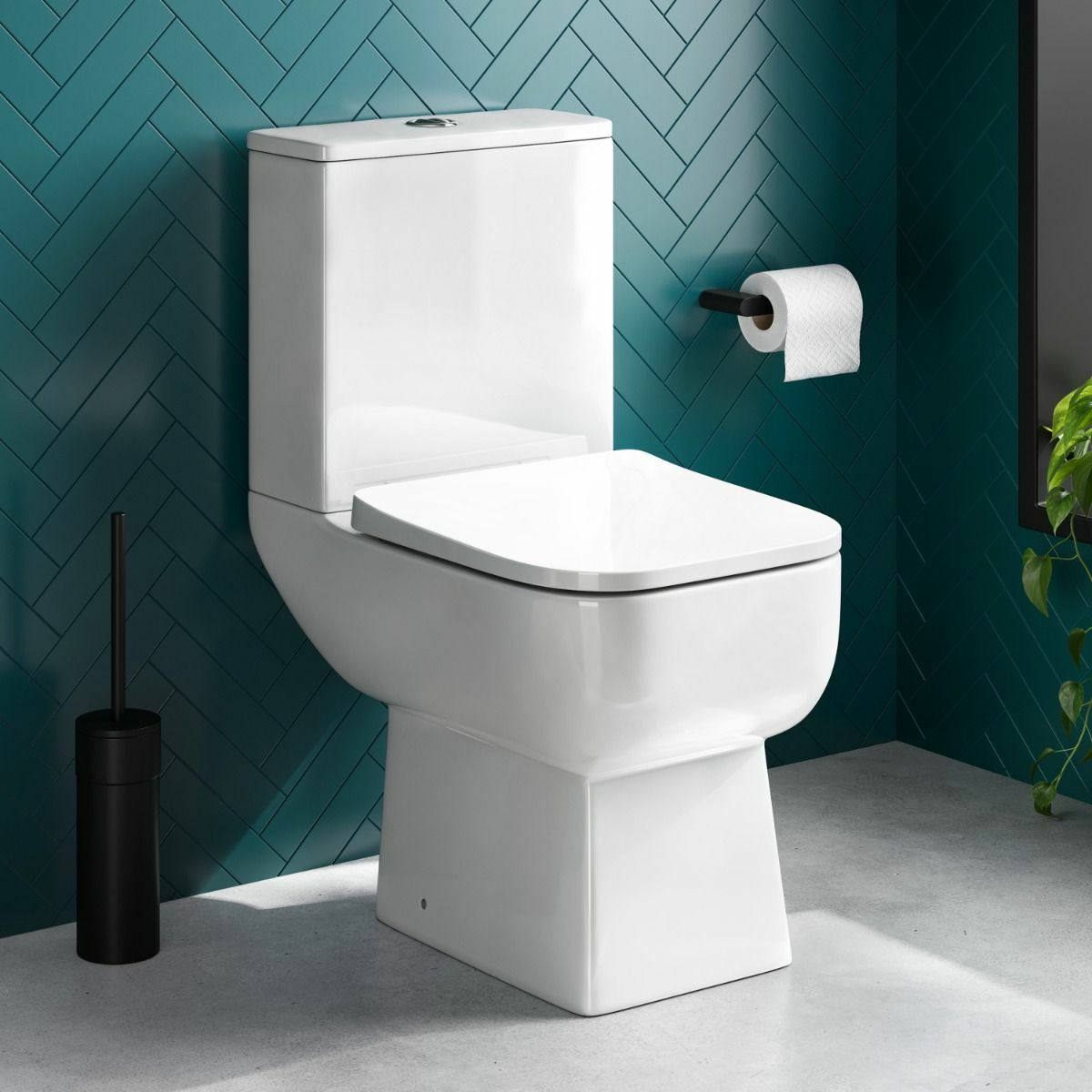
The most common toilet found in many family bathrooms. The close-coupled toilet features a floor-standing pan and an exposed cistern that is bolted directly to the pan. Modern designs often use push-buttons, while traditional styles may feature lever handles.
- Open-Back: Features a gap at the rear between the pan and the wall, allowing easy access to pipework for maintenance.
- Closed-Back / Back-to-Wall: The pan and cistern sit entirely flush to the wall, concealing all pipework for a tidy, streamlined look.
Wall-Mounted Toilets
Also known as floating toilets, the pan is mounted to the wall, suspended above the floor. The cistern is hidden within the wall and supported by a steel frame. These fixtures are popular because they maximize visible floor space, making the room look larger, and are exceptionally easy to clean. They are predominantly modern in design and can be customized with various colors of flush buttons or plates.

Back-to-Wall Toilets
These are often confused with closed-back close-coupled models. Back-to-wall (BTW) toilets also sit flush against the wall, but like wall-mounted models, they utilize a concealed cistern. Since the weight is supported by the floor, no structural frame is required. They offer a streamlined aesthetic and are versatile, as they can be built into bathroom furniture or false walls.
Traditional Toilets (Low, Medium, and High Level)
These models offer a period-style look (Victorian, Georgian). They are similar to close-coupled toilets, but the cistern is not bolted to the pan; instead, it is connected by an exposed pipe and wall-mounted with brackets.
- Level Designation: The name (Low, Medium, or High Level) refers to the height of the cistern and the length of the connecting pipe. High-level toilets often use a pull-chain flush, while lower models use a lever or push-button.
- Aesthetic Benefit: The elevated cistern provides a distinctive, historical focal point, and the mechanism is harder for children to tamper with.
Rimmed vs. Rimless Technology
You must decide whether to choose a traditional rimmed pan or a rimless toilet.
- Rimmed Toilets: Water flushes from the cistern into a rim and pours out through small holes beneath it.
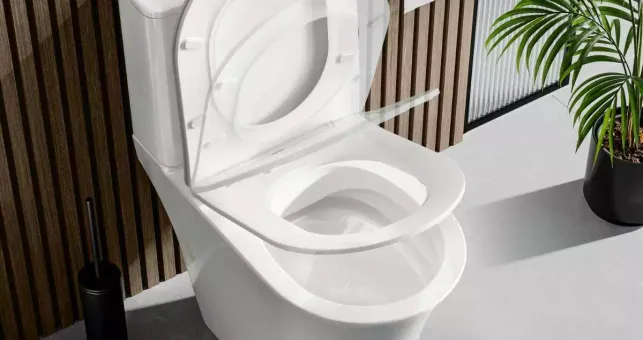
- Rimless Toilets: The pan lacks an inner rim. The water flushes directly and powerfully across the bowl’s surface. This is generally more hygienic, as the bowl is cleaned more efficiently, and there is nowhere for grime to hide, significantly reducing cleaning time.
Flush and Style Choices
Flush Mechanism
Toilets come in single-flush or dual-flush options. Dual-flush is standard today for water conservation.
- Dual-Flush: Usually operated via a push-button or a flush plate with two buttons. The larger button signifies a “full flush” (often 6 liters), and the smaller button is a “half-flush” (3 or 4 liters). Some systems can be adjusted for even lower flush volumes.
- Enhanced Flush: Some models feature advanced flush mechanisms (like cyclonic or specialized rinsing systems) designed to rinse the bowl more thoroughly.
Style and Shape
- Modern Toilets: Tend to have smoother, more angular, or clean curved designs, often paired with a soft-close toilet seat.
- Traditional Toilets: Feature more exposed fittings, detailed pan designs (like regal pedestals), and seats often come in rich wood tones. The flush is typically a lever handle or pull-chain.
- Shape: Toilets come in three common shapes:
- Round/Oval: Feature a curved front and a generally rounded overall pan shape (common in traditional styles).
- D-Shaped: Have a flat back that curves round at the front, resembling the letter D (very common due to ease of fitting).
- Square: Feature more linear, angular edges (common in modern and wall-mounted designs).
Seat Type
- Soft-Close Seats: These hinges allow the seat and lid to drop and close slowly and smoothly, reducing noise and impact damage.
- Seat Style: Seats can be wrap-over (the cover fits completely over the seat for a tidy look) or sandwich seats (the lid rests on top of the seat). Both can come in standard or slimline profiles.
Standard Depth vs. Short Projection
A short projection toilet has a narrower outward depth than a standard model, making it ideal for smaller or limited spaces without sacrificing aesthetic benefits.
Standard vs. Comfort Height
- Comfort Height Toilets have a taller pan than standard models. Originally designed to aid users with mobility issues, they have become popular for all users simply because the extra height offers more comfort and ease when sitting and standing.
Color
Most toilets are glazed white because it is the default color of porcelain and is associated with hygiene. However, color options are available, including modern black, subtle cappuccino, or greige. Flush plates and fittings also offer varied metallic finishes (chrome, brass, black) to coordinate with your theme.

Upgrading to a Smart or Bidet Toilet
For enhanced hygiene and a continental feel, consider upgrading to a bidet toilet or smart toilet. These combine the function of a traditional fixture with a cleansing spray. High-tech models include features like multiple washing functions, seat warming, air drying, and self-cleaning. While a premium investment, they offer exceptional personal hygiene and an eco-conscious benefit by reducing toilet paper consumption.
How to Measure for a New Toilet
Wall-Mounted and Back-to-Wall Toilets
To measure an existing unit for an easy swap:
- Height: Measure from the floor to the top of the pan (excluding the seat).
- Depth: Measure from the wall to the furthest front point of the pan.
- Width: Measure from edge to edge at the widest point of the pan.
Close-Coupled and Traditional Toilets
- Height: Measure the full height, including the cistern, to determine vertical space usage.
- Depth: Measure from the back of the cistern (or wall) to the front of the pan.
- Width: Measure the total width across the widest points (cistern or bowl).
It is always wise to consult a fitter or plumber in advance if you plan to swap types or suspect existing components might be incompatible.
Building Code and Replacement
Building Code
For spaces currently without a toilet, most building codes require a minimum of 15 inches (380mm) of clear space between the center line of the fixture and any side wall or obstruction.
When to Buy a New Toilet
It is time to buy a new toilet if:
- The current one is leaking or constantly requires repairs.
- Components are failing due to age and wear.
- You are redecorating or installing a new bathroom suite, and the existing fixture clashes with the new design.