

When selecting the perfect metal fixtures to complement your elegant new bathroom sink, the basin waste—the drain fitting—is often an afterthought.
However, once you start shopping, common questions inevitably arise, most notably the technical terms like “slotted” versus “unslotted” wastes and the function of various designs. While some manufacturers simplify things by including a drain fitting with their taps or basins, understanding these distinctions is vital if you need to buy a replacement or shop separately. Knowing the differences can save you future hassle and prevent potential plumbing issues in your bathroom.
In this article, we will examine:
- What exactly a Basin Waste is and its functions.
- The different Types of Basin Wastes and Plugs available.
- The purpose of an Overflow and which waste style to choose with or without one.
- The crucial difference: Slotted or Unslotted Basin Wastes—Which do you need?
- What happens if you install the incorrect type of drain fitting.
What is a Basin Waste and What Does It Do?
A basin waste is a metal component that sits inside the drain hole of the sink, connecting to the pipework beneath. Its most immediate purpose is to allow a user to fill and empty the sink for daily hygiene routines like washing the face, applying makeup, or shaving.
From a plumbing perspective, its essential function is to create a seal, preventing water from leaking under the basin and onto the bathroom floor. Additionally, it helps complete the aesthetic of your fixtures by coordinating with the color and design of the surrounding metalware.
It is worth noting that bathroom basin wastes can differ in size from their kitchen sink counterparts, so always confirm you are purchasing the correct dimensions for your bathroom before finalizing your order.
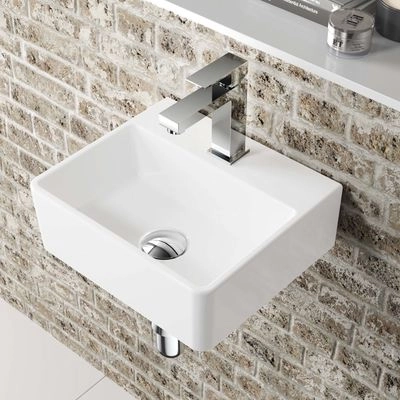
Types of Basin Wastes and Plugs
There are five main styles of basin wastes, categorized by their mechanism and design. It is important to know that some of these have different names depending on the region or supplier.
Push-Button Wastes
Push-button wastes feature a spring-loaded center. Pressing it down closes the drain hole, allowing the basin to fill with water. Pressing it again releases the mechanism, opening the hole and permitting the water to drain. They are also widely known as sprung or click-clack wastes, owing to the satisfying sound they make when pressed. These are highly popular, representing one of the most common types of modern drain fitting. They are available in slotted, unslotted, and even universal variations (discussed later).
The main benefit of this style is its high reliability and ease of maintenance compared to other options. The minor drawback is that you have to place your hand into the water to press the button when emptying the basin, though many people find this a negligible inconvenience.
Swivel-Top Wastes
Swivel-top wastes use a central disc that opens and closes similarly to the push-button design. However, instead of pushing straight down, you press one side of the disc to flip it vertically on an internal hinge, much like a coin standing on its edge. This allows the water to flow out. Pressing the other side pushes it flat again, closing the drain.
In practical terms, they are just as easy to operate as the push-button style, offering no significant functional advantage. However, they may require extra care to prevent the flipping mechanism from becoming jammed by dirt or grime.
Plug and Chain Wastes
This is perhaps the most familiar style of drain fitting. Plug and chain wastes consist of a plug stopper attached to a metal link or beaded chain. The other end of the chain is connected to a small metal bar, called a ‘stay,’ which is anchored to the sink. The plug is manually pushed into the drain hole and pulled out using the chain to release the water. The stay for the chain is usually secured in a small hole located near or integrated with the basin’s overflow.
If a basin lacks this small anchoring hole, it is generally unsuitable for this type of waste. Trying to drill a hole in the ceramic is not advisable and limits your choice of basins. However, the plug itself is often available in various colors and materials, offering a decorative touch that many users appreciate.

Lever-Operated Wastes
A lever-operated waste is controlled by a metal rod fitted near or within the tap assembly. Pulling the rod causes the plug disc to drop and seal the drain. Pushing the rod back up lifts the plug to release the water. The control rod can be attached in various locations, including on top, on the side, or discreetly behind the tap.
The key benefit of this style is that it is the only one that does not require you to get your hands wet to operate the plug. The disadvantage is that the rod mechanism can wear out over time and may require replacing the entire tap assembly if it breaks. These are more common in certain European markets and are less frequently purchased as standalone fittings.
Free-Flow Wastes
Free-flow wastes look similar to push-button wastes but are permanently open and cannot be closed. They are ideal for sinks without overflows, as they prevent accidental over-filling and flooding. However, they are not suitable if you need to fill the basin for shaving or other routines. Consequently, they are typically used only in small cloakroom basins for simple handwashing, or in commercial settings where taps might accidentally be left running.
The Role of the Overflow: Slotted or Unslotted?
When selecting a waste, you must consider the design of the sink, particularly whether it features an overflow hole.
The overflow is a safety feature—a small hole usually located halfway up the back of the sink bowl—designed to prevent the basin from overfilling and flooding the bathroom. When the water level reaches this point, the water escapes through the overflow channel, flows back down into the waste fitting, and drains away through the plumbing.
The type of stopper (push-button, swivel-top, etc.) is a matter of preference. However, the design of the waste fitting itself is critical: it must have a channel or opening to allow the water from the overflow to escape down the main drain. If this channel is absent, water will simply pool inside the overflow hole and back up into the sink, rendering the safety feature useless.
Not all basins have an overflow (many countertop basins do not), and it is not a required feature. If you dislike the look of a standard overflow, a decorative overflow cover can be added to match the color and finish of your other metal fixtures.

Slotted vs. Unslotted: Which is Correct?
Based on the overflow mechanism, drain fittings are divided into two categories:
Slotted Basin Wastes
A slotted basin waste features an opening or channel (the ‘slot’) built into the side of the fitting. When water flows through the basin’s overflow hole, it drains back down into this slot, allowing it to escape into the main pipework. Pairing a basin that has an overflow with a waste that lacks this slot could lead to a flooded bathroom.
Unslotted Basin Wastes
An unslotted waste has no side opening and is designed exclusively for basins that do not have an overflow. Water only drains through the main waste opening when the stopper is open.
Universal Basin Wastes
Universal basin wastes are designed for compatibility with all types of basins. They are often convertible: they can be configured with the necessary slot for basins with overflows, or fitted with a closed free-flow mechanism for sinks without overflows.
What Happens if You Buy the Wrong Type?
Installing the incorrect type of drain fitting can lead to water damage or mechanical failure. If you install an unslotted waste into a basin with an overflow, the trapped water inside the overflow channel will pool. This could cause the waste material to degrade over time and will likely lead to slow leaks from around the waste’s edge, as well as the water backing up into the sink.
Furthermore, some drain fittings and basins are physically incompatible and cannot be securely tightened, preventing them from functioning correctly. The simplest solution in all cases is to replace the incorrect fitting with the appropriate type that matches your basin’s design.


