
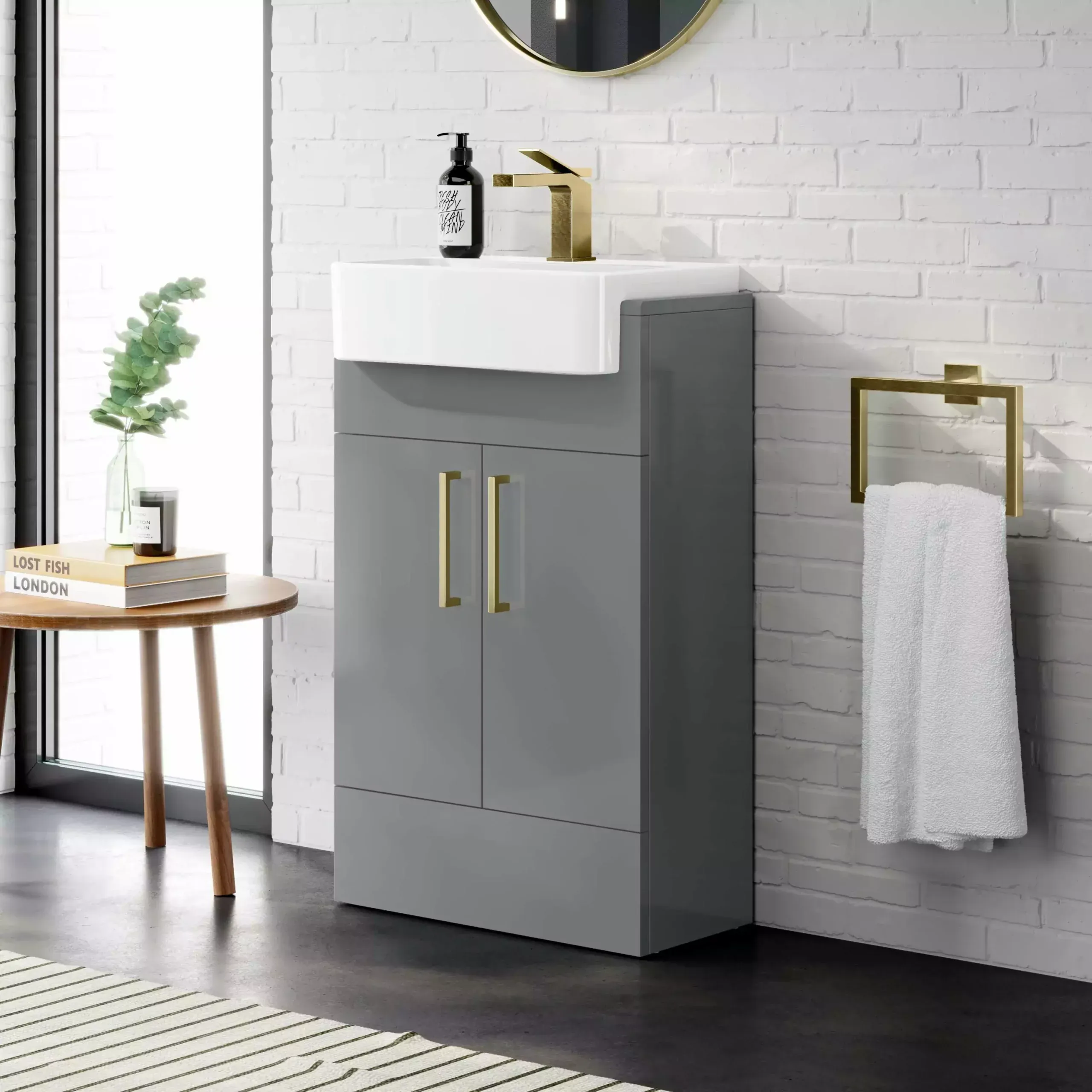
A cloakroom basin is a compact washbasin designed for small, dedicated hand-washing spaces such as downstairs WCs and guest toilets, measuring between 360mm and 500mm wide with a wall projection between 200mm and 300mm.
Cloakroom basins come in 5 main types: wall-hung, semi-pedestal, full pedestal, countertop, and corner. Each type suits a different room size, wall construction, and interior style. Materials range from vitreous china and ceramic to stone resin and solid surface, with vitreous china remaining the most widely installed material in UK cloakrooms due to its durability and low maintenance requirements.
UK cloakrooms must meet a minimum floor area of 1.0m x 1.2m under Part G of the Building Regulations, with a minimum 600mm of clear floor space in front of the basin. Every fixed washbasin in a UK cloakroom requires a compatible monobloc mixer tap, a 32mm or 40mm waste outlet, and a factory-fitted overflow to meet insurance and regulatory requirements.
Cloakroom basins cost between £90 and £700 in the UK, with full installation adding between £150 and £300 in plumber labour costs. Buying a cloakroom basin as part of a suite reduces the combined cost by up to 30% compared to sourcing each component separately, while also simplifying installation and warranty coverage.
Choosing the right cloakroom basin requires measuring wall width, projection depth, waste pipe height, and door swing clearance before ordering. The basin material, tap hole configuration, overflow provision, and warranty length of 10 years or more determine long-term performance and value.
A fitted cloakroom basin, according to Rightmove, contributes between 5% and 10% to a UK property’s resale value, making a well-specified cloakroom basin one of the highest-return bathroom investments in a UK home.
What Is a Cloakroom Basin?

A cloakroom basin is a compact washbasin designed for small, dedicated hand-washing spaces such as downstairs WCs and guest toilets. Cloakroom basins measure between 360mm and 500mm in width, compared to a standard basin at 550mm to 650mm in width.
Cloakroom basins fit within rooms as small as 1.0m², making the cloakroom basin the primary sanitary ware choice for space-restricted UK bathrooms. According to the Royal Institute of British Architects (RIBA), the minimum recommended cloakroom floor area is 1.2m x 0.9m, a dimension the cloakroom basin is purpose-built to complement.
The 4 defining characteristics of a cloakroom basin are listed below:
- Reduced Projection: Cloakroom basins project between 200mm and 300mm from the wall, preserving floor space in compact rooms.
- Compact Width: Cloakroom basin widths range from 360mm to 500mm, accommodating narrow wall spans.
- Dedicated Installation Types: Cloakroom basins mount as wall-hung, semi-pedestal, or countertop units.
- Integrated Overflow: Cloakroom basins include a factory-fitted overflow channel to prevent water spillage in confined spaces.
What Does “Cloakroom Basin” Mean in British Bathroom Planning?
In British bathroom planning, “cloakroom basin” means a compact washbasin classification for ground-floor toilet rooms without bathing facilities. Part G of the Building Regulations mandates one washbasin per WC compartment, a requirement the cloakroom basin fulfils within floor areas between 1.0m² and 1.5m².
What Makes a Basin a “Cloakroom Basin” Specifically?

A basin qualifies as a cloakroom basin when the width measures 500mm or below and the wall projection measures 300mm or below, per BS EN 14688 compact sanitary appliance classifications.
The 5 criteria that classify a cloakroom basin are listed below:
- Width Threshold: Cloakroom basins measure 500mm or below in width, distinguishing the unit from full-sized basins at 550mm to 650mm.
- Projection Limit: Cloakroom basins project 300mm or below from the wall, maintaining clearance in rooms under 1.5m².
- Single Tap Hole: Cloakroom basins feature one central tap hole, sized for a monobloc mixer or single pillar tap.
- Integrated Overflow: Cloakroom basins incorporate a built-in overflow port, mandatory under BS EN 14688.
- Waste Outlet Size: Cloakroom basins carry a 32mm or 40mm waste outlet, compatible with standard UK cloakroom plumbing.
Who Needs a Cloakroom Basin?
A cloakroom basin is needed by any UK homeowner, developer, or contractor installing a washbasin in a ground-floor WC or any room where floor area falls below 1.5m².
The 4 user groups that require a cloakroom basin are listed below:
- Homeowners With a Downstairs WC: Homeowners fitting a ground-floor toilet require a cloakroom basin to satisfy Part G Building Regulations.
- Property Developers Adding a Guest WC: Property developers require a cloakroom basin to fit within the reduced spatial allowance of converted rooms.
- Self-Build Contractors: Self-build contractors allocating rooms under 1.5m² require a cloakroom basin to meet RIBA minimum clearance standards.
- Commercial Premises With Restricted WCs: Commercial property managers require a cloakroom basin to comply with the Workplace (Health, Safety and Welfare) Regulations 1992.
What Are the Main Types of Cloakroom Basin?

Cloakroom basins come in 5 main types: wall-hung, semi-pedestal, full pedestal, countertop, and corner, each fitting a different cloakroom size and layout.
- Wall-Hung Basin: A wall-hung cloakroom basin fixes directly to the wall with no floor contact, freeing up floor space in rooms under 1.2m².
- Semi-Pedestal Basin: A semi-pedestal cloakroom basin uses a short column beneath the basin to hide the pipes, keeping the cloakroom looking neat and tidy.
- Full Pedestal Basin: A full pedestal cloakroom basin stands on a tall column that runs from the basin down to the floor, hiding all pipes inside the column.
- Countertop Basin: A countertop cloakroom basin sits on top of a vanity unit, adding storage space underneath in cloakrooms larger than 1.2m².
- Corner Basin: A corner cloakroom basin tucks into the corner of the room, making the most of unused space in cloakrooms as small as 1.0m².
What Size Should a Cloakroom Basin Be?
A cloakroom basin should be between 360mm and 500mm wide, with a wall projection between 200mm and 300mm, fitting comfortably within a standard UK cloakroom without restricting movement.
- Minimum Width: A cloakroom basin width starts at 360mm, suitable for the tightest cloakroom walls.
- Standard Width: Most cloakroom basins measure 400mm to 500mm wide, fitting the majority of UK cloakroom layouts.
- Wall Projection: Cloakroom basins project between 200mm and 300mm from the wall, leaving adequate standing space in front of the unit.
- Basin Depth: Cloakroom basin bowl depths range from 120mm to 180mm, deep enough for comfortable hand washing.
What Are the Minimum Dimensions Required for a Cloakroom in the UK?
A UK cloakroom requires a minimum floor area of 1.0m x 1.2m to meet Part G of the Building Regulations, which governs sanitary accommodation standards in residential properties.
- Minimum Floor Area: A cloakroom floor area measures at least 1.0m x 1.2m, accommodating a WC and cloakroom basin side by side.
- Minimum Door Clearance: A cloakroom door requires 600mm of clear swing space, factored into the overall room dimensions.
- WC to Basin Clearance: A minimum 200mm gap between the WC pan and cloakroom basin is required for comfortable use.
- Standing Space: A minimum 600mm of clear floor space in front of the cloakroom basin allows unrestricted access.
How Do You Measure for a Cloakroom Basin Correctly?

Measuring for a cloakroom basin requires recording the available wall width, the wall-to-obstacle projection depth, and the floor-to-waste-pipe height before selecting a unit.
- Measure Wall Width: Record the full width of the installation wall in millimetres, subtracting any obstructions such as door frames or pipe boxing.
- Measure Projection Depth: Measure from the wall face to the nearest obstacle directly in front, such as the WC pan or opposite wall, ensuring the chosen basin projection falls within this clearance.
- Measure Waste Pipe Height: Record the height of the existing waste pipe outlet from the floor, confirming compatibility with the basin waste position.
- Check Tap Clearance: Measure the distance between the wall and any overhead obstruction such as a windowsill, allowing at least 150mm above the tap hole for tap installation.
What Materials Are Cloakroom Basins Made From and Which Is Best?
Cloakroom basins are made from vitreous china, ceramic, stone resin, and solid surface materials, with vitreous china being the most widely used in UK cloakrooms due to its durability, stain resistance, and low maintenance requirements.
- Vitreous China: Vitreous china cloakroom basins are fired at 1,200°C, producing a non-porous, scratch-resistant surface that resists limescale and household cleaning agents.
- Ceramic: Ceramic cloakroom basins offer a similar finish to vitreous china at a lower price point, though ceramic carries a slightly lower density making the unit more susceptible to chipping.
- Stone Resin: Stone resin cloakroom basins combine crushed natural stone with resin, producing a matte, tactile finish with above-average impact resistance compared to ceramic alternatives.
- Solid Surface: Solid surface cloakroom basins use compressed acrylic or polyester compounds, allowing seamless countertop and basin integration with a fully repairable surface.
What Colour and Finish Options Are Available for Cloakroom Basins?

Cloakroom basins are available in white gloss, matt white, anthracite, black, and custom colour finishes, with white gloss remaining the most specified finish in UK cloakroom installations.
- White Gloss: White gloss cloakroom basins reflect light, making compact cloakrooms appear larger and brighter.
- Matt White: Matt white cloakroom basins offer a contemporary, low-sheen alternative to gloss, hiding water marks more effectively in hard water areas.
- Anthracite: Anthracite cloakroom basins suit modern and industrial cloakroom schemes, pairing with brushed or matt black brassware.
- Black: Black cloakroom basins create a high-contrast aesthetic in white or light-tiled cloakrooms, available in both gloss and matt surface finishes.
- Custom Colours: Select stone resin and solid surface cloakroom basins are available in bespoke colour finishes, specified through manufacturers for new-build and renovation projects.
What Cloakroom Basin Shapes Are Available?
Cloakroom basins are available in rectangular, round, oval, square, and semi-circular shapes, each suiting a different cloakroom style and spatial layout.
- Rectangular: Rectangular cloakroom basins offer the largest usable bowl area within a compact footprint, suiting contemporary and traditional cloakroom schemes equally.
- Round: Round cloakroom basins remove sharp corners, softening the visual appearance of small cloakrooms and reducing the risk of impact injury in narrow spaces.
- Oval: Oval cloakroom basins combine the generous bowl depth of a rectangular basin with the smooth, curved profile of a round unit.
- Square: Square cloakroom basins suit minimalist and geometric cloakroom designs, aligning cleanly with square wall tiles and angular sanitaryware.
- Semi-Circular: Semi-circular cloakroom basins project less from the wall than any other shape, making the semi-circular profile the best choice for cloakrooms with a projection allowance below 250mm.
What Cloakroom Basin Style Is Right for Your Home?
The right cloakroom basin style depends on the size of the cloakroom, the interior design of the home, and the available wall space.
- Traditional Homes: A semi-pedestal or full pedestal cloakroom basin with a curved bowl suits period-style interiors, pairing naturally with chrome taps and white gloss finishes.
- Contemporary Homes: A wall-hung rectangular cloakroom basin suits modern interiors, keeping the floor clear and the room feeling open.
- Minimalist Interiors: A countertop cloakroom basin on a floating vanity unit keeps the space clutter-free, hiding pipework and adding storage underneath.
- Very Small Cloakrooms: A corner or semi-circular cloakroom basin makes the best use of tight spaces, fitting rooms as small as 1.0m².
- Monochrome Schemes: A white basin paired with a matt black tap, or a black basin paired with chrome brassware, creates a strong, defined look without extra decoration.
What Type of Tap Works Best With a Cloakroom Basin?

A monobloc mixer tap works best with a cloakroom basin because a monobloc tap fits a single central tap hole, mixing hot and cold water through one compact unit, keeping the basin deck tidy and uncluttered.
- Monobloc Mixer Tap: A monobloc mixer tap fits the single tap hole on most cloakroom basins, controlling hot and cold water through one spout.
- Mini Monobloc Tap: A mini monobloc tap has a shorter spout than a standard monobloc, purpose-built for cloakroom basins with a shallow bowl under 150mm deep.
- Wall-Mounted Tap: A wall-mounted tap suits wall-hung cloakroom basins without a tap hole, keeping the basin surface completely clear.
- Sensor Tap: A sensor tap operates without touch, reducing the spread of germs in busy cloakrooms used by children, guests, or staff.
- Pillar Taps: Pillar taps require two tap holes and suit traditional full pedestal cloakroom basins with a wider deck.
How Is a Cloakroom Basin Installed?

A cloakroom basin is installed by fixing the basin to the wall, connecting the tap and waste fittings, and joining the supply and waste pipes to the existing plumbing.
Step 1: Gather Tools and Materials
Collect everything needed before starting the installation.
- Tools: Spirit level, pencil, power drill, drill bits, adjustable spanner, basin wrench, pipe cutter, PTFE tape, and silicone sealant.
- Materials: Cloakroom basin, tap, waste kit, bottle trap, wall fixings, and hot and cold supply pipes.
Step 2: Mark the Basin Position
Mark the fixing position on the wall at the correct height before drilling.
- Mark the basin rim at 800mm to 850mm from the floor for standard adult use.
- Mark the basin rim at 720mm from the floor for wheelchair-accessible cloakrooms, following BS 8300 accessibility standards.
- Use a spirit level across the fixing marks to confirm a level position before drilling.
Step 3: Fit the Tap and Waste First
Fit the tap and waste to the basin before fixing the basin to the wall, as the underside is much easier to reach at this stage.
- Push the tap through the tap hole and tighten the back nut underneath using a basin wrench.
- Wrap PTFE tape around all threaded tap connections to stop leaks.
- Insert the waste fitting into the basin waste hole, applying silicone sealant around the waste flange for a watertight seal.
- Tighten the waste back nut firmly and wipe away any excess sealant.
Step 4: Drill the Wall Fixings
Drill the fixing holes using the positions marked in Step 2.
- Use a masonry bit for brick or block walls and a wood bit for stud walls.
- Drill to the depth stated in the basin fixing kit instructions.
- Insert wall plugs into masonry walls before fitting the screws.
- On stud walls, locate the timber studs with a stud finder and fix directly into the studs, as plasterboard alone does not support the weight of a cloakroom basin.
Step 5: Mount the Basin
Fix the basin onto the wall, checking the level before fully tightening.
- For wall-hung basins, hang the basin onto the wall bracket and check level before tightening all fixings.
- For semi-pedestal basins, position the pedestal first, then lower the basin onto the pedestal and wall fixings together.
- For full pedestal basins, place the pedestal on the floor, lower the basin onto it, and fix the basin to the wall through the rear fixing holes.
- Apply a thin bead of silicone sealant where the back of the basin meets the wall to stop water getting behind the unit.
Step 6: Connect the Water Supply
Connect the hot and cold supply pipes to the tap tails beneath the basin.
- Use flexible tap connectors between the isolation valves and tap tails for easy alignment.
- Wrap PTFE tape around all threaded connections before tightening.
- Fit an isolation valve on both the hot and cold supply pipes so the tap is serviceable without shutting off the whole water system.
- Tighten all connections firmly with an adjustable spanner without over-tightening, which risks cracking the tap tail fittings.
Step 7: Connect the Waste and Trap
Connect the bottle trap to the basin waste and join the trap to the existing waste pipe.
- Fit the bottle trap to the basin waste fitting, hand-tightening the slip joint nuts first to allow adjustment.
- Align the trap outlet with the waste pipe in the wall or floor, cutting the pipe to length with a pipe cutter.
- Connect the trap to the waste pipe using a push-fit or solvent-weld connector.
- Tighten all slip joint nuts fully after final alignment.
Step 8: Test the Installation
Test all connections before finishing.
- Open the isolation valves slowly and check all supply connections for drips.
- Run hot and cold water through the tap, confirming correct flow and temperature.
- Check the waste and trap for leaks while water drains.
- Fill the basin to overflow level and confirm the overflow drains freely.
- Tighten any leaking connections and re-test before signing off the installation.
What Should You Look for When Buying a Cloakroom Basin in the UK?

When buying a cloakroom basin in the UK, the key factors to check are size, installation type, material, tap compatibility, overflow provision, budget, and warranty terms.
- Size and Fit: Measure the wall width and projection depth before buying. Cloakroom basins range from 360mm to 500mm wide, with a projection between 200mm and 300mm, fitting most UK cloakrooms from 1.0m² upward.
- Installation Type: Wall-hung basins suit modern, tight spaces. Pedestal basins suit traditional rooms with more floor space. Corner basins suit rooms under 1.0m² where space is extremely limited.
- Material: Ceramic and vitreous china cloakroom basins are durable, easy to clean, and budget-friendly. Stone resin basins offer a premium matte finish with better impact resistance at a higher price.
- Tap Compatibility: Check the number of tap holes before buying a tap. Most cloakroom basins have one central tap hole, requiring a monobloc mixer. Confirm the tap suits the household water pressure, with a minimum of 0.2 bar for gravity-fed systems and 1.0 bar for mains-fed systems.
- Overflow: A built-in overflow is recommended for all UK cloakroom basins. Some UK home insurance policies require an overflow on fixed washbasins to cover water damage in unattended rooms.
- Budget: Entry-level cloakroom basins start from £90. Mid-range basins sit between £150 and £350. Premium basins range from £350 to £700, depending on material, finish, and brand.
- Warranty: A trustworthy UK cloakroom basin carries a minimum 5-year guarantee. Mid-range and premium brands offer warranties between 10 and 25 years, covering manufacturing defects, glaze crazing, and structural failure.
- Brand Reputation: Buying from a trusted UK bathroom retailer ensures the basin meets BS EN 14688 dimensional standards and comes with verified manufacturer warranty support.
How Much Does a Cloakroom Basin Cost in the UK?
A cloakroom basin costs between £90 and £700 in the UK, with the price depending on material, finish, installation type, and brand.
Entry-Level Cloakroom Basins: £90 to £150
Entry-level cloakroom basins are ceramic or vitreous china units, available in white gloss across wall-hung, semi-pedestal, and full pedestal styles.
- What Is Included: Basin unit only, with no tap, waste fitting, or fixings included.
- Best For: Rental properties, budget renovations, and secondary cloakrooms.
- Warranty: Entry-level basins typically carry a 1 to 5-year manufacturer guarantee.
Mid-Range Cloakroom Basins: £150 to £350
Mid-range cloakroom basins offer a wider choice of shapes, finishes, and installation types, with better build quality and warranties between 10 and 15 years.
- What Is Included: Basin unit, and in some cases a matching semi-pedestal or vanity unit as part of a package.
- Best For: Family homes and design-led cloakroom renovations with a defined interior scheme.
- Finish Options: Matt white, anthracite, and black finishes are available alongside standard white gloss at this price point.
Premium Cloakroom Basins: £350 to £700+
Premium cloakroom basins use stone resin or high-grade vitreous china, with designer profiles, bespoke colour options, and warranties of up to 25 years.
- What Is Included: Basin unit, and often a complete package including a matching vanity unit, waste fitting, and bottle trap.
- Best For: High-specification new builds, luxury renovations, and commercial hospitality environments.
Hidden Costs to Budget For
The basin unit price does not cover the full installation cost. The additional costs to budget for are listed below:
- Tap: A compatible monobloc mixer tap costs between £30 and £250, depending on finish and brand.
- Waste Fitting and Bottle Trap: A waste kit and bottle trap costs between £15 and £60.
- Wall Fixings and Silicone: Wall fixings, PTFE tape, and silicone sealant add between £10 and £20.
- Plumber Installation Cost: A qualified UK plumber charges between £150 and £300 to install a cloakroom basin in 2026, based on a half-day rate of £50 to £80 per hour.
- Pipework Alterations: Rerouting existing supply or waste pipes adds between £100 and £250, depending on the complexity of the existing plumbing layout.
Does a Cloakroom Basin Add Property Value?
A fitted cloakroom with a washbasin adds between 5% and 10% to a UK property’s resale value, according to Rightmove, making a quality cloakroom basin one of the highest-return bathroom investments in a UK home.
Is It Better to Buy a Cloakroom Basin as Part of a Suite?
Buying a cloakroom basin as part of a suite is the better option for most UK homeowners, as a suite provides a matching basin, WC, and furniture in one coordinated purchase, saving time, reducing compatibility issues, and lowering the overall cost compared to buying each item separately.
- Guaranteed Design Match: A cloakroom suite ensures the basin, WC, and vanity unit share the same finish, profile, and dimensions, eliminating the risk of mismatched styles or sizing conflicts between separately sourced items.
- Lower Combined Cost: A cloakroom basin suite costs less than buying each component individually. A mid-range suite including a basin, WC, and vanity unit typically costs between £300 and £700, compared to £500 to £900 when each item is purchased separately.
- Simplified Installation: A suite supplies all components from one manufacturer, meaning fixing positions, pipe centres, and waste outlet heights are pre-coordinated, reducing installation time and plumber labour costs.
- Matched Warranty Coverage: A cloakroom suite carries a single warranty covering all components, whereas separately purchased items carry individual warranties from different manufacturers, complicating any future claims.
- When to Buy Separately: Buying a cloakroom basin separately suits homeowners replacing a single item within an existing cloakroom, or specifying a bespoke layout where standard suite dimensions do not fit the available space.
How Do You Clean and Maintain a Cloakroom Basin?

A cloakroom basin is best maintained by wiping the surface weekly with a mild non-abrasive cleaner and warm water, preventing limescale, soap scum, and surface staining from building up on the basin finish.
- Weekly Surface Clean: Wipe the cloakroom basin surface with a soft cloth and a mild bathroom cleaner weekly. Avoid abrasive scouring pads, bleach-based sprays, and solvent cleaners, as these damage the glaze on ceramic and vitreous china basins over time.
- Limescale Removal: Apply a diluted white vinegar solution to limescale deposits around the tap base and waste outlet, leaving the solution for 10 to 15 minutes before wiping clean. White vinegar dissolves calcium deposits without scratching the basin surface.
- Tap and Waste Cleaning: Clean around the tap base and waste cover weekly, as soap residue and limescale accumulate fastest at these points. Remove the waste cover monthly and clear any hair or debris from the waste outlet to maintain free drainage.
- Silicone Sealant Inspection: Inspect the silicone bead along the rear edge of the basin every 6 months. Cracked or discoloured silicone allows water to track behind the basin, causing damp and mould on the wall surface. Re-apply bathroom-grade silicone sealant when cracking or shrinkage is visible.
- Stone Resin Basin Care: Stone resin cloakroom basins require a specialist stone resin cleaner rather than standard bathroom sprays. Apply a thin coat of stone resin polish every 3 to 6 months to maintain the matte surface finish and resist water marking.
- Solid Surface Basin Care: Solid surface cloakroom basins tolerate mild abrasive cleaners better than ceramic alternatives. Light surface scratches on solid surface basins are removed by buffing with a fine-grade wet and dry sandpaper, a repair not possible on ceramic or vitreous china units.
- Preventing Staining: Rinse the basin thoroughly after each use to remove toothpaste, soap, and cosmetic products before they dry onto the surface. Dried product residue stains ceramic and vitreous china basins, requiring stronger cleaners that degrade the glaze finish over repeated use.
How Do You Deal With Common Cloakroom Basin Problems?
Common cloakroom basin problems are slow drainage, leaking waste joints, cracked basins, limescale build-up, and loose wall fixings, each with a straightforward fix requiring basic tools and materials.
- Slow Drainage: Slow drainage in a cloakroom basin is caused by a blockage in the waste outlet or bottle trap. Remove the waste cover and clear any debris from the outlet first. Unscrew the bottle trap beneath the basin, empty the trap contents, and rinse the trap thoroughly before refitting. Pour a solution of hot water and bicarbonate of soda down the waste to clear residual soap and grease build-up in the waste pipe.
- Leaking Waste Joint: A leaking waste joint between the basin and the bottle trap is caused by a worn slip joint washer or an under-tightened slip joint nut. Hand-tighten the slip joint nut on the bottle trap first. Replace the slip joint washer, if tightening alone does not stop the leak, as the washer compresses and flattens with age, losing its seal.
- Dripping Tap: A dripping monobloc mixer tap on a cloakroom basin is caused by a worn cartridge inside the tap body. Isolate the water supply using the isolation valves beneath the basin, remove the tap handle, and replace the cartridge with a compatible replacement from the tap manufacturer. Most UK monobloc mixer tap cartridges cost between £10 and £30 and are replaced without specialist tools.
- Cracked Basin: A cracked cloakroom basin requires full replacement, as ceramic and vitreous china cracks cannot be permanently repaired to a watertight standard. A crack in the basin bowl allows water to track through the ceramic body, causing damp to the wall and floor beneath the unit over time.
- Limescale Around Tap and Waste: Heavy limescale deposits around the tap base and waste outlet are removed using a proprietary limescale remover or undiluted white vinegar applied with a cloth wrapped around the affected area. Leave the solution in contact with the deposit for 20 to 30 minutes for heavy build-up before wiping and rinsing clean.
- Loose Wall Fixings: A cloakroom basin that moves or rocks on the wall indicates loose wall fixings or failed wall plugs. Isolate and disconnect the water supply, remove the basin from the wall, and re-drill the fixing holes at a fresh position if the original plugs have pulled through the wall. Use frame fixings rather than standard wall plugs on plasterboard stud walls to provide a larger bearing surface for the fixing screw.
- Mould Behind the Basin: Mould on the wall behind a cloakroom basin is caused by failed silicone sealant allowing water to track behind the unit. Remove the old silicone completely using a silicone remover tool, clean the wall surface with a mould-killing spray, allow the surface to dry fully for 24 hours, and apply a fresh bead of bathroom-grade anti-mould silicone sealant along the full rear edge of the basin.
Which Features Should Be Prioritised When Comparing Cloakroom Basins?

When comparing cloakroom basins, the features to prioritise are size, material, installation type, tap hole configuration, overflow provision, and warranty length, as these directly affect fit, durability, and long-term performance.
- Size First: A cloakroom basin must fit the available wall width and projection depth before any other feature is considered. A basin that looks perfect but projects 50mm too far makes the cloakroom unusable.
- Material Durability: Vitreous china and ceramic cloakroom basins resist staining, scratching, and limescale better than acrylic alternatives. Stone resin basins offer the highest impact resistance, lasting 20 to 25 years with minimal maintenance.
- Installation Type: Match the basin installation type to the wall construction. Wall-hung basins require a solid masonry wall or a reinforced stud wall. Full pedestal basins suit any wall type, as the pedestal carries the majority of the basin weight.
- Tap Hole Configuration: Confirm the tap hole count matches the intended tap. A single central tap hole suits a monobloc mixer. A basin with no tap hole requires a wall-mounted tap, which involves additional plumbing work.
- Overflow Provision: Prioritise a cloakroom basin with a factory-fitted overflow, particularly in households with children or in unattended commercial cloakrooms, where an unattended running tap presents a water damage risk.
- Warranty Length: A warranty of 10 years or more signals manufacturer confidence in the product. Warranties below 5 years on a ceramic or vitreous china basin indicate a lower-grade product specification.
- Ease of Cleaning: Basins with a simple, smooth profile and minimal surface joins clean faster and resist mould growth more effectively than basins with decorative ridges, recesses, or exposed fixings.
What Measurements Should Be Taken Before Ordering a Cloakroom Basin?
Before ordering a cloakroom basin, the measurements to take are wall width, projection depth, floor-to-waste-pipe height, floor-to-supply-pipe height, and door swing clearance, ensuring the chosen basin fits the space without requiring pipework alterations.
- Wall Width: Measure the full width of the installation wall in millimetres, subtracting any obstructions such as door frames, pipe boxing, or radiator brackets. The basin width must sit within this measurement with a minimum 50mm clearance on each side.
- Projection Depth: Measure from the wall face to the nearest obstacle directly in front, such as the WC pan, opposite wall, or door. The basin projection must fall at least 50mm short of this measurement to maintain comfortable standing space.
- Floor-to-Waste-Pipe Height: Record the height of the existing waste pipe outlet from the finished floor level, confirming the chosen basin waste outlet aligns with the existing waste pipe without requiring the pipe to be raised or lowered.
- Floor-to-Supply-Pipe Height: Measure the height of both the hot and cold supply pipes from the floor, confirming the flexible tap connectors supplied with the tap reach the tap tails without excessive bending or stretching.
- Door Swing Clearance: Measure the full arc of the cloakroom door swing, confirming the basin does not obstruct the door at any point during opening. Part M of the Building Regulations requires a minimum 750mm clear access zone in front of all sanitary fittings in new-build properties.
- Basin Height Clearance: Measure from the intended basin rim height to the underside of any overhead obstruction such as a windowsill or shelf, confirming a minimum 150mm clearance above the tap hole for tap installation and comfortable hand washing.
How Can Homeowners Choose the Right Cloakroom Basin?

Homeowners choose the right cloakroom basin by matching the basin size to the available space, selecting a style that suits the existing interior, and confirming material and warranty terms before purchase.
- Start With the Space: Measure the cloakroom wall width, projection depth, and door clearance before browsing basin options. Narrowing the search to basins that physically fit the space removes the majority of unsuitable options immediately.
- Match the Style to the Interior: A traditional home suits a semi-pedestal or full pedestal basin in white gloss. A contemporary home suits a wall-hung or countertop basin in matt white, anthracite, or black. Choosing a basin that conflicts with the existing interior requires additional redecoration to compensate.
- Set a Realistic Budget: Factor in the full installation cost, including the tap, waste kit, bottle trap, wall fixings, silicone, and plumber labour, before setting a basin budget. The basin unit typically accounts for 30% to 50% of the total cloakroom basin installation cost in the UK.
- Check Tap and Waste Compatibility: Confirm the basin tap hole count, tap hole diameter, and waste outlet size match the intended tap and waste kit before ordering. Incompatible components require additional fittings, adding cost and installation time.
- Verify the Warranty: Read the warranty terms before purchasing, confirming the guarantee covers manufacturing defects, glaze crazing, and structural failure for a minimum of 10 years. Register the warranty with the manufacturer immediately after installation to activate the full guarantee period.
- Buy From a Trusted UK Retailer: Purchase a cloakroom basin from a retailer that stocks BS EN 14688 compliant products, offers clear returns and warranty claim processes, and provides technical support for installation queries.
How Can Bathroom Mountain Help You Choose the Right Cloakroom Basin?
Bathroom Mountain supplies one of the largest ranges of cloakroom basins in the UK, covering every installation type, material, finish, and budget from £90 to £700, with expert product support available to help match the right basin to any cloakroom size or interior scheme.
- Free Delivery Over £399: Orders over £399 qualify for free UK delivery, covering the majority of mid-range and premium cloakroom basin suite purchases.
- Next Day Delivery: Next day delivery is available on cloakroom basins, keeping renovation timelines on track.
- Price Match Promise: Bathroom Mountain matches any lower price found on an identical UK-stocked cloakroom basin, guaranteeing the best available market price on every order.
- Rated Excellent on Trustpilot: Thousands of verified UK customer reviews rate Bathroom Mountain as Excellent on Trustpilot, reflecting consistent product quality and customer service standards.
- Largest Product Range: Bathroom Mountain stocks cloakroom basins across all types, all major materials, and all finish options, from entry-level ceramic units to premium stone resin designer basins.
- Expert Buying Support: The Bathroom Mountain team provides free product guidance on basin sizing, tap compatibility, waste fitting selection, and suite coordination for every cloakroom project.