Shower screen height in UK bathrooms is 1850 mm to 2000 mm, with 1950 mm as the standard height because this range delivers optimal splash containment, user height coverage, and compatibility with common ceiling heights and modern shower systems. Shower screen height depends on 5 factors: shower type, water pressure, shower head position, enclosure layout, and user height. Walk-in shower screens and frameless panels require taller heights due to open-entry design, while bath shower screens use 1400 mm to 1500 mm because bath height increases total coverage.
Shower screen height controls water containment, leak prevention, and slip reduction. Taller panels reduce vertical splash escape, while shorter panels allow water to travel beyond the enclosure boundary. Rainfall showers, overhead outlets, and high-pressure systems increase spray range, which increases required panel height. Panel width and placement influence containment alongside height because water escapes from open sides.
Shower screen height affects installation accuracy and structural performance. Ceiling height limits maximum panel size, while installation requires tolerance for fixing, alignment, and handling clearance. Framed screens operate effectively at slightly lower heights due to structural profiles, while frameless screens require greater height and thicker glass for stability. Glass safety depends on toughened material, correct thickness, edge finishing, and secure fixing.
What Is The Standard Shower Screen Height In The UK?

| Shower Screen Height | Main Use | Typical Application |
| 1400 mm | Bath screen height | Compact bath shower screens |
| 1500 mm | Bath screen height | Bath shower screens with greater splash protection |
| 1700 mm | Reduced screen height | Low ceilings, loft conversions, restricted spaces |
| 1800 mm | Lower standard shower height | Compact enclosures, budget installations, lower-pressure systems |
| 1850 mm | Standard shower screen height | Enclosed showers, framed screens, entry-level walk-in panels |
| 1900 mm | Enhanced shower screen height | Medium to high-pressure showers, modern enclosures |
| 1950 mm | Most common standard height | Walk-in shower screens, fixed panels, modern bathrooms |
| 2000 mm | Tall shower screen height | Walk-in showers, rainfall showers, frameless panels, high-pressure systems |
The standard shower screen height in the UK ranges from 1850 mm to 2000 mm, with 1950 mm used as the most common height for fixed panels and walk-in shower screens in modern bathrooms. Shower screen height depends on 3 factors: shower type, user height, and splash containment requirement. Bath shower screens are shorter because bath edge height reduces vertical splash travel, while walk-in shower screens need greater height for open-entry layouts. Higher pressure systems and rainfall shower heads increase water spread, which increases the need for taller screens. Ceiling height and installation clearance also affect final shower screen height selection.
Standard Height Range
Standard shower screen height in the UK is typically set between 1850 mm and 2000 mm across most enclosure types and walk-in shower designs. 1950 mm is the most widely used height because 1950 mm balances splash protection and installation practicality. Taller panels above 2000 mm are less common due to ceiling limitations and handling complexity. Shorter panels below 1850 mm usually reduce water containment performance.
Bath Screen Height
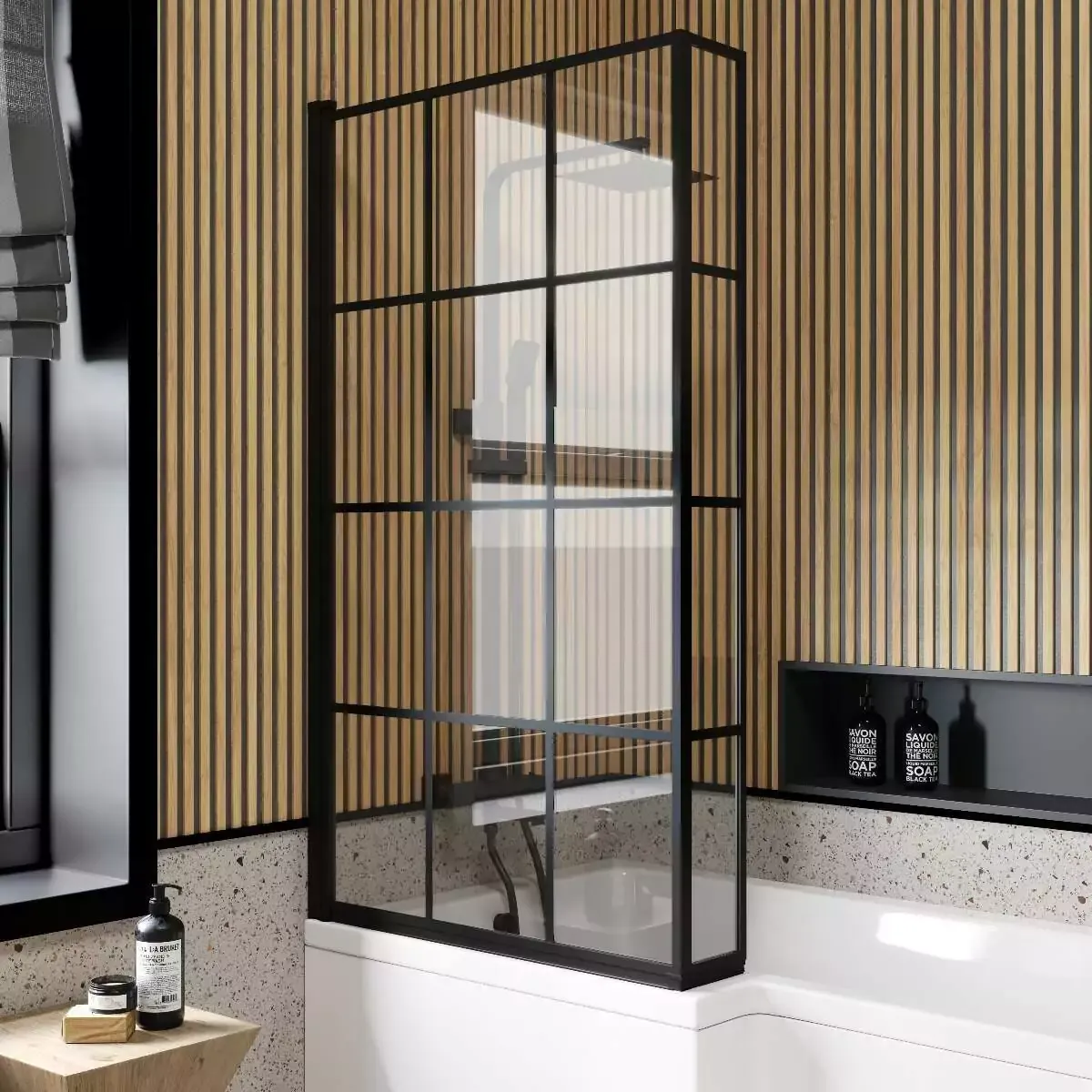
Bath screen height usually ranges from 1400 mm to 1500 mm because the screen sits on the bath rim rather than floor level. Bath height typically measures around 500 mm to 600 mm, which reduces the required screen height. Folding bath screens and pivot bath screens follow similar height ranges. Taller bath screens improve splash control but may reduce ease of movement above the bath edge.
Walk-In Panels
Walk-in shower screen panels usually range from 1850 mm to 2000 mm to provide effective splash control in open-entry shower layouts. Walk-in designs lack a door, so panel height plays a larger role in water containment. Wider panels combined with taller height improve performance in high-pressure systems. Fixed glass panels are often used in combination with a low-profile tray or wet room floor.
Ceiling Constraints
Ceiling height directly limits maximum shower screen height because installation requires clearance for lifting, positioning, and fixing the panel. Standard ceiling heights around 2400 mm usually support 2000 mm shower screens comfortably. Sloped ceilings and loft conversions often require reduced screen height. Accurate measurement is essential where ceiling irregularities affect panel positioning.
User Height Fit
User height affects shower screen selection because taller users require higher splash coverage during overhead or rainfall shower use. Users above 1800 mm height often benefit from screens closer to 2000 mm. Shorter users may not require maximum panel height for effective containment. Head height and shower head position both influence water trajectory and splash range.
Water Containment
Shower screen height controls water containment by limiting splash spread beyond the showering area. Higher pressure systems and rainfall shower heads create wider spray patterns, which increase splash distance. Taller screens improve containment in open walk-in layouts. Narrow panels or shorter screens usually require more careful shower head positioning to reduce water escape.
Design Proportion
Shower screen height influences bathroom proportion by affecting visual balance between wall height, panel size, and enclosure layout. Taller screens create a more seamless and vertical design appearance in modern bathrooms. Shorter screens can create visual breaks in tiled walls. Consistent panel height across enclosures and fixed screens improves overall bathroom design continuity.
How Tall Does A Shower Screen Need To Be To Be Effective?
A shower screen needs to be between 1850 mm and 2000 mm tall to be effective, with 1950 mm providing optimal splash containment for most shower types, user heights, and water pressure conditions in modern bathrooms. Effective shower screen height depends on shower head position, water pressure, and enclosure openness. Taller screens control vertical splash, while width and placement control lateral escape.
The key factors that define effective shower screen height are given below:
- Minimum Effective Height: Minimum effective shower screen height starts at 1850 mm for most enclosed showers and walk-in panels. Screens below 1850 mm allow water to travel beyond the panel edge. Lower heights reduce containment in high-pressure and overhead shower setups.
- Optimal Height Range: Optimal shower screen height ranges from 1900 mm to 2000 mm for balanced containment and usability. 1950 mm is widely used because 1950 mm suits standard ceiling heights and common shower head positions. Taller panels improve performance without restricting movement.
- Rainfall Showers: Rainfall shower systems require heights closer to 2000 mm because wider spray patterns increase water spread. Large overhead heads distribute water across a broader area. Taller panels combined with sufficient width improve containment.
- Walk-In Layouts: Walk-in shower layouts require taller screens because open entry allows water to escape more easily. Fixed panels rely on height and width rather than doors. A 2000 mm panel performs more effectively than shorter panels in open designs.
- Shower Head Position: Shower head height increases required screen height because higher outlets extend water travel distance. Ceiling-mounted and overhead heads increase splash range. Correct alignment between outlet height and panel height improves containment.
- Pressure Impact: Water pressure increases the need for taller screens because stronger flow creates wider spray patterns. High-pressure systems require greater height for control. Low-pressure systems reduce height demand but still require adequate coverage.
What Are The Different Shower Screen Heights Available?

Shower screen heights are commonly available in 1400 mm, 1500 mm, 1700 mm, 1800 mm, 1850 mm, 1900 mm, and 2000 mm, with 1950 mm used as the most common height for walk-in panels and modern shower enclosures. Shower screen height varies by shower type, enclosure design, and installation requirement. Bath shower screens are shorter because the bath adds base height, while walk-in shower screens and fixed panels require greater height for splash control. Standardisation across manufacturers keeps most panels within the 1850 mm to 2000 mm range for compatibility with typical bathroom layouts.
1400 mm Screens
1400 mm shower screens are used mainly for bath shower screens where the panel sits on the bath edge. Bath height usually adds 500 mm to 600 mm, which increases total splash protection height. Folding bath screens and pivot bath screens commonly use this size. Shorter height improves access but reduces full vertical coverage.
1500 mm Screens
1500 mm shower screens are also used for bath shower screens where additional splash protection is required above the bath edge. Taller bath screens improve water containment compared to 1400 mm panels. Hinged and multi-panel folding designs often use this height. Larger bath shower areas benefit from extended panel coverage.
1700 mm Screens
1700 mm shower screens are less common but used in compact shower enclosures where ceiling height or layout restricts taller panels. Reduced height helps installation in loft conversions and low ceilings. Splash containment is lower than standard heights. Careful shower head positioning improves performance at this height.
1800 mm Screens
1800 mm shower screens are used in smaller enclosures and budget installations where slightly reduced height is acceptable. This height works in low-pressure systems and compact shower areas. Splash control is moderate rather than full. Users often combine this height with narrower spray patterns.
1850 mm Screens
1850 mm shower screens are a standard entry height for walk-in showers and enclosed shower systems. This height provides reliable splash containment in most domestic bathrooms. Many framed and semi-frameless enclosures use 1850 mm as a base specification. Installation is easier compared to taller panels.
1900 mm Screens
1900 mm shower screens provide improved splash control and suit medium to high-pressure shower systems. This height works well with overhead showers and standard mixer showers. Many modern enclosures use 1900 mm for better coverage without reaching maximum height. The balance between performance and practicality is strong.
2000 mm Screens
2000 mm shower screens are the tallest common standard and provide maximum splash containment for open and high-pressure shower layouts. Walk-in showers, rainfall shower systems, and wet room-style layouts benefit from this height. Taller users and higher-mounted shower heads also require extended panel height. Installation requires sufficient ceiling clearance.
How Do You Measure For Shower Screen Height?

Measure shower screen height from the finished floor level or bath rim to the desired top edge of the glass, while accounting for shower head position, ceiling clearance, tray height, and splash containment requirements. Accurate measurement depends on 4 factors: base level reference, vertical clearance, shower outlet height, and installation tolerance. Walk-in showers use floor-to-top measurement, while bath screens use the bath rim as the starting point. Finished floor level must include tiles, adhesive, and tray height to avoid incorrect sizing.
Floor Reference Point
Start measurement from the finished floor level or shower tray surface to ensure correct screen height selection. Finished level includes tiles and adhesive thickness, not subfloor level. Measuring from an unfinished base leads to incorrect panel height after installation. Consistent reference points improve fitting accuracy across all enclosure types.
Bath Rim Start
Measure from the bath rim for bath shower screens because the panel sits directly on the bath edge. Bath height typically adds 500 mm to 600 mm above floor level. Screen height must combine with bath height to provide full splash coverage. Incorrect starting point leads to underestimation of required panel size.
Ceiling Clearance
Check ceiling height before finalising shower screen height to ensure sufficient installation space. Standard ceilings around 2400 mm usually allow 2000 mm panels with clearance. Sloped ceilings and bulkheads reduce available vertical space. Installation requires lifting clearance above the final panel position.
Shower Head Height
Measure shower head position to align screen height with water spray trajectory. Overhead and rainfall shower heads increase vertical water spread. Higher outlet positions require taller screens for containment. Lower hand-held showers reduce required height but still need alignment with panel coverage.
Installation Tolerance
Allow 10 mm to 20 mm tolerance for fitting, adjustment, and wall irregularities during installation. Wall profiles and brackets require small adjustment margins. Tight measurements without tolerance create installation difficulty. Professional fitting often uses adjustable channels to manage variation.
Width And Position
Measure screen width and placement alongside height because panel position affects splash containment. A correctly measured height may still fail if panel width is insufficient. Placement relative to the shower outlet controls water escape paths. Combined measurement improves overall performance.
What Shower Screen Height Is Best For A Low Ceiling?

A shower screen height of 1700 mm to 1850 mm is best for a low ceiling because reduced panel height maintains installation clearance while still providing functional splash containment in compact bathroom layouts. Low ceiling selection depends on 3 factors: ceiling height, shower head position, and enclosure type. Standard 2000 mm panels often do not fit where ceilings are below 2200 mm. Reduced heights prevent installation obstruction while maintaining usable shower coverage.
Ceiling Clearance
Ceiling clearance determines the maximum possible shower screen height because installation requires lifting space above the final panel position. Low ceilings below 2200 mm usually restrict panel height to 1850 mm or less. Bulkheads, beams, and sloped ceilings further reduce usable vertical space. Accurate measurement prevents fitting issues during installation.
Optimal Height Range
Optimal shower screen height for low ceilings ranges between 1700 mm and 1850 mm to balance clearance and splash control. 1800 mm is commonly used in restricted spaces because 1800 mm maintains adequate containment. Heights below 1700 mm reduce effectiveness in most shower setups. Taller panels may not fit within the available ceiling space.
Shower Head Position
Shower head height must align with reduced screen height to maintain effective water containment. Lowering the shower outlet reduces splash travel distance. Overhead and rainfall shower heads may require repositioning in low ceiling bathrooms. Correct alignment improves containment without increasing panel height.
Walk-In Layouts
Walk-in shower layouts require careful height selection in low ceiling spaces because open entry increases splash escape risk. Taller panels are preferred in open layouts, but ceiling limits restrict height. Wider panels compensate for reduced height by improving lateral containment. Panel placement becomes more important than height alone.
Enclosed Showers
Enclosed shower systems perform better than open layouts at lower heights because doors and side panels contain water within a defined space. Sliding door, pivot door, and bi-fold door enclosures reduce splash escape compared to walk-in designs. Lower screen height works more effectively within a fully enclosed structure.
Visual Proportion
Reduced shower screen height affects bathroom proportion and visual balance in low ceiling environments. Lower panels maintain proportion with reduced ceiling height. Taller panels in low ceilings create a compressed appearance. Balanced dimensions improve overall bathroom design.
Does Shower Screen Height Affect Water Containment And Leaks?

Shower screen height directly affects water containment and leak risk because taller panels reduce vertical splash escape, while shorter panels allow water to travel beyond the enclosure and reach surrounding floor and wall areas. Water behaviour depends on 4 factors: spray angle, pressure level, panel height, and panel placement. Open layouts such as walk-in showers rely more on screen height than enclosed showers. Incorrect height selection increases water escape even when seals and trays are correctly installed.
Splash Containment
Shower screen height controls splash containment by limiting how far water can travel beyond the showering area. Taller screens block higher spray arcs from overhead and rainfall shower heads. Shorter screens allow water to pass over the top edge during use. Effective containment requires alignment between panel height and shower outlet position.
Leak Risk
Lower shower screen height increases leak risk because water escapes more easily onto surrounding flooring and joints. Escaped water can move beyond tray edges and reach silicone joints or grout lines. Repeated exposure increases long-term water damage risk. Taller panels reduce overflow beyond the enclosure boundary.
Pressure Impact
Water pressure affects containment because higher pressure increases spray force and water travel distance. High-pressure systems create wider and stronger spray patterns. Taller shower screens are required to manage increased splash. Low-pressure systems usually require less height for effective containment.
Shower Type Influence
Shower type affects containment because different outlets produce different spray patterns and coverage areas. Rainfall showers and overhead showers produce wider coverage than hand-held showers. Body jet systems increase lateral spray movement. Screen height must match outlet type to prevent water escape.
Panel Placement
Panel placement affects containment alongside height because water escapes through open sides as well as over the top edge. A correctly sized panel placed too far from the spray source allows water to bypass the screen. Closer placement improves containment. Width and angle also influence performance.
Enclosure Design
Enclosed shower systems reduce reliance on height because doors and side panels provide full containment. Walk-in showers depend more on height and width due to open entry. Sliding door and pivot door enclosures contain water more effectively at lower heights. Enclosure type changes containment performance.
Seal Integrity
Seal condition affects leak prevention because worn or damaged seals allow water to pass through enclosure joints. Silicone joints, door seals, and tray edges must remain intact for full containment. Taller screens do not prevent leaks if sealing fails. Proper sealing and correct height work together to control water.
What Height Should A Bath Shower Screen Be?
A bath shower screen should be between 1400 mm and 1500 mm high because this height provides effective splash containment when combined with a bath height of 500 mm to 600 mm in standard UK bathrooms. Bath shower screen height depends on 3 factors: bath rim height, shower head position, and water pressure. Taller users and higher-mounted shower heads often require screens closer to 1500 mm. Shorter screens reduce splash protection above shoulder level.
Standard Height Range
Standard bath shower screen height ranges from 1400 mm to 1500 mm across most hinged, pivot, and folding screen designs. 1400 mm is common for compact bathrooms, while 1500 mm improves splash coverage. Manufacturers design bath screens within this range to match standard bath dimensions. Heights above 1500 mm are less common due to usability and weight.
Bath Height Factor
Bath height affects total splash coverage because the screen sits on the bath rim rather than the floor. A typical bath height of 500 mm to 600 mm increases overall protection height to around 1900 mm to 2100 mm. This combined height reduces the need for very tall glass panels. Correct pairing ensures full upper-body coverage.
Shower Head Position
Shower head height influences required screen height because higher outlets increase vertical water travel. Wall-mounted and riser rail showers usually sit lower than overhead shower heads. Higher positioning increases splash risk above the panel edge. Aligning outlet height with screen height improves containment.
Folding Screen Types
Folding bath shower screens often use heights between 1400 mm and 1500 mm to balance flexibility and splash protection. Multi-panel folding designs allow panels to move inward or outward for access. Consistent height across panels maintains containment. Hinges and joints must align correctly to prevent gaps.
Water Containment
Bath shower screen height controls water containment by preventing splash escape beyond the bath edge. Higher pressure systems and wider spray patterns increase splash spread. Taller screens improve containment in these conditions. Narrower spray patterns reduce dependence on maximum height.
User Comfort
User height affects bath shower screen selection because taller users require higher splash coverage during use. Screens closer to 1500 mm suit users above average height. Lower screens may allow water to escape at shoulder level. Comfortable use depends on correct height alignment.
What Is The Ideal Height For A Walk-In Shower Screen?

The ideal height for a walk-in shower screen is 1950 mm to 2000 mm because this range provides effective splash containment for open-entry layouts, higher shower head positions, and modern high-pressure shower systems. Walk-in shower screens rely on height and width rather than doors for water control. Open layouts increase splash escape risk, which increases the need for taller panels. Ceiling height, user height, and shower outlet position all influence final panel selection.
Standard Height Range
Walk-in shower screen height typically ranges from 1850 mm to 2000 mm across most modern bathroom installations. 1950 mm is the most common specification because 1950 mm balances containment and installation practicality. Lower heights reduce effectiveness in open layouts. Taller panels provide better vertical coverage.
Optimal Height Choice
Optimal walk-in shower screen height is 1950 mm for most bathrooms and 2000 mm for high-pressure or rainfall shower setups. This range supports wider spray patterns and taller user heights. Smaller panels are less effective in open-entry designs. Correct height improves daily performance.
Open Layout Impact
Open walk-in layouts require taller screens because there is no door to contain water inside the showering area. Splash can escape through both top and side openings. Taller panels reduce vertical escape paths. Width and placement must also support containment.
Shower Head Position
Shower head height affects required screen height because higher outlets increase water travel distance. Ceiling-mounted and overhead shower heads require taller panels. Lower-mounted hand showers require less height. Alignment between outlet and panel improves containment.
Water Pressure Effect
Water pressure increases the need for taller screens because stronger spray creates wider and higher splash patterns. High-pressure systems generate more forceful water movement. Taller screens control spray spread more effectively. Low-pressure systems require less height.
Panel Width Balance
Panel width works with height to control water containment in walk-in shower designs. Narrow panels allow side splash escape even with adequate height. Wider panels improve lateral coverage. Balanced width and height create effective containment.
How Does Shower Screen Height Differ Between Framed And Frameless Screens?
Framed shower screens usually range from 1850 mm to 1950 mm, while frameless shower screens typically range from 1900 mm to 2000 mm because frameless designs rely more on height and glass thickness for water containment and structural stability. Shower screen height differences depend on 3 factors: structural support, glass thickness, and enclosure design. Framed systems use metal profiles for reinforcement, while frameless systems use thicker glass and minimal hardware, which increases the need for taller panels.
Framed Screen Height
Framed shower screens usually range from 1850 mm to 1950 mm because full perimeter framing provides structural support and water containment. Metal frames reinforce the glass and improve sealing at edges. Framed enclosures contain water effectively even at slightly lower heights. Sliding door and quadrant enclosures commonly use this height range.
Frameless Screen Height
Frameless shower screens usually range from 1900 mm to 2000 mm because frameless panels rely on glass height and thickness for performance. Frameless designs use thicker glass, usually 8 mm to 10 mm, without full edge framing. Taller panels improve splash containment in open and semi-open layouts. Minimal hardware increases the importance of panel height.
Structural Support
Structural support differs because framed screens use metal profiles while frameless screens rely on glass strength and fixing points. Framed systems distribute load across the frame. Frameless systems use brackets, hinges, and wall channels. Taller frameless panels maintain rigidity and reduce flex.
Water Containment
Water containment depends more on height in frameless designs because fewer seals and frames reduce physical barriers. Framed screens use seals and channels to limit water escape. Frameless screens require greater height to compensate for reduced enclosure boundaries. Taller panels improve containment.
Visual Impact
Frameless shower screens create a taller visual appearance because uninterrupted glass panels extend higher across the wall. Framed screens introduce horizontal breaks through metal profiles. Taller frameless panels enhance vertical lines in modern bathrooms. Visual continuity improves with increased height.
Installation Differences
Installation differs because framed screens allow more adjustment, while frameless screens require precise measurement and alignment. Framed systems use adjustable channels to manage wall variation. Frameless panels have tighter tolerances. Height accuracy is more critical in frameless installations.
Are There UK Building Regulations For Shower Screen Height?

There are no specific UK building regulations that define a fixed shower screen height, but shower screen height must comply indirectly with building regulations related to safety, ventilation, electrical zones, and water containment. Shower screen selection is guided by practical standards rather than a mandated height value. Compliance focuses on safe installation, correct materials, and prevention of water damage rather than a fixed dimension.
No Fixed Requirement
UK regulations do not specify a minimum or maximum shower screen height for domestic bathrooms. Manufacturers set standard sizes based on usability and performance rather than regulation. Typical ranges such as 1850 mm to 2000 mm follow industry norms. Height selection remains a design and performance decision.
Safety Glazing
Safety glazing regulations require shower screens to use toughened or laminated safety glass that meets impact resistance standards. Shower screens must comply with British Standards for safety glass in bathrooms. Glass must break safely to reduce injury risk. Height selection does not override glazing safety requirements.
Electrical Zones
Electrical safety zones influence shower screen placement because bathroom zones restrict electrical fittings near water sources. Shower screens often define the boundary of wet zones. Correct height and placement help maintain safe distances between water and electrical components. Compliance supports safer bathroom design.
Water Containment
Water containment requirements influence shower screen height because installations must prevent water escape that could damage building structure. Poor containment can lead to moisture ingress into floors and walls. Taller screens improve containment in open layouts. Proper sealing is required alongside correct height.
Ventilation Requirements
Ventilation regulations affect shower areas because moisture control is necessary to prevent condensation and mould growth. Extractor fans and airflow design must support shower use regardless of screen height. Taller screens can trap more moisture within the shower area. Ventilation design must compensate for enclosed or semi-enclosed layouts.
Accessibility Standards
Accessibility guidance such as Document M influences shower design in accessible bathrooms but does not mandate a fixed screen height. Level-access showers, grab rails, and open layouts are prioritised. Screen height may be adjusted to suit accessibility needs. Function takes priority over standard height ranges in accessible design.
Is A Taller Shower Screen Safer? What Are The Glass Safety Considerations?

A taller shower screen improves water containment and reduces slip risk, but overall shower safety depends on glass type, thickness, edge finishing, panel stability, and secure fixing rather than height alone. Shower safety depends on 4 factors: impact resistance, structural stability, edge protection, and fixing strength. Taller panels reduce splash escape onto surrounding flooring, which lowers slip risk. Structural safety requires correct material selection and proper installation for the chosen panel size.
The main glass safety considerations for shower screens are given below:
- Toughened Glass: Toughened safety glass is used in shower screens because toughened glass breaks into small blunt fragments instead of sharp shards. Standard thickness options include 6 mm, 8 mm, and 10 mm. Thicker glass improves rigidity and impact resistance in daily use.
- Glass Thickness: Glass thickness increases panel strength and reduces flex under pressure. 6 mm glass is common in framed enclosures, while 8 mm to 10 mm glass is used in frameless panels. Taller screens require thicker glass to maintain structural integrity.
- Edge Finishing: Polished and rounded edges reduce the risk of cuts during use and cleaning. Frameless panels expose more edges, which increases the importance of smooth finishing. Poor edge treatment increases injury risk and reduces product quality.
- Panel Stability: Panel stability depends on correct support because taller screens place greater load on fixings and wall connections. Brackets, support bars, and wall channels prevent movement. Stable panels reduce the risk of shifting or failure.
- Secure Fixing: Secure fixing ensures the shower screen remains stable under repeated use. Wall profiles, hinges, and brackets must be correctly installed and tightened. Loose fixings increase movement and reduce safety performance.
How Does Shower Screen Height Affect The Look And Feel Of A Bathroom?

Shower screen height affects the look and feel of a bathroom by changing visual height perception, openness, light flow, and overall spatial proportion, with taller screens creating a more seamless and modern appearance while shorter screens introduce visible breaks in the layout. Bathroom perception depends on 4 factors: vertical lines, light continuity, enclosure openness, and panel proportion. Shower screen height works as a visual boundary that either extends or interrupts wall height.
Visual Height Impact
Taller shower screens increase perceived ceiling height by extending vertical sightlines across the bathroom. Continuous glass panels draw the eye upward and reduce visual interruption. Shorter screens create horizontal breaks that visually lower the space. Taller panels suit modern bathroom design with clean vertical emphasis.
Openness Effect
Shower screen height influences openness because taller panels create a more enclosed vertical boundary while still maintaining visual continuity. Walk-in showers with tall panels feel open without physical doors. Lower panels create a more segmented appearance. Open layouts benefit from increased panel height.
Light Flow
Glass panel height affects light distribution because taller panels allow uninterrupted light movement across the space. Natural and artificial light travel more freely through full-height glass. Shorter panels create shadow breaks and reduce brightness continuity. Frameless tall screens improve light flow.
Design Proportion
Shower screen height defines bathroom proportion by balancing wall height, tile layout, and enclosure size. Taller screens align with full-height tiling and larger wall formats. Shorter screens suit partial tiling or traditional layouts. Correct proportion improves visual harmony.
Frameless Appearance
Frameless shower screens appear taller and more minimal because uninterrupted glass surfaces remove visual clutter. Taller frameless panels create a seamless transition between shower and bathroom space. Framed screens introduce more visual segmentation. Height amplifies the frameless effect.
Space Perception
Shower screen height affects perceived space because taller panels make bathrooms feel larger and less confined. Continuous glass reduces visual barriers and improves depth perception. Smaller bathrooms benefit from taller panels. Shorter screens can make compact spaces feel more enclosed.
What Shower Screen Height Should I Choose For A Tall Or Short Person?

Shower screen height should be 1950 mm to 2000 mm for tall users above 1800 mm and 1850 mm to 1900 mm for shorter users below 1700 mm because user height directly affects splash range and vertical water coverage. Shower screen selection depends on 3 factors: user height, shower head position, and water pressure. Taller users create higher splash arcs during overhead use, while shorter users generate lower spray spread. Correct height alignment improves containment and daily comfort.
Tall User Height
Tall users above 1800 mm height require shower screens between 1950 mm and 2000 mm for effective splash containment. Higher body position increases water deflection above shoulder level. Overhead and rainfall shower heads increase vertical spray range further. Taller panels reduce water escape beyond the screen edge.
Short User Height
Shorter users below 1700 mm height usually require shower screens between 1850 mm and 1900 mm for sufficient coverage. Lower body height reduces splash travel distance. Compact panels provide adequate containment in most standard setups. Excessive height may not add functional benefit.
Shower Head Position
Shower head height must match user height because outlet position determines water trajectory. High-mounted heads increase splash range regardless of user height. Lower-mounted hand-held showers reduce vertical spread. Correct alignment improves containment.
Water Pressure Impact
Water pressure affects height selection because higher pressure increases spray force and water travel distance. High-pressure systems require taller screens for both tall and short users. Low-pressure systems reduce the need for maximum height. Pressure and user height must be considered together.
Walk-In Layouts
Walk-in showers require taller screens for tall users because open layouts increase splash escape risk. Taller panels improve containment in open-entry designs. Shorter users may still benefit from standard height in walk-in layouts. Width and placement also affect performance.
Bath Screen Consideration
Bath shower screens follow different height ranges because the bath adds base height to overall coverage. Tall users benefit from 1500 mm bath screens rather than 1400 mm options. Combined bath and screen height improves containment. Shorter users may use lower options effectively.
Can You Extend Or Increase The Height Of An Existing Shower Screen?

An existing shower screen height cannot be directly extended, but height can be increased by replacing the panel, adding a secondary fixed panel, or installing a splash extension solution above or beside the current screen. Extension depends on 3 factors: enclosure type, fixing method, and available space. Most shower screens are manufactured as fixed-height glass panels, which prevents direct vertical extension. Modification usually involves adding new components rather than altering the original panel.
Panel Replacement
Replacing the existing shower screen with a taller panel is the most effective method to increase height. Standard replacement options include 1900 mm, 1950 mm, and 2000 mm panels. Replacement ensures full structural integrity and consistent appearance. Correct measurement is required before selecting a new panel.
Glass Extension Panels
Glass extension panels can be added above or beside the existing screen to improve splash containment. Extension panels are usually fixed using brackets or wall channels. This solution suits walk-in shower layouts and fixed panel designs. Visual alignment between panels is important for consistency.
Fixed Top Panels
Fixed top panels increase vertical coverage by adding a horizontal or vertical glass section above the main screen. This method is less common but used in custom installations. Structural support is required to secure the additional panel. Top panels improve containment in high-pressure setups.
Side Splash Panels
Side splash panels improve containment by reducing water escape from open edges rather than increasing height directly. Additional side panels are common in walk-in showers. This approach compensates for limited height by improving lateral coverage. Combined height and width improve effectiveness.
Seal Extensions
Seal extensions such as deflectors or splash guards can slightly improve containment at the top edge. Plastic or rubber deflectors attach to the screen edge. These accessories redirect water back into the shower area. Effectiveness is limited compared to full panel replacement.
What Are The Most Common Shower Screen Height Mistakes, And How Do You Avoid Them?

The most common shower screen height mistakes are incorrect height selection, misaligned shower head position, underestimating water pressure, wrong measurement reference, poor panel placement, ignoring ceiling clearance, and mismatched enclosure layout, and these mistakes are avoided through accurate measurement and system alignment. Shower screen performance depends on height, width, placement, and water behaviour.
The main shower screen height mistakes and solutions are given below:
- Incorrect Height Choice: Shower screens below 1850 mm reduce splash containment in modern shower setups. Taller panels between 1950 mm and 2000 mm improve containment. Correct height selection depends on shower type and layout.
- Ignoring Shower Head: Shower head position determines water trajectory and splash range. High-mounted and rainfall shower heads require taller panels. Align panel height with outlet height to improve containment.
- Underestimating Pressure: High-pressure systems increase spray force and water travel distance. Taller panels are required for effective containment. Low-pressure systems allow lower height tolerance.
- Measuring From Wrong Level: Measurement from unfinished floor level leads to incorrect sizing after tiling and tray installation. Always measure from the finished floor or tray level. Accurate reference points prevent installation errors.
- Poor Panel Placement: Incorrect panel position allows water to escape from open sides. Place panels closer to the spray source. Combine correct height with correct width for effective containment.
- Ignoring Ceiling Space: Ceiling height limits maximum panel size. Installation requires vertical clearance for lifting and fixing. Measure ceiling height before selecting panel height.
Summing Up
The correct shower screen height is 1850 mm to 2000 mm, with 1950 mm as the most effective choice for most bathrooms because this range delivers consistent water containment, safe use, and compatibility with modern shower systems. Shower screen height selection depends on water pressure, shower head position, enclosure type, ceiling height, and user height. Walk-in showers and high-pressure systems require taller panels, while bath screens and low ceilings require reduced heights.
Shower screen height directly affects performance, safety, and usability. Taller panels reduce splash escape and slip risk, while incorrect height increases leaks and poor containment. Glass safety depends on toughened material, correct thickness, smooth edge finishing, and secure fixing. Framed and frameless screens require different height considerations due to structural support and glass design.
Accurate measurement, correct panel placement, and matching height to the shower system prevent common installation mistakes. Wider panels and correct positioning improve containment alongside height. Design impact also matters, as taller screens improve visual height, light flow, and modern appearance, while shorter screens suit compact spaces and restricted ceilings.