Best bathroom suites match a coordinated toilet, basin, and bath or shower to the room size, pipework positions, and daily user needs while delivering durable ceramics, reliable flush performance, moisture-resistant furniture, and long spare-part availability. Bathroom Mountain suite selection starts with measurement and service mapping because toilet outlet alignment, toilet projection depth, basin waste routing, and bath or shower footprint control installation cost and long-term maintenance access.
Bathroom suite type choice then follows layout, including cloakroom suites for compact rooms, standard suites for family bathrooms, back-to-wall and wall-hung suites for cleaner lines and easier floor access, furniture-led suites for storage, and freestanding or spa-style suites for larger ensuites.
Suite value varies by tier through ceramic body quality, glaze smoothness, dimensional tolerance, and hardware strength. Small bathroom suites perform best with short projection toilets, compact basins, and space-saving showers, while large ensuite suites perform best with zoning, walk-in showers, and double vanity options. Water-efficient suites rely on effective dual-flush performance and leak-resistant cistern parts, and quiet suites rely on concealed cisterns, quiet fill valves, soft-close seats, and vibration control.
What Is A Bathroom Suite And What Components Does It Include?

A bathroom suite is a coordinated set of bathroom fixtures sold as a matching group, and a bathroom suite usually includes a toilet, a basin, and a bath or shower enclosure, with optional taps, furniture, and accessories depending on suite type. Bathroom suite selection simplifies compatibility between fixture sizes, styles, and finishes. Bathroom suite components follow the room function: washing, toileting, and bathing. Bathroom suite quality depends on material grade, installation compatibility, and spare part availability.
- Toilet Unit: Toilet unit includes close-coupled toilet, back-to-wall toilet, wall-hung toilet, or comfort-height toilet depending on suite design. Toilet selection impacts projection depth and cleaning access.
- Basin Unit: Basin unit includes full pedestal, semi-pedestal, wall-hung basin, countertop basin, or vanity basin depending on suite layout. Basin width must match available wall span.
- Bath Option: Bath option includes straight bath, L-shape shower bath, P-shape shower bath, or freestanding bath depending on suite category. Bath length and width must match the room footprint.
- Shower Option: Shower option includes quadrant enclosure, sliding door enclosure, walk-in screen, shower tray, or wet room system depending on suite configuration. Enclosure footprint must match door swing and access space. Tray height affects step-in safety.
- Taps And Valves: Taps and valves include basin taps, bath filler, bath shower mixer, shower valve, and isolation valves where required. Tap finish must match suite finish consistency.
- Furniture And Storage: Furniture and storage include vanity unit, mirrored cabinet, tall unit, shelving, and WC unit housing depending on suite level. Storage depth must suit circulation space.
What Are The Different Types Of Bathroom Suites Available?
Bathroom suite types vary by layout, toilet style, basin style, and bath or shower configuration, and the best bathroom suite type depends on room size, service positions, accessibility needs, and preferred cleaning and storage features. Bathroom suite categories usually group fixtures by installation method and space efficiency. Compact suites prioritise reduced projection and smaller basin footprints.
- Cloakroom Suites: Cloakroom suites use a compact toilet and a small basin to fit a limited floor area. Reduced projection toilets increase circulation space. Corner basins and short-projection basins improve door clearance.
- Standard Bathroom Suites: Standard bathroom suites include a close-coupled toilet, a full-size basin, and a straight bath or shower bath. Standard layouts suit typical family bathrooms. Fixture sizing supports everyday use without specialist constraints.
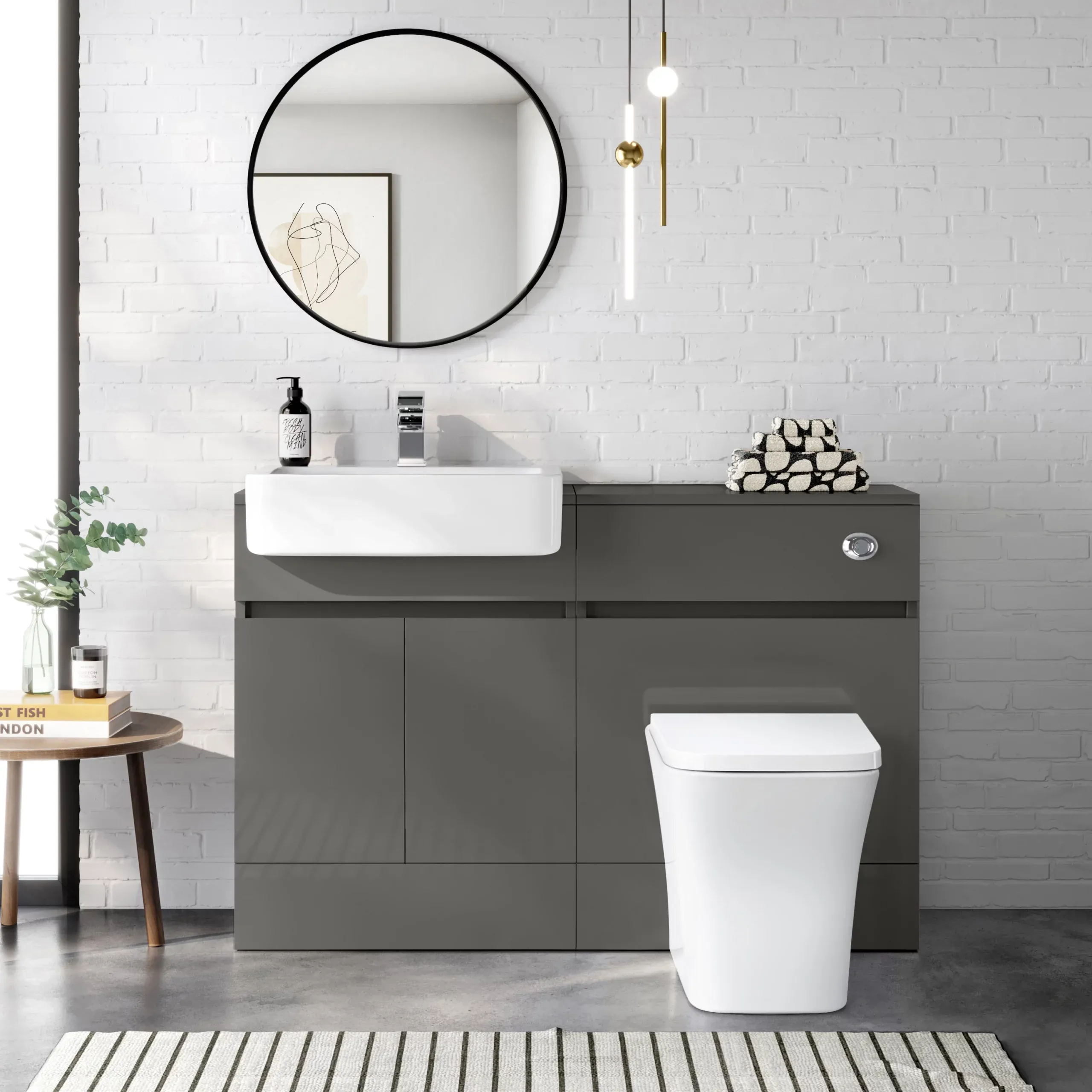
- Back To Wall Suites: Back to wall suites use a back-to-wall toilet with a concealed cistern inside a WC unit or wall void. Concealed pipework improves visual cleanliness. WC units add storage surface and hide services.
- Wall Hung Suites: Wall hung suites use a wall-hung toilet and often a wall-hung basin to free floor space. Clear floor area improves cleaning access. Frame systems require a strong wall and correct fixing.
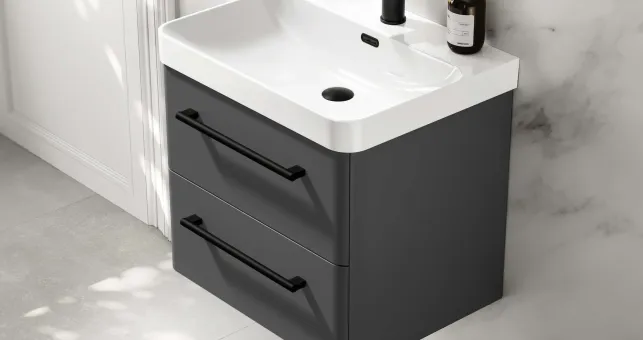
- Furniture Bathroom Suites: Furniture bathroom suites pair a vanity unit basin with matching WC furniture and storage units. Vanity units conceal pipework and increase storage capacity. Furniture depth must suit room circulation.
- Shower Bathroom Suites: Shower bathroom suites prioritise a shower enclosure and tray, often replacing a bath in smaller rooms. Quadrant enclosures save space near doors. Walk-in showers suit step-free access goals.
How Do You Choose The Best Bathroom Suite For Your Home?
The best bathroom suite choice matches room dimensions, pipework positions, daily user needs, and maintenance preferences while keeping toilet projection, basin depth, and bath or shower footprint compatible with comfortable movement and reliable installation. Bathroom Mountain suite selection starts with accurate measurement and a fixed layout plan. Toilet outlet type must match soil pipe position. Basin type must match wall strength and storage needs.
- Measure Room First: Measure room first by recording wall-to-wall dimensions, door swing arc, window position, and fixed service locations. Minimum clearance zones must remain for toilet use and entry.
- Fix Layout Constraints: Fix layout constraints by mapping soil pipe position, water feed locations, and waste routes before selecting fixtures. Toilet outlet orientation must align with existing soil connection. Basin waste height must suit trap and pipe run.
- Choose Toilet Type: Choose toilet type based on projection depth, cleaning access, and concealment preference. Short projection toilets improve circulation in small rooms. Back-to-wall toilets improve visual simplicity with concealed cisterns.
- Choose Basin Type: Choose basin type based on storage requirement and pipework concealment. Vanity basins add storage and hide pipework. Pedestal basins suit narrow spaces but reduce storage.
- Select Bath Or Shower: Select bath or shower based on bathing preference, step-in safety, and cleaning time. Straight baths suit standard layouts. Shower baths add dual function in family bathrooms.
- Match Style And Finish: Match style and finish across toilet, basin, furniture, and taps to keep a consistent suite visual set. Contemporary suites use clean lines and minimal profiles.
What Is The Difference Between Budget, Mid Range, And Premium Bathroom Suites?

Budget, mid-range, and premium bathroom suites differ mainly by material grade, manufacturing tolerance, glaze quality, component specification, aftercare depth, and design coordination, not by whether a bathroom suite contains a toilet, basin, and bath or shower. Budget suites prioritise low upfront cost and standard sizes. Mid-range suites prioritise stronger ceramics, better fittings, and more finish options.
- Ceramic Thickness: Ceramic thickness typically increases from budget to premium because higher-grade ceramics maintain rigidity and reduce flex under load. Thicker ceramics support stronger fixing points on basins and wall-hung pans.
- Glaze Quality: Glaze quality usually improves across tiers through smoother finish, better stain resistance, and more consistent colour tone. Smoother glaze reduces limescale adhesion and simplifies cleaning. Consistent glaze reduces visible patching under bright lighting.
- Fittings And Hardware: Fittings and hardware differences include hinge strength, seat durability, flush valve quality, and furniture runner strength. Budget hardware often uses lighter hinges and simpler seats. Mid-range hardware often improves soft-close reliability and hinge corrosion resistance.
- Toilet Technology: Toilet technology differs by tier because premium suites more often include rimless WC design, quieter flush profiles, and concealed cistern compatibility. Budget suites often use standard rim designs and basic dual flush. Mid-range suites often add improved flush distribution and easier-clean shapes
- Furniture Specification: Furniture specification varies strongly by tier because moisture resistance and edge sealing determine lifespan. Budget furniture often uses thinner panels and simpler finishes. Mid-range furniture often improves coatings, carcass thickness, and hinge quality.
- Design Coordination: Design coordination increases from budget to premium because premium ranges align basin shapes, WC profiles, furniture lines, and metal finishes across full collections. Budget ranges often mix generic shapes.
What Are The Best Bathroom Suites For Small Bathrooms And Compact Spaces?
The best bathroom suites for small bathrooms use short projection toilets, compact basins, space-saving bath or shower footprints, and concealed pipework options to maximise clear floor area and maintain comfortable movement around doors and fixtures. Compact suite performance depends on projection depth, not only fixture width. Wall-hung or back-to-wall toilets reduce visual bulk and improve floor access.
- Short Projection Toilet: Short projection toilet reduces front-to-back depth and increases circulation space. Reduced projection improves knee clearance and reduces door collision risk.
- Back To Wall WC: Back to wall WC improves space efficiency by pushing the pan closer to the rear wall and hiding the cistern in furniture or a wall void. Concealed cisterns reduce visual clutter.
- Wall Hung WC: Wall hung WC increases visible floor area and improves cleaning access. Frame systems move the cistern into the wall or a furniture unit. Adjustable pan height improves usability in tight rooms.
- Compact Basin Options: Compact basin options include corner basins, short projection basins, and slim vanity basins. Smaller basins improve door clearance and reduce shoulder pinch points.
- Slim Vanity Units: Slim vanity units provide storage without heavy room intrusion. Reduced depth units protect circulation paths near the door and toilet. Concealed pipework improves visual simplicity.
- Shower First Layout: Shower first layout replaces a bath with a quadrant enclosure, sliding door enclosure, or walk-in screen to free floor area. Quadrant trays reduce sharp corners in tight spaces.
What Are The Best Bathroom Suites For Large Ensuites And Spa Style Bathrooms?
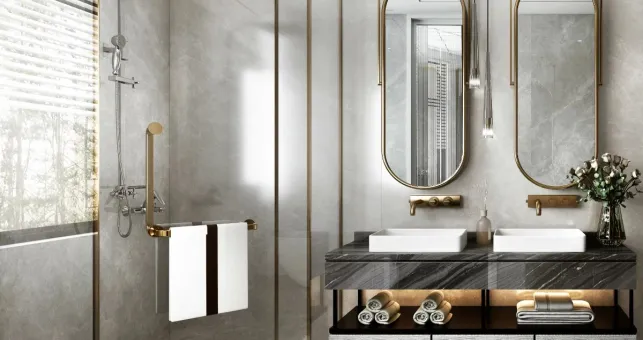
The best bathroom suites for large ensuites and spa-style bathrooms prioritise coordinated premium collections, generous fixture proportions, separate bathing and shower zones, high-storage furniture, and comfort upgrades because space allows zoning, feature pieces, and improved daily usability. Suite planning starts with zone definition for wet use, dry use, and storage use. Larger rooms support double basins, freestanding baths, and walk-in showers with wide screens.
- Freestanding Bath Focus: Freestanding bath focus creates a spa-style centrepiece and increases perceived luxury. Floor space must allow access on at least two sides for cleaning and entry.
- Walk In Shower Zone: Walk in shower zone improves spa usability through wider entry, reduced door hardware, and a larger wet area. Screen width and tray or wet room falls control splash and drainage.
- Double Basin Vanity: Double basin vanity improves shared ensuite use by reducing waiting time and increasing counter space. Wide vanity units require strong wall fixing and correct waste routing.
- Wall Hung Ceramics: Wall hung ceramics improve cleaning access and modernise visual lines in larger rooms. Wall hung WC frames allow concealed cistern design.
- Premium Furniture Storage: Premium furniture storage increases spa function through tall units, drawer stacks, and integrated organisers. Moisture resistance and edge sealing control lifespan.
- Finish And Style Cohesion: Finish and style cohesion improve spa feel when taps, shower valves, accessories, and furniture handles match one finish family.
How Do Wall Hung Vs Pedestal Basin Suites Differ In Quality And Performance?

Wall-hung and pedestal basin suites differ mainly by installation method, load support, cleaning access, pipework concealment, and storage integration, not by ceramic strength alone, because performance depends on wall fixing quality, basin design, and maintenance access. Wall-hung basins create open floor space and cleaner sightlines.
- Fixing Strength: Fixing strength matters more for wall-hung basins because load transfers into wall brackets and wall structure. Solid walls and correct fixings control long-term stability.
- Cleaning Access: Cleaning access improves with wall-hung basins because floor visibility increases and mop access improves. Open floor space reduces dust traps around pedestal bases..
- Pipework Concealment: Pipework concealment differs because pedestal basins hide pipework within the pedestal, while wall-hung basins often show traps and pipes unless paired with furniture. Exposed pipework requires neat routing and finish matching.
- Storage Capacity: Storage capacity typically increases with wall-hung vanity basin suites because drawers and cupboards sit below the basin. Pedestal basin suites provide minimal built-in storage.
- Installation Complexity: Installation complexity increases for wall-hung basins because bracket alignment, wall reinforcement, and level setting must be precise. Incorrect fixing causes movement and seal stress.
- Visual Design Impact: Visual design impact differs because wall-hung basins create a lighter, modern appearance and increase perceived space. Pedestal basins create a classic profile and suit traditional suites.
What Are The Best Low Profile And Minimalist Bathroom Suites?
The best low-profile and minimalist bathroom suites use wall-hung or back-to-wall toilets, slim basins or vanity basins, clean-edged furniture, and concealed services to reduce visual noise and increase clear floor and wall lines. Minimalist suite performance depends on tight alignment and consistent geometry between WC, basin, and furniture. Low-profile design relies on reduced projection and reduced height bulk. Rimless WC shapes and concealed cisterns improve cleanability and visual simplicity.
- Wall Hung WC: Wall hung WC creates the lowest visual bulk by lifting the pan off the floor and hiding the cistern in a frame. Clear floor space improves minimalist appearance. Adjustable pan height supports comfort alignment.
- Back To Wall WC: Back to wall WC keeps the pan tight to the wall and hides pipework behind a WC unit or wall void. Reduced gaps reduce cleaning complexity. WC units create a straight rear line that suits minimalist layouts.
- Slimline Basin: Slimline basin reduces depth and reduces wall intrusion in narrow rooms. Wall-hung basins increase floor visibility. Narrow projection improves circulation near doors.
- Handleless Vanity: Handleless vanity reduces visual clutter and maintains clean furniture planes. Push-to-open drawers and recessed grips keep a flat facade.
- Concealed Plumbing: Concealed plumbing hides traps, supply tails, and cistern components inside furniture or wall voids. Hidden services create uninterrupted lines. Concealment reduces visible metalwork in the dry zone.
- Rimless Toilet Design: Rimless toilet design reduces internal rim complexity and supports easier cleaning. Smooth bowl geometry reduces dirt traps.
What Are The Best Bathroom Suites For Period Properties And Older Homes?
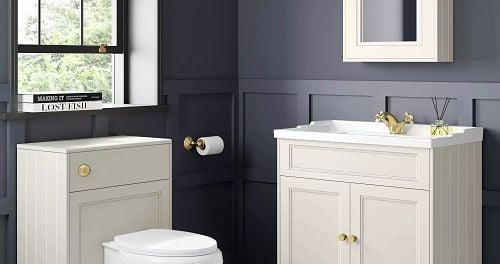
The best bathroom suites for period properties use traditional ceramic profiles, furniture-style basins, higher skirting and pipework tolerance, and classic brassware finishes, because older homes often have uneven walls, legacy service routes, and proportionally larger rooms that suit heritage styling. Period bathroom suite selection starts with era-matched shapes, then checks installation compatibility. Traditional close-coupled and low-level WC styles suit classic layouts.
- Traditional WC Styles: Traditional WC styles include close-coupled, low-level, and high-level cistern formats that match period bathroom aesthetics. WC projection planning prevents cramped clearances in narrower older bathrooms.
- Pedestal Basin Sets: Pedestal basin sets suit period properties because pedestal ceramics conceal pipework and simplify visual alignment against imperfect walls. Full pedestal support reduces reliance on wall strength.
- Console Basin Units: Console basin units provide a heritage look with open leg frames and under-basin clearance. Console frames increase perceived space compared to bulky furniture.
- Freestanding Bath Focus: Freestanding bath focus suits older homes with larger room proportions and creates a strong period feature. Roll-top baths and slipper baths align with Victorian and Edwardian themes.
- Traditional Brassware: Traditional brassware includes crosshead handles, lever handles, and matching bath fillers that align with period styling. Finish selection commonly uses chrome, brushed brass, or nickel tones.
- Heritage Furniture: Heritage furniture uses framed doors, classic profiles, and painted finishes to match older home characters. Storage planning reduces surface clutter and preserves a tidy period look.
What Are The Best Water Efficient Bathroom Suites For Eco Conscious Homeowners?

The best water-efficient bathroom suites reduce water use through dual-flush toilets, water-saving flush mechanisms, efficient taps and shower valves, and leak-resistant components that maintain performance without repeat flushing. Water efficiency depends on flush effectiveness, not only low litres-per-flush claims. Efficient suites pair strong siphon performance with controlled cistern volume.
- Dual Flush Toilets: Dual flush toilets reduce water use by providing a reduced flush for liquids and a full flush for solids. Correct full-flush release prevents repeat flushing. Reliable flush valve lift maintains full discharge when needed.
- Efficient Cistern Design: Efficient cistern design maintains flush effectiveness with stable waterline control and consistent discharge timing. Correct fill valve shutoff prevents overflow loss.
- Rimless WC Geometry: Rimless WC geometry improves cleanability and can support effective wash distribution with controlled flush volume. Smooth internal surfaces reduce dirt traps and reduce cleaning water use.
- Tap Flow Control: Tap flow control reduces basin water use using aerators and flow regulators that maintain perceived pressure while lowering litres per minute. Flow regulation reduces unnecessary run time during handwashing and brushing.
- Shower Flow Regulation: Shower flow regulation reduces shower water consumption through regulated shower heads and balanced valves. Flow limiting reduces litres per minute while maintaining spray pattern coverage.
What Are The Best Bathroom Suites By Colour?
The best bathroom suite colour depends on light level, room size, maintenance tolerance, and style goal, because bathroom suite colour changes perceived space, highlights ceramic shapes, and affects visible limescale, fingerprints, and water marks. White suites maximise brightness and match all finishes. Black and dark suites create high-contrast design but show mineral spotting more clearly.
- Classic White: Classic white suites suit most bathrooms because white ceramics reflect light and reduce visual bulk. White suites align with chrome, black, brushed brass, and stainless finishes.
- Matte Black: Matte black suites suit bold modern bathrooms and create strong contrast with light walls and stone tiles. Water marks and limescale spotting show more clearly on dark ceramics and dark furniture finishes.
- Soft Grey: Soft grey suites suit contemporary bathrooms with a calmer contrast than black. Grey ceramics and grey furniture reduce glare and soften the room. Grey surfaces show less stark spotting than black but show more than white.
- Beige And Stone: Beige and stone suites suit warm schemes and period-inspired bathrooms. Warm tones pair well with brushed brass and classic chrome.
- Two Tone Sets: Two tone sets combine white ceramics with coloured furniture fronts for controlled colour without full ceramic colour commitment. Two tone suites reduce long-term risk because ceramics remain neutral.
- High Gloss Finishes: High gloss finishes increase light reflection and suit smaller bathrooms needing brightness. Gloss surfaces show water droplets and smears more clearly than matte surfaces.
What Are The Best Value For Money Bathroom Suites?

Best value-for-money bathroom suites combine durable ceramics, reliable flush performance, standard UK-compatible dimensions, moisture-resistant furniture materials, and long spare-part availability at a mid-tier price point, because the lowest lifetime cost comes from fewer replacements, fewer call-backs, and easier maintenance. Value assessment must include installation compatibility and service access, not only purchase price.
- Standard Size Suite: Standard size suite delivers value by using common WC projections, common basin widths, and common bath lengths that fit typical homes without pipework relocation.
- Reliable Flush Design: Reliable flush design improves value because a strong, consistent flush reduces repeat flushing and reduces blockage events. Stable cistern waterline control reduces weak flush issues.
- Moisture Resistant Furniture: Moisture resistant furniture improves value because cabinet swelling and edge delamination drive early replacement. Better edge sealing extends lifespan in humid rooms.
- Coordinated Core Set: Coordinated core set improves value when toilet, basin, and bath or shower match in size and style without premium design pricing. Matching ceramics reduce visual mismatch risk.
- Easy Service Access: Easy service access improves value because concealed cisterns and vanity traps need reachable panels for repairs. Access reduces plumber time and reduces disruption.
How Much Does A Bathroom Suite Cost?
A bathroom suite typically costs £200–£5,000+ for the fixtures, and total fitted cost rises mainly with labour, layout changes, and finish level rather than the toilet–basin–bath bundle itself. Budget suites sit at the low end when the set includes a close-coupled toilet, pedestal basin, and standard bath.
- Budget Suite Cost: Budget bathroom suite cost often sits around £200–£400 for toilet, basin, and bath in entry-level sets.
- Mid Range Cost: Mid-range bathroom suite cost often sits around £600–£1,500 when the set includes upgraded sanitaryware, vanity basin options, and higher-spec bath or shower components.
- Premium Suite Cost: Premium bathroom suite cost often starts around £1,500 and can exceed £5,000 when the suite uses premium brand ranges, freestanding baths, and design-led ceramics.
- Suite Installation Cost: Bathroom suite installation for a standard toilet–bath–basin set commonly lands around £350–£1,100, depending on job complexity and time on site.
- Full Refit Context: Full bathroom installation commonly costs £4,500–£10,000 when the job includes multiple trades, removal, installation, and wider refurbishment work beyond the suite.
- Cost Drivers: Cost drivers include layout changes, soil pipe alignment, wall reinforcement for wall-hung frames, tiling extent, concealed cistern access design, and furniture moisture resistance
What Installation Considerations Should You Take Into Bathroom Suite Selection?
Bathroom suite installation success depends on matching toilet outlet position, basin waste routing, bath or shower footprint, wall and floor structure, and service access to the existing pipework and room dimensions, because mismatched dimensions and connections create extra labour, extra parts, and long-term maintenance problems. Bathroom Mountain suite selection starts with a measured plan and fixed service points. Toilet choice must align with soil pipe location and projection clearance.
- Soil Pipe Alignment: Soil pipe alignment controls toilet compatibility because outlet orientation must match the waste connection position. Horizontal rear outlets and vertical floor outlets require different pan connectors.
- Toilet Projection Clearance: Toilet projection clearance determines usable movement space in front of the toilet. Short projection pans suit tight rooms and cloakrooms.
- Cistern Service Access: Cistern service access matters because concealed cisterns and back-to-wall toilets require reachable panels or flush plate access. Hidden access increases repair cost and delays part replacement.
- Basin Waste Routing: Basin waste routing must match trap type and pipe route, especially in vanity units and wall-hung basins. Waste height affects pipe fall and trap clearance. Incorrect routing causes slow drainage and poor cabinet fit.
- Wall Strength And Fixings: Wall strength and fixings matter for wall-hung toilets and wall-hung basins because load transfers into frames and brackets. Stud walls require reinforcement and correct frame mounting.
- Bath Or Shower Drainage: Bath or shower drainage depends on waste position, pipe fall, and access for future trap cleaning. Shower trays need correct falls and stable support to prevent flex.
How Does Ceramic Quality And Durability Vary Among Bathroom Suites?

Ceramic quality and durability vary among bathroom suites through clay body density, firing temperature control, glaze thickness and smoothness, manufacturing tolerance, and load-rated design, and these factors change stain resistance, chip resistance, crack resistance, and long-term colour consistency. Higher-grade ceramics keep shape under load and maintain tighter fit at fixings. Better glaze reduces limescale adhesion and eases cleaning.
- Clay Body Density: Clay body density increases impact resistance and reduces micro-crack formation under repeated load. Denser bodies reduce water absorption and reduce long-term weakening.
- Firing Control Quality: Firing control quality affects strength and shape stability because firing temperature and time determine vitrification level. Stable firing reduces warping and keeps flat mounting faces true.
- Glaze Thickness: Glaze thickness improves stain resistance and reduces surface roughness that traps residue. Thicker, well-bonded glaze resists fine scratching from routine cleaning. Thin glaze shows dull patches and absorbs staining faster.
- Surface Smoothness: Surface smoothness reduces limescale adhesion and reduces cleaning effort because smoother surfaces offer fewer anchor points for mineral deposits. Rougher glaze accelerates grime build-up around waterlines.
- Dimensional Tolerance: Dimensional tolerance controls fit quality at cistern-to-pan joints, basin-to-wall interfaces, and seat hinge alignment. Tight tolerances reduce gaps that collect grime.
What Are The Best Bathroom Suites For Noise Reduction And Quiet Flushing?
The best bathroom suites for noise reduction use quiet cistern components, stable pan geometry, insulated or concealed cistern placement, and vibration control at fixing points to reduce flush noise and refill noise. Quiet flushing depends on controlled water entry into the bowl and reduced resonance through floors and walls. Quiet refill depends on a quiet fill valve and stable water pressure. Wall-hung and back-to-wall suites reduce audible pipework when correct insulation and isolation are used.
- Concealed Cistern Housing: Concealed cistern housing reduces airborne noise by placing the cistern inside a WC unit or wall void. Enclosed voids reduce direct sound transmission into the room. Service access panels must stay reachable to maintain parts.
- Quiet Fill Valves: Quiet fill valves reduce refill hiss and vibration during cistern refill. Anti-siphon designs with stable float movement reduce chatter. Inlet filtration reduces debris noise and valve turbulence.
- Soft Close Seats: Soft close seats reduce impact noise and remove seat slam events. Damped hinges reduce peak noise during closing. Stable hinge plates reduce creak and movement during use.
- Acoustic Fixing Kits: Acoustic fixing kits reduce vibration transfer between ceramic and wall or floor surfaces. Rubber isolation washers and foam pads reduce resonance.
What Are The Best Toilet Seats And Upgrade Options For Bathroom Suites?
The best toilet seats and upgrade options for bathroom suites improve hygiene, comfort, durability, and ease of cleaning through soft-close hinges, quick-release fittings, durable seat materials, stable hinge plates, and compatibility with the toilet pan shape and fixing type. Toilet seat performance depends on hinge quality more than seat thickness. Correct seat shape prevents overhang and wobble.
- Soft Close Hinges: Soft close hinges reduce noise and prevent seat slamming through damped hinge action. Damping improves child safety and reduces ceramic impact wear. Consistent closing speed signals better hinge quality.
- Quick Release Design: Quick release design allows seat removal without tools for easier deep cleaning around hinge areas. Removal reduces grime build-up at hinge plates. Faster cleaning improves hygiene consistency.
- Duroplast Seats: Duroplast seats provide strong rigidity and scratch resistance with a smooth, easy-clean surface. Rigid material reduces flex and improves comfort stability. A smooth surface reduces limescale adhesion and staining. Thermoset Seats: Thermoset seats provide a dense, hard surface with strong chemical resistance to common bathroom cleaners. Hard surface resists yellowing and reduces odour absorption. Stable rigidity improves long-term feel.
- Top Fix Mounting: Top fix mounting suits toilets where fixing access from below is limited, such as back-to-wall and wall-hung pans. Top fix kits tighten from above for easier installation. Secure expansion anchors reduce seat movement.
- Slimline Profile: Slimline profile seats improve modern aesthetics and reduce visual bulk. Slim profiles require strong hinges to prevent flex. Correct pan matching prevents gaps at the rear.
What Cleaning And Maintenance Routines Best Preserve Bathroom Suite Quality?

Bathroom suite quality stays highest when cleaning routines protect glaze surfaces, prevent limescale buildup, keep seals intact, and maintain moving parts such as flush valves, hinges, and drawers, because abrasion, scale, and moisture ingress drive most premature wear. Routine design must match water hardness and usage intensity. Neutral cleaners preserve ceramic glaze and furniture coatings. Microfibre wiping reduces water marks and reduces mineral spotting.
- Daily Surface Wipe: Daily surface wipe removes water droplets, soap film, and toothpaste residue before mineral deposits harden. Microfibre cloth use reduces scratching risk. Dry wiping on taps and shower screens reduces water spotting.
- Weekly Non Abrasive Clean: Weekly non abrasive clean uses pH-neutral bathroom cleaner and soft cloths to protect glaze and plated finishes. Abrasive powders scratch glaze and increase stain retention. Soft brushing under rims prevents residue build.
- Limescale Control: Limescale control prevents rim jet restriction, dull taps, and rough ceramic surfaces in hard water areas. Vinegar or citric acid descaling on targeted areas reduces deposits.
- Seal And Grout Checks: Seal and grout checks prevent water ingress behind baths, showers, and basins. Cracked silicone allows moisture into walls and floors. Soft joints around trays and baths protect movement zones.
- Cistern And Leak Check: Cistern and leak check protects suite longevity by preventing silent water loss and damp damage. Running cisterns waste water and increase scale formation.
How Long Do Quality Bathroom Suites Typically Last?
Quality bathroom suites typically last 10–25 years for core ceramics such as toilets and basins, while moving and wear components such as flush valves, toilet seats, taps, seals, and furniture hardware usually need replacement within 3–10 years depending on use intensity and water hardness. Ceramic lifespan stays long when glaze remains intact and fixings remain stable. Water quality and cleaning methods strongly influence wear rate. Moisture exposure shortens furniture lifespan when edge sealing fails.
- Ceramic Lifespan: Ceramic lifespan for toilets and basins often reaches 15–25 years when cracking and impact damage are avoided. Glaze integrity controls stain resistance and appearance over time. Stable fixing prevents rocking stress cracks.
- Bath And Shower Lifespan: Bath and shower lifespan varies by material and installation support. Acrylic baths often last 10–15 years when fully supported and correctly sealed. Shower trays and enclosures often last 10–15 years depending on seal condition and hardware quality.
- Flush Mechanism Lifespan: Flush mechanism lifespan commonly sits around 5–10 years depending on water hardness and usage frequency. Scale buildup reduces valve sealing and causes running cistern faults. Seal replacement often restores performance without replacing the toilet.
- Tap And Valve Lifespan: Tap and valve lifespan commonly sits around 5–15 years depending on cartridge quality, water pressure, and scale exposure. Cartridge replacement often restores smooth operation. Aerator cleaning reduces flow restriction.
- Seat And Hinges Lifespan: Seat and hinges lifespan commonly sits around 3–8 years in family bathrooms. Hinge loosening and soft-close damping wear drive replacement. Top-fix seat kits improve stability on back-to-wall and wall-hung pans.
- Furniture Lifespan: Furniture lifespan commonly sits around 7–15 years depending on board grade, edge sealing, and ventilation. Swelling at edges signals moisture ingress. Soft-close runners last longer when drawers stay dry.
What Common Defects Should You Look For In Bathroom Suites?

Common bathroom suite defects include ceramic cracks, glaze flaws, dimensional warping, poor flush performance, leaking seals, loose fixings, and furniture moisture damage, and these defects matter because they reduce hygiene, increase leak risk, and shorten service life. Defect checks must happen before installation and again after first use. Visual inspection identifies glaze and chip faults. Fit checks identify rocking and misalignment. Function tests identify flush valve sealing and tap cartridge stability. Early detection reduces rework and protects floors and cabinets.
- Ceramic Hairline Cracks: Ceramic hairline cracks appear around fixing holes, rim edges, and thin corners of basins and pans. Cracks grow under load and temperature cycling. Water ingress into cracks creates staining lines.
- Glaze Pinholes: Glaze pinholes show as small dots or pitting on glossy surfaces. Pinholes trap grime and increase stain retention. Pinhole clusters often appear near waterlines and rims.
- Uneven Glaze Colour: Uneven glaze colour shows as patches or tone shifts across a basin or pan. Colour inconsistency becomes obvious under LED lighting. Mismatched tone breaks suite coordination across matched components.
- Rocking Toilet Base: Rocking toilet base occurs when the pan base is not flat or the floor is uneven. Movement breaks seals and loosens fixings. Rocking creates creaking and long-term crack risk.
- Poor Flush Performance: Poor flush performance shows as weak bowl wash, incomplete clearance, and repeat flushing. Poor performance can come from incorrect cistern waterline, poor flush valve lift, or poor bowl geometry. Repeat flushing increases water use and blockage risk.
What Should You Avoid When Selecting Budget Bathroom Suites?
Budget bathroom suite problems increase when ceramic quality, flush mechanism reliability, dimensional consistency, furniture moisture resistance, and spare-part continuity are weak, so selection must avoid the lowest-spec compromises that create leaks, rocking, repeat flushing, and early replacement. Budget selection still works well when sizes are standard and fittings are reliable. Risk increases when concealed systems lack service access. Risk increases when furniture edge sealing is thin. Risk increases when replacement parts are non-standard. A short checklist prevents false economy.
- Non Standard Dimensions: Non standard dimensions create installation problems and restrict replacement options. Odd toilet projections reduce clearance. Uncommon basin wastes complicate trap routing. Uncommon pan connector geometry increases leak risk. Standard sizes reduce fitting time and simplify future upgrades.
- Weak Flush Components: Weak flush components cause running cistern faults and weak flush output. Poor seals leak and reduce usable flush volume. Inconsistent fill valve control reduces waterline stability. Repeat flushing increases water use and increases blockage risk. Reliable internals protect long-term value.
- Thin Glaze Finish: Thin glaze finish increases staining and limescale adhesion. Rough glaze surfaces trap grime and need harsher cleaning. Harsh cleaning increases scratching and dulling. Better glaze reduces daily effort and preserves appearance.
- Poor Tolerance Fit: Poor tolerance fit causes rocking toilets, misaligned cistern joints, and uneven basin seating. Rocking stresses seals and causes movement leaks. Misalignment increases silicone reliance. Better tolerances reduce call-backs and reduce rework.
- Low Moisture Furniture: Low moisture furniture fails early through swelling and edge delamination. Cut edges around pipework often fail first. Weak hinges and runners loosen quickly. Better sealing and better board grade extend furniture lifespan.
- No Service Access: No service access becomes a major risk on concealed cisterns and back-to-wall toilets. Hidden parts still need maintenance. Lack of access forces dismantling of furniture or tiling. Planned access reduces repair cost and downtime.
- Poor Spare Support: Poor spare support causes early full replacement when seats, hinges, valves, or brackets fail. Model changes and non-standard parts increase downtime. Stable spare availability keeps the suite serviceable for years. Spare continuity protects total ownership cost.
Summing Up
Best bathroom suites perform well when a coordinated toilet, basin, and bath or shower fit the room dimensions and the existing pipework without forcing awkward clearances or hidden compromises. A correct choice starts with measurement and service mapping, then narrows by suite type, such as compact cloakroom sets, standard family suites,
wall-hung or back-to-wall layouts, furniture-led storage suites, or spa-style ensuite suites. Good suites stay reliable because ceramics remain stable, glaze stays smooth, and key components such as flush mechanisms, seats, taps, and hinges stay replaceable.
Long-term value comes from practical details rather than a label. Toilet projection and outlet alignment control installation ease. Basin type controls storage, cleaning access, and pipework concealment. Bath or shower footprint controls circulation and daily usability. Tier differences usually show in tolerance, hardware strength, and finish consistency, so a sensible match between budget, mid-range, and premium depends on how hard the bathroom will be used and how long the suite needs to last.