When exploring options for shower products, you will frequently encounter specifications regarding the thickness of the glass.
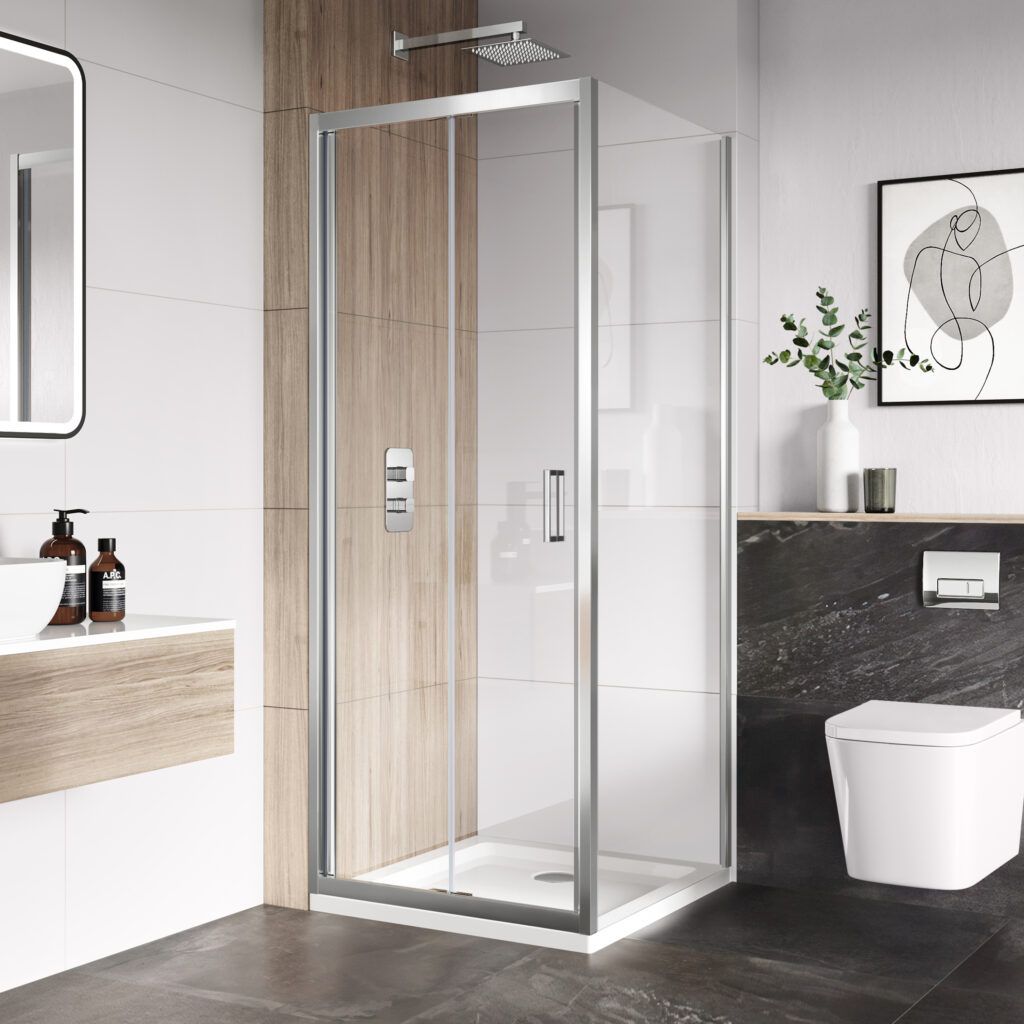
This measurement applies to any item containing a glass component, such as complete shower enclosures, large shower screens (like wetroom or walk-in screens), shower doors, and over-bath splash panels. Shower glass thickness is measured in millimeters and refers to the depth of the material when viewed edge-on. Given the variety of sizes available, understanding the pros and cons of each is crucial before making a purchase. This knowledge will also help you justify any differences in price points.
So, why should you care about glass thickness? And what are the benefits or drawbacks of each size? This guide aims to answer these questions and clarify common industry terminology related to shower glass.
What is the Typical and Standard Shower Glass Thickness?
In most residential bathrooms, the common glass thickness is 6mm. This size strikes a balance between weight and durability. First and foremost, the glass must be able to withstand impact and everyday force, especially for moving components like shower doors and screens, which experience motion and shock during use and cleaning.
The glass must also be sturdy for cubicles and enclosures to ensure resilience against moisture and consistent usage, offering a reassuring sense of longevity and quality. As glass becomes thinner, it naturally becomes more fragile, so a reasonable thickness helps protect against structural issues.
Other sizes you may commonly encounter include:
- 4mm
- 5mm
- 8mm (also very common)
- 10mm (also very common)
- 12mm
When considering less common sizes, remember that you may face limitations in finding matching items (like shower doors) or supplementary hardware such as bracing bars, hinges, or support mechanisms, which may only be available from specialized suppliers. Choosing a more standard thickness can offer flexibility should you need replacement parts or decide to update your space later.

How Thick Should the Glass Be for Your Shower?
The ideal glass thickness is ultimately a matter of personal choice. Many manufacturers highlight that thicker glass conveys a higher sense of quality and luxury, as the physical difference is noticeable. It is worth noting that generally, the thicker you go, the higher the cost.
One expert from a well-known bath products company notes that the thickness influences both aesthetics and physical feel: “Thicker glass is a visual improvement over thinner products. More importantly, the heavier, thicker glass door provides a better feel when you open and shut the cubicle panel, giving the customer an impression of higher quality.”
However, they add that selection may be limited depending on the shape: “Depending on the shape of your shower enclosure design, the size of the glass panel needed, or the more curved it is, you may be limited in terms of the glass thickness options available.”
6mm vs. 8mm Shower Glass
There are several clear advantages to choosing 6mm glass:
- Cost-Effective: It is cheaper, making it perfect if you are on a budget.
- Availability: It is extremely common, making it easy to find replacement parts and fittings.
- Design Choice: There is a broad selection of styles, colors, and designs.
- Safety: It is safe and meets all required safety certifications (such as national and EU standards).
Despite these benefits, moving to 8mm glass provides a higher overall level of quality. The slight increase in thickness delivers additional strength and peace of mind.
Another specialist source suggests: “4mm or 6mm glass are excellent alternatives to 8mm or 10mm glass when cost is the primary factor—these thinner glass panels are beautiful, very versatile, and entirely safe. However, 4mm glass feels much lighter, which some people may associate with cheaper quality.”
6mm/8mm vs. 10mm Shower Glass
When comparing the smaller thicknesses to the substantial feel of 10mm thick glass, the difference is largely about perceived quality and robustness. As one industry expert notes, the difference is like comparing a reliable, well-engineered car—you can truly feel the quality. For example, a shower door will feel more solid, and the sound it makes when closing will suggest superior construction.
Another expert advises: “The thicker the glass, the more rigid it becomes. A straight piece of 6mm glass, say 900mm long, will have more ‘flex’ than a 10mm piece of the same length. Therefore, what people are investing in with thicker glass is the feeling of robustness and quality, particularly with moving doors, as the heavier weight of 8mm or 10mm glass feels superior.”
While the added thickness offers greater safety and protection, a secondary benefit is that the supporting components (hinges, brackets) must be more durable to handle the extra weight, often resulting in an overall higher-quality fixture.
However, 10mm glass, like any size, has potential drawbacks. The increased weight can place more strain on the surrounding hardware, potentially reducing the lifespan of other components, a factor to consider before deciding.
One specialist offers an exception: “The exception to rigidity is when you curve the glass, as the radius means the glass cannot flex. In this case, the thicker glass enclosure will feel better due to its greater stability because of its weight.”
Further commenting on the jump to 10mm, a bath products expert adds: “8mm or 10mm glass is highly durable, long-lasting, safe, and easy to clean—these thicknesses signify premium quality. 8mm glass is indulgent, thick, yet still affordable. 10mm glass is reserved for designer-led, luxurious products at the upper end of the price scale.”
Must All My Shower Components Be the Same Thickness?
While it might seem logical that every part of your shower should be the same size, this is not strictly necessary. For instance, it may make sense to have a sturdier shower door than the fixed shower panels or screens.
The main consideration when purchasing glass products is component compatibility; some manufacturers design products to be used only with their own fixtures or shower trays. It is worthwhile checking in advance about flexibility, especially if you plan to shop across different suppliers.
What Are the Best Glass Thicknesses for Different Applications?
It might seem that the largest size is always the best, but the optimal thickness depends on the component’s purpose. It is highly recommended to visit a local bathroom showroom that has display models to get a true feel for the difference in quality.
Best Glass Thickness for Shower Enclosures
For a great balance between affordability and reliability, 8mm tempered glass is often the best choice for a full shower enclosure, providing a sufficiently sturdy structure. However, if your budget is the priority, 6mm tempered glass is an excellent option, while 10mm delivers that luxurious feel.
Best Glass Thickness For a Shower Door
Shower doors must be more resilient as they are high-use, high-impact components. Again, 8mm is a popular minimum choice. However, the difference between 8mm and 10mm is noticeable, offering a smoother opening and a sturdier feel. Many customers upgrade to 10mm purely for the improved feel and quality, particularly for hinged or sliding shower doors.
If cost must be kept very low, you can find doors as thin as 4mm or 6mm tempered glass, which are often used with folding doors where the impact and movement are generally lower.
Best Glass Thickness For Wet Room or Walk-In Screens
For the thickness of wet room screens, walk-in shower screens, or fixed shower walls, greater thickness is advantageous. 10mm is highly suitable, although 8mm is also a good option. Since these are usually standalone glass walls, supported only by minimal bracing, you want maximum strength to withstand accidental force, especially in areas that can become slippery.
Best Glass Thickness For Over-Bath Shower Screens
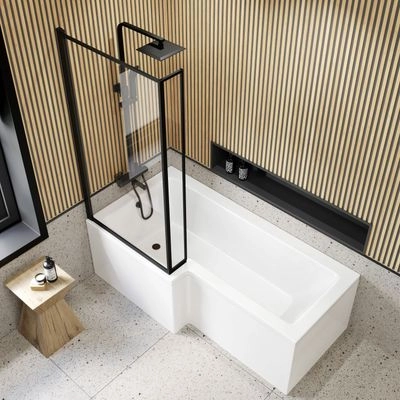
For over-bath shower screens, 6mm or 8mm are ideal. These panels serve as a protective splashback barrier. Particularly for hinged types, a lighter panel is often easier and smoother to move and position.

Safety and Tempered Glass Terminology
What is Safety Glass?
Safety glass is engineered to withstand significantly more force, making it much harder to break. If it does break, it shatters in a way that minimizes the risk of serious injury. There are different types, but tempered glass is the one most commonly used in shower products. All safety glass used in this application must conform to certified safety standards (such as national or EU directives and bear the CE mark).
What is Toughened Glass (Tempered Glass)?
The terms “toughened glass” and “tempered glass” are used interchangeably. It refers to glass that has undergone a process of intense heating followed by rapid cooling, which creates a much stronger material than standard glass.
If tempered glass shatters, it breaks into small, relatively harmless pieces, rather than large, dangerous shards that can cause severe injury. This differs from laminated glass, which holds together when shattered.
How Strong is 4mm to 10mm Tempered Glass?
The strength varies by thickness. 4mm to 6mm tempered glass is typically about twice as strong as standard glass. At the upper end, 10mm tempered glass is estimated to be up to five times stronger than standard annealed glass.