

A country and cottage style bathroom is a traditional interior design approach that combines natural materials, soft heritage colour palettes, classic sanitaryware, and furniture-led layouts inspired by British rural homes and period cottages. The style prioritises warmth, character, and timeless comfort.
Country and cottage bathrooms take cues from Georgian, Victorian, and Edwardian domestic interiors, adapting historic forms to modern performance standards without visual disruption.
Why choose a country or cottage bathroom style?
Country and cottage bathroom design offers emotional comfort, visual longevity, and strong cultural resonance with traditional housing, making the style consistently popular across renovation and refurbishment projects. The aesthetic ages slowly and avoids trend fatigue.
Homeowner preference studies in England and Wales consistently rank traditional bathrooms among the most satisfying long-term interior choices.
How should walls be designed in a country or cottage bathroom?
Walls in country and cottage bathrooms should introduce texture and softness using timber panelling, muted paint colours, or heritage-inspired wall panels that reflect traditional construction methods. Flat, high-gloss finishes reduce authenticity.
Timber panelling and tongue-and-groove walls
Painted timber panelling is one of the most recognisable cottage bathroom features. Tongue-and-groove boards or beadboard panels add vertical rhythm and work well to dado height or full wall coverage in larger rooms.
Wall panels as a practical alternative
Wood-effect wall panels replicate traditional timber appearance while offering improved moisture resistance. These panels suit bathrooms where solid wood installation proves impractical.
Painted walls and heritage colours
Soft paints such as chalk white, cream, sage green, duck-egg blue, and muted grey support the calm, lived-in aesthetic associated with country interiors.
Which flooring options suit country and cottage bathrooms?
Flooring for country and cottage bathrooms should use matte, tactile materials with natural variation such as stone, quarry tile, wood-effect porcelain, or heritage patterns, prioritising durability, slip resistance, and visual grounding consistent with traditional rural interiors.
Natural stone and stone-effect porcelain tiles
Natural stone floors historically appeared in utility spaces of rural homes. Modern stone-effect porcelain replicates limestone, travertine, or slate while offering improved water resistance and ease of maintenance. Matte finishes preserve authenticity and reduce slip risk.
Quarry tiles and terracotta-inspired flooring
Quarry tiles and terracotta finishes reflect traditional British service spaces and cottage kitchens adapted into washrooms. Warm red, clay, and earthy tones add visual weight and suit ground-floor bathrooms in older properties.
Victorian and heritage patterned tiles
Small-format patterned tiles referencing Victorian geometric designs suit cottages with period character. Black-and-white or muted multicolour patterns introduce visual interest without overwhelming compact rooms. Pattern scale remains controlled to preserve balance.
Wood-effect porcelain tiles
Wood-effect porcelain tiles replicate timber planks while eliminating moisture-related movement. Plank widths remain narrow to reflect historic board sizing. Oak, pine, and weathered tones integrate well with painted furniture and panelling.
Vinyl flooring with traditional appearance
High-quality vinyl flooring provides a practical solution in cottages with uneven subfloors. Wood-effect or stone-effect vinyl maintains visual continuity while offering comfort underfoot and improved thermal performance.
Floor finish and slip resistance considerations
Country bathrooms require flooring rated at least R10 for slip resistance in wet areas. Matte or textured surfaces outperform polished finishes and align with traditional material appearance.
Compatibility with underfloor heating
Porcelain tiles and stone-effect finishes suit water-based underfloor heating systems commonly retrofitted into older homes. Even heat distribution improves comfort in properties with solid floors and limited insulation.
Colour and tone selection
Floor colours remain grounded and subdued. Creams, warm greys, soft browns, and muted charcoal dominate. High-contrast gloss finishes reduce authenticity and visual calm.
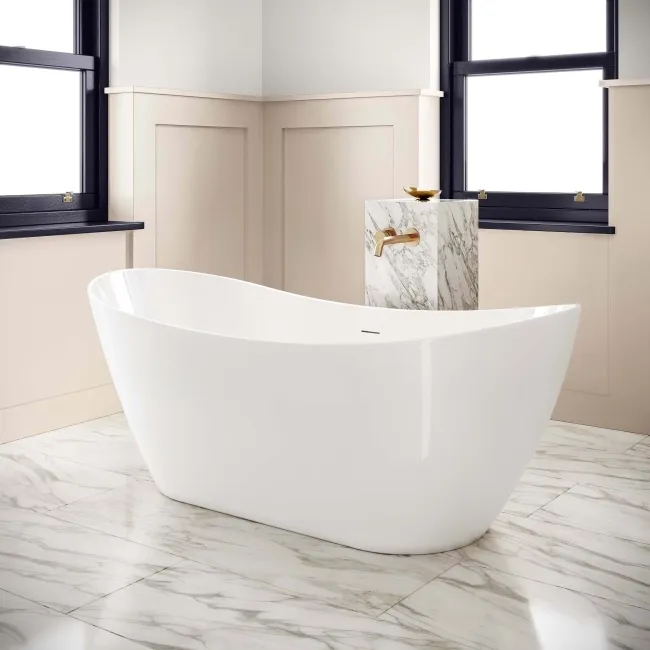
Which colour palettes define country and cottage bathrooms?
Country and cottage bathrooms rely on low-saturation, heritage-inspired colour palettes dominated by warm neutrals, soft pastels, and nature-based tones. Colour restraint supports relaxation and authenticity.
Common palette groups include:
- Chalk white, linen, and cream
- Sage green and muted olive
- Duck-egg blue and powder blue
- Soft grey, oatmeal, and clay tones
Dark accents often appear through metal fittings or stained timber rather than wall colour.
What bath styles work best in country and cottage bathrooms?
Country and cottage bathrooms use freestanding bath styles with traditional proportions, rolled rims, and heritage silhouettes derived from British domestic bathing forms between 1870 and 1930, prioritising visual softness, material authenticity, and balanced scale within modest room footprints.
Freestanding roll-top baths
Roll-top baths reflect late Victorian and Edwardian bathing design, defined by curved rims and deep soaking profiles. These baths suit larger cottage bathrooms and period homes, acting as a central visual anchor without requiring wall enclosure.

Slipper baths with raised backrests
Slipper baths feature one or two raised ends designed for seated bathing comfort. Single-ended slipper baths suit compact cottage bathrooms, while double-ended versions suit wider rooms. Asymmetrical profiles introduce softness without visual excess.
Painted exterior baths
Painted bath exteriors reinforce cottage character when finished in muted heritage tones such as off-white, stone, sage, or soft grey. Exterior paintwork increases contrast against tiled or panelled walls without introducing ornamentation.
Compact traditional baths for smaller bathrooms
Shorter freestanding or back-to-wall traditional baths allow country style application in bathrooms under 5m². Reduced length maintains proportion while preserving heritage form, supporting older housing layouts common in rural and pre-war properties.
Material considerations for traditional baths
Acrylic baths dominate modern installations due to reduced floor loading, while cast-iron baths appear in structurally suitable properties. Both materials achieve traditional aesthetics when paired with period profiles and compatible brassware.
How should basins be chosen for a cottage bathroom?
Basins for cottage bathrooms should use traditional proportions, ceramic materials, and visually exposed forms derived from late-19th and early-20th-century domestic sanitaryware, prioritising softness, vertical emphasis, and compatibility with furniture-led layouts rather than concealed modern structures.
Pedestal basins and heritage proportions
Pedestal basins represent the most recognisable basin type in cottage bathrooms. Narrow profiles, rounded bowls, and full-height pedestals reflect Victorian and Edwardian manufacturing standards. These basins suit smaller rooms by preserving floor visibility and avoiding visual bulk.
Console basins with open frames
Console basins combine ceramic bowls with metal or ceramic legs, maintaining openness beneath the basin. This format reflects early plumbing installations where pipework remained visible. Open structure supports visual lightness while increasing perceived room size.
Furniture-mounted ceramic basins
Ceramic basins integrated into painted wooden vanity units suit cottages requiring storage. Shaker-style cabinetry and framed doors preserve traditional character. Basin edges remain visibly defined to avoid modern slab-like appearances.
Wall-hung basins with traditional detailing
Wall-hung basins suit compact cottage bathrooms when traditional shapes and exposed pipework are retained. Rounded fronts, shallow projections, and decorative trap covers preserve heritage alignment despite wall mounting.

Basin size and scale considerations
Basin width typically ranges between 450mm and 600mm for cottage bathrooms. Depth remains modest to suit narrow rooms common in pre-1930 housing stock. Oversized basins disrupt proportion and reduce authenticity.
Material and finish selection
Gloss white ceramic remains the dominant basin finish due to historical accuracy and light-reflective performance. Matte finishes and coloured ceramics appear less frequently and require careful contextual control.
Which taps and fittings suit country and cottage bathrooms?
Taps and fittings for country and cottage bathrooms should reflect early mechanical plumbing design through traditional silhouettes, visible structure, and heritage metal finishes, prioritising proportion, material consistency, and visual softness over modern minimalism. Detail coherence defines authenticity.
Crosshead taps and ceramic indices
Crosshead taps remain the most recognisable fitting style in cottage bathrooms. Four-pronged handles with ceramic indices reference Victorian and Edwardian valve controls. These taps suit pedestal, console, and furniture-mounted basins where traditional detailing remains visible.
Lever taps with heritage profiles
Traditional lever taps provide a softer alternative to crossheads while retaining period accuracy. Slim curved levers with ceramic caps reflect early 20th-century designs and suit households requiring easier operation without introducing modern visual cues.
Bridge mixers and exposed pipework
Bridge mixer taps with visible connections between hot and cold feeds replicate historic plumbing layouts. Exposed pipework reinforces authenticity and pairs effectively with wall-hung or console basins in cottages and period homes.
Freestanding bath fillers and deck-mounted taps
Freestanding bath fillers suit larger country bathrooms where the bath acts as a focal point. Deck-mounted taps with traditional spouts suit compact spaces. Both options rely on classic proportions, curved spouts, and restrained detailing.

Heritage metal finishes and consistency
Chrome, brushed nickel, antique brass, and aged bronze represent historically appropriate finishes. Consistent metal selection across taps, valves, wastes, and accessories maintains visual cohesion and prevents stylistic fragmentation.
Modern performance within traditional form
Traditional tap designs meet modern standards through internal ceramic cartridges and flow regulation. Visual heritage remains unchanged while water efficiency and durability align with current UK regulations.
How does furniture influence country bathroom design?
Furniture influences country bathroom design by introducing domestic scale, visual softness, and functional storage through freestanding units that resemble household furniture rather than fitted cabinetry, reinforcing the lived-in, non-institutional character associated with traditional cottages and rural homes.
Furniture-led layouts versus fitted joinery
Country bathrooms favour furniture-led layouts over wall-to-wall fitted units. Freestanding vanities, linen cupboards, and side cabinets create visual breaks, mirroring how furniture appears in bedrooms and washrooms of period homes. This separation increases warmth and avoids modern rigidity.
Shaker-style and framed cabinetry
Shaker doors, framed panels, and visible stiles define authentic country bathroom furniture. These construction methods reflect joinery techniques common in 19th-century domestic furniture. Flat slab doors undermine heritage alignment and reduce visual depth.
Painted timber finishes and surface texture
Painted timber furniture in eggshell or satin finishes supports cottage aesthetics. Soft whites, stone tones, sage greens, and muted greys dominate. Visible grain and subtle brush texture reinforce handcrafted character and prevent overly refined appearance.
Freestanding vanity units and washstands
Freestanding vanity units with legs or plinth bases preserve floor visibility and echo traditional washstands. Open space beneath units increases perceived room size and maintains visual lightness, particularly important in smaller cottage bathrooms.
Storage through domestic furniture forms
Storage integrates through linen cupboards, sideboards, open shelving, and ladder-style units rather than concealed wall cabinets. This approach reflects rural storage traditions and supports practical, everyday use without visual heaviness.
Proportion and scale control
Furniture scale remains modest to suit narrow rooms and lower ceiling heights typical of pre-1930 housing stock. Oversized units disrupt balance and compromise authenticity. Widths between 600mm and 900mm suit most country bathroom layouts.
Hardware and detailing alignment
Furniture handles, knobs, and hinges use ceramic, aged metal, or painted finishes aligned with tapware and brassware. Consistent detailing prevents stylistic conflict and reinforces cohesion across the bathroom.
How should lighting be designed in a country bathroom?
Lighting in country and cottage bathrooms should create a soft, welcoming atmosphere using warm colour temperatures and decorative fittings rather than harsh spotlights. Layered lighting improves comfort.
Wall lights and sconces
Wall-mounted lights beside mirrors provide functional illumination while reinforcing traditional aesthetics.
Pendant and decorative lighting
Ceiling pendants with glass or fabric shades add character and help soften the overall ambience.
What heating solutions suit country and cottage bathrooms?
Heating solutions for country and cottage bathrooms should deliver gentle, consistent warmth through visually traditional systems such as column radiators, heritage towel rails, and concealed underfloor heating that complement period interiors without introducing modern visual disruption. Thermal comfort and aesthetic harmony carry equal importance.
Traditional column radiators and cast-iron styles
Column radiators reflect heating forms widely used in late Victorian and Edwardian homes. Vertical or horizontal profiles suit both compact and larger bathrooms. Painted finishes in soft neutrals or muted heritage colours integrate seamlessly with cottage interiors.
Heritage towel radiators for practical warmth
Traditional towel rails combine space heating with towel drying, supporting everyday use in bathrooms with limited wall space. Designs with rounded tubes and classic valve detailing align with country aesthetics while meeting modern efficiency standards.
Underfloor heating for discreet comfort
Water-based underfloor heating systems provide even radiant warmth beneath stone or porcelain floors without visible equipment. Concealed heating preserves visual authenticity and works effectively in older properties with cooler floor surfaces.
Heat source compatibility in older properties
Country and cottage bathrooms often exist in period homes with solid walls and variable insulation levels. Heating systems should be sized accurately to account for heat loss, particularly in rural or exposed locations.
Can country and cottage style work in small bathrooms?
Country and cottage style adapts well to small bathrooms when light colours, compact fixtures, and vertical detailing are used to preserve proportion and openness. Scale control is essential.
Strategies include:
- Half-height wall panelling
- Slim pedestal basins
- Pale flooring with subtle pattern

How much does a country or cottage bathroom cost in the UK?
A country or cottage bathroom typically costs between £4,500 and £12,000 depending on room size, material choice, and heritage-style fittings. Traditional details increase specification cost.
Indicative breakdown:
- Sanitaryware: £1,500–£4,000
- Furniture and storage: £800–£2,500
- Flooring and finishes: £1,000–£3,000
- Installation: £1,200–£2,500
What finishing touches complete a country bathroom?
Finishing details in country and cottage bathrooms should remain practical, restrained, and material-led rather than decorative for decoration’s sake. Utility reinforces authenticity.
Typical finishing touches include:
- Wicker or wooden storage baskets
- Framed mirrors with traditional profiles
- Textiles in cotton or linen
- Subtle botanical elements
What is the overall goal of country and cottage bathroom design?
The goal of country and cottage bathroom design is to create a calm, comfortable, and timeless space that balances traditional character with modern performance, avoiding trend dependency and visual excess. Longevity defines success.


