A semi-recessed basin buying decision depends on bathroom size, furniture depth, user access needs, basin shape, material durability, tap and waste compatibility, installation method, and long-term maintenance requirements to achieve space efficiency, ergonomic use, and concealed plumbing in furniture-led bathroom layouts.
This buying guide explains what defines a semi-recessed basin, how semi-recessed basins differ from other basin types, and why semi-recessed basins suit compact and accessibility-focused bathrooms. The guide evaluates suitable bathroom sizes, available basin types, shapes, profiles, materials, tap hole options, waste and overflow systems, compatible furniture and worktops, concealed plumbing routes, installation principles, cleaning requirements, and user suitability criteria to support accurate selection and long-term performance.
What Is a Semi-Recessed Basin?
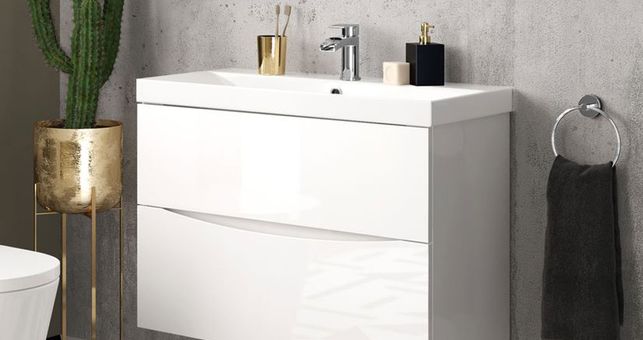
A semi-recessed basin is a bathroom washbasin partially set into a vanity unit or countertop, with the front section projecting forward to provide full bowl depth while reducing cabinet intrusion and improving knee and leg clearance in compact bathroom layouts.
Semi-recessed basins combine space efficiency with ergonomic access. The basin design allows plumbing concealment within furniture while maintaining a forward bowl position that supports comfortable reach and accessibility in reduced-depth units.

Structural Design Characteristics
Partial integration into furniture defines the structure, with the rear section recessed and the front edge extending beyond the cabinet face to preserve bowl capacity and user clearance.
Typical projection ranges between 100 mm and 200 mm beyond the unit front. Standard basin depths range from 450 mm to 550 mm. This configuration balances storage retention with functional wash space.
Functional Purpose And Use Case
Space optimisation and improved accessibility represent the primary functional purposes in small or mobility-conscious bathrooms. Forward projection reduces obstruction from cabinetry. Improved approach distance supports seated or standing use. Semi-recessed basins suit cloakrooms, ensuites, and reduced-depth vanity installations.
Installation Context And Compatibility
Compatibility with reduced-depth vanity units and wall-hung furniture distinguishes semi-recessed basin applications. Cabinet depths commonly range from 380 mm to 450 mm. Wall-hung installation enhances floor clearance. This configuration supports both domestic and accessible bathroom planning without increasing overall room footprint.
How Does a Semi-Recessed Basin Differ from Other Basin Types?
A semi-recessed basin differs from other basin types through partial integration into bathroom furniture, allowing the basin front to project forward while the rear section remains recessed, improving space efficiency and user access compared with fully recessed, wall-hung, or countertop basins.
The distinction relates to furniture depth, projection, accessibility, and plumbing concealment. Semi-recessed basins occupy a hybrid position between fitted and protruding basin formats.
Difference From Fully Recessed Basins
Fully recessed basins sit entirely within vanity units, requiring greater cabinet depth and offering limited forward access compared with semi-recessed designs. Fully recessed configurations rely on unit depths exceeding 500 mm. Semi-recessed basins function with reduced-depth furniture between 380 mm and 450 mm while maintaining bowl volume and reach comfort.
Difference From Wall-Hung Basins
Wall-hung basins mount directly to walls without furniture support, exposing pipework and reducing storage compared with semi-recessed installations.
Wall-hung formats prioritise open floor space. Semi-recessed basins retain under-basin storage and concealed plumbing while offering improved forward projection for accessibility-focused layouts.
Difference From Countertop Basins
Countertop basins sit fully above vanity surfaces, increasing overall height and requiring deeper worktops compared with semi-recessed basins. Countertop designs raise rim height beyond standard ergonomic ranges. Semi-recessed basins maintain controlled rim heights while delivering similar visual presence with lower spatial demand.
Difference From Semi-Pedestal And Pedestal Basins
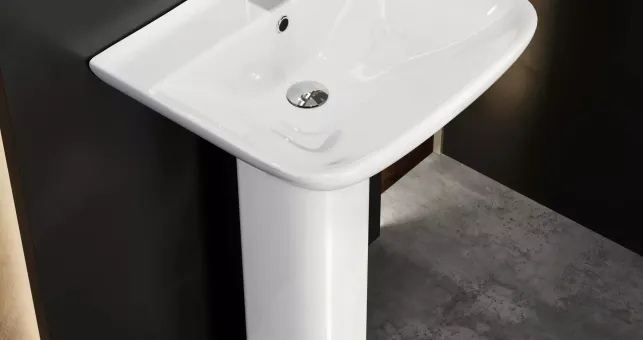
Pedestal-based basins rely on vertical supports and provide no storage integration, unlike semi-recessed furniture-mounted configurations. Pedestal systems suit traditional layouts. Semi-recessed basins prioritise contemporary storage efficiency, concealed services, and compact furniture compatibility.
Why Choose a Semi-Recessed Basin for a Bathroom?
A semi-recessed basin suits bathrooms requiring space efficiency, improved user access, and integrated storage by combining forward bowl projection with reduced-depth furniture compatibility in compact or accessibility-conscious layouts.
The selection addresses spatial constraints without sacrificing wash area. Semi-recessed basins support ergonomic reach while maintaining concealed plumbing and storage.
Space Optimisation Benefits
Reduced cabinet depth allows greater circulation space while preserving full basin functionality. Vanity depths commonly reduce to 380–450 mm. Forward projection maintains bowl volume. This configuration supports narrow bathrooms and cloakrooms without compromising usability.
Accessibility And Ergonomic Advantages
Forward basin positioning improves approach distance and reach comfort for standing and seated users. Extended front edges reduce torso lean. Improved knee clearance supports wheelchair or mobility-aid access. Semi-recessed basins align with inclusive bathroom planning principles.
Storage And Plumbing Concealment
Furniture integration retains under-basin storage and conceals pipework without increasing unit depth. Cabinet space remains usable. Exposed plumbing is avoided. This balance improves visual order and hygiene control within small bathrooms.
Design Flexibility And Visual Balance
Hybrid installation delivers contemporary appearance without the height or depth demands of countertop designs. Rim height remains controlled. Visual projection adds presence. Semi-recessed basins suit modern furniture-led bathroom designs.
What Bathroom Sizes Are Suitable for Semi-Recessed Basins?

Semi-recessed basins suit small to medium bathroom sizes where reduced furniture depth, improved circulation space, and forward user access are required without sacrificing full basin capacity or integrated storage.
Bathroom size suitability depends on clearance, furniture projection, and user movement zones. Semi-recessed basins optimise functional space in constrained layouts.
Small Bathroom And Cloakroom Suitability
Compact bathrooms and cloakrooms benefit from semi-recessed basins due to reduced vanity depth and forward bowl projection. Typical cloakroom widths range between 800 mm and 1,200 mm. Reduced-depth vanity units between 380 mm and 450 mm preserve circulation space. Forward basin projection maintains usable wash depth without encroaching on walkways.
Ensuite Bathroom Suitability
Ensuite bathrooms with limited wall depth accommodate semi-recessed basins while retaining storage and concealed plumbing. Ensuite layouts commonly measure between 1.2 m² and 3 m². Semi-recessed configurations reduce cabinet intrusion near doors and shower enclosures. Improved approach distance supports comfortable daily use.
Medium Bathroom Layout Compatibility
Medium-sized bathrooms use semi-recessed basins to balance storage capacity and open floor area. Bathrooms between 3 m² and 5 m² benefit from reduced furniture mass. Semi-recessed basins maintain proportional visual balance while supporting efficient zoning between basin, toilet, and bathing areas.
Accessibility-Focused Bathroom Sizes
Bathrooms designed for accessibility benefit from forward basin projection and reduced obstruction zones. Improved knee clearance supports seated use. Reduced cabinet depth improves turning radius. Semi-recessed basins integrate effectively into inclusive layouts without requiring wall-hung-only solutions.
What Types of Semi-Recessed Basins Are Available?
Semi-recessed basins are available in multiple design, material, and installation variations to match bathroom style preferences, furniture compatibility, and functional requirements while maintaining forward bowl projection and reduced cabinet intrusion.
Type selection influences aesthetic presence, durability, and workflow integration in bathroom layouts. Semi-recessed basins vary by shape, bowl count, and material composition.
Single-Bowl Semi-Recessed Designs
Single-bowl configurations provide one wash area within a semi-recessed furniture layout for individual use. Single-bowl basins optimise space while maintaining full bowl depth. These designs suit ensuite and cloakroom applications where single-user functionality is sufficient.
Double-Bowl Semi-Recessed Configurations
Double-bowl semi-recessed basins incorporate two wash areas into wider furniture layouts for shared-use environments. Wider projection and larger furniture support dual wash zones. Double-bowl designs enhance efficiency in family bathrooms where simultaneous use is required.
Material Variations: Ceramic And Vitreous China
Ceramic and vitreous china materials deliver smooth, hygienic surfaces with high scratch and stain resistance. High-temperature fired compositions resist surface wear. Non-porous finishes support hygiene control. These materials suit traditional and contemporary bathroom aesthetics.
Material Variations: Resin And Composite Materials
Resin-based or composite basins provide design flexibility with thinner edges and modern profiles.
Lightweight compositions reduce furniture load. Textured finishes improve tactile quality. Composite materials support contemporary design languages.
Integrated Furniture-Led Semi-Recessed Units
Pre-configured furniture-led semi-recessed units combine basin and storage in cohesive design systems. Coordinated cabinetry and basin shapes improve visual harmony. Integrated units simplify planning. These configurations support modern bathroom design coherence.
What Materials Are Semi-Recessed Basins Made From?

Semi-recessed basins are manufactured from ceramic, vitreous china, resin-based composites, and engineered stone materials selected for durability, hygiene performance, and compatibility with reduced-depth furniture installations.
Material choice affects surface hardness, stain resistance, weight loading on furniture, and long-term maintenance. Semi-recessed basin materials balance structural strength with refined surface finish.
Ceramic And Vitreous China Construction
High-fired ceramic materials provide dense, non-porous surfaces with strong resistance to staining, scratching, and chemical wear in daily bathroom use. Vitreous china undergoes kiln firing above 1,200°C. Glazed surfaces prevent water absorption below 0.5%. This material dominates residential bathroom applications due to durability and hygiene performance.
Resin And Composite Material Construction
Engineered resin composites deliver lightweight basin structures with thinner edges and contemporary design flexibility. Polymer-bound mineral blends reduce overall basin weight by approximately 20–30% compared with ceramic equivalents. Smooth or matte finishes support modern furniture-led bathroom designs.
Engineered Stone And Solid Surface Materials
Solid surface and engineered stone materials offer seamless aesthetics and high impact resistance within semi-recessed basin formats.
Acrylic-mineral compositions enable integrated overflow channels and refined edge profiles. Non-porous construction supports stain resistance and simplified cleaning routines.
What Basin Shapes and Profiles Are Available With Semi-Recessed Basins?
Semi-recessed basins are offered in square, rectangular, oval, and curved profiles to match bathroom aesthetics, ergonomic wash area requirements, and furniture integration priorities. Shape and profile selection influences approach zones, water containment, and visual harmony in compact or furniture-led layouts. Each profile type balances form with functional performance.
Square Profile Semi-Recessed Basins
Square profiles provide angular geometry and maximised wash surface area within defined perimeter lines. Sharp corners deliver contemporary aesthetics. Linear edges align with modern cabinetry. Increased internal bowl volume improves splash containment during washing.
Rectangular Profile Semi-Recessed Basins
Rectangular profiles extend lateral wash area while maintaining reduced-depth furniture compatibility.
Extended front-to-back dimensions support multiple movement vectors during hand washing. Rectangular formats integrate with linear countertop designs and elongated cabinetry layouts.
Oval Profile Semi-Recessed Basins
Oval profiles deliver continuous curves that enhance water containment and visual fluidity. Curved perimeters reduce hard edge presence. Soft transitions improve ergonomic hand movement paths. Oval forms personalise softer design languages in compact bathrooms.
Curved And Organic Profile Basins
Curved and organic profiles reflect freeform design tendencies while preserving forward bowl projection. Asymmetric contours increase visual interest. Organic shapes adapt to irregular spatial zones. Curvilinear forms support tactile comfort during use.
What Tap Hole Configurations Do Semi-Recessed Basins Support?
Semi-recessed basins support multiple tap hole configurations designed to accommodate different tap types, furniture layouts, and plumbing arrangements while maintaining forward basin projection and reduced-depth cabinet compatibility. Tap hole configuration determines tap selection, installation method, and clearance behind the basin. Semi-recessed basin design aligns tap placement with furniture depth and wall spacing constraints.
Single Tap Hole Configuration
A single central tap hole supports mono basin mixer taps that combine hot and cold water delivery through one outlet. This configuration simplifies installation and plumbing alignment. Mono mixers reduce rear clearance requirements. Single tap hole designs suit compact furniture and modern bathroom layouts.
Two Tap Hole Configuration
Dual tap hole layouts support separate hot and cold pillar taps positioned symmetrically on the basin deck. This configuration suits traditional bathroom styles. Independent water control improves temperature precision. Two-hole designs require additional deck space and symmetrical furniture alignment.
No Tap Hole Configuration
Tap-hole-free basins support wall-mounted or countertop-mounted tap installations. Wall-mounted taps free basin deck space and reduce cleaning complexity. Countertop-mounted taps require compatible furniture surfaces. This configuration suits minimalist and contemporary bathroom designs.
Offset Tap Hole Configuration
Offset tap hole layouts position the tap away from the basin centre to accommodate reduced rear clearance or side furniture constraints. Side-positioned taps improve compatibility with shallow units. Offset designs support asymmetrical bathroom layouts. This configuration enhances flexibility in compact installations.
Compatibility With Tap Projection And Spout Reach
Tap hole configuration must align with spout reach to ensure correct water delivery into the basin bowl. Insufficient reach causes splash-back. Excessive reach reduces user comfort. Proper alignment ensures controlled water flow and efficient basin use.
What Waste and Overflow Options Are Used with Semi-Recessed Basins?

Semi-recessed basins use standard basin waste systems combined with integrated or concealed overflow solutions designed to manage water drainage safely while maintaining compatibility with reduced-depth furniture and concealed plumbing layouts. Waste and overflow selection affects drainage efficiency, hygiene control, and furniture compatibility. Semi-recessed basin configurations prioritise compact routing and visual concealment.
Slotted Waste Systems With Integrated Overflow
Slotted basin wastes connect directly to visible overflow channels formed within the basin body to prevent water overfilling. Overflow slots sit beneath the basin rim. Slotted wastes align with manufacturer-formed channels. This system provides passive flood protection without additional components.
Unslotted Waste Systems Without Overflow
Unslotted basin wastes are used when no overflow channel exists or when alternative overflow protection is installed. This configuration suits minimalist designs. Unslotted wastes require controlled water use. Compatibility depends on basin design and furniture routing capacity.
Hidden Or Integrated Overflow Channels
Integrated overflow systems conceal water routing within basin walls to maintain a clean external appearance.
Hidden channels direct excess water internally. Visual disruption is reduced. This design supports contemporary furniture-led bathrooms and simplified cleaning.
Universal And Click-Clack Waste Options
Modern waste designs include push-button and spring-loaded mechanisms for controlled drainage operation. Click-clack wastes improve ease of use. Chrome, black, and brushed finishes support aesthetic coordination. Mechanism selection affects maintenance and user preference.
Furniture Clearance And Trap Compatibility
Waste and overflow systems must align with shallow furniture depth and compact bottle trap configurations. Low-profile traps preserve drawer space. Horizontal outlet alignment improves routing efficiency. Correct selection prevents obstruction within reduced-depth vanity units.
How Are Semi-Recessed Basins Installed?
Semi-recessed basins are installed by partially recessing the rear section into a vanity unit or worktop, securing the basin to the furniture and wall, and connecting taps, waste, and overflow systems while maintaining correct projection, sealing, and load support. Installation accuracy affects stability, water containment, and long-term durability. Semi-recessed basin installation follows a defined sequence to preserve furniture integrity and alignment.
Furniture And Cut-Out Preparation
Correct furniture preparation involves creating an accurate cut-out that matches the basin profile and rear recess dimensions. Manufacturer templates define cut-out shape and tolerance. Reduced-depth units require precise rear clearance. Incorrect cut-outs cause instability and sealing failure.
Basin Positioning And Projection Alignment
Forward projection must be measured and aligned to ensure consistent overhang and ergonomic access. Typical projection ranges between 100 mm and 200 mm beyond the cabinet front. Level positioning prevents uneven load distribution. Correct alignment preserves visual balance and usability.
Fixing And Structural Support Method
Secure fixing combines furniture mounting points and wall support to stabilise the basin under daily use loads.
Rear fixing brackets anchor the basin to the wall. Furniture fixings prevent lateral movement. Dual support improves long-term rigidity.
Tap, Waste, And Overflow Connection
Plumbing connections are completed after dry fitting to confirm alignment and clearance within the vanity unit. Tap connections follow selected tap hole configuration. Waste and overflow align with furniture depth constraints. Low-profile traps preserve internal storage space.
Sealing And Waterproofing Application
Waterproof sealing is applied at all basin-to-furniture and basin-to-wall interfaces to prevent moisture ingress. Sanitary-grade silicone forms a continuous barrier. Proper sealing protects furniture panels from swelling and degradation. Clean seal lines support hygiene control.
What Furniture and Worktops Are Compatible with Semi-Recessed Basins?
Semi-recessed basins are compatible with reduced-depth vanity units, wall-hung furniture, and solid or laminated worktops designed to support partial basin recessing while maintaining forward projection, structural stability, and concealed plumbing. Compatibility depends on depth, structural rigidity, cut-out tolerance, and moisture resistance. Furniture and worktop selection directly affects installation accuracy and long-term performance.
Reduced-Depth Vanity Units
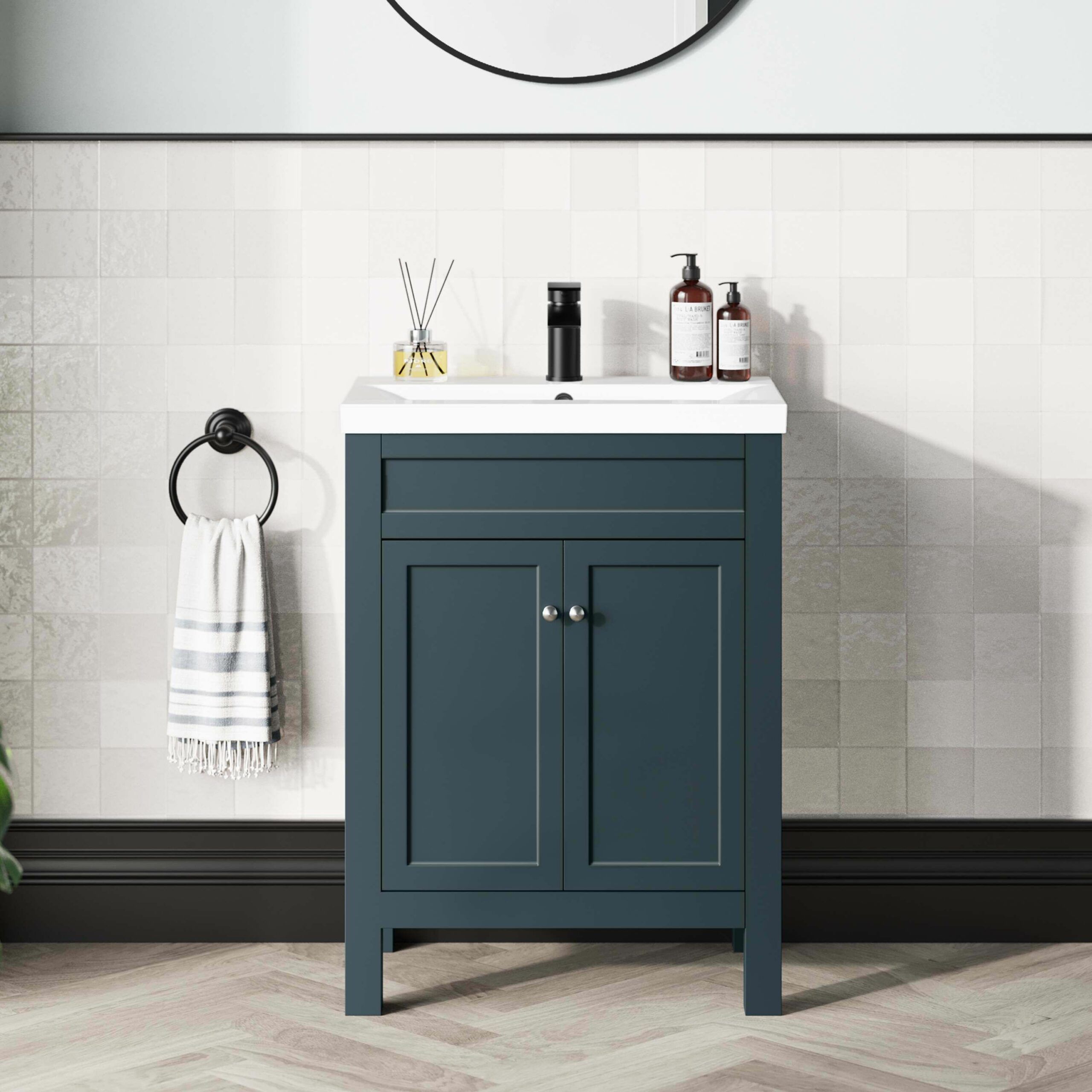
Shallow vanity units between 380 millimetres and 450 millimetres deep provide optimal compatibility by allowing rear basin recessing without obstructing circulation space. Reduced-depth furniture preserves walkway clearance. Forward basin projection maintains wash bowl capacity. Reinforced carcass panels support basin load and fixing points.
Wall-Hung Bathroom Furniture
Wall-hung furniture enhances compatibility by improving knee clearance, visual lightness, and floor access beneath semi-recessed basins. Wall-mounted units reduce visual mass. Improved access supports inclusive bathroom layouts. Structural wall fixing must support combined basin and furniture load.
Furniture With Integrated Basin Cut-Outs
Pre-configured units with manufacturer-defined cut-outs ensure accurate basin fit and reduced installation error.
Matched cut-outs align with basin profiles. Factory tolerances improve sealing accuracy. Integrated designs simplify planning and installation sequencing.
Laminated Worktop Compatibility
Moisture-resistant laminated worktops support semi-recessed installations when sealed correctly around cut-out edges. High-pressure laminates resist surface moisture. Sealed edges prevent core swelling. Laminated worktops suit cost-conscious and contemporary bathroom designs.
Solid Surface And Engineered Stone Worktops
Solid surface and engineered stone worktops provide high structural stability and precise cut-out capability for semi-recessed basins. Dense material composition supports basin weight. Precision machining improves edge finish. Non-porous surfaces enhance hygiene and durability.
What Plumbing Is Concealed by a Semi-Recessed Basin?

Semi-recessed basins conceal basin waste pipes, traps, water supply connections, and overflow routing within vanity furniture or wall voids while maintaining forward basin projection and external visual cleanliness. Plumbing concealment improves hygiene perception and visual order. Semi-recessed configurations balance accessibility with discreet service routing in compact bathroom layouts.
Waste Pipe And Trap Concealment
Drainage pipework and traps are housed within vanity units or wall cavities to prevent visual exposure and obstruction.
Bottle traps or low-profile traps fit reduced-depth furniture. Horizontal waste alignment preserves drawer and shelf space. Concealment reduces accidental contact and simplifies cleaning.
Hot And Cold Water Supply Routing
Water supply pipes route through the rear of the furniture or wall space to connect taps without surface exposure. Flexible braided hoses reduce space demand. Rear-entry connections maintain clean basin deck lines. Concealed routing supports modern furniture-led bathroom design.
Overflow Channel And Discharge Concealment
Integrated overflow systems direct excess water internally to the waste without visible external pipework. Internal channels preserve basin aesthetics. Concealed discharge prevents water spillage onto furniture surfaces. This design improves safety and moisture control.
Isolation Valves And Service Access
Shut-off valves and service points remain accessible within furniture while remaining visually hidden.
Access panels or removable shelves allow maintenance. Concealed placement avoids disruption to basin appearance. Proper access supports long-term serviceability.
What Are the Space-Saving Benefits of Semi-Recessed Basins?
Semi-recessed basins save bathroom space by reducing furniture depth requirements while maintaining full bowl usability, improving circulation clearance, and optimising approach distance in compact and furniture-led bathroom layouts. Space efficiency derives from partial basin integration rather than full cabinet enclosure. Forward projection preserves wash capacity without increasing overall room footprint.
Reduced Furniture Depth Requirement
Shallower vanity units accommodate semi-recessed basins without compromising basin volume or function. Compatible furniture depths range between 380 millimetres and 450 millimetres. Reduced depth frees floor area in narrow bathrooms. Cabinet intrusion into walkways is minimised.
Improved Circulation And Walkway Clearance
Forward basin projection maintains usability while reducing obstruction within primary movement zones. Additional clearance improves door swing tolerance. Reduced collision risk enhances comfort in tight layouts. Circulation efficiency increases in cloakrooms and ensuites.
Enhanced Knee And Leg Clearance
Partial recessing improves lower-body clearance during approach and use. Forward bowl positioning reduces cabinet contact. Improved clearance supports seated use. Accessibility benefits increase without removing storage furniture.
Retention Of Under-Basin Storage
Space efficiency is achieved without sacrificing concealed storage beneath the basin. Plumbing concealment remains intact. Drawer and shelf layouts remain usable. Storage efficiency improves compared with wall-hung-only solutions.
Optimised Use Of Shallow Wall Runs
Semi-recessed basins align with limited wall depth scenarios where full-depth units are impractical. Reduced projection suits narrow wall sections. Furniture placement flexibility increases. Space planning efficiency improves in constrained bathrooms.
What Styles and Designs Are Available for Semi-Recessed Basins?
Semi-recessed basins are available in contemporary, minimalist, traditional, and furniture-led design styles that combine forward bowl projection with reduced-depth installation while aligning with modern and classic bathroom aesthetics. Style selection affects visual integration, furniture compatibility, and perceived spatial balance. Semi-recessed basin designs adapt to multiple interior themes without altering functional performance.
Contemporary And Minimalist Designs
Clean-lined forms emphasise sharp edges, thin rims, and flat basin decks to create a modern, uncluttered appearance. Rectangular and square profiles dominate this category. Slim rim thickness enhances visual lightness. Gloss or matte finishes align with contemporary furniture-led bathrooms.
Traditional And Classic Designs
Softer contours and symmetrical proportions reflect classic bathroom styling while retaining semi-recessed functionality.
Oval and gently curved profiles feature prominently. Deeper bowls and rounded edges enhance traditional visual language. These designs integrate with heritage-style furniture and fittings.
Furniture-Led Integrated Designs
Coordinated basin and vanity combinations deliver cohesive visual alignment between basin profile and cabinet geometry. Matched edges and proportions reduce visual fragmentation. Integrated designs simplify selection and installation. This style suits modern fitted bathroom layouts.
Slimline And Compact Profile Designs
Reduced projection and narrow-width designs prioritise space efficiency without compromising wash usability. Compact widths support cloakrooms and ensuites. Shallow profiles reduce visual mass. These designs maintain ergonomic reach within restricted layouts.
Statement And Architectural Designs
Distinctive shapes and bold profiles create focal points while retaining partial recess integration. Pronounced front edges add visual presence. Unique geometries enhance design individuality. These basins suit feature-led bathrooms with controlled spatial planning.
How Do You Clean and Maintain a Semi-Recessed Basin?

Semi-recessed basin maintenance involves regular surface cleaning, seal inspection, and drainage care to preserve hygiene, surface integrity, and furniture protection while preventing staining, moisture damage, and bacterial buildup in daily bathroom use. Maintenance routines focus on exposed basin surfaces and concealed interfaces. Correct care extends material lifespan and preserves appearance.
Routine Surface Cleaning Practices
Non-abrasive cleaning methods maintain glaze or composite finishes without degrading surface coatings. pH-neutral bathroom cleaners remove soap residue and limescale. Soft cloths or sponges prevent micro-scratching. Weekly cleaning maintains surface smoothness and hygiene performance.
Limescale And Mineral Deposit Control
Mineral buildup requires targeted removal to prevent surface dulling and tap outlet restriction. Diluted descaling solutions dissolve calcium deposits. Short contact time protects finishes. Regular removal prevents permanent etching on ceramic and composite surfaces.
Sealant And Joint Inspection
Seal integrity at basin-to-furniture and basin-to-wall interfaces must be checked periodically to prevent moisture ingress. Cracked or peeling silicone allows water penetration. Resealing restores waterproof protection. Intact seals protect vanity panels from swelling and degradation.
Waste And Overflow Maintenance
Drainage components require periodic inspection to ensure efficient water flow and odour control. Hair and debris accumulation reduces flow rate. Cleaning waste mechanisms prevents blockage. Functional overflow channels reduce accidental overfilling risk.
Furniture Protection And Care
Adjacent furniture surfaces require moisture control to maintain structural stability and finish quality. Spill water should be wiped promptly. Prolonged moisture exposure damages laminate edges. Proper care preserves reduced-depth vanity units.
What Should Be Considered Before Buying a Semi-Recessed Basin?
Semi-recessed basin selection requires evaluation of bathroom size, furniture depth, user access needs, material durability, tap and waste compatibility, and installation constraints to ensure functional fit, long-term performance, and spatial efficiency within reduced-depth bathroom layouts. Purchase decisions affect usability, installation success, and maintenance outcomes. Each factor influences compatibility with furniture-led bathroom designs.
Bathroom Size And Layout Constraints
Available floor area and circulation clearance determine whether forward basin projection improves or restricts movement. Compact bathrooms benefit from reduced furniture depth. Narrow layouts require controlled projection between 100 millimetres and 200 millimetres. Clearance planning prevents obstruction near doors and walkways.
Furniture Depth And Structural Compatibility
Vanity unit depth and rigidity must support partial basin recessing without compromising stability. Compatible furniture depths range from 380 millimetres to 450 millimetres. Reinforced carcass construction supports basin load. Incorrect depth selection causes fitting and sealing issues.
User Needs And Accessibility Requirements
User height, mobility level, and approach method influence basin projection and rim height suitability. Forward positioning improves reach comfort. Enhanced knee clearance supports seated use. Accessibility-focused planning improves long-term usability across changing needs.
Material Durability And Maintenance Expectations
Material selection affects scratch resistance, staining behaviour, weight loading, and cleaning frequency. Ceramic prioritises longevity. Composite materials reduce weight. Solid surface materials offer repairability. Maintenance tolerance varies by household use intensity.
Tap Hole, Waste, And Overflow Compatibility
Basin configuration must align with chosen taps, waste systems, and concealed plumbing routes. Tap hole number limits tap selection. Waste depth affects drawer clearance. Overflow type determines waste compatibility. Early confirmation prevents installation conflicts.
Installation And Wall Support Considerations
Wall condition and furniture fixing points determine installation complexity and stability. Wall support improves rigidity. Cut-out accuracy affects sealing. Professional installation may be required for non-standard layouts.
Who Should Choose a Semi-Recessed Basin?

Semi-recessed basins suit users seeking space efficiency, improved approach clearance, and integrated storage within compact or furniture-led bathrooms where reduced cabinet depth and forward basin access improve daily usability. User suitability depends on bathroom layout, mobility needs, and storage requirements. Semi-recessed basins address functional and spatial constraints without sacrificing wash performance.
Homeowners With Compact Bathrooms
Limited floor area and narrow layouts benefit from reduced furniture depth combined with forward basin projection.
Cloakrooms and small ensuites gain circulation space. Door swing clearance improves. Usable wash depth remains uncompromised despite compact furniture selection.
Users Requiring Improved Accessibility
Forward basin positioning supports easier reach and improved knee clearance for seated or mobility-conscious users. Reduced cabinet obstruction improves approach distance. Semi-recessed basins support inclusive bathroom planning without full wall-hung installation.
Households Prioritising Storage Retention
Furniture-mounted configurations retain under-basin storage while concealing plumbing. Drawers and shelves remain functional. Visual order improves. Semi-recessed designs balance accessibility with storage efficiency.
Renovation Projects With Shallow Wall Runs
Reduced-depth installations suit bathrooms with limited wall depth or structural constraints. Shallow stud walls accommodate partial recessing. Forward projection compensates for reduced rear clearance. Installation flexibility improves in retrofit scenarios.
Design-Led Bathroom Renovations
Furniture-coordinated basin designs suit contemporary and integrated bathroom aesthetics. Visual alignment between basin and vanity improves cohesion. Semi-recessed formats support modern fitted bathroom schemes.
Summing Up
Choosing a semi-recessed basin requires alignment between bathroom size, reduced-depth furniture, basin shape, material performance, tap and waste configuration, and installation method to deliver space efficiency, ergonomic access, concealed plumbing, and long-term durability in furniture-led bathroom layouts.
This guide established that semi-recessed basins perform best in compact and accessibility-conscious bathrooms where forward projection improves reach and circulation without removing storage. Correct selection depends on compatible furniture depth, appropriate materials, suitable tap hole layouts, waste and overflow alignment, and accurate installation. When these factors align, semi-recessed basins provide a balanced solution that supports daily usability, visual order, and adaptable bathroom design over time.