Hiding pipes on a wall means creating clean, continuous surfaces that conceal exposed bathroom pipework through boxing, panelling, furniture integration, colour-blending, or decorative covers. Effective concealment improves visual order, preserves space, and supports long-term maintenance through access-ready designs.
Bathroom pipework can be hidden with slim casings, full-height panels, recessed channels, or modular furniture that encloses supply and waste lines without disrupting the room layout. Colour-matched paint, feature-wall cladding, clip-on covers, and simple DIY wraps provide lighter-touch options that blend pipework into surrounding surfaces. Plants, freestanding screens, and adhesive panels offer non-destructive solutions ideal for rented homes.
Strong concealment choices rely on assessing access, moisture, structure, pipe condition, and ventilation before installation. Material selection, airtight sealing, and correct framing shape durable surface continuity, while avoiding common mistakes such as restricting access, trapping moisture, or using unsuitable boards.
Cost ranges extend from low-budget DIY materials to higher-value professional installations or full false-wall builds. Popular trends favour seamless wall planes, integrated cabinetry, decorative sleeves, and natural styling that align pipe concealment with modern bathroom design.
What Does Hiding Pipes on a Wall Mean?
Hiding pipes on a wall means creating a continuous bathroom wall plane through structural coverings that conceal exposed pipework. Concealed bathroom pipework forms uninterrupted visual geometry across vertical and horizontal surfaces and strengthens spatial order through stable, uniform wall alignment.
Hiding pipes on a wall increases bathroom design coherence because continuous planes reduce visual segmentation across compact and medium bathroom zones. Concealed bathroom pipework uses moisture-resistant plasterboard boxing, MDF casings, wall-hung furniture panels, recessed pipe channels, and integrated vanity structures to maintain consistent architectural flow.
Concealed bathroom pipework increases thermal stability around heated feeds because enclosed channels reduce ambient temperature variation across wall regions.
What Should You Consider Before Hiding Wall Pipes?
You should consider access, moisture conditions, wall structure, pipe condition, and ventilation before hiding wall pipes. These bathroom pipework factors determine structural safety, concealment durability, and long-term functional performance across boxed casings, furniture integrations, and false-wall systems.
Access Requirements
Access requirements define maintenance efficiency for concealed bathroom pipework. Removable panels provide direct reach to valves and joints and preserve structural stability during interventions across enclosed pipe zones.
Moisture Conditions
Moisture conditions determine material suitability for bathroom pipe concealment. Moisture-resistant plasterboard, MDF, and polymer panels maintain dimensional accuracy and prevent swelling across high-humidity bathroom environments.
Wall Structure
Wall structure determines fixing reliability for concealment systems. Stud mapping and substrate assessment provide secure anchoring for recessed channels, false-wall frameworks, and integrated bathroom furniture panels.
Pipe Condition
Pipe condition determines enclosure readiness for bathroom pipework. Joint inspection, corrosion evaluation, and pressure verification prevent hidden failures across boxed or recessed pipe sections.
Ventilation
Ventilation determines condensation control within enclosed pipe cavities. Passive airflow gaps stabilise humidity gradients across concealed bathroom wall regions and support long-term material performance.
How Can You Box In Pipes on Your Wall?
You can box in pipes on your wall by creating a framed enclosure with moisture-resistant panels that conceal bathroom pipework behind a continuous surface. Boxed casings produce stable visual alignment across vertical wall zones and maintain controlled access for maintenance.
Framing Structure
Framing structure creates the core support for boxed bathroom pipework. Timber battens generate a rigid outline around pipe routes and establish uniform depth for plasterboard or MDF placement across bathroom wall planes.
Panel Installation
Panel installation forms the visible surface of boxed bathroom pipework. Moisture-resistant plasterboard, MDF, or polymer boards attach to the frame and generate seamless alignment with adjacent bathroom wall sections.
Surface Finishing
Surface finishing integrates boxed casings into bathroom wall geometry. Tiling, paint, or laminate coverings create continuous visual transitions across vertical and horizontal bathroom surfaces and reinforce concealment uniformity.
Access Integration
Access integration preserves maintenance functionality for boxed bathroom pipework. Removable hatches or magnet-fixed panels provide valve reach without disturbing primary surface finishes across pipe-enclosure zones.
Edge Sealing
Edge sealing increases moisture control around boxed bathroom pipework. Silicone joints and trim profiles prevent water ingress across panel boundaries and extend structural stability in high-humidity environments.
What Are the Easiest DIY Solutions to Hide Pipes?
The easiest DIY solutions to hide pipes use surface-level coverings that require minimal structural alteration, including clip-on casings, decorative wraps, adhesive panels, and freestanding bathroom furniture. These bathroom pipework methods create fast concealment while maintaining visual continuity across wall planes.
Clip-On Casings
Clip-on casings provide rapid bathroom pipework concealment through pre-formed moisture-resistant covers. Lightweight PVC or MDF sections snap around exposed feeds and generate uniform alignment across vertical and horizontal bathroom routes.
Decorative Pipe Wraps
Decorative pipe wraps create visual blending for exposed bathroom pipework. Heat-safe vinyl sleeves or metallic-effect wraps neutralise pipe contrast and support coherent colour continuity across bathroom wall regions.
Adhesive Wall Panels
Adhesive wall panels create shallow concealment for bathroom pipework. Slim PVC boards or laminate strips adhere directly to surfaces and unify wall texture without complex framing across compact bathroom zones.
Freestanding Bathroom Furniture
Freestanding bathroom furniture conceals pipework behind integrated storage volumes. Tallboys, slimline cabinets, and vanity units mask vertical and horizontal feeds while providing functional compartments across bathroom layouts.
Simple MDF Boxing
Simple MDF boxing creates quick pipe coverage through basic batten framing and moisture-resistant boards. Straight-line casings form continuous visual geometry across bathroom walls and support later access through detachable front sections.
What Are the Best Decorative Pipe Covers Available in the UK?
The best decorative pipe covers available in the UK include chrome sleeves, black sleeves, white PVC collars, and brass sleeving kits because these materials provide strong concealment and consistent bathroom wall aesthetics. Decorative pipe covers create uniform visual geometry across exposed bathroom pipework.
Chrome Sleeves
Chrome sleeves provide reflective concealment for exposed bathroom pipework. Chrome finishes reinforce contemporary design schemes and align bathroom pipes with tapware, shower valves, and radiator fittings across polished wall surfaces.
Black Sleeves
Black sleeves provide high-contrast concealment for bathroom pipework. Matte and satin black finishes strengthen industrial or minimalist bathroom themes and create bold alignment across concealed vertical and horizontal pipe routes.
White PVC Collars
White PVC collars provide colour-matched concealment for bathroom pipework. White profiles blend with pale walls and create continuous visual planes across bathroom zones that rely on neutral or traditional interior schemes.
Brass Sleeving Kits
Brass sleeving kits provide premium decorative concealment for bathroom pipework. Brushed or polished brass finishes reinforce warm-toned design environments and coordinate with brass taps, handles, and fixtures across bathroom wall regions.
Coordinated Cover Kits
Coordinated cover kits provide unified concealment systems for bathroom pipework. Matching sleeves and rosettes create consistent pipe-to-wall transitions across UK bathroom layouts and stabilise decorative continuity across exposed plumbing zones.
How Can You Use Paint to Disguise Wall Pipes?
You can use paint to disguise wall pipes by applying colour-matched, moisture-resistant coatings that merge pipe surfaces with surrounding bathroom walls. Painted bathroom pipework reduces visual contrast, strengthens surface continuity, and maintains uniform geometry across vertical and horizontal wall zones.
Colour Matching
Colour matching creates visual blending across painted bathroom pipework. Using the same wall shade on pipes removes tonal breaks and produces continuous planes across bathroom surfaces.
Surface Preparation
Surface preparation creates strong paint adhesion on bathroom pipework. Degreasing, light abrasion, and priming form a stable base that maintains finish durability across high-moisture environments.
Heat-Resistant Coatings
Heat-resistant coatings maintain finish stability on bathroom pipes connected to heated systems. Specialist radiator or multi-surface paints prevent discolouration across high-temperature pipe routes.
Accent Painting
Accent painting transforms exposed bathroom pipework into coordinated design elements. Deliberate contrast colours such as black, brass-tone, or deep neutrals create structured visual alignment across furniture zones, shelving areas, and architectural features.
Satin and Matte Finishes
Satin and matte finishes reduce glare across painted bathroom pipework. Low-sheen coatings create smoother transitions across textured or tiled wall surfaces and reinforce subtle concealment in compact bathroom layouts.
How Can Bathroom Furniture Be Used to Hide Pipes?
Bathroom furniture hides pipes by enclosing bathroom pipework within integrated storage volumes that create continuous wall planes and stable spatial geometry. Furniture-based concealment strengthens bathroom organisation and aligns vertical and horizontal pipe routes with functional cabinetry structures.
Vanity Units

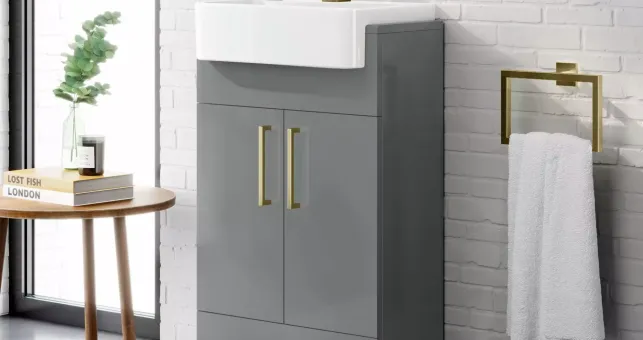
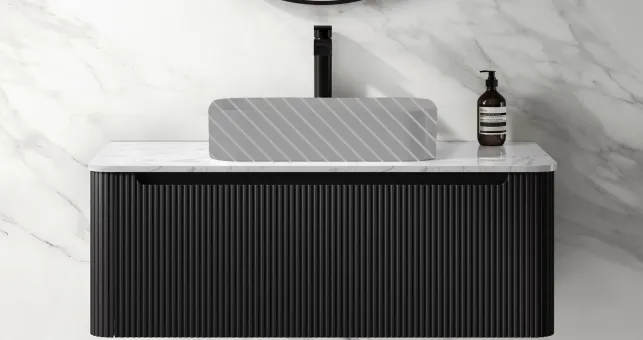
Vanity units conceal basin waste and supply pipes within structured cabinet frames. Internal compartments mask plumbing routes and maintain uninterrupted surfaces across sink zones while supporting storage allocation in compact bathroom layouts.
Tall Storage Units

Tall storage units hide vertical bathroom pipework behind extended panel surfaces. Full-height cabinetry encloses rising feeds and forms continuous sightlines across wall planes while providing additional shelving capacity.
WC Units

WC units conceal cisterns and toilet feeds within rigid furniture carcasses. Back-to-wall configurations generate smooth surfaces across toilet areas and stabilise bathroom wall geometry through enclosed plumbing channels.
Basin Cabinets
Basin cabinets hide exposed under-sink pipes behind moisture-resistant fronts. Hinged doors and internal shelves create functional access routes while maintaining visual uniformity across bathroom wall regions.
Modular Furniture Systems
Modular furniture systems integrate multiple pipe routes within coordinated components. Linked vanity units, side cupboards, and WC housings create extended concealment spans and reinforce linear alignment across contemporary UK bathroom designs.
What Are the Best Pipe Hiding Solutions for Small Bathrooms?
The best pipe hiding solutions for small bathrooms include boxed casings, integrated furniture, painted concealment, clip-on covers, and recessed channels because these methods maximise visual continuity while preserving usable floor space. These solutions create unified wall planes and improve spatial perception in compact UK bathroom layouts.
Boxed Casings
Boxed casings create slim, framed enclosures around exposed bathroom pipework. Moisture-resistant boards form continuous wall surfaces that integrate with tiling or paint finishes and enhance perceived space across narrow zones.
Integrated Furniture
Integrated furniture conceals pipework within vanity units and tall cabinets. Structured cabinetry masks vertical and horizontal feeds while adding organised storage without occupying additional floor area.
Painted Concealment
Painted concealment reduces visual contrast of exposed bathroom pipework. Colour matching between pipes and wall surfaces creates uninterrupted planes that expand perceived room dimensions across compact layouts.
Clip-On Covers
Clip-on covers provide shallow concealment for bathroom pipes with minimal build-out. Lightweight PVC or MDF profiles snap over pipes and maintain close alignment with adjacent wall finishes in tight spaces.
Recessed Channels
Recessed channels hide pipework within wall cavities where structural depth permits. Flush positioning within stud walls creates continuous surfaces and preserves floor clearance, reinforcing streamlined bathroom geometry.
Can You Create a Feature Wall to Conceal Pipes?
You can create a feature wall to conceal pipes by using textured cladding, patterned panels, or vertical slat systems that hide bathroom pipework behind a decorative surface. Feature-wall concealment strengthens visual depth and produces continuous geometry across compact and medium UK bathroom layouts.
Textured Cladding
Textured cladding conceals bathroom pipework behind structured surface patterns. Moisture-resistant stone-effect boards, ribbed panels, or concrete-effect sheets generate layered bathroom wall depth while masking vertical and horizontal pipe routes.
Patterned Panels
Patterned panels hide bathroom pipework through continuous graphic surfaces. Geometric boards, tile-effect laminates, and terrazzo-style panels create dominant visual fields that redirect attention away from concealed plumbing channels.
Vertical Slat Systems
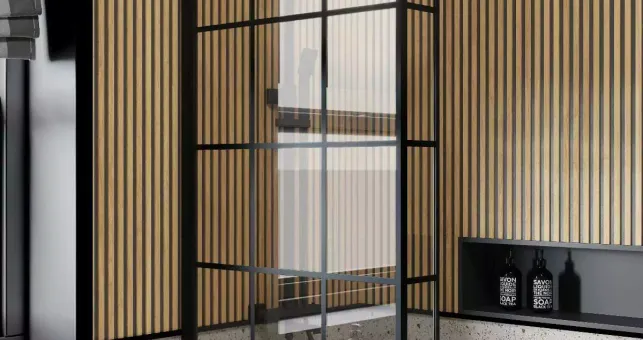
Vertical slat systems conceal bathroom pipework behind evenly spaced battens. Timber or polymer slats establish rhythmic wall alignment, preserve airflow gaps, and generate architectural emphasis across concealed pipe zones.
Full-Height Decorative Boards
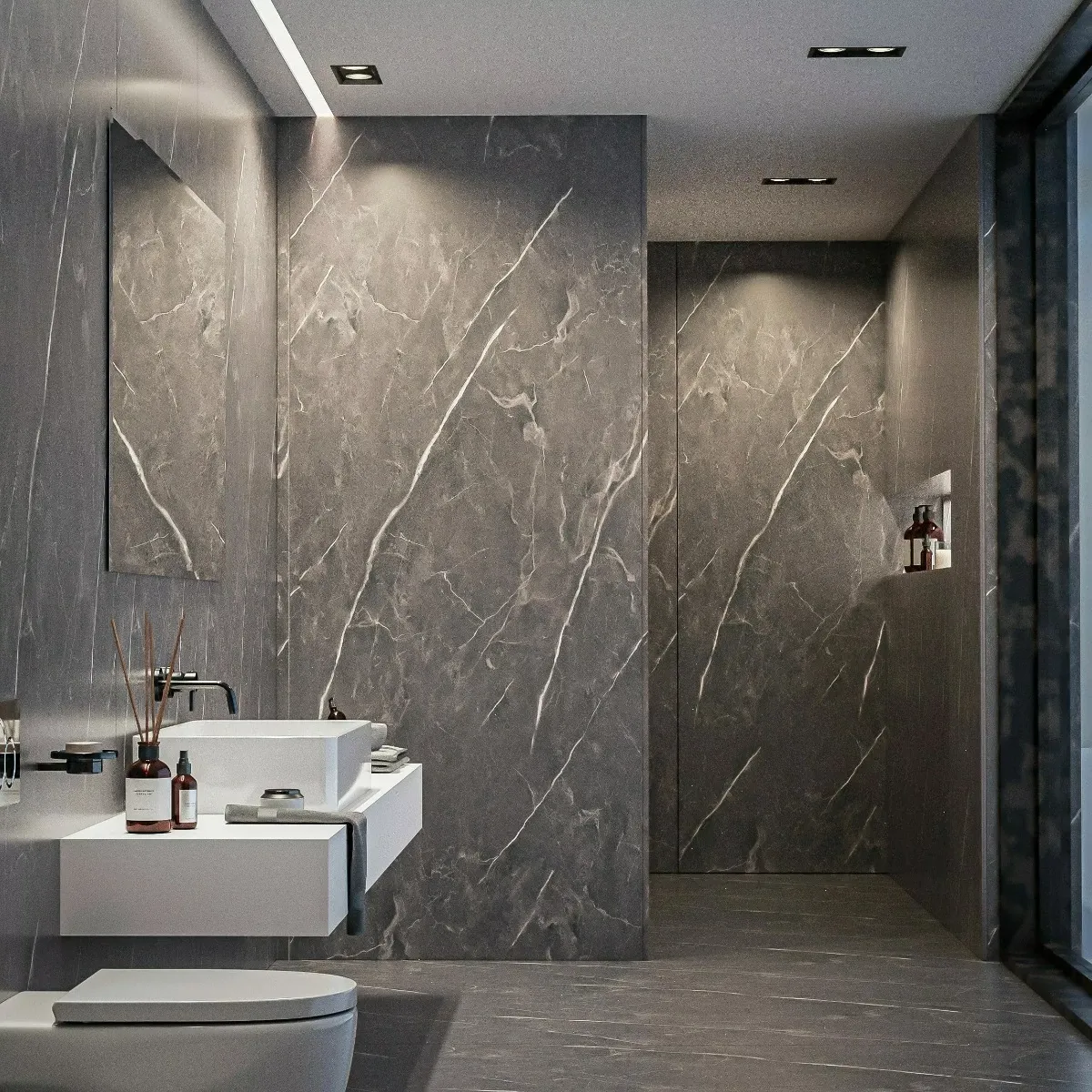
Full-height decorative boards hide bathroom pipework behind unified wall planes. Large-format waterproof panels eliminate grout lines, increase surface continuity, and strengthen concealment along entire bathroom elevations.
Integrated Lighting Features
Integrated lighting features enhance feature-wall concealment around bathroom pipework. LED strips placed within recesses or slat gaps create depth contrast that stabilises visual focus across decorated wall regions while pipes remain fully hidden.
How Can You Use Plants and Greenery to Disguise Pipes?
You can use plants and greenery to disguise pipes by positioning foliage along bathroom wall routes to soften visual lines and obscure exposed pipework. Botanical concealment creates organic texture across bathroom surfaces and redirects visual focus away from plumbing structures.
Wall-Mounted Planters
Wall-mounted planters conceal bathroom pipework through vertically aligned foliage. Moisture-tolerant plants such as ferns or pothos generate cascading coverage that masks pipe shapes across wall regions.
Tall Floor Plants
Tall floor plants disguise pipework by occupying vertical sightlines. Hardy species such as snake plants provide height-based screening and form natural barriers around exposed bathroom pipe zones.
Shelf-Top Greenery
Shelf-top greenery obscures pipework around basin or vanity shelves. Compact species such as succulents or trailing ivy create layered visual density across upper wall areas and reduce pipe visibility.
Hanging Plants
Hanging plants disguise pipework by using downward foliage flow. Trailing varieties form organic veils across vertical pipework, increasing texture and visual complexity around bathroom wall sections.
Artificial Greenery
Artificial greenery conceals bathroom pipework with consistent foliage density. UV-stable synthetic plants maintain shape, colour, and coverage across enclosed or low-light bathroom zones where natural growth conditions are limited.
What Trunking and Conduit Options Work Best?
The best trunking and conduit options for hiding bathroom wall pipes include moisture-resistant PVC trunking, metal conduit, tile-inserts, and flush-mount channels because these systems conceal plumbing lines while maintaining surface continuity and access in UK bathrooms. Effective trunking and conduit create stable, uniform wall geometry across vertical and horizontal pipe routes.
Moisture-Resistant PVC Trunking
Moisture-resistant PVC trunking provides durable concealment for exposed bathroom pipework. PVC trunking resists humidity, prevents water ingress, and forms continuous, smooth surfaces that integrate with adjacent wall finishes without bulk.
Metal Conduit Systems
Metal conduit systems deliver robust pipe concealment behind rigid channels. Galvanised steel and aluminium conduits maintain structural integrity in high-usage bathroom zones and support secure anchoring for tiles or panelled finishes.
Tile-Insert Trunking
Tile-insert trunking hides bathroom pipework behind tiled surfaces. Channels sized to standard tile units allow tiles to sit flush across concealed pipe routes and preserve uninterrupted visual planes across bathroom wall areas.
Flush-Mount Channels
Flush-mount channels conceal pipes within wall cavities where structural depth permits. Recessed positioning creates a smooth surface finish and maximises usable floor and wall space while stabilising visual continuity.
Corner and Edge Conduits
Corner and edge conduits disguise pipes along intersecting wall planes. Slim profiles run along wall junctions and maintain clean sightlines across bathroom zones while minimising protrusion from finished surfaces.
How Can You Use Tiles and Panelling to Hide Pipes?
You can use tiles and panelling to hide pipes by creating continuous waterproof wall planes that enclose bathroom pipework behind structured surfaces. Tiled and panelled concealment increases visual uniformity, strengthens bathroom geometry, and supports long-term durability across concealed pipe zones.
Tiled Boxing
Tiled boxing encloses bathroom pipework within moisture-resistant framed structures. Cement-board substrates support ceramic or porcelain tiles that form seamless planes across vertical and horizontal pipe routes and reinforce structural stability in high-humidity environments.
Full-Height Wall Panelling
Full-height wall panelling hides bathroom pipework behind uninterrupted decorative boards. Large-format waterproof panels eliminate grout lines and create continuous surfaces that mask concealed channels across entire wall elevations.
Half-Height Panelling
Half-height panelling conceals lower bathroom pipework behind rigid moisture-resistant boards. MDF or polymer panels provide structured coverage for basin feeds, WC pipes, and radiator lines while maintaining easy access across service zones.
Tile-Effect PVC Panels
Tile-effect PVC panels disguise bathroom pipework through lightweight, adhesive-backed surfaces. Slim PVC boards generate fast concealment, reduce wall build-out, and maintain visual alignment across compact bathroom layouts.
Recessed Tile Channels
Recessed tile channels hide bathroom pipework within wall-depth cavities. Tiles installed on flush-mounted substrates create continuous flat planes that merge concealed pipe routes with surrounding surfaces and preserve spatial clarity across bathroom wall regions.
How Do You Hide Pipes in a Rental Property Without Damaging Walls?
You hide pipes in a rental property without damaging walls by using non-permanent coverings such as freestanding furniture, clip-on casings, adhesive panels, and plant-based screening that preserve landlord-approved surfaces. These temporary bathroom pipework methods maintain full reversibility across UK rental homes.
Freestanding Furniture
Freestanding furniture conceals bathroom pipework without wall alteration. Vanity units, tallboys, and slimline cabinets mask vertical and horizontal feeds while remaining removable for end-of-tenancy inspections.
Clip-On Casings
Clip-on casings hide bathroom pipework through pressure-fit enclosures. Lightweight PVC or MDF profiles snap over pipes and generate continuous lines without screws, filler, or surface preparation.
Adhesive Panels
Adhesive panels provide shallow concealment for exposed bathroom pipework. Peel-and-stick PVC strips or laminate boards blend surfaces and detach cleanly without damaging paint or plaster.
Decorative Wraps
Decorative wraps disguise bathroom pipework with reversible finishes. Heat-safe vinyl wraps create colour-matched or metallic effects across pipes and maintain non-destructive concealment.
Plants and Greenery
Plants and greenery obscure bathroom pipework through organic visual coverage. Tall plants, hanging foliage, and artificial greenery create soft screening around exposed pipe zones without structural intervention.
Freestanding Screens
Freestanding screens hide bathroom pipework behind lightweight partitions. Folding panels or slatted dividers provide vertical masking and remain fully removable across rental properties.
How Much Does It Cost to Hide Wall Pipes in the UK?
Hiding wall pipes in the UK costs between £200 and £500 for standard boxing-in projects because labour intensity, material grade, and pipe length determine total expenditure. UK bathroom pipework concealment becomes more expensive when false-wall construction or extended finishing is required.
DIY Material Costs
DIY material costs range from £25 to £35 per metre for MDF, moisture-resistant plasterboard, or PVC boards. These materials form slim casings that create continuous bathroom wall planes across exposed pipework.
Professional Installation Costs
Professional installation costs range from £200 to £500 for typical UK bathrooms. Carpenters and fitters set pricing based on wall complexity, pipe routes, and regional labour rates across fixed bathroom zones.
Pre-Formed Casing Costs
Pre-formed casing costs range from £30 to £75 per length. Ready-made profiles reduce installation time and create consistent bathroom wall finishes across vertical and horizontal pipe runs.
Finishing Costs
Finishing costs range from £5 to £30 per square metre for tiling or moisture-resistant paint. These treatments stabilise surface uniformity across boxed bathroom pipework.
False-Wall Construction Costs
False-wall construction costs exceed £1,000 when structural framing and plastering are required. Full-height concealment increases material demand and expands labour hours across entire bathroom wall sections.
What Are the Most Popular Trends for Hiding Pipes?
The most popular trends for hiding pipes focus on seamless wall finishes, smart furniture integration, decorative sleeves, colour-blending, and natural styling because these approaches make pipework disappear without heavy construction. These trends create cleaner, calmer spaces with simple, design-led solutions.
Seamless Wall Finishes
Seamless wall finishes hide pipes behind large panels or tiled boxing. Wide-format boards, stone-effect panels, and smooth cladding create uninterrupted surfaces that make pipes vanish into the background.
Smart Furniture Integration
Smart furniture integration hides pipes inside vanity units, WC housings, and tall cabinets. Storage pieces neatly enclose plumbing while adding useful space for toiletries, cleaning items, and towels.
Decorative Sleeves
Decorative sleeves turn exposed pipes into coordinated design details. Chrome, black, and brass covers match taps and hardware, helping pipework blend into the overall bathroom style.
Colour-Blending
Colour-blending conceals pipes by painting them in the same shade as surrounding walls. Matching tones removes contrast, softens lines, and helps surfaces feel more streamlined.
Natural Styling
Natural styling disguises pipes with greenery and organic textures. Trailing plants, wall-mounted planters, or tall freestanding plants soften hard lines and shift attention away from exposed pipework.
What Is the Best Way to Hide Pipes on a Wall for Your Bathroom?
The best way to hide pipes on a wall for your bathroom is to create a slim boxed casing that forms a continuous surface while still allowing easy access for maintenance. A well-built casing delivers clean lines, durable moisture resistance, and reliable long-term performance.
Slim Boxing
Slim boxing creates a neat enclosure around exposed pipework. Moisture-resistant boards fixed to a simple timber frame form a tidy structure that blends into tiled or painted walls without reducing valuable space.
Integrated Furniture
Integrated furniture hides pipework inside functional storage units. Vanity units, WC housings, and modular cabinets enclose plumbing while adding useful compartments that keep bathroom areas organised.
Full-Height Panelling
Full-height panelling conceals pipes behind continuous decorative surfaces. Large boards remove visual breaks, simplify cleaning, and create a sleek architectural finish across the entire wall.
False-Wall Systems
False-wall systems place pipes inside shallow studwork. This method forms completely flush surfaces and keeps plumbing accessible through removable inspection panels.
Colour-Blended Painting
Colour-blended painting disguises surface-mounted pipework. Painting pipes in the same shade as surrounding walls softens outlines and makes them visually merge with the room.
Decorative Sleeves
Decorative sleeves transform visible pipes into coordinated design elements. Chrome, black, brass, or matte covers match taps and fittings and create intentional styling rather than visible plumbing.
Conclusion
Hiding pipes on a wall creates continuous bathroom surfaces that organise visual structure and maintain reliable pipework performance through access-ready, moisture-resistant designs. Structured boxing, full-height panels, recessed channels, and integrated furniture establish stable concealment across vertical and horizontal wall areas.
Colour-blended paint, decorative sleeves, adhesive boards, and greenery support lighter concealment where minimal intervention is required, while freestanding furniture offers reversible coverage for rented homes. Effective planning depends on assessing access points, moisture behaviour, wall depth, pipe condition, and ventilation to prevent concealed damage and material distortion.
Cost ranges from low-cost DIY materials to higher-value installations and full false-wall builds, with design trends favouring seamless planes, coordinated cabinetry, and decorative surface treatments that refine overall bathroom geometry.