

A toilet cistern is the core water control unit of a toilet system, responsible for storing clean water, regulating flush volume, and delivering controlled discharge for effective waste removal while maintaining hygiene separation and water efficiency.
Modern toilet cisterns operate through calibrated inlet valves, siphon or drop-valve flush mechanisms, overflow protection, and refill regulation, with common flush volumes set at 3 and 6 litres to reduce water consumption. Toilet cistern design varies by installation type, including close-coupled, concealed, low-level, and high-level systems, and by flush technology such as siphon, drop valve, dual-flush, and pressure-assisted operation.
Material selection spans ceramic, vitreous china, plastic polymers, stainless steel, galvanised steel, and reinforced composites, each affecting durability, noise control, and service life. Correct toilet cistern selection depends on bathroom layout, toilet pan compatibility, water efficiency targets, installation constraints, maintenance access, and long-term mechanical reliability, with proper installation and maintenance extending operational lifespan to 10–25 years.
What Is a Toilet Cistern?
A toilet cistern is a sanitary bathroom unit that stores a fixed volume of clean water and discharges that volume into a toilet pan to remove human waste through gravity-assisted hydraulic flow, with modern cistern designs calibrated for 4–6 litre full flush capacity to control water consumption. The toilet cistern functions as the hydraulic control centre of a toilet system and governs flush force, discharge duration, refill accuracy, and hygiene separation between stored water and waste pathways through inlet valves, flush valves or siphons, overflow channels, and sealed pan connections.
How Does a Toilet Cistern Work?

A toilet cistern works by storing a calibrated volume of clean water, releasing that volume into a toilet pan through gravity-driven hydraulic discharge during flushing, and restoring the same volume through an automatic refill cycle controlled by mechanical valves and water level regulation.
Water Intake and Storage Process
Water enters the toilet cistern through a mains-connected inlet valve and fills an enclosed chamber until a float mechanism reaches a predefined shut-off height. The shut-off height fixes the flush capacity, which commonly measures 4–6 litres per full flush in modern toilet cistern systems. Storage maintains physical separation between clean water and waste pathways to preserve hygiene control.
Flush Activation and Discharge Sequence
Flush activation through a push button, lever, or pneumatic control lifts a siphon diaphragm or opens a drop valve. Stored water exits the toilet cistern rapidly and transfers into the toilet pan. The released water mass generates hydraulic force that initiates waste transport through the pan outlet and trapway. Discharge ends when siphon pressure collapses or when the flush valve reseats.
Refill Cycle and Water Level Regulation
Refill begins immediately after discharge completion as the float descends below the shut-off point and reopens the inlet valve. Controlled inflow restores the toilet cistern to the calibrated fill height. The inlet valve closes once the float reaches the target level, preventing overfilling. Overflow channels divert excess water into the pan during inlet valve failure conditions.
Flush Volume Control and Efficiency Design
Flush volume control depends on water level calibration, valve timing, and internal component geometry. Dual-flush toilet cistern configurations divide discharge into partial and full flush volumes, commonly 3 litres and 6 litres. Volume separation reduces total water use while preserving waste clearance efficiency across repeated flushing cycles.
Internal Component Interaction
A toilet cistern operates through coordinated interaction between inlet valve, float assembly, flush valve or siphon, overflow channel, and outlet connection. Each component performs a fixed mechanical role that governs refill accuracy, discharge timing, and sealing performance. System reliability depends on precise alignment of component tolerances and water pressure balance.
What Are the Main Components Inside a Toilet Cistern?
The main components inside a toilet cistern are the inlet valve, float mechanism, flush valve or siphon, overflow system, flush actuator, and outlet seal, with each component performing a defined mechanical function that controls water intake, storage level, discharge activation, and safety regulation during flushing cycles.
Inlet Valve Inside a Toilet Cistern
The inlet valve regulates water supply into the toilet cistern and stops water flow when the calibrated fill level is reached. Water pressure and float position determine inlet valve closure, which fixes refill accuracy and stabilises flush volume consistency.
Float Mechanism for Water Level Measurement
The float mechanism measures internal water height inside the toilet cistern and mechanically signals inlet valve closure at a predefined level. Float adjustment alters stored water volume and directly influences discharge capacity per flush cycle.
Flush Valve or Siphon for Water Discharge
The flush valve or siphon initiates controlled water release from the toilet cistern into the toilet pan. Drop-valve designs lift vertically to open the outlet path, while siphon systems sustain discharge through pressure differential until water level depletion.
Overflow System for Safety Control
The overflow system diverts excess water from the toilet cistern into the toilet pan during inlet valve malfunction or fill-level failure. Overflow routing prevents water escape outside the cistern structure and maintains hygienic separation.
Flush Actuator for Mechanical Activation
The flush actuator transfers user input from a button, lever, or pneumatic control to the internal discharge mechanism. Actuation timing governs flush initiation and supports single-flush or dual-flush configurations within the toilet cistern.
Outlet Seal and Pan Connection Assembly
The outlet seal forms a watertight interface between the toilet cistern and toilet pan. Seal integrity ensures directed water transfer during discharge and prevents leakage at the cistern-to-pan junction.
Each toilet cistern component operates within an integrated mechanical system where water intake regulation, level measurement, discharge initiation, and overflow protection maintain stable flushing performance and long-term operational reliability.
What Are the Pros and Cons of a Toilet Cistern?

A toilet cistern provides controlled water storage and regulated flushing that supports hygiene separation and water efficiency, while disadvantages relate to mechanical wear, space requirements, refill noise, and ongoing maintenance dependency on internal valves and seals.
Pros of a Toilet Cistern
- Controlled flush volume through calibrated storage at 3–6 litres
- Hygienic separation between clean water storage and waste pathways
- Water efficiency enabled by dual-flush systems reducing consumption by up to 50%
- Compatibility with multiple installations including close-coupled, concealed, low-level, and high-level layouts
- Repairability through replaceable inlet valves, flush valves, siphons, and seals
- Consistent flushing performance using gravity-driven or pressure-assisted discharge
Cons of a Toilet Cistern
- Mechanical component wear affecting inlet valves, seals, and flush mechanisms over time
- Space requirements for exposed tanks, frames, or wall cavities in compact bathrooms
- Sensitivity to water quality, with limescale accelerating valve degradation
- Refill noise generation without acoustic damping or delayed-fill valves
- Periodic maintenance requirement to prevent continuous running and leakage
What Are the Different Types of Toilet Cisterns Available?

The different types of toilet cisterns are close-coupled cisterns, concealed cisterns, low-level cisterns, high-level cisterns, pressure-assisted cisterns, dual-flush cisterns, slimline cisterns, corner cisterns, and electronic cisterns, with each type defined by installation position, hydraulic operation, space requirement, and flush control method.
Close-Coupled Toilet Cisterns
Close-coupled toilet cisterns fix directly onto the rear of the toilet pan and discharge water through a short outlet path. Direct mounting reduces hydraulic loss, stabilises flush delivery, and supports standard 4–6 litre flush volumes in compact bathroom layouts.
Concealed Toilet Cisterns
Concealed toilet cisterns install within wall cavities or furniture units and connect to wall-hung or back-to-wall toilet pans. Concealment separates mechanical components from visible surfaces while maintaining gravity-based flushing through mechanical or pneumatic activation plates.
Low-Level Toilet Cisterns
Low-level toilet cisterns mount on the wall just above the toilet pan and connect using a short flush pipe. Intermediate height preserves gravity-assisted discharge while allowing decorative pipework in traditional bathroom configurations.
High-Level Toilet Cisterns
High-level toilet cisterns mount high on the wall and connect to the toilet pan using a long vertical flush pipe. Increased height amplifies gravitational force, producing rapid discharge velocity and strong flushing performance for traditional or heritage-style bathrooms.
Pressure-Assisted Toilet Cisterns
Pressure-assisted toilet cisterns store water under compressed air rather than relying solely on gravity. Pressurised discharge increases flush force, improves solid waste clearance, and reduces required water volume per flush cycle.
Dual-Flush Toilet Cisterns
Dual-flush toilet cisterns separate discharge volumes into partial and full flush options, commonly calibrated at 3 litres and 6 litres. Volume separation reduces overall water consumption while maintaining effective waste removal across different usage conditions.
Slimline Toilet Cisterns
Slimline toilet cisterns feature reduced depth profiles designed for restricted installation spaces. Compact dimensions enable installation behind furniture units or shallow walls while preserving regulated flush capacity and refill accuracy.
Corner Toilet Cisterns
Corner toilet cisterns fit triangular installation zones where wall geometry limits standard cistern placement. Angular tank design optimises space utilisation while maintaining standard inlet, discharge, and overflow mechanisms.
Electronic and Sensor-Activated Toilet Cisterns
Electronic toilet cisterns activate flushing through infrared sensors or electronic controls rather than mechanical input. Automated actuation improves hygiene control and regulates flush timing in high-traffic environments.
How Do Toilet Cisterns Differ by Flush System?
Toilet cisterns differ by flush system based on how stored water is released and controlled, with the primary flush systems classified as siphon flush, drop valve flush, dual-flush, pressure-assisted flush, and electronic flush, each defined by discharge mechanics, water volume control, and activation method.
Siphon Flush Toilet Cistern System
Siphon flush toilet cisterns use a pressure differential to sustain water flow once flushing begins. The siphon mechanism empties the cistern until air breaks the vacuum, producing consistent discharge volume and reducing accidental partial flushing.
Drop Valve Flush Toilet Cistern System
Drop valve toilet cisterns release water by lifting a valve directly from the outlet opening. Vertical valve movement allows adjustable flush volume, faster refill cycles, and compatibility with compact and concealed cistern designs.
Dual-Flush Toilet Cistern System
Dual-flush toilet cisterns divide discharge into two preset volumes, commonly 3 litres for reduced flush and 6 litres for full flush. Volume separation improves water efficiency while preserving waste clearance performance across different usage scenarios.
Pressure-Assisted Flush Toilet Cistern System
Pressure-assisted toilet cisterns store water under internal air pressure rather than relying solely on gravity. Pressurised discharge increases flush force, improves solid waste transport, and reduces the total water volume required per flush.
Electronic and Sensor-Activated Flush Toilet Cistern System
Electronic toilet cisterns activate flushing through infrared sensors or electronic controls. Automated activation regulates flush timing, improves hygiene control by reducing contact surfaces, and standardises discharge volume in high-frequency usage environments.
What Sizes and Dimensions Do Toilet Cisterns Come In?
Toilet cistern sizes and dimensions vary by installation type and flush system, with standard widths ranging from 360–520 mm, heights from 320–1,200 mm, depths from 120–200 mm, and internal water capacities calibrated between 3 and 6 litres per flush.
Close-Coupled Toilet Cistern Dimensions
Close-coupled toilet cisterns typically measure 360–400 mm in width, 370–420 mm in height, and 140–180 mm in depth. Compact proportions allow direct mounting onto toilet pans while maintaining full 4–6 litre flush capacity.
Concealed Toilet Cistern Dimensions
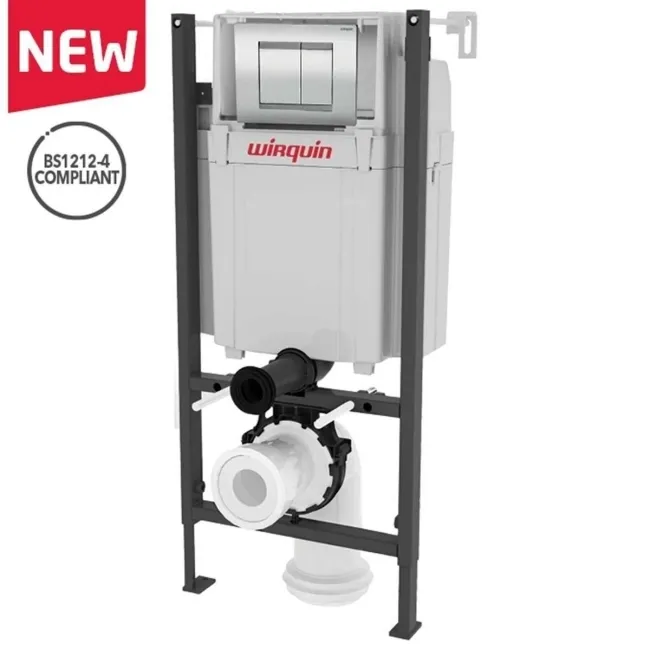
Concealed toilet cisterns are engineered for in-wall installation and commonly measure 450–520 mm in width, 500–1,200 mm in height, and 80–120 mm in depth. Reduced depth supports cavity wall placement without compromising flush volume regulation.
Slimline Toilet Cistern Dimensions
Slimline toilet cisterns feature reduced front-to-back depth between 120–140 mm while maintaining widths of 360–400 mm and heights of 360–420 mm. Shallow profiles enable installation in restricted spaces with standard gravity-based flushing.
Low-Level Toilet Cistern Dimensions
Low-level toilet cisterns typically measure 360–400 mm in width and 360–420 mm in height, with installation height placing the cistern 300–450 mm above the toilet pan. Moderate elevation supports controlled gravity discharge through short flush pipes.
High-Level Toilet Cistern Dimensions
High-level toilet cisterns measure approximately 360–400 mm in width and 360–420 mm in height, with mounting heights ranging from 1,000–1,200 mm above floor level. Increased vertical distance amplifies discharge velocity through extended flush pipes.
Corner Toilet Cistern Dimensions
Corner toilet cisterns use triangular tank geometry with typical side lengths of 400–450 mm and depths of 150–180 mm. Angular design optimises space usage in compact bathroom layouts while preserving regulated flush volume.
What Materials Are Toilet Cisterns Made From?
Toilet cisterns are manufactured from ceramic, vitreous china, plastic polymers, stainless steel, galvanised steel, reinforced composite materials, and concealed-frame steel tanks, with material selection defining durability, corrosion resistance, hygiene control, acoustic behaviour, and dimensional stability during repeated flushing cycles.
Ceramic and Vitreous China
Ceramic and vitreous china cisterns use kiln-fired clay bodies with vitrified glaze. Fired construction delivers compressive strength above 250 MPa, surface porosity below 0.5%, resistance to chemical cleaners, and long-term colour stability while limiting bacterial adhesion.
Plastic Polymers
Plastic cisterns use high-density polyethylene or polypropylene produced through injection moulding. Polymer construction reduces weight by approximately 50–60% compared to ceramic, resists internal corrosion, enables slimline geometries, and maintains dimensional accuracy in concealed installations.
Stainless Steel
Stainless steel cisterns use corrosion-resistant steel alloys with welded seams. Metal construction provides high impact resistance, pressure tolerance, and structural rigidity, supporting pressure-assisted flushing and sustained high-frequency usage environments.
Galvanised Steel
Galvanised steel cisterns use zinc-coated steel sheets to prevent corrosion. Zinc protection improves moisture resistance and structural strength while supporting exposed or semi-concealed installations in utility and commercial bathroom settings.
Reinforced Composite Materials
Reinforced composite cisterns combine polymer matrices with fibre or mineral reinforcement. Composite construction increases stiffness, reduces deformation under constant water load, dampens refill noise, and enables reduced installation depth in in-wall cistern assemblies.
Concealed Frame Steel Tanks
Concealed frame cistern systems use powder-coated steel frames with integrated plastic or composite water tanks. Frame construction supports wall-hung toilets, distributes load into structural walls, and maintains dimensional stability under static and dynamic loading.
How Water-Efficient Are Modern Toilet Cisterns?
Modern toilet cisterns deliver high water efficiency by limiting flush volumes to calibrated 3–6 litre ranges through precision valve control, dual-flush separation, and optimised discharge geometry, reducing per-flush water use by over 60% compared with legacy cisterns exceeding 9 litres.
Flush Volume Calibration and Control
Flush volume calibration fixes stored water height and outlet timing to defined discharge limits. Full flush cycles commonly measure 6 litres, while reduced flush cycles measure 3 litres. Fixed calibration prevents excess discharge and stabilises water consumption across repeated use.
Dual-Flush Separation and Consumption Reduction
Dual-flush toilet cisterns separate liquid and solid waste removal into two fixed discharge volumes. Partial flush activation reduces water use by approximately 50% per cycle compared with full flush operation, lowering total daily water demand in high-frequency use environments.
Inlet Valve Precision and Refill Accuracy
Precision inlet valves regulate refill cut-off height and stop inflow at the calibrated level. Accurate shut-off prevents continuous water loss caused by overfilling or overflow routing, preserving long-term water efficiency consistency.
Discharge Velocity and Waste Clearance Efficiency
Optimised gravity discharge and pressure-assisted cistern designs increase water exit velocity without increasing flush volume. Higher discharge velocity improves waste transport through the pan outlet and trapway, maintaining clearance performance at reduced water levels.
Overall Water Use Impact of Efficient Toilet Cisterns
Water-efficient toilet cisterns reduce toilet-related indoor water usage from historical levels above 30% to below 18%. Reduction results from lower discharge volumes, controlled refill cycles, and stable mechanical performance across extended service life.
How Do You Choose the Right Toilet Cistern for Your Bathroom?
The right toilet cistern is chosen by matching installation type, available space, toilet pan compatibility, flush system, water efficiency rating, material durability, and maintenance access, with correct alignment of these variables ensuring stable flushing performance, controlled water consumption, and long-term mechanical reliability.
Bathroom Layout and Installation Type
Bathroom layout determines whether a close-coupled, concealed, low-level, or high-level toilet cistern fits the structural configuration. Concealed cisterns suit wall-hung and back-to-wall toilet pans, while close-coupled cisterns suit floor-mounted pans with exposed installation.
Toilet Pan Compatibility and Fixing Geometry
Toilet cistern selection requires compatibility with toilet pan inlet height, fixing centres, flush pipe alignment, and outlet seal position. Mismatched geometry causes leakage risk, inefficient discharge, and unstable mounting over time.
Flush System Selection
Flush system selection defines discharge behaviour and water control. Siphon flush systems deliver consistent full-volume discharge. Drop valve systems allow adjustable volumes and faster refill cycles. Dual-flush systems separate 3-litre and 6-litre discharge volumes to reduce water usage.
Water Efficiency and Flush Volume Rating
Water efficiency depends on calibrated storage volume and inlet valve accuracy. Dual-flush toilet cisterns reduce per-use water consumption by up to 50% compared with single-flush designs exceeding 9 litres. Precision refill shut-off prevents continuous overflow loss.
Space Availability and Cistern Dimensions
Cistern depth, width, and height determine installation feasibility. Slimline cisterns support shallow wall cavities and compact furniture units. Standard-depth cisterns suit unrestricted installations with direct pan mounting and rear access.
Material Durability and Acoustic Behaviour
Material selection influences lifespan, refill noise, and maintenance frequency. Ceramic and vitreous china provide surface durability and hygiene stability. Plastic and composite materials reduce weight and enable compact designs. Stainless steel supports high-frequency and pressure-assisted flushing environments.
Maintenance Access and Long-Term Serviceability
Long-term serviceability depends on component accessibility. Concealed toilet cisterns require removable access panels for valve replacement. Exposed cisterns allow direct maintenance access. Standardised internal components reduce long-term repair complexity.
How Is a Toilet Cistern Installed?

A toilet cistern is installed by accurately positioning the cistern body, securing structural fixings, connecting the water inlet and flush outlet, sealing all interfaces, and calibrating internal mechanisms to deliver controlled flush volume, stable refill behaviour, and leak-free operation.
Positioning and Installation Planning
Installation begins with verifying wall strength, toilet pan alignment, fixing centres, inlet position, and outlet height. Correct positioning ensures gravity-assisted discharge, structural load distribution, and sufficient clearance for internal toilet cistern components and future maintenance access.
Fixing and Structural Mounting
The toilet cistern is fixed using manufacturer-specified anchors and brackets. Close-coupled cisterns bolt directly to the toilet pan. Concealed cisterns mount within steel support frames or wall cavities. High-level and low-level cisterns secure to load-bearing walls using reinforced brackets.
Water Inlet Connection
The water supply connects to the toilet cistern inlet valve using compression or push-fit fittings. An isolation valve is installed inline to allow servicing without shutting off the main supply. Correct inlet alignment prevents valve stress and maintains consistent refill pressure.
Flush Outlet and Pan Interface Connection
The flush outlet joins the toilet cistern to the toilet pan using a flush pipe or direct outlet seal. Seal compression creates a watertight joint that channels discharge water directly into the pan inlet without leakage or pressure loss.
Internal Component Calibration
Internal calibration sets the operational parameters of the toilet cistern. Float height adjustment defines stored water volume. Flush valve or siphon positioning ensures full discharge without continuous flow. Overflow alignment confirms safe excess water routing into the pan.
Functional Testing and Verification
Final verification involves controlled filling, repeated flushing, and visual inspection. Testing confirms inlet shut-off accuracy, discharge completion, seal integrity, overflow operation, and refill stability. Successful verification confirms correct toilet cistern installation and operational readiness.
What Are the Most Common Toilet Cistern Problems?
The most common toilet cistern problems are continuous water running, weak flushing, slow refilling, water leakage, excessive refill noise, and flush mechanism failure, with each problem caused by mechanical wear, valve misalignment, seal degradation, or incorrect water level calibration.
Continuous Water Running Inside a Toilet Cistern
Continuous water running occurs when the inlet valve fails to shut off at the calibrated water level. Worn valve seals, float misalignment, or debris accumulation allow constant inflow, increasing water consumption and preventing stable refill completion.
Weak or Incomplete Toilet Cistern Flush
Weak flushing results from insufficient stored water volume or restricted discharge flow. Incorrect float height, partial siphon activation, or drop valve obstruction reduces discharge force and limits waste clearance efficiency.
Slow Refill After Toilet Cistern Flushing
Slow refill occurs when inlet valve flow rate decreases due to scale buildup, pressure restriction, or valve diaphragm wear. Reduced refill speed extends cycle recovery time and disrupts consistent toilet cistern operation.
Water Leakage From a Toilet Cistern
Water leakage originates from degraded outlet seals, cracked cistern bodies, loose inlet connections, or failed flush valve gaskets. Leakage compromises hygiene control and increases surface water exposure around the toilet installation.
Excessive Noise During Toilet Cistern Refill
Excessive refill noise develops when high-pressure inflow enters the cistern without flow dampening. Faulty inlet valves, rigid pipe connections, or insufficient acoustic insulation amplify refill sound levels.
Flush Mechanism Failure Inside a Toilet Cistern
Flush mechanism failure occurs when buttons, levers, cables, or pneumatic actuators lose alignment or mechanical tension. Activation failure prevents discharge initiation and interrupts normal flushing cycles.
How Do You Fix Common Toilet Cistern Issues?

Common toilet cistern issues are fixed by restoring correct water level calibration, repairing or replacing worn valves and seals, clearing hydraulic restrictions, and re-establishing flush mechanism alignment, with each fix addressing a specific mechanical failure inside the cistern system.
Fixing Continuous Water Running in a Toilet Cistern
Continuous water running is corrected by recalibrating float height or replacing a worn inlet valve diaphragm. Correct shut-off height stops inflow at the defined water level. Valve replacement resolves seal fatigue and debris-related shut-off failure.
Fixing Weak or Incomplete Toilet Cistern Flushing
Weak flushing is fixed by increasing stored water volume or removing discharge restrictions. Float adjustment restores correct flush capacity. Clearing siphon membranes or drop valve openings restores discharge velocity and waste clearance efficiency.
Fixing Slow Refill in a Toilet Cistern
Slow refill is resolved by cleaning inlet valve filters or replacing the inlet valve assembly. Limescale removal restores flow rate. Valve replacement corrects refill delay caused by diaphragm deformation or pressure imbalance.
Fixing Water Leakage From a Toilet Cistern
Water leakage is fixed by replacing outlet seals, flush valve gaskets, or inlet connection washers. Seal renewal restores watertight joints between cistern, flush outlet, and toilet pan, preventing surface water escape.
Fixing Excessive Noise During Toilet Cistern Refill
Excessive refill noise is reduced by installing a delayed-fill or quiet-fill inlet valve. Controlled inlet velocity reduces turbulence and vibration inside the cistern body, lowering acoustic output during refill cycles.
Fixing Flush Mechanism Failure in a Toilet Cistern
Flush mechanism failure is corrected by realigning push buttons, levers, cables, or pneumatic actuators. Component replacement restores mechanical transmission between activation input and discharge valve operation.
How Do You Fix or Maintain a Toilet Cistern?
A toilet cistern is fixed and maintained by inspecting internal components, cleaning hydraulic pathways, recalibrating water levels, replacing worn valves and seals, and verifying correct refill and discharge operation to preserve flush efficiency, water control accuracy, and mechanical reliability.
Routine Inspection and Preventive Maintenance
Routine maintenance begins with visual inspection of inlet valves, float mechanisms, flush valves or siphons, and overflow channels. Early identification of scale buildup, seal wear, or component misalignment prevents continuous water loss and unstable flushing performance.
Cleaning Internal Components and Water Pathways
Cleaning removes limescale, sediment, and debris from inlet valve filters, siphon membranes, and flush valve openings. Clean hydraulic pathways restore refill speed, discharge velocity, and consistent flush volume across repeated toilet cistern cycles.
Water Level Calibration and Float Adjustment
Water level calibration is performed by adjusting float height to the defined shut-off position. Correct calibration restores stored water volume, stabilises flush capacity at 3–6 litres, and prevents overfilling or weak discharge conditions.
Replacing Worn Valves and Seals
Valve and seal replacement corrects mechanical degradation caused by repeated operation. Inlet valve replacement restores shut-off accuracy. Outlet seal and flush valve gasket replacement restores watertight discharge and prevents leakage at the cistern-to-pan interface.
Servicing Flush Activation Mechanisms
Flush buttons, levers, cables, or pneumatic actuators require alignment and tension verification. Correct mechanical transmission ensures reliable discharge initiation and prevents partial or failed flushing cycles.
Verifying Refill, Overflow, and Discharge Performance
Final verification confirms inlet shut-off accuracy, refill speed, overflow routing, and complete discharge. Functional testing through repeated flush cycles validates stable toilet cistern operation and confirms maintenance effectiveness.
When Should You Replace a Toilet Cistern?
A toilet cistern requires replacement when structural damage, persistent leakage, repeated mechanical failure, or inefficient flush performance occurs beyond repair thresholds, indicating loss of water control accuracy, hygiene separation, and long-term mechanical reliability within the flushing system.
Structural Damage and Material Degradation
Replacement becomes necessary when cracks, fractures, or deformation appear in the cistern body. Ceramic cracking, polymer warping, or metal corrosion compromises water containment and creates uncontrolled leakage risk that repair actions do not resolve.
Persistent Water Leakage and Seal Failure
Ongoing leakage after seal and valve replacement signals outlet interface deformation or internal body wear. Continuous water escape indicates loss of dimensional stability and requires full toilet cistern replacement to restore watertight performance.
Repeated Mechanical Component Failure
Frequent inlet valve, flush valve, or actuator failures indicate internal wear across multiple components. Recurrent malfunction increases water consumption and maintenance frequency, making replacement more efficient than repeated part substitution.
Inefficient Flush Performance and Water Waste
Consistently weak flushing, incomplete waste clearance, or uncontrolled refill despite calibration efforts indicate hydraulic inefficiency. Inefficient cistern operation increases water usage and reduces sanitation reliability, justifying replacement.
Incompatibility With Modern Flush Standards
Older toilet cisterns operating above 9 litres per flush fail to meet current efficiency benchmarks. Replacement with calibrated 3–6 litre cistern systems reduces water usage and improves discharge consistency without structural modification.
Limited Access or Obsolete Component Design
Obsolete cistern designs with unavailable replacement parts or inaccessible concealed mechanisms restrict effective servicing. Replacement restores serviceability, standardised components, and long-term maintenance viability.
How Much Does a Toilet Cistern Cost in the UK?

A toilet cistern typically costs between £25 and £400, with price variation driven by cistern type, installation method, flush system, material construction, and integration requirements, while concealed frame systems and pressure-assisted designs occupy the upper cost range.
Cost of Close-Coupled Toilet Cisterns
Close-coupled toilet cisterns generally cost between £25 and £120. Entry-level models use plastic components and single-flush systems. Higher-priced variants include ceramic construction and dual-flush mechanisms calibrated at 3 and 6 litres.
Cost of Concealed Toilet Cisterns
Concealed toilet cisterns typically range from £60 to £300. Price increases with steel frame integration, load-bearing capacity for wall-hung toilets, pneumatic flush actuation, and acoustic insulation features within in-wall assemblies.
Cost of Low-Level and High-Level Toilet Cisterns
Low-level and high-level toilet cisterns usually cost between £80 and £250. Pricing reflects decorative pipework, mounting hardware, and increased material use associated with elevated installation heights and exposed fittings.
Cost of Pressure-Assisted Toilet Cisterns
Pressure-assisted toilet cisterns range from £150 to £400. Higher cost results from reinforced tanks, pressure chambers, and specialised valves designed to increase discharge force while maintaining controlled water volume.
Cost of Slimline and Space-Saving Toilet Cisterns
Slimline toilet cisterns typically cost between £50 and £180. Reduced depth profiles, compact tank geometry, and concealed compatibility influence pricing within this category.
Additional Cost Factors Affecting Toilet Cistern Pricing
Toilet cistern pricing varies based on material type, flush technology, frame inclusion, and compatibility with existing toilet pans. Installation labour, flush plates, frames, and service access panels represent separate cost considerations not included in unit pricing.
What United Kingdom Regulations Apply to Toilet Cisterns?
United Kingdom toilet cistern regulations govern water efficiency, backflow prevention, installation safety, and material compliance, with legal requirements defined by Building Regulations, Water Supply regulations, and harmonised product standards that control flush volume, hygiene protection, and mechanical performance.
Building Regulations Part G: Sanitation and Water Efficiency
Building Regulations Part G sets mandatory water efficiency standards for sanitary fittings. Toilet cisterns must limit full flush volume to a maximum of 6 litres. Dual-flush systems must operate with a reduced flush volume of approximately 3 litres. Compliance ensures controlled potable water consumption in residential and commercial buildings.
Water Supply (Water Fittings) Regulations 1999
The Water Supply Regulations require toilet cisterns to prevent contamination of the potable water supply. Cisterns must include approved backflow prevention devices, air gaps, or type-approved inlet valves. Overflow arrangements must discharge safely into the toilet pan to eliminate cross-contamination risk.
British Standard BS EN 14055 for Toilet Cisterns
BS EN 14055 defines performance, dimensional tolerance, durability, and functional testing requirements for toilet cisterns. The standard covers flush volume accuracy, inlet valve shut-off reliability, overflow performance, and endurance testing under repeated flushing cycles.
WRAS Approval and Water Authority Compliance
Water Regulations Advisory Scheme approval confirms that toilet cistern components comply with water supply safety requirements. WRAS-approved inlet valves, fill valves, and flush mechanisms demonstrate material suitability and backflow protection compliance accepted by water authorities.
Installation and Structural Safety Requirements
Wall-mounted and concealed toilet cisterns must meet structural load requirements when supporting wall-hung toilet pans. Steel frames and fixing systems must transfer static and dynamic loads into load-bearing structures to maintain long-term installation safety.
Noise and Acoustic Performance Considerations
Although not legally mandated, modern toilet cisterns often align with acoustic performance benchmarks outlined in BS EN standards. Reduced refill noise supports compliance with building design guidance for residential and multi-occupancy environments.
Which Toilet Cistern Is Right for Your Home?
The right toilet cistern for a home is determined by bathroom layout, toilet pan type, available installation space, flush system efficiency, material durability, and long-term service access, with correct alignment of these factors ensuring reliable flushing performance, controlled water use, and mechanical stability.
Bathroom Layout and Available Installation Space
Bathroom layout defines whether a close-coupled, concealed, low-level, or high-level toilet cistern fits the physical constraints. Compact bathrooms favour close-coupled or slimline concealed cisterns. Larger layouts accommodate concealed frame systems or traditional high-level installations without space conflict.
Toilet Pan Type and Compatibility
Toilet cistern selection must match the toilet pan configuration. Close-coupled pans require direct-mount cisterns. Wall-hung pans require concealed cisterns with load-bearing frames. Back-to-wall pans require concealed or furniture-housed cisterns with aligned flush outlets and fixing geometry.
Flush System and Water Efficiency Preference
Flush system choice determines water consumption and discharge behaviour. Dual-flush toilet cisterns operating at 3 and 6 litres reduce water use by up to 50% compared to older single-flush designs. Siphon systems deliver consistent discharge. Drop-valve systems allow adjustable volumes and faster refilling.
Material Durability and Environmental Conditions
Material selection affects lifespan and maintenance frequency. Ceramic and vitreous china cisterns provide surface durability and hygiene stability. Plastic and composite cisterns reduce weight and enable compact installations. Stainless steel cisterns support pressure-assisted flushing and high-frequency usage environments.
Installation Method and Structural Requirements
Installation method defines structural support needs. Close-coupled cisterns rely on pan fixing stability. Concealed cisterns require steel frames or reinforced wall cavities. High-level and low-level cisterns require load-bearing wall fixings and accurate flush pipe alignment.
Noise Control and User Comfort
Noise performance varies by inlet valve design and tank insulation. Quiet-fill inlet valves and insulated cistern bodies reduce refill noise. Pressure-assisted cisterns increase discharge force but generate higher operational sound levels.
Maintenance Access and Long-Term Reliability
Long-term reliability depends on access to internal components. Exposed cisterns allow direct maintenance. Concealed cisterns require removable service panels and standardised internal parts to support future repair without structural disruption.
How Long Should a Toilet Cistern Last?
A toilet cistern should last between 10 and 25 years, with lifespan determined by material type, water quality, usage frequency, and maintenance quality, while internal valves and seals typically require replacement every 5 to 10 years to maintain correct flushing performance.
Lifespan by Toilet Cistern Material
Ceramic and vitreous china toilet cisterns commonly last 20–25 years due to high compressive strength and low porosity. Plastic and composite toilet cisterns typically last 10–15 years because polymer fatigue and seal interfaces degrade faster under constant water exposure. Stainless steel cisterns often exceed 20 years in high-frequency environments due to corrosion resistance and structural rigidity.
Lifespan of Internal Toilet Cistern Components
Internal components determine functional lifespan more than the cistern body. Inlet valves, flush valves, siphons, and seals usually last 5–10 years depending on water hardness and usage frequency. Component replacement extends overall toilet cistern service life without replacing the tank structure.
Impact of Water Quality on Toilet Cistern Longevity
Hard water accelerates scale formation on valves and seals, reducing operational lifespan by up to 30% compared with soft water conditions. Scale buildup increases wear on moving components and reduces shut-off accuracy during refill cycles.
Effect of Usage Frequency on Toilet Cistern Life
High-frequency usage environments shorten component lifespan due to repeated mechanical cycles. Residential toilet cisterns average 5,000–7,000 flush cycles per year, while high-use environments exceed 15,000 cycles, accelerating valve and seal wear.
Maintenance Influence on Toilet Cistern Durability
Regular inspection, cleaning, and timely replacement of worn components extend toilet cistern lifespan. Preventive maintenance stabilises water level calibration, prevents continuous running, and reduces stress on structural interfaces.
Conclusion
A toilet cistern functions as the central hydraulic and control component of a toilet system, governing water storage, flush delivery, refill accuracy, and long-term water efficiency through calibrated mechanical operation. Toilet cistern performance depends on correct alignment of installation type, flush system, material construction, and internal component quality, with modern designs achieving effective waste clearance at reduced 3–6 litre flush volumes. Structural durability, valve precision, and maintenance access determine service life, while regular inspection and component replacement prevent water loss and performance decline. Selecting, installing, and maintaining the correct toilet cistern ensures reliable flushing, controlled water consumption, hygienic operation, and mechanical stability across the full lifecycle of a bathroom installation.


