

A mirror is a reflective glass surface coated with a thin metallic layer, typically aluminium or silver, that reflects visible light to produce a virtual image. Mirror cost ranges from £20 to £900 depending on mirror type, mirror size, mirror glass thickness, mirror frame material, mirror technology features, and mirror installation complexity. Total mirror spending includes purchase price, installation cost, and long-term ownership expenses such as electricity usage, maintenance, and component replacement.
Mirror price changes when mirror dimensions increase, when mirror glass thickness rises from 3 mm to 6 mm, and when mirror features such as LED lighting, demister pads, or smart display systems are included. Basic wall mirrors cost £20 to £120, decorative framed mirrors cost £80 to £350, LED bathroom mirrors cost £80 to £400, and smart mirrors cost £250 to £900. Mirror installation adds £40 to £300 depending on wall type, mirror weight, and electrical wiring requirements.
Mirror quality differs based on reflection clarity, low-iron glass usage, corrosion-resistant backing, frame durability, edge finishing, and electrical component lifespan. High-quality mirrors last 10 to 20 years under normal indoor conditions, while lower-specification mirrors often require replacement within 3 to 7 years due to moisture damage or coating failure.
Mirror ownership cost extends beyond initial purchase because electricity consumption, cleaning materials, part replacement, wall repair after removal, and reinstallation labour add £10 to £150 per year depending on mirror type and usage level. Budget planning therefore requires evaluation of mirror specification, installation method, and lifecycle cost rather than purchase price alone.
Choosing the best mirror requires matching mirror purpose, mirror size, glass thickness, IP rating for bathroom zones, frame material strength, lighting colour temperature, and realistic budget allocation. Accurate measurement, correct installation, and balanced feature selection determine long-term mirror value and overall mirror cost efficiency.
How Much Does a Mirror Cost in the UK?
A mirror in the United Kingdom costs £20 to £900 depending on mirror type, mirror size, mirror frame material, and mirror features such as LED lighting or smart technology. Basic wall mirrors cost £20 to £80, while advanced smart mirrors cost £250 to £900.
Mirror price changes when mirror size increases or when extra features are added. Larger glass panels increase material cost. Digital systems increase production cost.
The main mirror types and mirror prices are given below:
- Bathroom Mirrors: £20 to £250
- LED Bathroom Mirrors: £80 to £400
- Smart Mirrors: £250 to £900
- Mirror Cabinets: £114 to £600
- Living Room Mirrors: £40 to £350
- Bedroom Mirrors: £35 to £300
- Full-Length Mirrors: £50 to £400
- Freestanding Mirrors: £60 to £450
- Wall-Mounted Mirrors: £20 to £200
- Frameless Mirrors: £20 to £120
- Wood-Framed Mirrors: £70 to £500
- Metal-Framed Mirrors: £60 to £450
- Round Mirrors: £25 to £300
- Oval Mirrors: £30 to £320
- Magnifying Shaving Mirrors: £20 to £150
- Bespoke Made-to-Measure Mirrors: £150 to £900+
Bathroom mirrors cost £20 to £250 because standard bathroom mirrors use simple glass and basic wall fixings. Smart mirrors cost £250 to £900 because smart mirrors include Bluetooth speakers, touch sensors, digital clocks, and heated demister pads.
Full-length mirrors cost more than small mirrors because larger glass sheets increase manufacturing and delivery cost. Mirrors wider than 100 centimetres often cost more than £250.
What Factors Affect the Cost of a Mirror?

Mirror cost in the United Kingdom depends on mirror size, mirror glass thickness, mirror glass type, mirror frame material, mirror design detail, mirror edge finish, mirror technology features, mirror safety certification, mirror brand positioning, mirror installation complexity, and mirror delivery requirements. Higher specification increases mirror cost because additional materials, processing time, and compliance testing increase production expense.
Mirror Size
Larger mirror size increases mirror cost because larger glass sheets require greater raw material volume and reinforced packaging. Mirrors under 60 cm cost £20 to £120, mirrors between 60 cm and 100 cm cost £80 to £250, and mirrors above 100 cm often exceed £250 due to higher glass weight and transport protection.
Mirror Glass Thickness
Thicker mirror glass increases mirror cost because thicker safety glass improves structural strength and impact resistance. Standard 3 mm glass costs less, 4 mm glass adds £20 to £50, and 5 mm to 6 mm safety glass adds £40 to £80 depending on mirror dimensions.
Mirror Glass Type
Specialist mirror glass increases mirror cost because enhanced coatings and treatments require advanced manufacturing processes. Low-iron mirror glass increases clarity and adds £30 to £100, tinted mirror glass adds £40 to £120, and antique-effect mirror glass adds £60 to £200 compared with standard silver-backed mirror glass.
Mirror Frame Material
Premium mirror frame material increases mirror cost because hardwood and metal frames require precision cutting and finishing. Solid oak or walnut frames cost £120 to £500, aluminium frames cost £60 to £450, steel frames cost £80 to £550, composite frames cost £40 to £200, and frameless mirrors cost £20 to £120.
Mirror Edge Finish
Advanced mirror edge finish increases mirror cost because polishing and bevelling require additional machining time. Flat polished edges add £10 to £30, bevelled edges add £30 to £100, and decorative etched edges add £50 to £150.
Mirror Shape and Design Detail
Non-standard mirror shape increases mirror cost because curved cutting and template shaping require specialist machinery. Round and oval mirrors cost £25 to £320, irregular geometric mirrors add £40 to £150 above rectangular equivalents, and carved decorative frames increase cost by 10% to 25%.
Mirror Technology Features
Integrated mirror technology increases mirror cost because electrical systems and digital components require certified manufacturing. LED lighting adds £50 to £200, demister heating pads add £40 to £120, colour temperature controls add £60 to £180, Bluetooth speakers add £80 to £250, motion sensors add £40 to £120, and full smart mirror displays range from £250 to £900.
Mirror Energy Efficiency and Electrical Rating
Higher electrical rating increases mirror cost because certified components and insulation materials require compliance with UK electrical regulations. IP44-rated bathroom mirrors cost £80 to £400, while non-electrical mirrors avoid this added cost.
Mirror Safety Backing
Safety backing film increases mirror cost because shatter-resistant layers reduce injury risk. Safety-backed mirrors add £20 to £60 depending on mirror size and thickness.
Mirror Brand Positioning
Established mirror brands increase mirror cost because quality control testing, warranty provision, and certified sourcing increase operational expense. Branded mirrors cost 15% to 35% more than non-branded mirrors with similar specifications.
Mirror Installation Complexity
Complex mirror installation increases total mirror cost because wall reinforcement, stud detection, and electrical wiring increase labour time. Standard wall mounting costs £40 to £80, electrical mirror fitting costs £80 to £120, and structural reinforcement increases labour cost further.
Mirror Delivery and Handling
Heavy mirror weight increases mirror delivery cost because fragile handling and reinforced packaging increase logistics expense. Large mirrors above 20 kg often include £20 to £60 delivery surcharges due to special transport requirements.
How Much Does Mirror Installation Cost in the UK?

Mirror installation cost in the United Kingdom ranges from £40 to £300 depending on mirror size, mirror weight, wall structure, and electrical connection requirements. Standard wall mirror installation costs £40 to £120, electrical bathroom mirror installation costs £80 to £160, and heavy or large mirror installation costs £100 to £300 due to reinforced fixing systems and longer labour duration.
Standard Wall Mirror Installation Cost
Standard wall mirror installation costs £40 to £120 because screws, wall plugs, and mounting brackets secure mirrors to plasterboard or brick walls with limited labour time. Mirrors under 15 kg require standard anchors and average 30 to 60 minutes of fitting time which keeps installation cost lower.
Electrical Bathroom Mirror Installation Cost
Electrical bathroom mirror installation costs £80 to £160 because LED lighting, demister heating pads, and touch sensors require certified wiring under UK electrical safety regulations. IP44-rated bathroom mirrors increase labour checks and connection time which raises installation cost compared with non-electrical mirrors.
Heavy or Large Mirror Installation Cost
Heavy or large mirror installation costs £100 to £300 because mirrors above 15 kg require reinforced wall anchors, stud detection, and two-person handling for safe mounting. Mirrors wider than 100 cm distribute weight across multiple brackets which increases installation time and fixing complexity.
Tiled or Concrete Wall Installation Cost
Tiled or concrete wall mirror installation costs £60 to £180 because ceramic tiles, porcelain tiles, and masonry surfaces require specialist drill bits and heavy-duty expansion bolts. Hard wall materials increase drilling time and precision alignment which increases labour cost compared with plasterboard walls.
Mirror Removal and Replacement Cost
Mirror removal adds £10 to £50 to mirror installation cost because safe glass handling, adhesive separation, and disposal increase service duration. Adhesive-backed mirrors require additional surface preparation during removal which increases labour time.
Regional Labour Rate Impact
Regional labour rates increase mirror installation cost by 10% to 25% in London and South East England due to higher hourly trade charges. Local operating costs directly influence final mirror installation pricing across different UK regions.
How Can You Save Money on Mirror Costs in the UK?
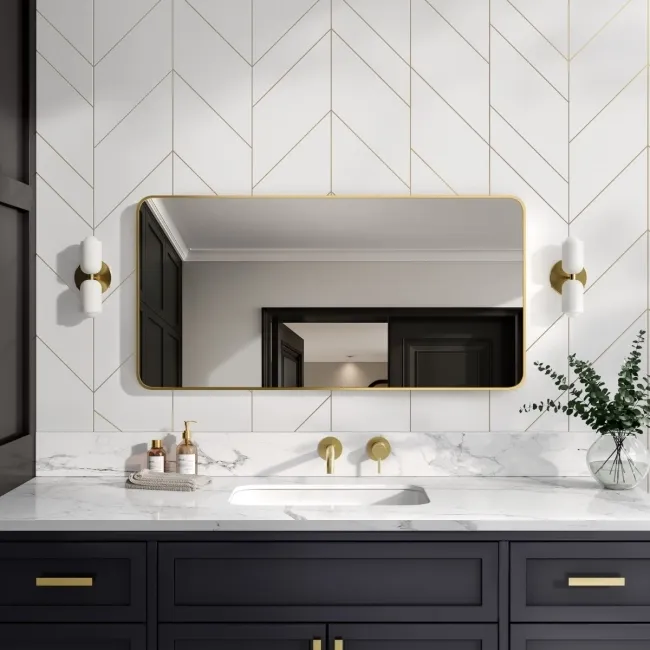
Mirror cost savings in the United Kingdom reach 10% to 40% when buyers choose simple mirror designs, standard mirror sizes, fewer electrical features, and lower installation complexity. Mirror price decreases when mirror materials, mirror features, and mirror labour needs remain basic.
Choose Standard Mirror Sizes
Standard mirror sizes reduce mirror cost because factory-made sizes use less custom cutting and less glass waste. Common sizes such as 60 cm, 80 cm, and 100 cm cost 15% to 30% less than made-to-measure mirrors.
Avoid Electrical Mirror Features
Non-electrical mirrors reduce mirror cost because LED lights, demister pads, and Bluetooth systems add £50 to £250 to mirror price. Basic bathroom mirrors priced £20 to £120 avoid wiring cost and electrical certification fees.
Compare Mirror Prices
Price comparison reduces mirror cost because the same mirror specification often differs by 10% to 25% between retailers. Seasonal discount periods reduce mirror prices by up to 35% during January sales and November promotions.
Avoid Bespoke Mirror Cutting
Bespoke mirror cutting increases mirror cost because custom glass shaping and edge polishing increase production labour. Made-to-measure mirrors cost £150 to £900, while standard framed mirrors cost £40 to £250.
Reduce Installation Labour
Lower installation complexity reduces total mirror cost because professional fitting adds £40 to £120 per mirror. Lightweight mirrors under 15 kg require fewer heavy-duty anchors which lowers labour time.
Choose Lightweight Mirror Frames
Lightweight mirror frames reduce mirror cost because hardwood frames increase material weight and transport charges. Frameless mirrors cost £20 to £120, while solid wood frames cost £120 to £500.
What Are the Ongoing and Hidden Costs of Owning a Mirror?
Ongoing and hidden mirror costs range from £10 to £150 per year depending on mirror type, mirror features, bathroom humidity level, and installation method. Mirror ownership cost includes electricity usage, component replacement, cleaning materials, moisture damage risk, wall repair, and reinstallation labour which extend beyond initial mirror purchase price.
Electricity Usage Cost
Electricity usage increases mirror ownership cost because LED lighting systems and demister heating pads consume electrical energy during operation. A 20-watt LED mirror used 2 hours daily consumes 14.6 kWh annually which costs approximately £4 to £6 per year based on average residential electricity tariffs.
Electrical Component Replacement Cost
Electrical component degradation increases mirror ownership cost because LED drivers, capacitive touch sensors, and demister pads have limited operational lifespan. LED driver replacement costs £20 to £60, demister pad replacement costs £30 to £80, and Bluetooth module repair costs £40 to £120 depending on mirror specification.
Cleaning and Maintenance Cost
Routine mirror maintenance increases ownership cost because cleaning agents and cloth materials require periodic replacement. Annual cleaning supply cost ranges from £10 to £25 depending on bathroom condensation frequency and mineral content in tap water.
Moisture and Corrosion Risk Cost
Elevated indoor humidity increases hidden mirror cost because moisture exposure accelerates edge corrosion in silver-backed mirror glass. Bathrooms with ventilation below recommended airflow levels increase corrosion probability and reduce mirror lifespan to approximately 5 to 10 years.
Wall Surface Repair Cost
Mirror removal increases hidden cost because screw holes, adhesive residue, and surface damage require filling and repainting. Wall repair materials cost £10 to £40, while professional surface restoration costs £40 to £120 depending on wall type.
Reinstallation and Relocation Cost
Mirror relocation increases lifecycle cost because new drilling, levelling, and anchoring require additional labour. Professional mirror reinstallation costs £40 to £120 depending on mirror weight and structural wall support.
Warranty Expiry Financial Exposure
Warranty expiry increases ownership risk because electrical mirror faults after warranty period require direct repair payment. Manufacturer warranties typically range from 1 to 5 years depending on mirror brand and integrated feature complexity.
What Is the Difference Between a Cheap and High-Quality Mirror?

The difference between a cheap mirror and a high-quality mirror lies in glass clarity, glass thickness, reflective coating durability, frame material strength, edge finishing precision, and electrical component quality which directly affect lifespan, reflection accuracy, and total lifecycle cost. Cheap mirrors prioritise lower material cost, while high-quality mirrors prioritise durability and performance.
Glass Thickness and Strength
High-quality mirrors use 4 mm to 6 mm safety glass, while cheap mirrors use 2 mm to 3 mm standard glass which bends more easily and reduces structural stability. Thicker glass improves rigidity and reduces distortion across larger mirror surfaces above 80 cm.
Reflection Clarity and Distortion
High-quality mirrors provide clearer and more accurate reflection because low-iron glass reduces green tint and improves light transmission. Standard mirrors use higher iron content which creates slight colour distortion especially under bright LED lighting.
Reflective Coating Durability
High-quality mirrors use multi-layer silver or aluminium backing with protective paint layers which increase corrosion resistance. Cheap mirrors use thinner reflective coatings which degrade faster in humid bathroom environments and develop edge blackening within 3 to 5 years.
Frame Material and Construction
High-quality mirrors use solid wood, aluminium, or steel frames which improve structural support and load distribution. Cheap mirrors use lightweight plastic or composite frames which may warp over time under humidity exposure.
- Solid hardwood frames: £120 to £500
- Aluminium frames: £60 to £450
- Plastic frames: £20 to £120
Edge Finishing and Safety
High-quality mirrors feature polished or bevelled edges which reduce sharpness and improve durability. Cheap mirrors often use basic cut edges which increase chipping risk during installation.
Electrical Component Quality
High-quality LED mirrors use certified drivers, IP44-rated components, and longer lifespan lighting modules rated 30,000 to 50,000 hours. Cheap LED mirrors use lower-grade drivers which fail earlier and reduce electrical lifespan to below 20,000 hours.
Lifespan Comparison
High-quality mirrors last 10 to 20 years under normal indoor conditions, while cheap mirrors often require replacement within 3 to 7 years due to corrosion, warping, or electrical failure. Longer lifespan reduces replacement frequency and total lifecycle cost.
How Much Should Be Budgeted for a Mirror?

Mirror budget should be £20 to £900 based on mirror type, mirror size, mirror features, mirror frame material, and mirror installation cost. Small simple mirrors need a low budget, while large mirrors with lights or smart systems need a higher budget because more materials and parts are used.
Budget for Basic Wall Mirrors
Basic wall mirrors need a £20 to £120 budget because standard glass and simple brackets reduce production cost. Frameless mirrors and small rectangular mirrors between 40 cm and 80 cm fall in this price range.
Budget for Decorative Framed Mirrors
Decorative framed mirrors need a £80 to £350 budget because wood frames, metal frames, and bevelled edges increase material weight and finishing work. Round mirrors, arched mirrors, and carved frame mirrors cost 15% to 30% more than plain frameless mirrors.
Budget for Bathroom and LED Mirrors
Bathroom and LED mirrors need a £80 to £400 budget because built-in lights and heated demister pads add electrical parts. IP44-rated bathroom mirrors cost more than non-electrical mirrors because moisture protection increases manufacturing cost.
Budget for Smart Mirrors
Smart mirrors need a £250 to £900 budget because digital screens, Bluetooth speakers, and touch sensors increase engineering cost. Smart mirrors contain internal drivers and control boards which raise total mirror price.
Budget for Full-Length and Freestanding Mirrors
Full-length and freestanding mirrors need a £50 to £450 budget because taller mirrors use more glass and stronger frames. Mirrors taller than 150 cm often cost more than £250 due to increased glass size and transport care.
Budget for Bespoke Mirrors
Bespoke mirrors need a £150 to £900 budget because custom cutting and special edge finishing increase labour and material waste. Non-standard shapes increase cost by 20% to 40% compared with standard rectangular mirrors.
Budget for Mirror Installation
Mirror installation needs a £40 to £300 budget because labour time, mirror weight, and wall type affect fitting cost. Standard wall fitting costs £40 to £120, electrical fitting costs £80 to £160, and heavy mirror fitting costs £100 to £300.
How to Choose the Best Mirror?

The best mirror is selected by matching mirror purpose, mirror dimensions, mirror glass thickness, mirror reflection clarity, mirror frame durability, mirror feature necessity, mirror safety rating, and mirror installation conditions which together determine mirror lifespan, reflection accuracy, and total mirror cost. Correct specification prevents distortion, corrosion, and unnecessary expense.
Define Mirror Purpose
Mirror purpose determines mirror specification because grooming mirrors, decorative mirrors, and full-length mirrors require different dimensions and features. Vanity mirrors range from 50 cm to 80 cm wide, full-length mirrors range from 120 cm to 180 cm tall, and decorative statement mirrors prioritise frame design over magnification or lighting.
Measure Mirror Dimensions Precisely
Accurate mirror measurement ensures proportional placement because mirror width should align with furniture width and wall space. Bathroom mirrors typically measure 60 cm to 100 cm wide which balances basin width and visual symmetry.
Select Appropriate Mirror Glass Thickness
Mirror glass thickness determines structural stability because 4 mm to 6 mm safety glass reduces bending and reflection distortion compared with 3 mm standard glass. Mirrors wider than 80 cm benefit from thicker glass to maintain flat reflection.
Evaluate Reflection Accuracy
Reflection accuracy determines mirror quality because low-iron mirror glass reduces colour tint and improves image clarity. High-iron glass produces slight green distortion under bright lighting conditions.
Choose Durable Mirror Frame Material
Frame material determines long-term durability because hardwood, aluminium, and steel resist humidity better than plastic composites. Solid oak frames cost £120 to £500, aluminium frames cost £60 to £450, and plastic frames cost £20 to £120 with lower resistance to moisture exposure.
Verify Moisture and IP Rating
Bathroom mirrors require appropriate IP rating because electrical safety standards regulate product use in wet zones. IP44-rated mirrors provide splash resistance for bathroom installation.
Assess Lighting Specification
Lighting specification determines usability because colour temperature affects visibility and grooming precision. Warm white lighting ranges from 2700K to 3000K, neutral white ranges from 3500K to 4100K, and cool white ranges from 5000K to 6500K which changes reflection tone.
Evaluate Feature Necessity
Feature necessity prevents overspending because LED lighting, demister pads, and Bluetooth modules increase mirror price by £50 to £250. Smart mirrors range from £250 to £900 while non-electrical mirrors range from £20 to £120.
Analyse Installation Requirements
Installation condition determines fixing method because mirror weight and wall type influence anchor selection. Mirrors above 15 kg require reinforced anchors and increase installation cost to £100 to £300.
Compare Warranty Duration
Warranty duration reflects manufacturing quality because longer coverage reduces financial exposure from component failure. Electrical mirrors typically include 1 to 5 year warranties depending on specification.
Inspect Surface and Edge Finishing
Surface flatness and edge polishing indicate production quality because uneven reflection signals glass warping. Bevelled edges increase durability and add £30 to £100 to mirror cost.
Why Choose Bathroom Mountain to Buy Your Next Mirror?
Bathroom Mountain provides competitively priced mirrors from £20 to £900 with verified product specifications, IP-rated bathroom options, and transparent installation cost guidance to support accurate mirror budgeting and long-term value.
We offer LED mirrors, smart mirrors, framed mirrors, and mirror cabinets with clear size data, glass thickness details, and feature breakdowns to support informed comparison. Secure checkout systems, UK-based customer support, and nationwide delivery coverage strengthen purchasing confidence. Structured product information improves decision accuracy and reduces post-purchase uncertainty.


