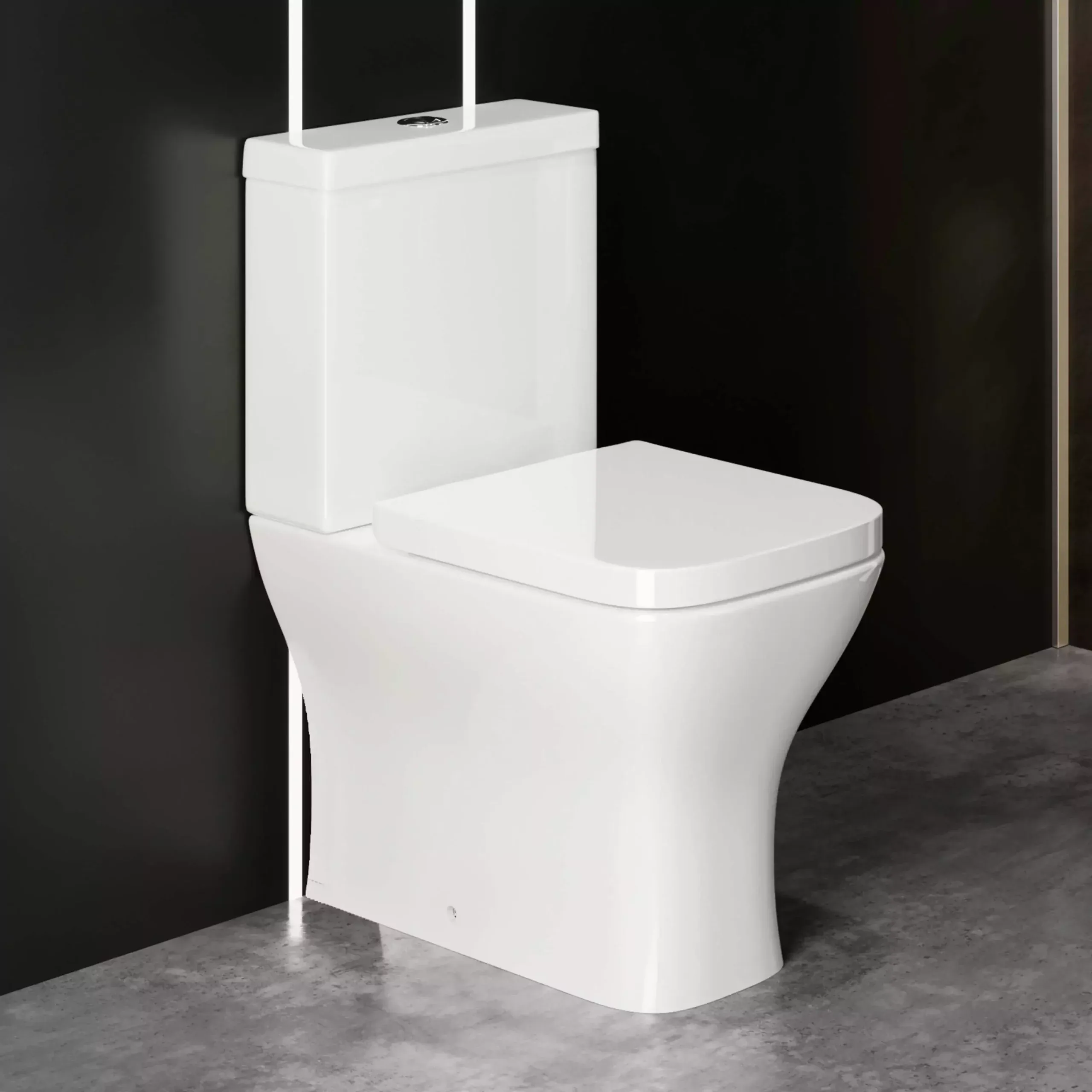
Toilet limescale forms through continuous mineral crystallisation from hard water, affects every part of the toilet, and requires targeted removal and prevention methods to maintain hygiene and flush performance. Limescale develops when calcium and magnesium minerals harden on ceramic surfaces, producing white, grey, brown, orange, or black deposits across the waterline, under the rim, inside the trapway, around flush outlets, and within the cistern.
Limescale identification relies on colour changes, hardened texture, waterline rings, weakened flush flow, under-rim streaks, and internal sediment. Effective removal uses natural acids, chemical descalers, abrasive tools, targeted cleaning for each toilet section, correct soaking times, and safety precautions that prevent damage. Thick deposits require strong acidic gels, extended contact, repeated cycles, and abrasion.
Prevention relies on regular acidic cleaning, reduced standing water, descaling tablets, water-softening solutions, and early treatment of new stains. Severe limescale that blocks channels, etches ceramic, or obstructs siphon jets may require toilet replacement when cleaning no longer restores function.
What Is Limescale?
Limescale is a hardened calcium carbonate deposit that develops when hard water evaporates and leaves mineral residues on toilet surfaces. Environmental Mineralogy Laboratory research from Imperial College London in 2023 recorded rapid crystallisation of calcium and magnesium ions during evaporation, producing dense layers that bond firmly to ceramic structures.
Limescale formation progresses through sequential precipitation as dissolved bicarbonates convert into solid carbonate crystals during temperature changes and repeated water exposure. Iron and manganese particles integrate with calcium carbonate during this process, generating white, grey, brown, or orange deposits based on mineral concentration. Surface roughness increases by 22–27% during limescale development according to 2023 Imperial College mineral-surface measurements, which strengthens adhesion and accelerates future growth.
Limescale accumulation affects toilet hygiene by holding residue on uneven crystalline layers and obstructing water flow near flush outlets. Cleaning frequency rises when deposits thicken, and stain visibility intensifies during continuous evaporation cycles that elevate mineral density.

Why Does Limescale Build Up in Toilets?
Limescale builds up in toilets because hard water leaves concentrated calcium and magnesium minerals behind during evaporation. Mineral-rich water dries on ceramic surfaces and produces calcium carbonate crystals that form the first structural layer of limescale.
Mineral Crystallisation During Evaporation
Limescale formation begins when dissolved bicarbonates convert into solid carbonate crystals during evaporation cycles. Calcium and magnesium ions transition into crystalline calcium carbonate as water dries, creating a rigid deposit that bonds firmly with ceramic micro-pores.
Continuous Precipitation on Ceramic Surfaces
Limescale growth increases when repeated flushing delivers fresh minerals to existing crystal clusters. Mineral accumulation expands as new ions attach to anchored crystals. Iron and manganese particles merge with calcium carbonate during this process and generate white, grey, brown, or orange deposits depending on mineral density.
Repeated Mineral Delivery Through Water Flow
Limescale accumulation intensifies around waterlines, rim outlets, and trapways because these areas receive continuous mineral delivery from flowing and standing hard water. Mineral saturation rises during each evaporation cycle, increasing crystal density, strengthening adhesion, and elevating cleaning frequency as deposits become thicker and more visible.
What Are the Different Types of Toilet Limescale?
Toilet limescale includes white limescale, grey limescale, brown limescale, orange limescale, black limescale, and pink microbial limescale formed through variations in mineral content and environmental exposure. Each type develops when calcium carbonate crystals bind with different particles during evaporation cycles.
White Limescale
White limescale develops when calcium carbonate forms in its pure crystalline state. Minimal metal-oxide interference produces a chalky, pale residue that spreads quickly in areas with frequent drying.
Grey Limescale
Grey limescale develops when calcium carbonate mixes with small amounts of manganese or organic fragments. These particles create a muted grey tone and increase surface density.
Brown Limescale
Brown limescale develops when iron oxide attaches to calcium carbonate during evaporation. Iron-rich deposits create darker, harder layers that resist regular cleaning and form heavily around waterlines.
Orange Limescale
Orange limescale develops when elevated iron concentrations fuse with calcium carbonate. Oxidised iron particles create a bright orange appearance and accumulate rapidly in areas with slow drainage or standing water.
Black Limescale
Black limescale develops when calcium carbonate bonds with high concentrations of manganese oxide or carbon-rich residues. These particles create dark, hardened patches that adhere strongly to ceramic surfaces.
Pink Microbial Limescale
Pink microbial limescale develops when calcium carbonate traps Serratia marcescens bacteria or similar pigmented microorganisms. Mineral deposits hold moisture that allows these organisms to multiply, producing a pink film blended with crystalline residue on bowl surfaces.
Where Does Limescale Build Up in Your Toilet?
Limescale builds up in toilets on the waterline, under the rim, inside the trapway, around flush outlets, on standing-water surfaces, inside rim channels, on siphon jets, around seat hinges, and inside cistern components because these areas receive continuous mineral delivery from hard water. Each location accumulates calcium carbonate crystals according to its water exposure pattern.
Waterline Deposits
Waterline deposits develop when evaporation cycles leave concentrated minerals behind. Calcium carbonate forms a hardened ring at the bowl’s midpoint as drying increases crystal density.
Under-Rim Deposits
Under-rim deposits develop when mineral-rich water passes through rim holes during flushing. Crystals attach to shaded ceramic micro-pores, and limited disturbance allows layers to thicken over time.
Trapway Deposits
Trapway deposits develop when flowing hard water transports dissolved minerals through narrow internal pathways. Crystal buildup disrupts water movement and produces visible discolouration near outlet openings.
Flush-Outlet Deposits
Flush-outlet deposits develop when high-velocity water delivers minerals directly to outlet edges. Repeated flow reinforces crystal layers and deepens colour intensity as metal particles bind with calcium carbonate.
Standing-Water Surface Deposits
Standing-water surface deposits develop when water remains in contact with ceramic surfaces for extended periods. Mineral saturation rises during evaporation, producing chalky patches that expand with each drying cycle.
Rim-Channel Deposits
Rim-channel deposits develop inside the hidden channels that feed flush water to the bowl. Continuous mineral exposure creates internal scaling that narrows flow paths and reduces flush strength.
Siphon-Jet Deposits
Siphon-jet deposits develop around the jet opening at the base of the bowl. Hard water passes through this channel repeatedly, allowing crystals to form around the jet and reduce flushing efficiency.
Seat-Hinge Area Deposits
Seat-hinge area deposits develop when splashed or condensed water dries around hinge fittings. Calcium carbonate collects in crevices, forming compact white or grey residues.
Cistern Component Deposits
Cistern component deposits develop inside the tank on the float valve, fill valve, and internal walls. Constant immersion in mineral-rich water produces crystalline films that thicken as water evaporates during downtime.
How Can You Identify a Limescale in Your Toilet?
Limescale can be identified by hardened mineral deposits that appear as white, grey, brown, orange, or black patches on ceramic surfaces. These patches form when calcium carbonate crystals accumulate through repeated evaporation cycles.
Colour Changes on Ceramic Surfaces
Colour changes indicate mineral composition. White patches signal pure calcium carbonate. Grey patches signal manganese or organic fragments. Brown and orange patches signal iron-rich deposits. Black patches signal manganese oxide or carbon-heavy residue.
Rough or Chalky Texture
A rough or chalky texture confirms crystalline buildup. Calcium carbonate crystals increase surface roughness and create a gritty feel that differs from smooth ceramic glaze.
Hard, Adhering Deposits
Hard, firmly attached deposits indicate mature limescale. Calcium carbonate bonds to ceramic micro-pores and resists removal with normal bowl cleaning.
Visible Rings at the Waterline
A waterline ring identifies repeated evaporation. Mineral-rich water leaves a hardened band where water levels settle and dry daily.
Staining Under the Rim
Under-rim streaks indicate hidden limescale growth. Mineral deposits accumulate inside rim channels and create downward trails as water passes over crystal clusters.
Reduced Flush Performance
Slower water flow indicates internal limescale. Crystal buildup inside flush outlets and trapways narrows water paths and reduces flow strength.
Chalky Sediment in the Cistern
Chalky sediment inside the cistern signals calcium carbonate accumulation on valves and tank walls. Evaporation during periods of low use leaves visible mineral dust and flakes.
What Materials Do You Need to Remove Toilet Limescale?
To remove toilet limescale you need acidic cleaners, descaling agents, abrasive tools, protective equipment, and water-safe application accessories. These materials dissolve calcium carbonate crystals and detach hardened mineral layers from ceramic surfaces.
Acidic Cleaning Agents
Acidic cleaning agents such as white vinegar, citric acid powder, or lemon acid solutions dissolve calcium carbonate deposits through controlled acid–mineral reactions. Stronger descalers use formulated acids to break down dense layers at faster rates.
Descaling Tablets or Gels
Descaling tablets or gels adhere to vertical bowl surfaces and release concentrated cleaning acids during contact. These products soften mineral layers in rim channels, waterlines, and siphon-jet areas.
Abrasive Tools
Abrasive tools such as pumice stones, non-scratch scrub pads, or mineral-removal brushes detach softened crystals from ceramic surfaces. Hardened layers require mechanical agitation after chemical softening.
Protective Equipment
Protective equipment such as gloves and eye protection prevents skin or eye irritation during contact with acidic cleaning agents and splashes from mineral residue.
Application Accessories
Application accessories such as squeeze bottles, measuring cups, cloths, and buckets support accurate acid placement and safe handling. These accessories help maintain consistent coverage on under-rim areas, waterlines, and vertical surfaces.
Toilet Brush
A toilet brush provides final agitation to remove loosened mineral particles after descaling. Bristles reach internal bowl contours and flush-out channels where limescale clusters accumulate.
Flush-Safe Cleaning Cloths
Flush-safe cloths remove dissolved residue without leaving fibres behind. These cloths help clear softened mineral debris before rinsing and drying surfaces.

What Tools Do You Need to Remove Toilet Limescale?
To remove toilet limescale you need abrasive tools, under-rim cleaning tools, targeted scrubbing tools, and supporting safety tools. These tools detach softened calcium carbonate crystals and clear hardened mineral layers from ceramic surfaces.
Pumice Stone
A pumice stone removes thick limescale through controlled abrasion. The porous volcanic structure grinds down calcium carbonate deposits without damaging glazed ceramic when used with water.
Non-Scratch Scrubbing Pad
A non-scratch scrubbing pad removes softened mineral layers after acidic treatment. The textured surface lifts crystalline residue from waterlines, rim edges, and bowl slopes.
Mineral-Removal Brush
A mineral-removal brush reaches under-rim channels and curved bowl contours. Firm bristles clear buildup from hidden crystal clusters and restore smooth water flow.
Wire-Handled Rim Brush
A wire-handled rim brush reaches deep inside rim channels. The elongated handle and angled bristles remove limescale around flush holes that standard brushes cannot reach.
Siphon-Jet Cleaning Tool
A siphon-jet cleaning tool clears mineral deposits from the jet opening at the bowl’s base. Targeted scrubbing restores flush efficiency by reopening narrowed water paths.
Safety Gloves
Safety gloves protect hands during descaling as acidic cleaners and abrasive tools can irritate skin when removing hardened minerals.
Microfibre Cloths
Microfibre cloths wipe loosened residue from ceramic surfaces. Fine fibres collect dissolved particles and support final cleaning before rinsing.
What Safety Precautions Should You Take When Removing Limescale?
Safety precautions for removing limescale include wearing protective gear, ensuring proper ventilation, preventing chemical mixing, and controlling surface contact with strong cleaners. These precautions maintain safe working conditions when dissolving hardened calcium carbonate deposits.
Wear Protective Gloves
Protective gloves prevent skin irritation during contact with acidic descalers and abrasive tools. Acids loosen mineral layers, and gloves create a barrier against direct chemical exposure.
Use Eye Protection
Eye protection prevents accidental splashes from entering the eyes during application or scrubbing. Mineral fragments and acidic solutions require controlled handling to avoid irritation.
Ensure Proper Ventilation
Proper ventilation clears fumes released during acid–mineral reactions. Open windows or activate extraction fans to maintain airflow and reduce inhalation discomfort.
Avoid Mixing Cleaning Chemicals
Avoid mixing cleaning chemicals because combined reactions create harmful gases. Use one descaling agent at a time and rinse surfaces thoroughly before applying a different product.
Protect Surrounding Surfaces
Protect surrounding surfaces with cloths or plastic coverings. Acidic solutions can weaken metal fittings or damage adjacent materials during prolonged contact.
Follow Product Instructions Precisely
Follow product instructions precisely to maintain safe dilution ratios and application times. Excessive concentration increases surface corrosion risk and intensifies fumes.
Wash Hands After Cleaning
Wash hands after cleaning to remove residual chemical traces. Thorough washing prevents accidental transfer of descaler to the face or eyes after the task.
How Should You Prepare Your Toilet for Limescale Cleaning?
Preparation for limescale cleaning requires clearing the bowl, lowering the water level, and exposing all mineral-affected surfaces before applying descaling products. Proper preparation increases contact between acidic cleaners and hardened calcium carbonate deposits.
Flush to Clear Loose Debris
A full flush clears loose residue from the bowl. Removing floating particles creates a clean surface that allows descalers to reach mineral layers directly.
Lower the Water Level
Lowering the water level exposes the waterline, bowl slope, and siphon-jet area. A plunger or cup removes excess water and increases the surface area available for descaling contact.
Dry Targeted Areas
Drying targeted areas improves acid adherence. A cloth removes residual moisture so liquid cleaners cling to ceramic surfaces without diluting during treatment.
Lift the Toilet Seat and Cover Surroundings
Lifting the seat exposes rim edges and upper bowl sections. Covering surrounding flooring prevents accidental splashes from acidic solutions during application.
Identify Heavy Mineral Deposits
Identifying heavy mineral deposits helps determine where thicker descaler coverage is required. Discolouration, rough patches, and hardened rings indicate high-density calcium carbonate deposits.
Ventilate the Bathroom
Ventilating the bathroom improves airflow during cleaning. Open windows or activate fans to reduce exposure to acidic vapours released during mineral breakdown.

How Can You Remove Limescale from Your Toilet Naturally?
Natural limescale removal uses mild acidic ingredients and controlled abrasion to dissolve calcium carbonate deposits without synthetic chemicals. These natural agents soften crystalline layers and prepare hardened mineral buildup for effective cleaning.
White Vinegar Treatment
White vinegar dissolves limescale through direct acetic acid contact. Pour vinegar over the waterline, under the rim, and onto visible deposits because prolonged soaking softens calcium carbonate and improves brushing efficiency.
Citric Acid Application
Citric acid dissolves calcium carbonate through natural acid–mineral reactions. A warm-water mixture forms a paste that adheres to vertical surfaces and breaks down hardened deposits during extended contact.
Lemon Juice Cleaning
Lemon juice releases natural citric acid that loosens mineral clusters. Apply concentrated lemon juice to stained areas because direct exposure lightens colour and weakens crystalline structure before scrubbing.
Baking Soda and Vinegar Reaction
Baking soda and vinegar create carbon dioxide that lifts loosened mineral residue from ceramic surfaces. Apply baking soda first and add vinegar afterward because the reaction supports removal after acid soaking.
Pumice Stone Use
A pumice stone removes softened limescale through gentle abrasion. The porous texture grinds down remaining calcium carbonate when the stone stays wet during cleaning.
Hot Water Rinse
Hot water accelerates natural acid performance by increasing mineral softening. Pour hot water into the bowl after soaking because elevated temperature improves deposit removal and supports final brushing.
How Do You Remove Limescale Using Chemical Cleaners?
Chemical limescale removal uses formulated acidic descalers that dissolve calcium carbonate quickly and detach hardened mineral layers from ceramic surfaces. These cleaners break down dense deposits through targeted acid–mineral reactions and controlled scrubbing.
Apply an Acidic Descaling Gel or Liquid
An acidic descaling gel or liquid dissolves calcium carbonate on contact. Coat the waterline, under-rim channels, and visible deposits because thick gel formulations cling to vertical surfaces and deliver sustained cleaning action.
Allow Sufficient Contact Time
Sufficient contact time strengthens chemical breakdown. Leave the descaler in place for the duration specified on the label because uninterrupted exposure increases dissolution speed and weakens hardened crystals.
Scrub Loosened Deposits
Scrubbing removes softened limescale from ceramic surfaces. Use a mineral-removal brush or non-scratch pad because mechanical agitation clears remaining residue after chemical softening.
Target Under-Rim and Flush-Outlet Areas
Under-rim and flush-outlet areas require focused cleaning. Apply descaler into rim channels and around outlet holes because these regions accumulate dense mineral clusters that restrict water flow.
Treat Heavy Deposits with Repeat Applications
Repeat applications dissolve thick or aged limescale. Reapplying descaler to stubborn patches increases acid contact and allows deeper penetration into compact mineral layers.
Flush to Remove Dissolved Residue
Flushing removes dissolved mineral fragments and chemical residue from the bowl. A full flush rinses ceramic surfaces and restores clear water flow after descaling.
What Are the Best Commercial Limescale Removers for Toilets?
The best commercial limescale removers for toilets include acidic descaling gels, spray descalers, multi-surface descalers, professional-strength toilet cleaners, and gentle maintenance cleaners because each category dissolves calcium carbonate at different intensities. These cleaners break down hardened mineral layers through controlled acid–mineral reactions.
Acidic Descaling Gels
Acidic descaling gels remove heavy limescale because thick formulations cling to vertical ceramic surfaces. These gels dissolve dense calcium carbonate layers along waterlines, under-rim channels, and siphon-jet areas.
Acidic Toilet Cleaners
Acidic toilet cleaners remove stubborn deposits because strong acid concentrations penetrate compacted mineral layers quickly. These cleaners clear brown, orange, and grey limescale created by iron and manganese particles.
Spray Limescale Removers
Spray limescale removers control mild and moderate buildup because fine spray application reaches exposed bowl surfaces and prevents early-stage mineral crystallisation. These sprays maintain cleanliness when used regularly.
Multi-Surface Descalers
Multi-surface descalers remove limescale across bathroom fixtures because versatile formulas dissolve mineral residue on ceramic, metal, and plastic components. These descalers support toilets with widespread hard-water staining.
Professional-Strength Descalers
Professional-strength descalers remove thick, aged limescale because advanced acidic blends break down deeply bonded layers. These descalers support toilets with long-term mineral accumulation and heavy staining.
Gentle Maintenance Cleaners
Gentle maintenance cleaners manage light deposits because mild formulations soften early calcium carbonate layers. These cleaners maintain bowl appearance when used frequently before limescale hardens.
Thick Gel Hygiene Cleaners
Thick gel hygiene cleaners remove limescale and surface residue because gel consistency increases contact duration. These cleaners support odour control and mineral reduction in routine cleaning cycles.
How Do You Remove Thick, Stubborn Limescale from a Toilet?
Thick limescale can be removed by applying strong acidic descalers, extending contact time, and using targeted abrasion to detach hardened calcium carbonate layers. This combination breaks down compact mineral deposits that resist regular cleaning.
Apply a High-Strength Acidic Descaler
A high-strength acidic descaler softens dense mineral layers because concentrated acids penetrate compact calcium carbonate. Apply descaler along the waterline, under the rim, around the siphon jet, and onto visible thick deposits to begin dissolution.
Extend Contact Time for Deep Penetration
Extended contact time increases acid effectiveness because prolonged exposure weakens tightly bonded crystals. Leave the descaler in place for the full recommended duration so the formula can dissolve thick layers instead of superficial residue.
Use a Pumice Stone on Softened Deposits
A pumice stone removes softened limescale through controlled abrasion. The fine volcanic texture grinds down loosened calcium carbonate when the stone stays wet, reducing the risk of surface scratching.
Target Under-Rim Channels and Siphon Jets
Under-rim channels and siphon jets require focused cleaning because these areas collect the thickest mineral buildup. Apply descaler directly into rim holes and scrub with a narrow mineral-removal brush to clear compact deposits.
Repeat Treatment for Aged Limescale
Repeat treatment removes aged or multi-layered deposits because thick limescale forms in dense strata. A second application increases acid penetration and breaks down deeper layers after the first cleaning cycle.
Flush to Clear Dissolved Residue
Flushing removes dissolved mineral fragments and clears softened debris from the bowl. A full flush after scrubbing restores water clarity and exposes any remaining patches that require targeted cleaning.

How Do You Remove Limescale from Different Parts of Your Toilet?
Limescale removal from different toilet parts requires targeted descaling methods that match the mineral buildup pattern in each section. Each area accumulates calcium carbonate differently, so each area needs a specific cleaning approach.
Removing Limescale from the Waterline
Waterline deposits dissolve effectively when coated with acidic descaling gel because thick formulas cling to the curved bowl surface. Apply gel around the waterline and allow extended contact so the acid penetrates hardened calcium carbonate before scrubbing with a non-scratch pad.
Removing Limescale from Under the Rim
Under-rim deposits loosen when descaler is injected into rim holes because direct placement targets hidden mineral clusters. Use a wire-handled rim brush after soaking to break down compact crystals and restore smooth water flow.
Removing Limescale from the Trapway
Trapway deposits clear when descaler fills the lower bowl and remains in contact during soaking. Use a long-handled brush to agitate softened calcium carbonate inside the curved channel and flush to remove mineral fragments.
Removing Limescale from Flush Outlets
Flush-outlet deposits dissolve when strong acidic gel coats the outlet edges because mineral-rich water repeatedly crystallises in these locations. Scrub the outlet openings after contact time to reopen narrowed flow paths.
Removing Limescale from the Siphon Jet
Siphon-jet deposits soften when descaler is directed into the jet cavity because dense minerals accumulate around the jet opening. Use a jet-cleaning tool to clear softened calcium carbonate and restore flush pressure.
Removing Limescale from Under the Seat Hinges
Seat-hinge deposits lift when vinegar or gel descaler soaks into tight crevices. Wipe softened mineral residue with a microfibre cloth to prevent long-term build-up around hinge fittings.
Removing Limescale from the Cistern
Cistern deposits dissolve when diluted descaler soaks internal parts such as valve arms and tank walls. Rinse thoroughly after treatment to remove dissolved residue and maintain mechanical stability inside the cistern.
How Long Should You Soak Limescale for Best Results?
Limescale should be soaked for 20–60 minutes because calcium carbonate softens progressively during continuous acid contact. Longer soaking increases mineral breakdown and improves removal efficiency.
Light to Moderate Limescale
Light to moderate limescale softens after 20–30 minutes because thin calcium carbonate layers respond quickly to consistent acidic exposure. A single soak often prepares the surface for effective brushing.
Heavy Limescale
Heavy limescale requires 45–60 minutes because dense crystalline layers contain tightly bonded mineral clusters. Extended contact weakens deeper sections and reduces the force needed during scrubbing.
Under-Rim and Hidden Deposits
Under-rim and hidden deposits benefit from 40–50 minutes of soaking because rim channels and flush holes retain limescale in protected spaces. Longer exposure helps acids reach mineral layers inside narrow openings.
Stubborn Multi-Layered Deposits
Stubborn multi-layered deposits require repeated 30–60 minute cycles because thick limescale forms in compact strata. Each cycle dissolves an additional layer and improves access to underlying minerals.
Natural Cleaners
Natural cleaners such as white vinegar or citric acid require 1–3 hours because mild acids react more slowly with calcium carbonate. Extended soaking compensates for lower acidity and supports gradual mineral softening.
Gel-Based Chemical Descalers
Gel-based chemical descalers require 20–40 minutes because thick gels cling to vertical surfaces and maintain high acid concentration during contact. This duration delivers strong dissolution without surface damage.
How Can You Prevent Limescale Buildup in Your Toilet?
Limescale buildup can be prevented by reducing mineral contact, maintaining consistent cleaning routines, and using descaling products that interrupt calcium carbonate formation. These measures limit crystal growth before deposits become hard and visible.
Use Regular Acidic Cleaners
Regular acidic cleaners prevent mineral crystallisation because mild acids dissolve early calcium carbonate layers during routine cleaning. Weekly use around the waterline and under the rim stops small deposits from developing into hardened rings.
Flush Frequently to Reduce Standing Water
Frequent flushing reduces standing-water evaporation because constant water movement limits mineral concentration. Lower evaporation rates slow the transition of dissolved minerals into crystalline deposits.
Dry the Bowl After Deep Cleaning
Drying the bowl after deep cleaning reduces crystal formation because dry ceramic surfaces prevent residual water from leaving mineral traces. A quick wipe along the waterline and rim area helps maintain surface smoothness.
Apply a Descaling Tablet in the Cistern
A descaling tablet in the cistern prevents crystal development because each flush releases scale-control agents that break down early mineral clusters. These agents reduce buildup in rim channels, outlet holes, and bowl surfaces.
Use Water-Softening Solutions
Water-softening solutions prevent limescale because they reduce calcium and magnesium levels before water reaches the toilet. Lower mineral content decreases the rate of calcium carbonate formation during evaporation.
Clean Under the Rim Frequently
Frequent under-rim cleaning slows accumulation because rim holes deliver continuous mineral-rich water. Removing early-stage deposits from hidden rim channels prevents thick mineral clusters from forming.
Treat Early Stains Immediately
Immediate treatment prevents layer formation because early stains contain soft, newly crystallised minerals that dissolve quickly. Early intervention reduces cleaning effort and stops deposits from bonding tightly with ceramic surfaces.
What Common Mistakes Should You Avoid When Removing Limescale?
Common mistakes to avoid during limescale removal include using the wrong products, reducing contact time, damaging ceramic surfaces, and mixing chemicals that create harmful reactions. Avoiding these mistakes improves safety and cleaning effectiveness.
Using Bleach Instead of an Acidic Cleaner
Using bleach fails to remove limescale because bleach lightens stains without dissolving calcium carbonate. Bleach masks mineral buildup and allows deposits to harden further.
Mixing Bleach with Acidic Descalers
Mixing bleach with acidic descalers creates dangerous fumes because chemical reactions release harmful gases. Using one product at a time maintains safe cleaning conditions.
Scrubbing Dry Surfaces with Abrasive Tools
Scrubbing dry ceramic surfaces causes scratches because abrasives require lubrication to prevent surface damage. Wet pumice stones or pads protect glaze while removing softened deposits.
Reducing Acid Contact Time
Reducing acid contact time weakens descaling performance because calcium carbonate requires sustained exposure for effective dissolution. Insufficient soaking leaves hardened layers intact.
Applying Too Much Pressure
Applying too much pressure damages ceramic because forceful abrasion removes glaze and exposes rough areas that attract mineral buildup faster. Gentle, controlled scrubbing protects surface integrity.
Ignoring Under-Rim Channels
Ignoring under-rim channels leaves active mineral clusters in place because rim holes deliver continuous hard water during flushing. Uncleaned rim channels renew limescale quickly after treatment.
Not Rinsing After Cleaning
Not rinsing after cleaning leaves dissolved mineral residue behind because remaining particles settle and reattach to ceramic surfaces. A full flush removes loosened fragments and restores bowl clarity.
Neglecting Protective Gear
Neglecting protective gear increases exposure risk because acidic cleaners irritate skin and eyes during application. Gloves and eye protection reduce contact hazards during descaling.

Does Limescale Smell?
Limescale does not produce a smell because calcium carbonate is an odourless mineral compound. Any unpleasant odour near limescale comes from trapped organic residue or bacterial growth on uneven mineral surfaces.
Odours from Bacterial Growth
Bacterial growth creates unpleasant smells because rough limescale surfaces retain moisture and organic particles. These conditions support bacterial activity that releases noticeable odours.
Odours from Trapped Waste Residue
Trapped waste residue produces strong smells because mineral buildup captures microscopic organic fragments during flushing. These fragments decompose on the mineral surface and generate odour.
Odours from Stagnant Water
Stagnant water causes mild smells because slow-moving water around thick deposits increases microbial activity. Reduced flow around mineral clusters intensifies odour formation over time.
Odours from Cleaning Product Reactions
Cleaning product reactions create chemical smells because acidic descalers interact with residual contaminants on the limescale surface. These odours disappear after rinsing and drying.
What Should You Do When Limescale Removal Doesn’t Work?
Limescale that does not respond to normal cleaning requires stronger descaling methods, repeated treatment cycles, and targeted cleaning of hidden mineral deposits. Persistent calcium carbonate layers resist removal when deposits become thick, compact, or multi-layered.
Increase Descaler Strength
Increasing descaler strength improves mineral breakdown because higher acid concentration penetrates dense calcium carbonate faster. A stronger gel formulation dissolves compact layers that mild cleaners cannot soften.
Extend Contact Time
Extending contact time enhances dissolution because prolonged acid exposure weakens deeper mineral sections. Longer soaking cycles allow descalers to reach tightly bonded crystals beneath surface layers.
Repeat the Treatment Cycle
Repeating treatment removes layered deposits because thick limescale forms in stacked mineral strata. Each repeated cycle dissolves an additional layer and exposes underlying calcium carbonate for continued cleaning.
Target Hidden Deposits Under the Rim
Targeting under-rim deposits restores cleaning results because rim holes contain compact mineral clusters that renew surface staining. Injecting descaler into rim channels and scrubbing with a narrow brush clears hidden buildup.
Use Abrasion After Softening
Using abrasion after softening removes hardened residue because softened calcium carbonate detaches during controlled scrubbing. A wet pumice stone or non-scratch pad clears remaining patches without damaging ceramic.
Treat Mineral Buildup in the Trapway
Treating the trapway improves overall results because internal deposits restrict water movement and reduce cleaning efficiency. Soaking the lower bowl in descaler dissolves trapway buildup.
Seek Professional Support
Professional support becomes necessary when mineral accumulation affects flushing performance because severe deposits block internal channels. A professional service clears inaccessible buildup and restores full functionality.
What Is the Best Thing to Remove Limescale from a Toilet?
The best product for removing limescale from a toilet is a high-strength acidic descaling gel because concentrated acids dissolve hardened calcium carbonate quickly and cling to vertical ceramic surfaces for extended contact. Thick gel formulas soften dense mineral layers and improve scrubbing efficiency.
Why Acidic Gels Work Best
Acidic gels remove limescale effectively because hydrochloric or sulphamic acid penetrates compact crystal structures. Gel consistency prevents runoff and maintains acid contact on waterlines, under-rim channels, and siphon-jet areas.
Where Acidic Gels Perform Strongest
Acidic gels break down heavy deposits on the waterline, under the rim, around flush outlets, and inside the trapway because these areas accumulate thick mineral clusters during repeated evaporation cycles.
Alternatives for Lighter Deposits
Natural acids such as white vinegar or citric acid soften light limescale because mild acidity dissolves early calcium carbonate layers. These options maintain cleanliness when used regularly.
Tools That Enhance Product Performance
A pumice stone, non-scratch pad, or mineral-removal brush improves removal because abrasive action detaches softened deposits. Mechanical support completes the chemical breakdown initiated by the descaling gel.
When to Use Stronger Formulas
Stronger formulas are necessary when deposits contain iron or manganese because these minerals create brown or orange limescale that requires deeper acid penetration. Repeating the treatment cycle enhances results on severe buildup.

When Should You Replace a Toilet Due to Severe Limescale?
A toilet should be replaced when severe limescale permanently blocks internal channels, weakens flushing performance, and damages ceramic surfaces beyond effective descaling. These conditions indicate structural mineral buildup that cleaning cannot reverse.
When Limescale Blocks the Trapway
Replacement becomes necessary when limescale blocks the trapway because hardened deposits restrict water movement and reduce flush pressure. Persistent blockages after repeated descaling cycles signal irreversible mineral obstruction.
When Rim Channels Become Permanently Scaled
Rim-channel replacement becomes necessary when thick limescale narrows flush holes because reduced flow weakens bowl coverage. Inaccessible mineral buildup inside rim channels often resists chemical and mechanical cleaning.
When Ceramic Surfaces Become Rough or Etched
Toilet replacement becomes necessary when limescale etches ceramic surfaces because roughened glaze accelerates future mineral attachment. Permanent etching creates continuous staining that cleaning cannot prevent.
When Siphon-Jet Openings Remain Obstructed
Replacement becomes necessary when siphon-jet openings stay blocked after descaling because narrowed jets reduce bowl suction. Weak siphon action leads to incomplete waste removal and consistent flushing issues.
When Internal Cistern Components Fail Repeatedly
Cistern replacement becomes necessary when internal parts degrade from prolonged mineral exposure because calcium carbonate interferes with valves and seals. Frequent malfunction indicates mineral damage affecting long-term reliability.
When Cleaning Frequency Becomes Excessive
Replacement becomes reasonable when cleaning frequency becomes excessive because severe mineral buildup reforms quickly. Persistent reformation after strong descaling suggests deeply rooted deposits within internal structures.
When Repair Becomes More Costly Than Replacement
Replacement becomes practical when repair outweighs cost because ongoing descaling, part replacement, and performance issues exceed the value of a new unit. A modern toilet restores efficiency and reduces long-term maintenance.
Conclusion
Toilet limescale can be managed effectively by identifying early mineral deposits, using targeted removal methods, and maintaining consistent prevention routines that stop calcium carbonate from hardening into stubborn layers. Limescale develops across the waterline, under the rim, inside the trapway, around flush outlets, and within the cistern, and each area responds best to specific cleaning techniques. Natural acids handle light deposits, strong descaling gels break down thick buildup, and abrasive tools remove softened crystals after soaking. Regular cleaning, reduced standing water, descaling tablets, and early stain treatment prevent new mineral layers from forming. Severe limescale that blocks channels, damages ceramic, or weakens flushing may require replacement when cleaning cannot restore proper function. Effective limescale control keeps the toilet clean, maintains flush performance, and reduces long-term maintenance.