

A digital shower uses a processor to regulate water temperature and water flow with precise electronic control, creating a consistent and reliable showering experience. The system blends hot and cold supplies before delivery, which stabilises performance during pressure changes and supports accurate modulation across different outlet settings.
Modern designs offer exposed, concealed, single outlet, dual outlet, and pumped options, allowing the system to suit a wide range of bathroom layouts. Compatibility extends across combi boilers, system boilers, unvented cylinders, and gravity fed arrangements when supply balance, installation space, and routing structure meet system requirements.
Compared to manual mixer, thermostatic mixer, electric, power, and smart formats, this technology provides stronger temperature accuracy and steadier flow because electronic regulation replaces mechanical balancing or pump assistance. Benefits include controlled delivery, simple operation, flexible installation, and coordinated multi outlet performance, while considerations involve electrical reliance, installation planning, processor access, and higher upfront cost.
Long term stability depends on routine descaling, filter cleaning, control panel care, and basic system inspection. Installation follows a defined process that positions the processor, aligns pipework, routes outlets, integrates electrical supply, installs the interface, and tests modulation accuracy. Together, these characteristics create a dependable and adaptable system suited to varied household requirements.
What Is a Digital Shower?
A digital shower is a thermostatically controlled shower system that uses a digital processor to keep water temperature and water flow consistent. The processor blends hot and cold water before it reaches the outlet, which helps maintain a steady and comfortable experience during pressure changes in the home. A digital control panel can be wired, wireless, or remote, and users adjust settings through simple controls. Flow rates usually range from 6 to 15 litres per minute. Digital systems work with fixed heads, handset showers, or dual outlet setups, making the design suitable for a wide range of bathroom layouts.
What Is the Difference Between a Digital Shower and a Traditional Shower?
The main difference that sets a digital shower apart from a traditional shower is the integrated digital thermostat that manages water temperature and water flow with precise electronic control. A digital processor blends hot and cold supplies before delivery, and a digital control panel or remote activates the shower from an external position for consistent performance and simple operation.
How Do Digital Showers Work?
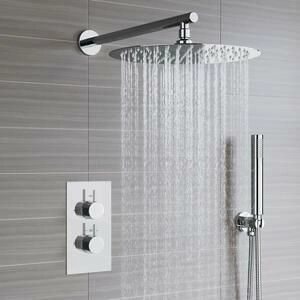
A digital shower works through a digital processor that blends hot and cold water electronically to deliver precise temperature and flow control. The processor receives continuous data from temperature and flow sensors, and processor algorithms adjust blending sequences to maintain consistent delivery during household pressure variation.
Digital Processor Function
The digital processor regulates water temperature and water flow through controlled electronic modulation. Sensor feedback guides blending accuracy, and processor sequences stabilise performance for single outlet and dual outlet configurations. Adjustment cycles operate in rapid intervals to maintain steady output across different flow settings.
Digital Control Operation
The digital control panel or remote sends electronic commands that instruct the processor to set the required temperature and flow. The interface activates the shower from an external position, and control increments shape flow rates between defined ranges for structured bathroom layouts, producing a consistent experience regardless of pressure fluctuation.
What Are the Types of Digital Showers?
The types of digital showers are defined by processor placement, outlet configuration, and performance capability, and each type controls water temperature and water flow through precise electronic regulation. Digital shower categories organise functional behaviour, installation method, and system architecture.
Exposed Digital Showers
An exposed digital shower uses an external processor and a surface mounted control unit to regulate temperature and flow through electronic signals. Exposed construction supports faster installation and straightforward servicing, and exposed processor placement maintains stable blending sequences.
Concealed Digital Showers
A concealed digital shower uses a processor positioned behind the wall structure to deliver a streamlined appearance. Concealed construction routes blended water through internal channels, and concealed processor placement stabilises output with reduced surface hardware in the bathroom environment.
Single Outlet Digital Showers
A single outlet digital shower supplies blended water to one outlet through controlled electronic modulation. Single outlet construction supports fixed heads or handset units, and sequence regulation maintains consistent output for focused showering arrangements.
Dual Outlet Digital Showers
A dual outlet digital shower distributes blended water across two outlets through coordinated electronic control. Dual outlet construction supports combinations of fixed heads and handset units, and processor sequencing allocates flow accurately to each outlet based on user selection.
Pumped Digital Showers
A pumped digital shower uses an integrated pump to increase flow where gravity fed systems restrict performance. Pumped construction enhances delivery strength through amplified movement of blended water, and controlled modulation preserves temperature accuracy during increased output.
What Are the Benefits of Having a Digital Shower?
The benefits of having a digital shower are defined by precise temperature accuracy, controlled water flow regulation, flexible installation design, and enhanced user convenience through electronic management. Digital shower performance strengthens comfort consistency and operational reliability across structured bathroom layouts.
Precise Temperature Accuracy
Digital shower systems regulate water temperature through continuous electronic blending sequences. Sensor feedback adjusts hot and cold supplies in rapid cycles, and controlled modulation reduces temperature deviation during household pressure variation.
Controlled Water Flow Regulation
Digital shower processors manage water flow through defined electronic increments. Structured regulation maintains steady delivery across fixed heads and handset units, and consistent sequencing supports single outlet and dual outlet arrangements.
Flexible Installation Design
Digital shower construction adapts to exposed or concealed positioning for different bathroom styles. External placement supports straightforward access, and concealed placement creates a streamlined appearance without compromising temperature stability.
Enhanced User Convenience
Digital shower interfaces provide simplified operation through touch panels or remote control units. External activation supports preset temperature selection, and consistent sequencing delivers predictable performance during daily use.
Strengthened Multi-Outlet Performance
Digital shower technology distributes blended water across multiple outlets through coordinated electronic control. Controlled sequencing balances flow between fixed heads and handset units, and structured modulation maintains uniform output across outlet transitions.
What Are the Drawbacks and Considerations of Digital Showers?
The drawbacks and considerations of digital showers involve electrical reliance, installation complexity, processor placement limitations, and higher upfront cost compared to manual or mixer systems. Digital shower evaluation requires structured assessment before selection.
Electrical Reliance
Digital shower operation depends on continuous electrical power for processor and control interface performance. Electrical interruption halts blending sequences, and temperature regulation pauses until supply restoration.
Higher Upfront Cost
Digital shower systems use advanced processors and electronic components that increase initial expenditure. Multi outlet designs raise installation labour, and engineered circuitry elevates overall system cost compared to traditional alternatives.
Processor Placement Limitations
Digital shower processors require a designated installation area outside the wet zone. Placement in lofts, cupboards, or service voids demands adequate ventilation, and confined spaces restrict safe airflow around processor housing.
Installation Complexity
Digital shower installation requires accurate alignment of hot, cold, and blended pipework alongside control cabling. Structured routing extends installation time, and concealed integration demands precise positioning within bathroom wall structures.
Maintenance Access Requirements
Digital shower maintenance requires accessible entry points for processor servicing. Inspection panels or service hatches support component checks, and restricted access increases maintenance duration during system adjustments.
How Do You Install a Digital Shower Step by Step?
Digital shower installation follows a structured sequence that includes processor placement, water supply connection, control interface positioning, outlet routing, and system testing to achieve accurate blending and controlled flow performance. Each installation stage supports stable digital shower function.
Digital Shower Installation Steps
- Prepare Installation Area
Identify the processor location outside the wet zone, confirm access clearance, and verify ventilation space for stable processor operation. - Shut Off Water and Electrical Supply
Turn off hot and cold supplies and isolate electrical circuits to create a safe installation environment. - Position the Digital Processor Unit
Mount the processor in a loft, cupboard, or service void, ensuring secure fixing, correct orientation, and adequate airflow around the housing. - Connect Hot and Cold Water Supplies
Attach the hot and cold feeds to the processor inlets, confirm pressure balance, and secure isolating valves for future maintenance access. - Route Blended Outlet Pipework
Connect the blended outlet to the fixed head, handset unit, or dual outlet assembly, and secure pipework using appropriate fittings and insulation. - Install the Control Interface
Fix the control panel to the designated wall position, ensuring correct height and sealing, and route communication cables or pair wireless modules according to system requirements. - Complete Electrical Connection
Connect the processor to an isolated electrical supply following certified electrical standards, and confirm correct voltage and safe earth bonding. - Check Filters and System Seals
Inspect inlet filters for debris, verify all seals, and confirm watertight connections throughout the system. - Test System Function
Activate the digital shower through the control interface, check temperature accuracy, verify flow stability across settings, and confirm correct outlet switching for dual outlet systems. - Finalise Installation
Secure all access panels, confirm processor accessibility for future maintenance, and review system instructions for correct daily operation.
How Does a Digital Shower Compare to Other Shower Types?
The comparison between a digital shower and other shower types is defined by temperature regulation method, flow control capability, energy behaviour, and installation structure. The comparison below outlines functional differences across the main shower categories.
Comparison Table Definition
The table below compares digital showers with manual mixer, thermostatic mixer, electric, power, and smart showers using temperature control method, flow management, installation structure, and system behaviour as comparison criteria.
Digital Shower Comparison Table
| Shower Type | Temperature Control | Flow Control | Installation Structure | System Behaviour |
| Digital Shower | Electronic blending with processor sequences | Electronic increments through control interface | Processor placed externally in loft, cupboard, or service space | Stable temperature and consistent flow during pressure variation |
| Manual Mixer Shower | Direct manual mixing without stabilising mechanism | Dependent on household pressure levels | Simple valve assembly on wall surface | High fluctuation during pressure changes |
| Thermostatic Mixer Shower | Mechanical thermostatic cartridge maintains set temperature | Flow adjusted manually through valve | Wall mounted with internal cartridge | Stable temperature with slower reaction to supply change |
| Electric Shower | Internal heating element warms cold water on demand | Flow restricted by heating capacity | Unit mounted on wall with electrical connection | Consistent output independent of hot water storage |
| Power Shower | Mechanical mixing with integrated pump | Pump boosted flow for gravity fed systems | Pump and mixer assembly requiring dedicated space | Strong output with higher water consumption |
| Smart Shower | Electronic blending with smart automation features | App controlled flow modulation | Processor with connectivity modules | Programmable performance with custom profiles |
How Much Does a Digital Shower Cost?
The cost of a digital shower ranges from £300 to £900 for the unit, and the full installation cost ranges from £700 to £1,800 depending on processor type, outlet configuration, and installation complexity. Digital shower pricing reflects system architecture and labour requirements.
Unit Cost Range
Digital shower units typically fall between £300 and £900 based on processor capability and control interface design. Exposed configurations sit at the lower end of the range, and concealed multi outlet systems increase overall unit price.
Installation Cost Range
Digital shower installation usually ranges from £400 to £900 depending on pipe routing, processor placement, and electrical connectivity. Concealed systems require more structural adjustment, and installation time increases with multi outlet layouts.
Cost Components
Digital shower costs include the processor unit, control interface, pipework adjustments, electrical work, and labour. Expanded outlet setups increase hardware requirements, and concealed routing raises installation duration.
Long Term Cost Considerations
Digital shower efficiency benefits originate from controlled temperature regulation and managed flow output. Reduced wasted water during warm up cycles influences long term running costs, and consistent modulation supports predictable energy behaviour.
Digital Shower Cost Comparison
Digital shower cost comparison uses unit price, installation cost, system complexity, and long term efficiency to distinguish digital shower expenditure from manual mixer, thermostatic mixer, electric, and power shower systems. Structured comparison clarifies financial differences across shower types.
Cost Comparison Table Definition
The table below compares digital shower costs with other shower types using unit price, installation price, and system behaviour as cost-related criteria.
Digital Shower Cost Comparison Table
| Shower Type | Unit Cost Range | Installation Cost Range | Cost Drivers | System Behaviour |
| Digital Shower | £300–£900 | £400–£900 | Processor design, control interface, outlet count | Electronic blending with stable output |
| Manual Mixer Shower | £60–£150 | £100–£250 | Basic valve assembly, simple installation | Manual adjustment with fluctuation during pressure changes |
| Thermostatic Mixer Shower | £120–£300 | £150–£350 | Thermostatic cartridge, balanced controls | Mechanical stabilisation with moderate accuracy |
| Electric Shower | £150–£400 | £150–£350 | Heating element, electrical safety compliance | On-demand heating independent of stored hot water |
| Power Shower | £250–£500 | £300–£600 | Integrated pump, gravity system compatibility | Pump-boosted output with higher water consumption |
Are Digital Showers Any Good?
Digital showers are good because electronic temperature regulation and controlled flow modulation deliver consistent and accurate showering performance. Digital processor sequences stabilise output during pressure variation, and structured electronic control enhances reliability compared to manual or mechanically balanced systems.
Performance Accuracy
Digital showers maintain target temperature through continuous electronic blending cycles. Sensor feedback reduces deviation during hot and cold supply changes, and regulated sequencing supports stable delivery across different flow settings.
User Convenience
Digital shower interfaces provide straightforward operation through touch panels or remote controls. Preset temperature selection speeds daily use, and incremental flow adjustments support consistent preference patterns.
Installation Versatility
Digital showers adapt to exposed or concealed installation structures. External placement supports accessible servicing, and concealed routing creates a streamlined aesthetic while retaining stable performance.
Comparative Advantage
Digital showers outperform manual mixer and thermostatic mixer systems by using electronic modulation rather than mechanical balancing. Electronic sequences react quickly to pressure change, and controlled modulation delivers uniform performance across single outlet and dual outlet configurations.
Practical Considerations
Digital showers require electrical power for processor operation and structured installation planning for processor placement. Upfront investment and system design reflect electronic capability, and controlled regulation supports predictable long term performance.
How Do You Maintain a Digital Shower?
Digital shower maintenance focuses on processor care, control interface cleaning, descaling routines, and periodic system checks to preserve temperature accuracy and flow stability. Structured maintenance protects digital processor performance and supports consistent operation.
Processor Maintenance
Digital shower processors require clear airflow and unobstructed access for safe operation. Ventilation spaces prevent overheating, and occasional visual checks identify moisture, dust build up, or loose connections within the processor area.
Control Interface Care
Digital shower control panels need regular surface cleaning to maintain responsive electronic input. Non-abrasive cleaning prevents sensor degradation, and dry application protects internal circuitry from moisture intrusion.
Descaling Requirements
Digital shower outlets require descaling to remove mineral build up that restricts flow. Hard water deposits narrow spray channels, and periodic descaling restores full output strength across fixed heads and handset units.
Filter and Inlet Checks
Digital shower systems use inlet filters that collect debris from water supplies. Filter inspection removes accumulated particles, and clear filtration supports stable blending sequences within the processor.
System Testing
Digital shower performance benefits from regular temperature and flow tests to confirm blending accuracy. Steady output across multiple settings confirms processor stability, and irregular behaviour signals the need for servicing or recalibration.
What Boiler or Water System Can You Use With a Digital Shower?
Digital showers work with combi boilers, system boilers, unvented cylinders, and gravity fed systems because digital processors regulate blended temperature and flow independently of the heat source. Balanced hot and cold supplies strengthen processor accuracy and flow consistency.
Combi Boiler Compatibility
Digital showers perform effectively with combi boilers because continuous hot water generation supports stable blending modulation. Direct supply response allows rapid processor correction during temperature variation, and consistent feed strength improves overall delivery.
System Boiler Compatibility
Digital showers operate reliably with system boilers because stored hot water creates a predictable blending baseline. Cylinder reserves support steady modulation cycles, and processor sequences maintain controlled output across different flow settings.
Unvented Cylinder Compatibility
Digital showers align with unvented cylinders because pressurised hot water enhances blending precision. Stable pressure improves processor efficiency, and consistent temperature strengthens modulation accuracy during outlet changes.
Gravity Fed System Compatibility
Digital showers require pumped assistance when connected to gravity-fed systems because low pressure restricts natural flow. Pumped processors increase supply strength, and controlled modulation preserves temperature stability during boosted performance.
Cold Mains Supply Consideration
Digital showers depend on balanced hot and cold feeds to maintain accurate electronic blending. Pressure differences require adjustment through pumps or pressure-regulating devices, and balanced supply conditions support consistent processor behaviour.
Are Digital Showers as Powerful as a Power Shower?
Digital showers are not as powerful as power showers because power showers use an integrated pump to increase flow, and digital showers use electronic modulation without mechanical boosting. System design determines flow intensity and overall spray force.
Flow Output Difference
Power showers generate higher flow because pump mechanisms increase litres per minute from low pressure supplies. Mechanical boosting delivers strong spray patterns, and pump force elevates output across fixed heads and handset units.
Digital Shower Flow Regulation
Digital showers manage flow through controlled electronic increments rather than pump pressure. Processor modulation maintains steady delivery, and final flow strength depends on the natural pressure of the hot and cold feeds.
Gravity Fed System Context
Power showers outperform digital showers on gravity fed systems because pump integration compensates for limited pressure. Digital systems require pumped processors to reach comparable strength, and pumped variants change system classification.
Pressurised System Context
Digital showers deliver stronger performance on pressurised systems because stable supply pressure enhances electronic modulation. Power showers still achieve higher peak intensity, and digital systems prioritise controlled consistency over force amplification.
Conclusion
A digital shower provides accurate temperature control and regulated flow through electronic blending, and this operational structure delivers consistent performance across varied household conditions. Processor modulation maintains stability during pressure changes, and controlled sequencing supports predictable behaviour for single outlet and dual outlet arrangements.
System formats such as exposed, concealed, single outlet, dual outlet, and pumped configurations expand installation suitability, and compatibility with combi boilers, system boilers, unvented cylinders, and gravity fed supplies strengthens functional range when balanced feeds and correct routing support accurate modulation. Comparative evaluation shows that electronic blending offers stronger consistency than manual, thermostatic, electric, power, and smart alternatives.
Key advantages include temperature precision, steady flow regulation, installation flexibility, and simplified control, and considerations include electrical dependence, processor placement planning, installation complexity, and higher initial investment. Long term stability relies on descaling, filtration checks, control interface care, and routine performance testing.
A structured installation process that positions the processor, connects supplies, routes outlets, integrates electrical components, and verifies modulation accuracy ensures reliable operation. Combined characteristics establish a controlled, adaptable, and high performing system for modern bathroom design.


