

The difference between a close coupled toilet and a back to wall toilet lies in cistern position, installation method, plumbing access, space usage, maintenance strategy, cost structure, and long-term flexibility within a bathroom layout. Close coupled toilets use a visible cistern fixed directly to the pan, which supports straightforward installation, direct servicing access, and lower overall cost, while back to wall toilets conceal the cistern behind walls or furniture to reduce visual bulk, optimise space, and support modern design schemes.
Performance, reliability, and usability depend on soil pipe position, wall construction, bathroom size, access planning, cleaning requirements, flush mechanism design, installation scope, and maintenance preference, where each toilet type aligns with different structural conditions and user priorities rather than universal superiority.
What Is a Close Coupled Toilet?
A close coupled toilet is a two-piece toilet design where the cistern mounts directly onto the toilet pan, forming a single compact unit with a visible flushing mechanism. Close coupled toilets represent the most common residential toilet configuration due to straightforward installation and standardised plumbing compatibility.
Toilet Pan and Cistern Configuration
Close coupled toilets connect the cistern directly to the rear of the toilet pan using a sealed coupling system. The cistern sits immediately above the pan, which creates a short flush path and reliable water delivery during operation.
Flush Mechanism Accessibility
Close coupled toilets use exposed flushing mechanisms mounted on or within the cistern. Push-button and lever-operated flush systems remain externally accessible, which simplifies maintenance, adjustment, and part replacement.

Installation Characteristics
Close coupled toilet installation connects directly to existing soil pipe positions. Standardised dimensions support compatibility with floor-mounted waste outlets, which reduces installation complexity in traditional bathroom layouts.
Space and Layout Suitability
Close coupled toilets suit bathrooms with sufficient wall depth and visible plumbing acceptance. The visible cistern occupies rear wall space, which influences suitability in compact or minimalist bathroom designs.
Maintenance and Servicing Advantages
Close coupled toilets allow straightforward servicing due to exposed cistern access. Internal components such as fill valves, flush valves, and siphons are accessed without wall removal or specialist tools.
Design Variations
Close coupled toilets are available in multiple design profiles. Square, round, rimless, and traditional styles accommodate varied aesthetic preferences while retaining the same structural configuration.
What Is a Back to Wall Toilet?
A back to wall toilet is a toilet design where the pan sits flush against the wall and the cistern is concealed within a wall void or furniture unit, leaving no visible pipework. Back to wall toilets prioritise a clean, streamlined bathroom appearance.
Concealed Cistern Structure
Back to wall toilets use a concealed cistern positioned behind the wall or inside a toilet unit. The cistern remains hidden from view while retaining full flushing functionality through an external flush plate or button.
Pan and Wall Alignment
Back to wall toilet pans align directly against the finished wall surface. Rear-mounted waste outlets connect horizontally into the soil pipe, eliminating visible pipework at floor level.

Flush Control System
Back to wall toilets operate using externally mounted flush plates or buttons. Dual-flush mechanisms remain accessible from the front panel, which allows maintenance access through removable plates rather than full wall removal.
Installation Requirements
Back to wall toilet installation requires a supporting framework or furniture housing. Structural support and precise alignment are necessary to accommodate concealed cistern placement and pipe routing.
Space Optimisation Benefits
Back to wall toilets improve usable bathroom space as compared to traditional toilets by concealing components. Reduced visual clutter and compact pan projection support installation in modern and smaller bathroom layouts.
Maintenance Access Design
Back to wall toilets incorporate service access through flush plates or removable panels. Maintenance access remains possible without dismantling tiled surfaces when installed correctly.
How Does the Toilet Cistern Position Differ Between Close Coupled and Back to Wall Toilets?
The cistern position differs because a close coupled toilet mounts the cistern directly onto the toilet pan in full view, while a back to wall toilet conceals the cistern inside a wall cavity or furniture unit behind the pan. Cistern placement determines visibility, access, installation complexity, and spatial efficiency.
Visible Cistern Placement in Close Coupled Toilets
Close coupled toilets position the cistern externally above and directly connected to the toilet pan. The cistern body remains fully visible, with flush valves, fill valves, and water connections accessible without removing wall finishes, which simplifies inspection and servicing.
Concealed Cistern Placement in Back to Wall Toilets
Back to wall toilets locate the cistern behind the finished wall surface or within a purpose-built toilet unit. Concealment removes visual bulk from the bathroom and centralises plumbing components behind panels designed for controlled access.
Flush Actuation Location
Flush actuation differs based on cistern visibility. Close coupled toilets use top-mounted or front-mounted push buttons fixed directly to the cistern lid, while back to wall toilets use wall-mounted or furniture-mounted flush plates connected to concealed mechanisms.
Plumbing Connection Orientation
Cistern position affects water supply and waste alignment. Close coupled cisterns connect vertically into the pan with short internal flush paths, while concealed cisterns connect through extended flush pipes designed to operate behind walls without pressure loss.
Structural Support Implications
Cistern placement changes structural support requirements. Close coupled cisterns rely on the toilet pan for support, whereas concealed cisterns require wall frames, carrier systems, or rigid furniture units to support filled cistern weight exceeding 10–12 litres.
Maintenance Access Strategy
Maintenance access differs by cistern position. Close coupled cisterns allow full access through removable lids, while back to wall cisterns rely on flush plate apertures or removable panels sized to meet service clearance standards.
How Does Installation Differ Between Close Coupled and Back to Wall Toilets?
Installation differs because close coupled toilets connect directly to existing soil pipe positions with surface-mounted cisterns, while back to wall toilets require concealed cistern frameworks, precise wall alignment, and controlled access points. Installation complexity, time, and structural preparation vary significantly between the two designs.
Floor and Waste Connection Method
Close coupled toilets connect to floor-mounted or rear-exit soil pipes using visible pan connectors. Back to wall toilets use rear outlet connections routed horizontally into the wall cavity, which requires accurate soil pipe positioning before wall finishing.
Cistern Fixing Requirements
Close coupled cisterns fix directly onto the toilet pan using coupling kits and bolts. Back to wall cisterns mount onto rigid frames or furniture units secured to wall structures, supporting the cistern independently of the pan.
Wall Preparation Level
Back to wall toilet installation requires wall preparation before final finishing. Wall cavities, stud frameworks, or furniture housings must be installed and aligned before tiling or pan fitting, unlike close coupled toilets that install after wall completion.
Plumbing Access Strategy
Plumbing access differs between the two systems. Close coupled toilets allow direct access to water inlet valves and flush mechanisms externally, while back to wall toilets rely on concealed access panels designed during installation.
Installation Time and Complexity
Installation time increases with back to wall toilet systems. Frame installation, cistern concealment, and alignment checks extend fitting duration compared to straightforward close coupled toilet installation.
Tolerance and Alignment Precision
Back to wall toilets demand higher alignment precision. Flush pan positioning against finished walls requires exact depth and level control to avoid gaps, while close coupled toilets tolerate minor positional variation.
How Does Plumbing Access Differ Between Close Coupled and Back to Wall Toilets?

Plumbing access differs because close coupled toilets provide direct external access to cistern components and pipe connections, while back to wall toilets restrict access to concealed systems through designed service panels. Access method affects maintenance speed, fault diagnosis accuracy, and long-term servicing practicality.
External Access in Close Coupled Toilets
Close coupled toilets allow full plumbing access through a removable cistern lid. Fill valves, flush valves, siphons, isolation valves, and inlet connections remain visible and reachable without disturbing wall finishes or pan positioning.
Concealed Access in Back to Wall Toilets
Back to wall toilets restrict plumbing access to concealed cistern service points. Flush plates or removable furniture panels provide controlled access to internal components while keeping pipework hidden behind finished surfaces.
Maintenance Intervention Scope
Maintenance scope differs based on access visibility. Close coupled toilets support rapid component replacement without specialist tools, while back to wall systems require precise access through limited apertures designed to meet service clearance standards.
Leak Detection Practicality
Leak detection remains simpler in close coupled toilets due to visible connections. Back to wall toilets conceal joints and pipework, which delays visual identification of minor leaks until moisture migration becomes apparent.
Isolation Valve Accessibility
Isolation valve access differs significantly between systems. Close coupled toilets expose isolation valves externally, while back to wall toilets position valves behind panels that must remain unobstructed for compliance and servicing.
Repair Time Implications
Repair time increases with concealed cistern systems. Restricted access and alignment sensitivity extend diagnostic and repair duration compared to surface-mounted close coupled installations.
How Do Close Coupled and Back to Wall Toilets Compare in Bathroom Space Usage?
Bathroom space usage differs because close coupled toilets occupy visible rear wall depth with an exposed cistern, while back to wall toilets reduce visual and physical projection by concealing the cistern behind the wall or furniture. Spatial efficiency depends on pan projection, cistern placement, and layout constraints.
Overall Projection From the Wall
Close coupled toilets project further into the bathroom due to the externally mounted cistern and pan depth. Combined pan and cistern depth commonly exceeds 650–700 mm, which increases required clearance in compact layouts.
Reduced Visual Depth With Concealment
Back to wall toilets reduce visible depth by hiding the cistern behind the finished wall line. Pan projection typically measures 500–550 mm, which creates a shorter visual footprint and increases perceived floor space.
Floor Area Perception
Back to wall toilets improve perceived floor space through reduced visual clutter. Concealed pipework and flush plates create uninterrupted wall lines, which enhances spatial clarity in smaller bathrooms.
Wall Utilisation Efficiency
Back to wall toilets use wall cavities or furniture units to absorb cistern volume. Space behind the wall becomes functional storage for plumbing components rather than visible bathroom volume.
Installation Flexibility in Compact Rooms
Close coupled toilets limit layout flexibility in narrow bathrooms. Exposed cistern depth restricts placement near doors, basins, or shower enclosures compared to concealed systems.
Cleaning and Movement Clearance
Reduced projection improves movement clearance around the toilet zone. Back to wall toilets allow easier circulation and cleaning access around the pan base due to simplified rear geometry.
How Do Close Coupled and Back to Wall Toilets Compare in Appearance and Design?
Appearance and design differ because close coupled toilets present a visible cistern–pan structure, while back to wall toilets conceal all cistern components to create a minimal, uninterrupted bathroom profile. Design impact relates to visual mass, line continuity, and stylistic flexibility.
Visible Structure in Close Coupled Toilets
Close coupled toilets display both the cistern and pan as a single visible unit. Exposed components create a traditional, familiar toilet form that suits classic, transitional, and utility-focused bathroom designs.
Concealed Minimalism in Back to Wall Toilets
Back to wall toilets achieve a streamlined appearance by hiding the cistern behind walls or furniture. Only the pan and flush plate remain visible, which produces clean lines and reduces visual complexity.
Design Line Continuity
Back to wall toilets support uninterrupted wall and tile lines. Concealed systems remove breaks caused by cistern edges and pipework, which enhances geometric consistency in contemporary bathroom layouts.
Styling Versatility
Close coupled toilets offer broad styling variation within a fixed form factor. Traditional lever flushes, modern push buttons, curved pans, and square profiles provide aesthetic choice without altering structural visibility.
Flush Control Aesthetics
Flush control design differs significantly between systems. Close coupled toilets use top-mounted or front-mounted buttons integrated into the cistern, while back to wall toilets use wall-mounted flush plates that act as design accents.
Visual Weight Distribution
Close coupled toilets carry greater visual weight due to cistern bulk. Back to wall toilets shift visual emphasis downward to the pan, which creates a lighter, more balanced room composition.
How Do Cleaning and Maintenance Differ Between the Two Toilet Types?
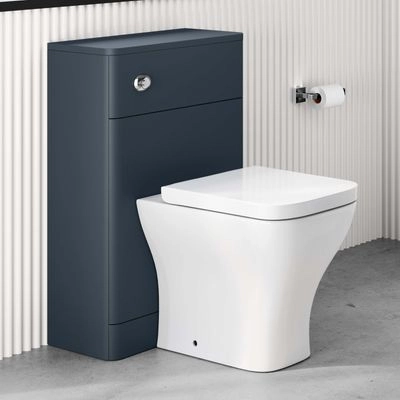
Cleaning and maintenance differ because close coupled toilets expose cistern surfaces and pipework for direct access, while back to wall toilets minimise visible components but require planned access for concealed systems. Maintenance effort balances surface cleaning simplicity against servicing accessibility.
External Surface Cleaning
Close coupled toilets require cleaning of both the pan and exposed cistern surfaces. Larger visible surface area increases wipe-down time but allows unrestricted access to all exterior components.
Reduced Surface Area in Back to Wall Toilets
Back to wall toilets reduce exterior cleaning requirements by concealing the cistern and pipework. Fewer visible surfaces simplify routine cleaning and contribute to a cleaner visual environment.
Pan Base Access
Back to wall toilets improve access around the pan base due to flush wall alignment. Reduced gaps behind the pan limit dust accumulation and simplify floor-level cleaning.
Cistern Maintenance Access
Close coupled cistern maintenance involves lifting the cistern lid for full component access. Routine servicing and part replacement occur without dismantling wall finishes or furniture.
Concealed System Servicing
Back to wall toilet servicing relies on access through flush plates or removable panels. Maintenance requires careful handling and precise alignment to avoid cosmetic damage during component replacement.
Leak Detection and Response
Leak detection remains more immediate in close coupled toilets. Visible joints and pipework allow faster identification, while concealed systems delay detection until moisture signs appear externally.
How Does Cistern Access Affect Long-Term Maintenance?
Cistern access affects long-term maintenance by determining how easily internal flushing components can be inspected, repaired, or replaced without disturbing surrounding finishes. Access design directly influences servicing cost, response time, and long-term reliability.
Direct Access Advantage in Close Coupled Toilets
Close coupled toilets provide unrestricted cistern access through removable lids. Immediate visibility of fill valves, flush valves, siphons, and inlet connections enables rapid diagnosis and routine maintenance without dismantling structural elements.
Controlled Access in Back to Wall Toilets
Back to wall toilets limit cistern access to flush plate apertures or removable panels. Servicing remains possible but depends on correct installation of access routes that meet clearance requirements.
Component Replacement Practicality
Component replacement occurs faster in externally accessible cisterns. Direct access reduces labour time and lowers maintenance complexity compared to concealed systems requiring careful panel removal.
Risk of Cosmetic Damage
Concealed cistern access increases cosmetic risk during servicing. Flush plates, furniture panels, and surrounding finishes require careful handling to avoid surface damage during maintenance tasks.
Maintenance Cost Implications
Restricted access increases long-term servicing costs. Extended labour time and specialist intervention raise maintenance expenditure compared to straightforward close coupled cistern access.
Preventive Maintenance Feasibility
Preventive maintenance remains more practical with visible cistern systems. Regular inspections and early component replacement reduce failure risk, while concealed systems rely on scheduled access rather than visual monitoring.
How Do Close Coupled and Back to Wall Toilets Compare in Terms of Cost?
Cost comparison between close coupled and back to wall toilets differs because close coupled toilets generally require lower upfront purchase and installation expenses, while back to wall toilets incur higher initial and maintenance access costs due to concealed cistern systems and structural support requirements. Cost analysis must include product pricing, installation complexity, and long-term servicing implications.
Product Purchase Price
Close coupled toilets typically cost less at purchase due to simpler two-piece construction and widespread availability. Standardised parts, visible cistern design, and mass production result in competitive pricing compared to integrated frame and concealment systems used for back to wall toilets.
Installation Labour Costs
Back to wall toilets require higher installation labour costs due to frame assembly and wall preparation. Supporting frameworks, panel fitting, precise alignment, and concealed plumbing routing extend installation time compared to close coupled toilets, which install directly to existing soil outlets.
Structural and Materials Expense
Back to wall toilets incur extra structural materials expense. Installation of support frames, furniture housings, or wall-infilling systems adds cost beyond the pan and cistern unit, which increases total project expenditure.
Access Panel and Servicing Setup Cost
Servicing access provisions raise initial costs for back to wall systems. Flush plates, removable panels, and access routes must be installed to meet maintenance standards, which increases upfront material and labour investment relative to exposed systems.
Long-Term Maintenance Expense
Back to wall toilets may incur higher long-term maintenance expense due to restricted access. Servicing concealed components requires careful panel removal and potential refinishing, which increases labour rates and service duration compared to externally accessible cisterns.
Retrofit Versus New Construction Impact
Back to wall toilets cost advantage diminishes in retrofit projects. Modifying existing walls to conceal cisterns creates additional demolition, framing, and finishing costs, whereas close coupled systems integrate directly without structural alteration.
How Do Flush Mechanisms Differ Between Close Coupled and Back to Wall Toilets?

Flush mechanisms differ because close coupled toilets use cistern-mounted flushing components with direct mechanical actuation, while back to wall toilets use concealed cistern mechanisms operated through external flush plates. Flush design affects accessibility, actuation method, and maintenance strategy.
Cistern-Mounted Flush Systems in Close Coupled Toilets
Close coupled toilets use flush valves or siphon systems housed inside the visible cistern. Actuation occurs through top-mounted or front-mounted push buttons or levers that connect directly to the flushing mechanism without intermediary linkages.
Concealed Flush Systems in Back to Wall Toilets
Back to wall toilets use concealed flush mechanisms located inside hidden cisterns. Actuation transfers through mechanical rods, pneumatic tubes, or cable systems connected to an external flush plate mounted on the wall or furniture panel.
Dual-Flush Operation Differences
Both toilet types commonly use dual-flush technology, but execution differs by placement. Close coupled dual flush buttons sit directly on the cistern lid, while back to wall dual flush controls integrate into flush plates that trigger internal mechanisms remotely.
Mechanical Complexity Comparison
Flush mechanisms in back to wall toilets involve greater mechanical complexity. Extended actuation paths introduce additional components, which increases alignment sensitivity compared to the direct engagement used in close coupled systems.
Maintenance Accessibility
Flush mechanism servicing remains simpler in close coupled toilets. Full cistern access allows immediate valve inspection and replacement, whereas concealed systems rely on flush plate apertures designed to meet minimum service access dimensions.
Reliability and Adjustment
Close coupled flush systems allow easier adjustment and fault correction. Float height, flush volume, and valve seals adjust directly, while concealed systems require precise component positioning during servicing to maintain flush reliability.
How Do Close Coupled and Back to Wall Toilets Compare for Small Bathrooms?
Close coupled and back to wall toilets differ in small bathroom suitability because back to wall designs maximise usable floor space and visual openness, while close coupled toilets require additional rear projection due to visible cistern placement. Space efficiency and accessibility determine optimal choice based on layout constraints.
Wall Projection and Floor Space
Back to wall toilets minimise visible rear projection by concealing the cistern behind the wall or furniture unit. Reduced projection increases available usable floor area in compact layouts compared to close coupled toilets, which typically extend 650–700 mm from the finished wall due to exposed cistern depth.
Perceived Visual Space
Back to wall toilets enhance perceived visual space by creating uninterrupted wall lines. Hidden plumbing and flush mechanisms reduce visual clutter, which supports a cleaner, more spacious appearance essential in small bathrooms.
Installation Constraints in Tight Layouts
Close coupled toilets install easily on existing soil outlets but demand additional clearance behind the pan. In narrow rooms or where wall recesses are limited, exposed cistern depth can restrict placement near doors, basins, or shower zones.
Access and Maintenance in Confined Areas
Back to wall toilets maintain service access through flush plates or removable panels designed into the wall or furniture. Restricted access remains manageable, but requires careful planning to avoid interfering with adjacent fixtures in small layouts.
Cleaning Around the Pan
Back to wall toilets simplify cleaning around the base due to flush wall alignment. Reduced gaps behind the pan limit dirt traps and improve movement clearance compared to close coupled toilets with visible rear edges.
Design Cohesion With Compact Fixtures
Back to wall toilets integrate with custom storage and compact fixtures more effectively. Coordination with fitted cabinetry and wall-mounted accessories supports space-optimised design without compromising functionality.
Which Toilet Type Offers Better Installation Flexibility?

Close coupled toilets offer greater installation flexibility because the cistern and pan connect directly to existing plumbing positions without concealed frameworks, while back to wall toilets require predefined wall depth, framing, and access planning. Flexibility depends on soil pipe position, wall construction, and renovation scope.
Compatibility With Existing Plumbing
Close coupled toilets adapt easily to existing soil pipe locations. Floor-exit and rear-exit options allow installation without altering pipe routes, which suits replacements and partial refurbishments.
Wall Structure Dependency
Back to wall toilets depend on wall structure and depth availability. Stud walls, service voids, or furniture units must accommodate concealed cistern dimensions, which limits flexibility in solid-wall or space-restricted properties.
Retrofit Versus New Installation
Close coupled toilets suit retrofit installations with minimal disruption. Back to wall toilets integrate more flexibly into new builds or full renovations where wall construction remains adjustable.
Tolerance for Positional Variation
Close coupled toilets tolerate greater positional variation during fitting. Visible cistern and pan connections allow minor alignment correction, while back to wall toilets require precise depth and level control to achieve flush wall contact.
Installation Sequencing
Installation sequencing differs significantly between the two types. Close coupled toilets install after wall and floor finishes, while back to wall toilets require cistern and frame placement before final finishing.
Access Planning Requirements
Back to wall toilets require advance access planning. Flush plate and service panel positioning must remain unobstructed, which reduces flexibility once walls and furniture install.
Who Should Choose a Close Coupled Toilet?
A close coupled toilet suits users who prioritise installation simplicity, direct maintenance access, lower overall cost, and compatibility with existing plumbing layouts. Selection aligns with practical use cases rather than design-driven concealment.
Retrofit and Replacement Projects
Close coupled toilets suit bathroom replacements where existing soil pipe positions remain unchanged. Direct pan-to-cistern configuration avoids wall modification and supports rapid installation in occupied properties.
Budget-Conscious Installations
Cost-sensitive projects benefit from close coupled toilets due to lower product and labour costs. Standardised components reduce purchase price and long-term servicing expense.
Properties With Solid Walls
Solid-wall constructions favour close coupled toilets. Concealed cistern installation becomes impractical in masonry walls without structural alteration, which makes surface-mounted systems more suitable.
Users Requiring Easy Maintenance
Users prioritising easy maintenance benefit from exposed cistern access. Routine servicing, part replacement, and fault diagnosis occur without specialist intervention or finish removal.
Traditional or Transitional Bathroom Designs
Close coupled toilets complement traditional and transitional bathroom aesthetics. Visible cistern forms align with classic styling, lever flush options, and conventional layout expectations.
Rental and High-Use Properties
Rental and high-traffic properties favour close coupled toilets for durability and serviceability. Quick access and part availability reduce downtime and maintenance cost over repeated use cycles.
Who Should Choose a Back to Wall Toilet?

A back to wall toilet suits users who prioritise modern design, space efficiency, concealed plumbing, and integrated bathroom layouts where installation planning and wall modification remain feasible. Selection aligns with design-led projects rather than rapid retrofit requirements.
Contemporary Bathroom Renovations
Design-focused renovations benefit from back to wall toilets due to concealed cisterns and reduced visual bulk. Clean wall lines and minimal exposed components support modern and minimalist bathroom aesthetics.
Small Bathroom Optimisation
Compact bathrooms benefit from back to wall toilets through reduced pan projection and improved perceived space. Concealed cistern placement shortens visible depth and increases usable floor area in tight layouts.
New Build and Full Refurbishment Projects
New builds and full refurbishments suit back to wall toilet installation requirements. Wall framing, service void creation, and access panel planning integrate efficiently during early construction stages.
Integrated Furniture Layouts
Bathrooms using fitted furniture systems benefit from back to wall toilets. Concealed cisterns align with vanity units and storage cabinetry, creating cohesive and continuous design schemes.
Users Prioritising Easy Cleaning
Users seeking reduced surface cleaning benefit from back to wall toilets. Concealed pipework and flush wall alignment limit dust traps and simplify routine bathroom maintenance.
Properties With Stud or Service Walls
Properties with stud walls or service voids support concealed cistern installation. Adequate wall depth enables secure frame mounting and compliant access provision.
How Should the Final Choice Between Close Coupled and Back to Wall Toilets Be Made?
The final choice between close coupled and back to wall toilets should be made by evaluating plumbing constraints, wall construction, available space, maintenance access preference, installation scope, and long-term design priorities. Functional suitability outweighs aesthetic preference when conditions restrict installation feasibility.
Plumbing and Soil Pipe Position
Existing soil pipe position sets the primary constraint for toilet selection. Close coupled toilets accommodate floor and rear exits with minimal alteration, while back to wall toilets require rear outlet alignment and concealed routing within wall structures.
Wall Type and Structural Depth
Wall construction determines concealed cistern feasibility. Solid masonry walls favour close coupled toilets, while stud walls, service voids, or furniture units enable back to wall installations without structural compromise.
Bathroom Size and Layout
Bathroom size influences spatial efficiency requirements. Small bathrooms benefit from reduced projection and visual openness provided by back to wall toilets, while larger bathrooms accommodate close coupled designs without spatial penalty.
Installation Scope and Disruption Tolerance
Project scope defines installation practicality. Close coupled toilets suit replacements and partial refurbishments, while back to wall toilets integrate best into new builds or full renovations with planned wall access.
Maintenance and Servicing Preference
Maintenance accessibility affects long-term usability. Close coupled toilets provide immediate cistern access, while back to wall toilets rely on correctly planned service panels for concealed component access.
Budget and Long-Term Cost
Budget considerations include product, installation, and servicing costs. Close coupled toilets minimise upfront and maintenance expenditure, while back to wall toilets invest in design efficiency at higher initial cost.
Summing Up
The choice between a close coupled toilet and a back to wall toilet depends on how installation constraints, maintenance access, available space, and long-term usability align with design expectations. Close coupled toilets deliver simplicity, adaptability, and easy servicing through visible cistern access, which suits replacements, solid walls, and cost-focused projects.
Back to wall toilets prioritise space efficiency, visual cleanliness, and integrated design by concealing the cistern, which suits new builds, renovations, and modern layouts where access planning is possible. When plumbing position, wall structure, servicing preference, and budget are assessed together, the correct toilet type becomes clear based on practical suitability rather than appearance alone.


